
In the competitive landscape of publishing, few sectors are as saturated or as loyalty-driven as religious literature. Within this space, the “Amplified Bible” stands not merely as a translation of ancient texts, but as a masterclass in brand differentiation and strategic market positioning. To understand what the Amplified Bible is from a brand perspective, one must look past the theological content and examine the corporate identity, the unique value proposition (UVP), and the specific user experience that has allowed this brand to maintain a significant market share for over half a century.
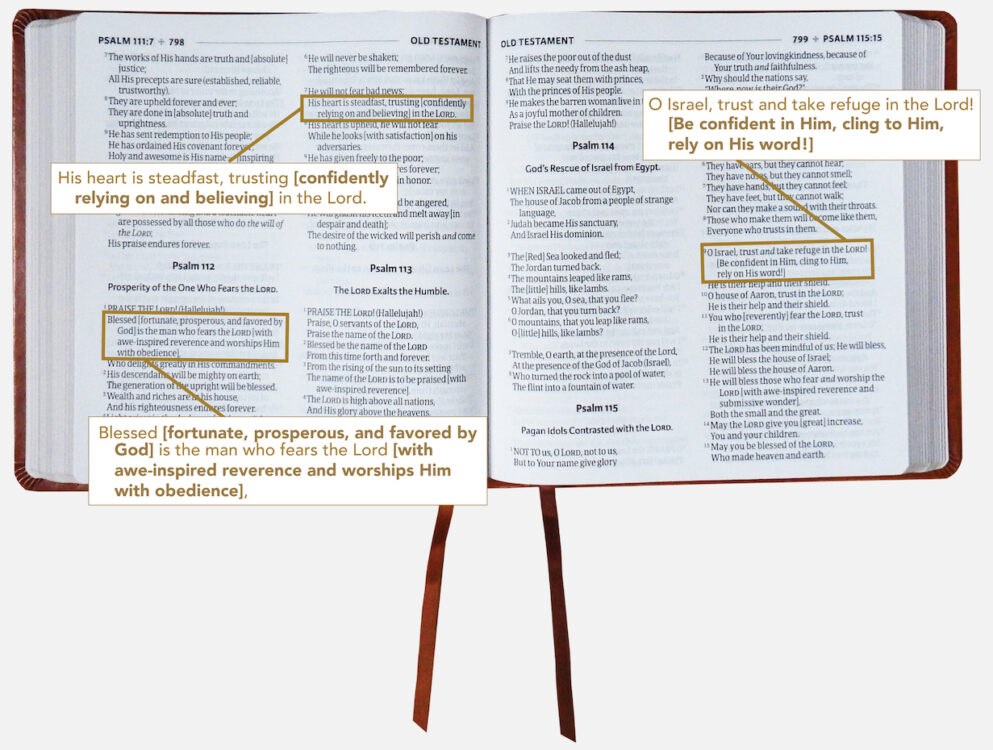
The Amplified Bible (AMP) is a product of a collaborative effort between The Lockman Foundation and Zondervan. Its brand identity is built on a singular, disruptive premise: that a word-for-word translation is often insufficient to capture the full nuance of the original source material. By “amplifying” the text through a system of brackets, parentheses, and italics, the brand offers a solution to a problem many consumers didn’t know they had—the linguistic gap between ancient Greek or Hebrew and modern English.
The Core Identity: Understanding the “Amplification” Brand Proposition
Every successful brand solves a specific pain point. In the world of Bible translations, the primary conflict usually lies between “Formal Equivalence” (literal, word-for-word) and “Dynamic Equivalence” (thought-for-thought). The Amplified Bible carved out a third way, creating an entirely new category that we might call “Expansive Equivalence.”
Bridging the Linguistic Gap
The brand’s core identity is centered on the concept of “fullness.” While other brands in the space compete on the basis of readability (like the New Living Translation) or historical prestige (like the King James Version), the Amplified Bible brand promises depth without the need for external study tools. This is its primary brand differentiator. By including synonyms and explanations directly within the flow of the text, the brand effectively integrates a commentary and a lexicon into the product itself.
From a strategic standpoint, this eliminates “friction” for the user. A reader who wants to understand the multiple shades of meaning in a word like agape (love) does not have to put the book down to consult a dictionary. The brand provides that value instantly. This “all-in-one” convenience is a hallmark of the AMP’s brand strategy.
The Unique Value Proposition (UVP)
The UVP of the Amplified Bible is clarity through expansion. In branding terms, this is a bold move. Most modern branding trends toward minimalism—distilling a message down to its simplest form. The AMP does the opposite; it embraces complexity but organizes it through a proprietary visual system.
The use of brackets [ ] and parentheses ( ) serves as a visual brand signature. Even without seeing the cover, a seasoned consumer can identify an Amplified Bible just by the look of the page. This visual consistency is vital for brand recognition. It tells the user: “Here, you are getting more than just the text; you are getting the context.”
Market Positioning: How the Amplified Bible Carved Its Niche
The success of the Amplified Bible is largely due to its precise market positioning. It does not attempt to be the “everyday” Bible for everyone. Instead, it positions itself as the “study companion” or the “deeper dive” brand.
Identifying the “Seeker” Persona
In brand strategy, defining the target audience is paramount. The Amplified Bible targets the “Serious Student” persona—an individual who is dissatisfied with surface-level readings and seeks a more academic or immersive experience but may lack the formal training in linguistics to read original languages.
By positioning the brand as an “amplifier” of truth, the marketing focuses on empowerment. The brand tells the consumer: “You don’t need a PhD to understand the nuances of the original text; our product provides the bridge.” This creates a strong emotional connection based on growth and intellectual curiosity.
Competitive Analysis in Religious Publishing
In a market dominated by the “Big Three” (NIV, KJV, and ESV), the Amplified Bible occupies a specialized quadrant. It avoids the “accuracy vs. readability” debate by existing as a supplement to both.
Many consumers use a “multi-brand strategy” in their personal lives, owning a standard translation for daily reading and an Amplified Bible for deeper study. This is a brilliant strategic position for a brand; it doesn’t have to replace the market leader to be successful. It merely needs to be the essential “second purchase.” By not competing head-to-head for the “primary Bible” slot, the AMP has secured a permanent place on the shelves of millions.
Evolution of the Brand: From 1965 to the Modern Era
A brand that does not evolve eventually becomes a relic. The Amplified Bible has undergone several iterations to maintain its relevance in a changing cultural and linguistic landscape.
The 2015 Revision (AMP vs. AMPc)
The transition from the “Amplified Bible Classic” (AMPc) to the updated 2015 “Amplified Bible” (AMP) represents a significant brand refresh. The original version, completed in 1965, was revolutionary but eventually began to feel dated as modern scholarship evolved.
The brand refresh in 2015 was handled with extreme care to avoid “brand dilution.” The Lockman Foundation and Zondervan recognized that many long-time users were deeply attached to the Classic version. Consequently, they maintained both versions in their digital catalogs, a move that mirrors how tech companies like Apple might support an older OS while pushing users toward the new one. This strategy preserves brand loyalty among traditionalists while attracting a new generation of users who prefer modern syntax.
Adapting to Digital Consumption
The digital transformation has changed how consumers interact with text-heavy brands. The Amplified Bible’s complex formatting (brackets and italics) presented a unique challenge for early digital e-readers and mobile apps.
The brand’s response was to lean into the technology. In apps like YouVersion or BibleGateway, the Amplified Bible is one of the most frequently toggled translations. The “amplification” feature translates perfectly to a digital “hover” or “click” environment, though the brand has chosen to keep the text expanded within the flow of the sentences. This decision maintains the integrity of the brand’s “expanded” look and feel, ensuring that the user experience remains consistent across physical and digital touchpoints.
Strategic Partnerships and Distribution Ecosystems
The strength of the Amplified Bible brand is also a result of its powerful distribution network and corporate backing. Brand equity is often a reflection of the company it keeps.
The Role of Zondervan and The Lockman Foundation
The partnership between The Lockman Foundation (the copyright holders and developers) and Zondervan (the commercial powerhouse) is a classic example of a successful licensing and distribution strategy. The Lockman Foundation provides the “intellectual property” and maintains the brand’s scholarly integrity, while Zondervan provides the marketing muscle, retail relationships, and aesthetic design.
This division of labor allows the brand to remain “authentic” to its scholarly roots while being commercially aggressive. Zondervan’s ability to package the Amplified text into various formats—journaling Bibles, large-print editions, and “thinline” versions—has expanded the brand’s reach into different lifestyle segments.
Licensing and Cross-Platform Integration
The Amplified Bible has been aggressively licensed to third-party software developers and digital platforms. By making the text available on every major digital storefront and Bible study app, the brand ensures it is present wherever the consumer is. This ubiquity is a key component of brand “top-of-mind” awareness. When a user searches for a translation that offers “more detail,” the Amplified Bible is almost always the first recommendation, largely due to its decades of established presence and strategic SEO in digital marketplaces.
The Brand Legacy: Trust and Authority in Modern Publishing
Ultimately, the Amplified Bible brand stands as a symbol of trust and authority. In an era of “fake news” and linguistic ambiguity, a brand that promises to show all the possible meanings of a word carries a significant amount of weight.
The brand’s longevity is its greatest asset. By remaining consistent in its methodology for over 50 years, it has built a “moat” around its niche. Other publishers have attempted to create “expanded” or “study” translations, but none have achieved the brand recognition of the Amplified Bible.
In the world of branding, being “the first” in a category is a powerful advantage. The Amplified Bible was the first to formalize the expanded translation style for a mass audience, and it continues to reap the rewards of that pioneering spirit. It is more than a book; it is a specialized tool, a trusted guide, and a landmark in the history of religious branding. Through strategic evolution and a steadfast commitment to its unique value proposition, the Amplified Bible remains a dominant force in its industry, proving that even in a digital age, depth and detail are still highly marketable commodities.
aViewFromTheCave is a participant in the Amazon Services LLC Associates Program, an affiliate advertising program designed to provide a means for sites to earn advertising fees by advertising and linking to Amazon.com. Amazon, the Amazon logo, AmazonSupply, and the AmazonSupply logo are trademarks of Amazon.com, Inc. or its affiliates. As an Amazon Associate we earn affiliate commissions from qualifying purchases.