
In the modern landscape of winter sports, the term “freestyle ski” represents far more than a specialized piece of sporting equipment; it is a marvel of material science, structural engineering, and digital design. While a standard alpine ski is engineered primarily for carving efficient arcs on groomed snow, a freestyle ski is a multi-dimensional tool designed to withstand the violent physics of terrain parks, halfpipes, and urban features. To understand what a freestyle ski truly is, one must look past the vibrant top-sheet graphics and analyze the sophisticated technology integrated into its core, edges, and profile.
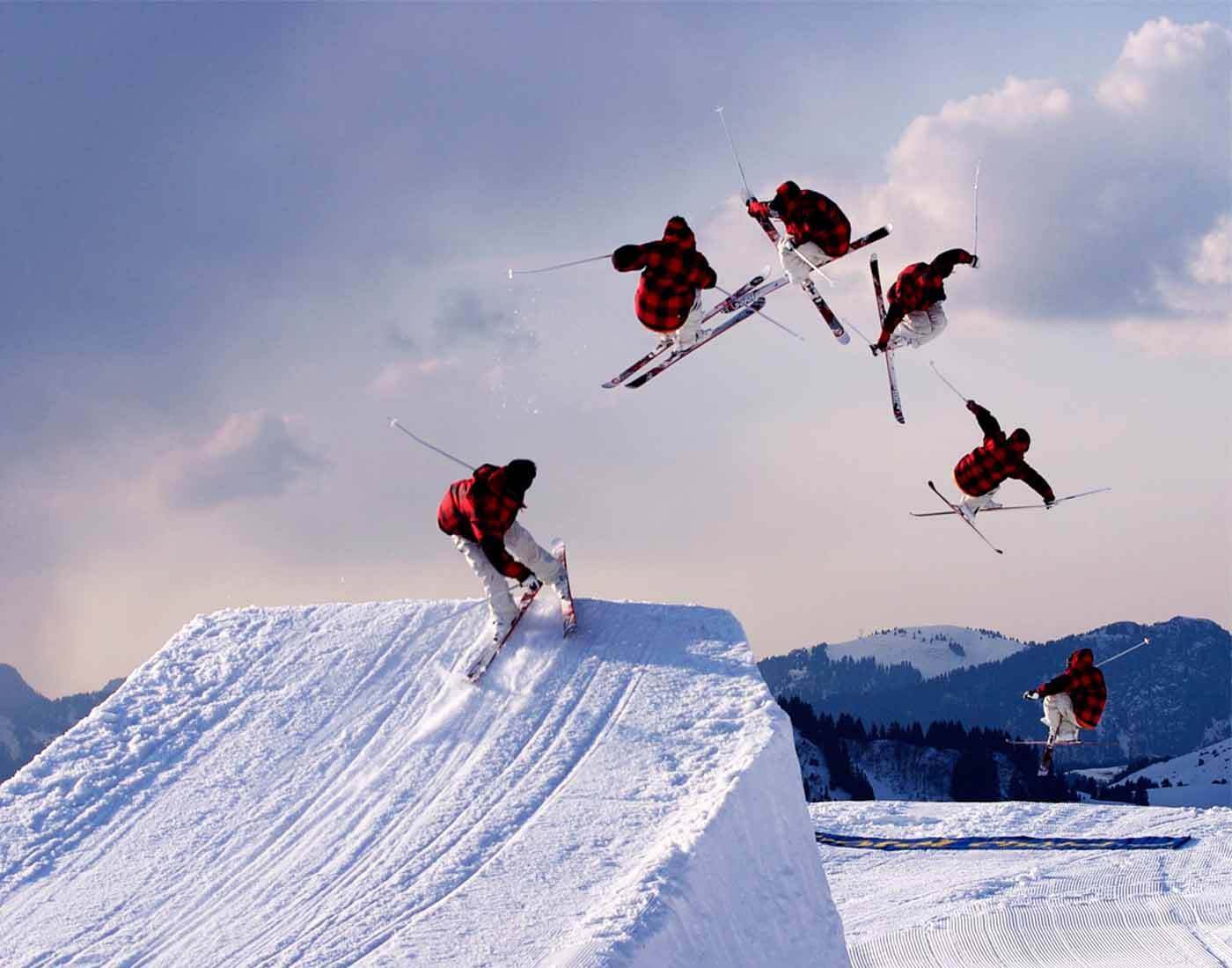
The evolution of freestyle skiing has been driven by a continuous feedback loop between professional athletes and mechanical engineers. As tricks become more complex—incorporating off-axis rotations and massive impact forces—the hardware has had to evolve. Today’s freestyle skis are high-performance gadgets that leverage aerospace-grade materials and advanced geometric modeling to achieve a delicate balance between weight, durability, and kinetic energy return.
The Anatomy of Innovation: Materials and Core Construction
At the heart of every freestyle ski is its core, the primary engine that determines how the ski vibrates, flexes, and responds to input. In the tech-heavy world of ski manufacturing, the “wood core” is rarely just a simple slab of timber. It is an intricately laminated composite structure designed using Computer Numerical Control (CNC) machining to ensure micron-level precision.
Advanced Wood Laminates and Density Mapping
Engineers often utilize a blend of different wood species to achieve specific mechanical properties. For instance, a high-tech freestyle ski might feature a “Poplar and Beech” blend. Poplar provides a lightweight, dampening foundation, while Beech stringers are strategically placed underfoot to provide rigidity and better screw retention for bindings. Some manufacturers have moved toward even more exotic materials like Paulownia or Bamboo, which offer incredible strength-to-weight ratios, allowing the ski to remain “flickable” during complex aerial rotations without sacrificing the structural integrity needed for high-impact landings.
Carbon Fiber and Titanal Reinforcements
To enhance the “pop” or energy return of a ski, manufacturers integrate synthetic reinforcements. Carbon fiber stringers—long, thin strips of carbon—are often laid in longitudinal or diagonal patterns. These fibers act like springs; when the ski is flexed during a take-off, the carbon stores potential energy and releases it rapidly, propelling the skier higher.
In some high-end freestyle models designed for halfpipe competitions, layers of Titanal (a high-strength aluminum alloy used in aircraft) are integrated into the layup. Titanal provides exceptional torsional rigidity and vibration dampening, ensuring that the ski remains stable at the high speeds required to boost out of a 22-foot pipe wall.
Geometry and CAD Design: The Science of the Sidecut
The physical shape of a freestyle ski—its sidecut and taper—is a product of rigorous digital modeling. Unlike traditional skis that are designed to travel in one direction, a freestyle ski is a bidirectional tool. This necessity has birthed the “Twin Tip” design, where both the shovel (front) and the tail (back) are turned upward.
Symmetrical vs. Directional Twin Shapes
In the design phase, engineers decide on the degree of symmetry. A “True Twin” is a perfectly symmetrical masterpiece where the dimensions of the tip and tail are identical, and the mounting point for the binding is dead-center. This tech allows the ski to behave identically whether the skier is traveling forward or backward (switch).
However, many modern freestyle skis utilize a “Directional Twin” geometry. Through CAD (Computer-Aided Design) simulations, engineers can create a ski that excels in the park but remains functional on the rest of the mountain. These designs often feature a slightly wider tip than tail, optimized for flotation in soft snow while still maintaining the aerodynamic properties needed for switch take-offs and landings.
Progressive Sidecut Ratios
The sidecut—the inward curve of the ski’s edge—is no longer a simple radius. Modern freestyle tech employs “Progressive” or “Multi-radius” sidecuts. By using different radii along the length of the edge, designers can ensure the ski hooks up quickly at the start of a turn but doesn’t “hook” or catch unpredictably when the skier is sliding sideways on a metal rail. This mathematical approach to edge geometry is what allows a freestyle ski to be both aggressive on snow and forgiving on features.
Profile Technology: Rocker, Camber, and Hybrid Baselines
The profile of a ski refers to its shape when laid flat on the ground. This is where freestyle technology has seen the most significant disruption over the last decade. The transition from traditional camber to sophisticated rocker-camber hybrids has fundamentally changed how these skis interact with varied surfaces.
Traditional Camber for Kinetic Energy
Traditional camber is the slight upward arch in the middle of the ski. In a freestyle context, this acts as a suspension system. When a skier lands a large jump, the camber flattens out, absorbing the impact and distributing the force across the entire length of the ski. The tech here is focused on “loaded tension,” providing the edge grip necessary to carve into a massive jump transition.
Twin-Tip Rocker for Maneuverability
Rocker, or “early rise,” is the reverse of camber, where the tips and tails begin to curve upward closer to the center of the ski. In freestyle engineering, rocker serves two technological purposes. First, it reduces the “effective edge,” making the ski more pivotable—essential for making micro-adjustments on the approach to a rail. Second, it creates a “surfier” feel in soft snow, preventing the tips from diving.
Modern freestyle skis often use a “Camber-Underfoot, Rocker-in-Tip-and-Tail” profile. This hybrid baseline is designed via digital stress testing to ensure the skier has the stability of camber under their boots for landings, combined with the playfulness of rocker at the extremities for buttering and pressing.
Manufacturing Hardware: Edges, Bases, and Dampening Systems
The brutal environment of the terrain park—consisting of steel rails, concrete ledges, and ice—requires specialized hardware that goes far beyond standard consumer grade.
Sintered Bases and Micro-Structure
The base of a freestyle ski is typically made from Sintered Ultra-High-Molecular-Weight Polyethylene (UHMWPE). Unlike cheaper extruded bases, sintered bases are porous. From a technical standpoint, these pores act as reservoirs for wax, reducing friction through a hydrophobic reaction. Furthermore, the bases are often “structured” with a stone-grind pattern that breaks the surface tension of the water film between the ski and the snow, allowing for maximum speed on short in-runs.
Reinforced Steel Edges and Sidewall Tech
One of the greatest technical challenges in freestyle ski design is preventing “edge crack.” When a skier hits a rail, the impact can cause the steel edge to compress and crack the wood core. To combat this, freestyle-specific skis use “2.5mm XL Edges”—thicker, heat-treated steel that is bonded more deeply into the ski’s internal structure.
Additionally, the “sidewall” (the material covering the sides of the core) is often made of high-density ABS plastic. Some manufacturers utilize a “Step-Down Sidewall” or “Cap-Wall” construction, which uses digital layering to place more protective material in high-impact zones under the boot while tapering the weight toward the tips to reduce “swing weight.”
The Future of Freestyle Tech: Sustainable Materials and Smart Dampening
As we look toward the future, the technology within freestyle skis is shifting toward sustainability and “smart” vibration management. Designers are experimenting with bio-resins and recycled materials that match the tensile strength of traditional epoxies.
One of the most exciting frontiers is the integration of “Non-Newtonian” materials or specialized rubber elastomers embedded within the layup. These materials stay soft and flexible during normal use but instantly stiffen upon impact, providing a dynamic dampening system that can handle the chatter of icy transitions while remaining “poppy” for tricks.
In conclusion, a freestyle ski is a sophisticated piece of industrial technology. It is a product of high-level physics simulations and material experimentation, designed to perform in an environment where the margin for error is measured in millimeters. By blending the structural integrity of aerospace composites with the nuanced geometry of modern CAD design, the freestyle ski remains one of the most technologically dense tools in the world of outdoor sports. It is not just a ski; it is a precision-engineered instrument built for the laboratory of the air.
aViewFromTheCave is a participant in the Amazon Services LLC Associates Program, an affiliate advertising program designed to provide a means for sites to earn advertising fees by advertising and linking to Amazon.com. Amazon, the Amazon logo, AmazonSupply, and the AmazonSupply logo are trademarks of Amazon.com, Inc. or its affiliates. As an Amazon Associate we earn affiliate commissions from qualifying purchases.