
In the high-stakes world of modern technology, where a single second of downtime can cost millions of dollars and a minor software glitch can compromise the data of millions, understanding system reliability is no longer optional. Among the most powerful tools in a systems engineer’s arsenal is Fault Tree Analysis (FTA). But what is a fault tree, and why has it become a cornerstone of digital security, software development, and complex systems architecture?
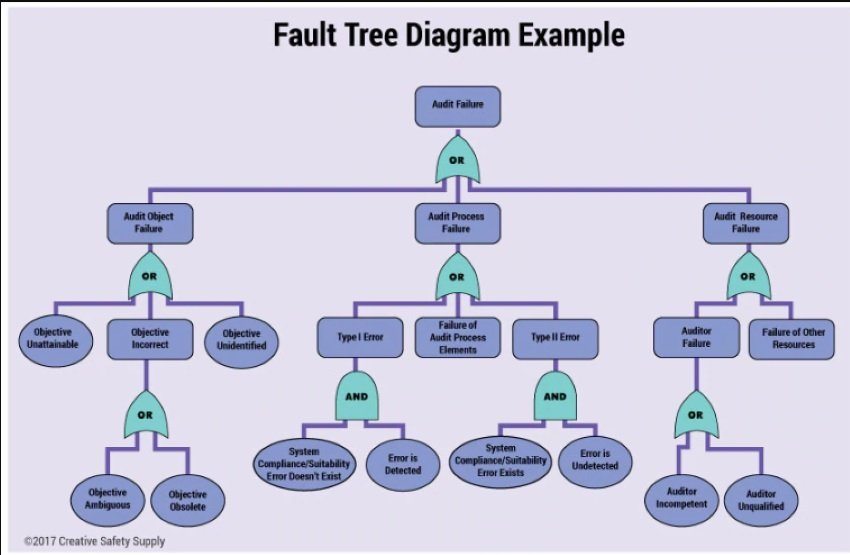
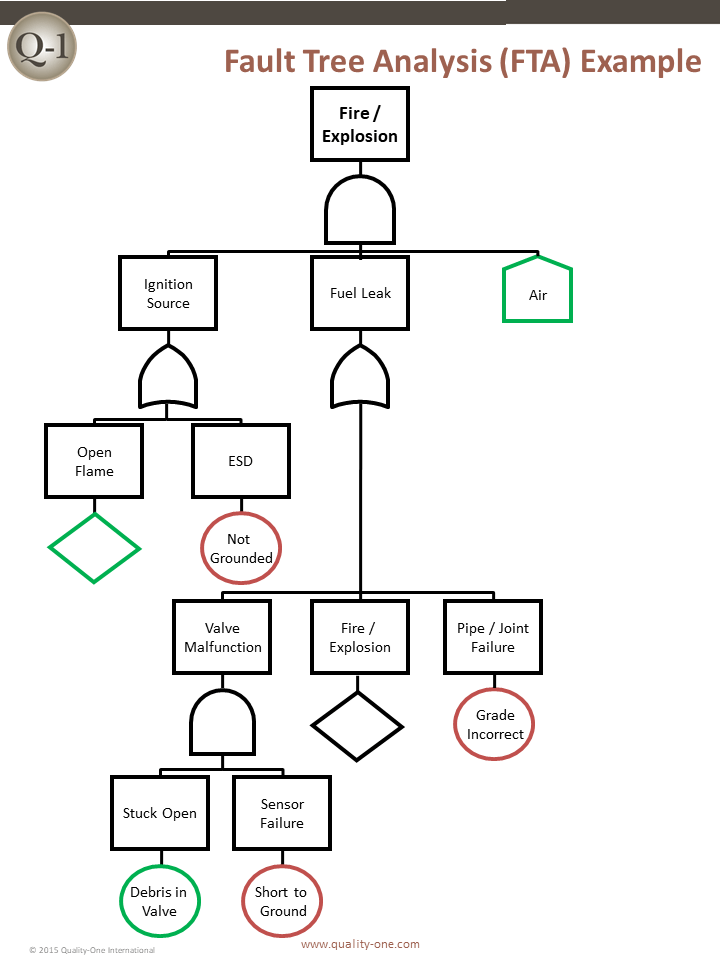
Fault Tree Analysis is a top-down, deductive failure analysis method that uses Boolean logic to combine lower-level events to understand the causes of a systemic failure. By visualizing how various components of a system can fail and lead to a catastrophic “Top Event,” organizations can proactively identify vulnerabilities, quantify risks, and implement robust safeguards.
The Fundamentals of Fault Tree Analysis (FTA)
At its core, a fault tree is a graphical representation of the pathways within a system that can lead to an undesired outcome. Unlike bottom-up approaches that look at individual components to see what might happen if they fail, FTA starts with the failure itself and works backward to find the root causes.
The Origin Story: From Aerospace to Digital Systems
Fault Tree Analysis was first conceived in 1962 at Bell Telephone Laboratories by H.A. Watson, under a contract for the U.S. Air Force to evaluate the Minuteman Missile Launch Control System. The complexity of the missile system was so vast that traditional safety checks were insufficient. Engineers needed a way to visualize the “logic” of failure.
Following its success in aerospace, the methodology was adopted by the nuclear power industry and later by the automotive and chemical sectors. Today, in the era of Cloud Computing and Artificial Intelligence, FTA has transitioned into the digital realm. It is now used to map out server cluster failures, cybersecurity breaches, and the logic of autonomous vehicle decision-making.
The Anatomy of a Fault Tree
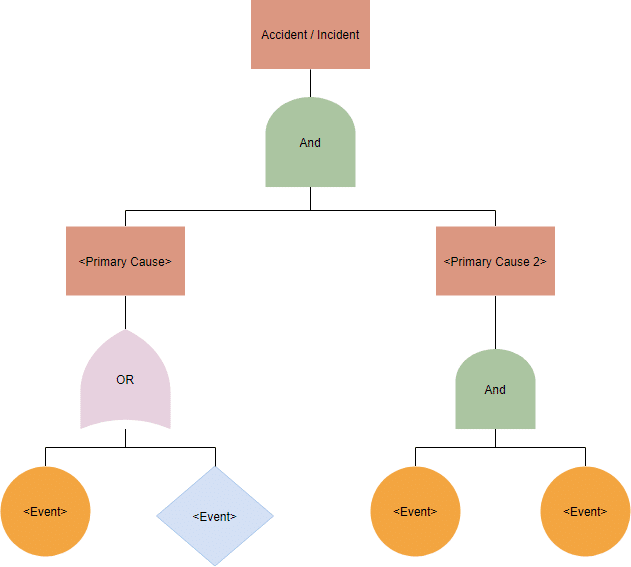
A fault tree is composed of two primary elements: “events” and “gates.”
- The Top Event: This is the primary failure being studied (e.g., “Total Cloud Service Outage” or “Data Breach”).
- Intermediate Events: These are failures that contribute to the Top Event but are not yet the root cause.
- Basic Events: These are the lowest-level failures, often representing a hardware component failure or a human error, which require no further decomposition.
- Logic Gates: These connect the events and define the conditions under which a failure propagates to the next level.
Understanding Logic Gates: The Language of System Failures
The true power of FTA lies in its use of Boolean logic. By using specific “gates,” engineers can model the exact relationship between different failure points. This allows for a granular understanding of system redundancy and vulnerability.
The AND Gate: Synchronous Failure Requirements
An AND gate indicates that the output event occurs only if all the input events happen simultaneously. In the context of technology trends, the AND gate is often a sign of built-in redundancy.
For example, if a high-availability database is designed to fail only if both the Primary Server fails AND the Backup Server fails, the fault tree would use an AND gate. If the probability of one server failing is low, the probability of both failing at the same time is exponentially lower. In this way, AND gates represent the strengths of a system’s design.
The OR Gate: Single Points of Failure
Conversely, an OR gate indicates that the output event occurs if any of the input events happen. These are the danger zones in any technological architecture. If a web application goes offline because the “Load Balancer Fails” OR the “Database Crashes,” the system is highly vulnerable.
Identifying OR gates in a fault tree allows software architects to identify “Single Points of Failure” (SPOFs). The goal of modern system design is often to convert OR gates into AND gates through the introduction of failovers and distributed systems.
Specialized Gates and Symbols
While AND and OR gates are the most common, complex systems often require specialized logic:
- Priority AND Gate: The output occurs only if the inputs happen in a specific chronological order.
- Exclusive OR (XOR) Gate: The output occurs if exactly one input happens, but not both.
- Inhibit Gate: The output occurs only if the input happens and a specific “conditional event” is also present.
Practical Applications in Modern Software Development and Cybersecurity
While FTA began in heavy industry, its application in the tech sector has become vital for maintaining digital security and software uptime.
Enhancing Software Resilience through FTA
In software engineering, Fault Tree Analysis is used during the design phase to predict how a new feature might crash an entire application. By treating a “System Crash” as the Top Event, developers can map out potential memory leaks, API failures, or unhandled exceptions.
This proactive approach is especially useful in microservices architectures. Because microservices rely on numerous moving parts communicating over a network, the probability of a localized failure is high. FTA helps developers understand how a failure in a minor service (like a “Notification Engine”) might or might not propagate to a critical service (like “Payment Processing”).
FTA in Digital Security: Mapping Attack Vectors
Cybersecurity professionals use a variation of fault trees known as “Attack Trees.” In this context, the Top Event is a successful breach—for instance, “Unauthorized Access to Customer Database.”
The branches of the tree represent the various methods an attacker might use:
- Branch A: Phishing an administrator’s credentials.
- Branch B: Exploiting an unpatched SQL injection vulnerability.
- Branch C: Physical theft of a company laptop.
By quantifying the “cost” or “difficulty” of each basic event (each leaf of the tree), security teams can determine which attack paths are most likely and allocate their budget toward the most effective defenses.
Step-by-Step Methodology: Building an Effective Fault Tree
Creating a fault tree is a disciplined process that requires deep system knowledge and collaboration between stakeholders.
Defining the Top Event
The first step is the most critical: identifying the failure you want to prevent. It must be specific and well-defined. Instead of saying “System Failure,” a better Top Event would be “Unable to process transactions for more than five minutes.” A vague Top Event leads to an unmanageable and unfocused tree.
Decomposing the System
Once the Top Event is set, engineers look at the immediate causes. What could directly cause the transaction system to stop? Perhaps it’s a “Database Timeout” or a “Network Gateway Error.” These become the first layer of intermediate events. The process continues downward, layer by layer, until the “Basic Events” are reached.
Quantitative vs. Qualitative Analysis
Once the tree is constructed, it can be used in two ways:
- Qualitative Analysis: This focuses on identifying “Cut Sets.” A Cut Set is a combination of basic events that, if they occur, will cause the Top Event. The “Minimal Cut Set” is the smallest combination of failures that can trigger the disaster. Reducing the number of Minimal Cut Sets is the primary goal of safety engineering.
- Quantitative Analysis: If the probability of each basic event is known (e.g., a hard drive has a 2% chance of failure per year), engineers can calculate the exact probability of the Top Event occurring. This is essential for meeting Service Level Agreements (SLAs) in the tech industry.
The Future of FTA: Integrating AI and Automation
As technology becomes more complex, manual Fault Tree Analysis is becoming increasingly difficult. The future of the field lies in the integration of AI tools and automated monitoring.
Real-time Monitoring and Dynamic Fault Trees
We are moving away from “static” fault trees—which are drawn once and filed away—toward “dynamic” fault trees. These are linked to real-time telemetry from software environments. If a server’s latency increases, the “probability” of failure in the fault tree updates automatically, allowing DevOps teams to see a real-time risk score for the Top Event.
Choosing the Right FTA Software
Several modern software tools have emerged to handle the complexities of digital FTA. Tools like ReliaSoft, CAFTA, and even specialized modules within enterprise architecture suites allow for the drag-and-drop creation of fault trees. Many of these tools now include AI-driven suggestions, identifying potential failure paths that human engineers might have overlooked by analyzing historical log data.
Conclusion
Fault Tree Analysis remains one of the most effective methods for deconstructing complexity and ensuring system reliability. Whether it is used to prevent a breach in digital security or to ensure the 99.999% uptime of a global SaaS platform, the fault tree provides a logical, visual, and mathematical framework for understanding failure.
By moving from reactive “post-mortems” to proactive Fault Tree Analysis, technology leaders can build systems that are not just functional, but resilient. In an age where digital infrastructure is the backbone of the global economy, understanding the “logic of failure” is the surest way to guarantee success.
aViewFromTheCave is a participant in the Amazon Services LLC Associates Program, an affiliate advertising program designed to provide a means for sites to earn advertising fees by advertising and linking to Amazon.com. Amazon, the Amazon logo, AmazonSupply, and the AmazonSupply logo are trademarks of Amazon.com, Inc. or its affiliates. As an Amazon Associate we earn affiliate commissions from qualifying purchases.