
In the realm of computer science, data analytics, and artificial intelligence, measuring the “closeness” of two points is a fundamental operation. While most people are familiar with the concept of a straight-line distance—mathematically known as Euclidean distance—tech professionals often rely on a different metric known as City Block Distance. Also referred to as Manhattan distance, Taxicab geometry, or the $L_1$ norm, this measurement offers a unique way to quantify spatial or numerical differences that aligns more closely with how certain algorithms and digital grids function.
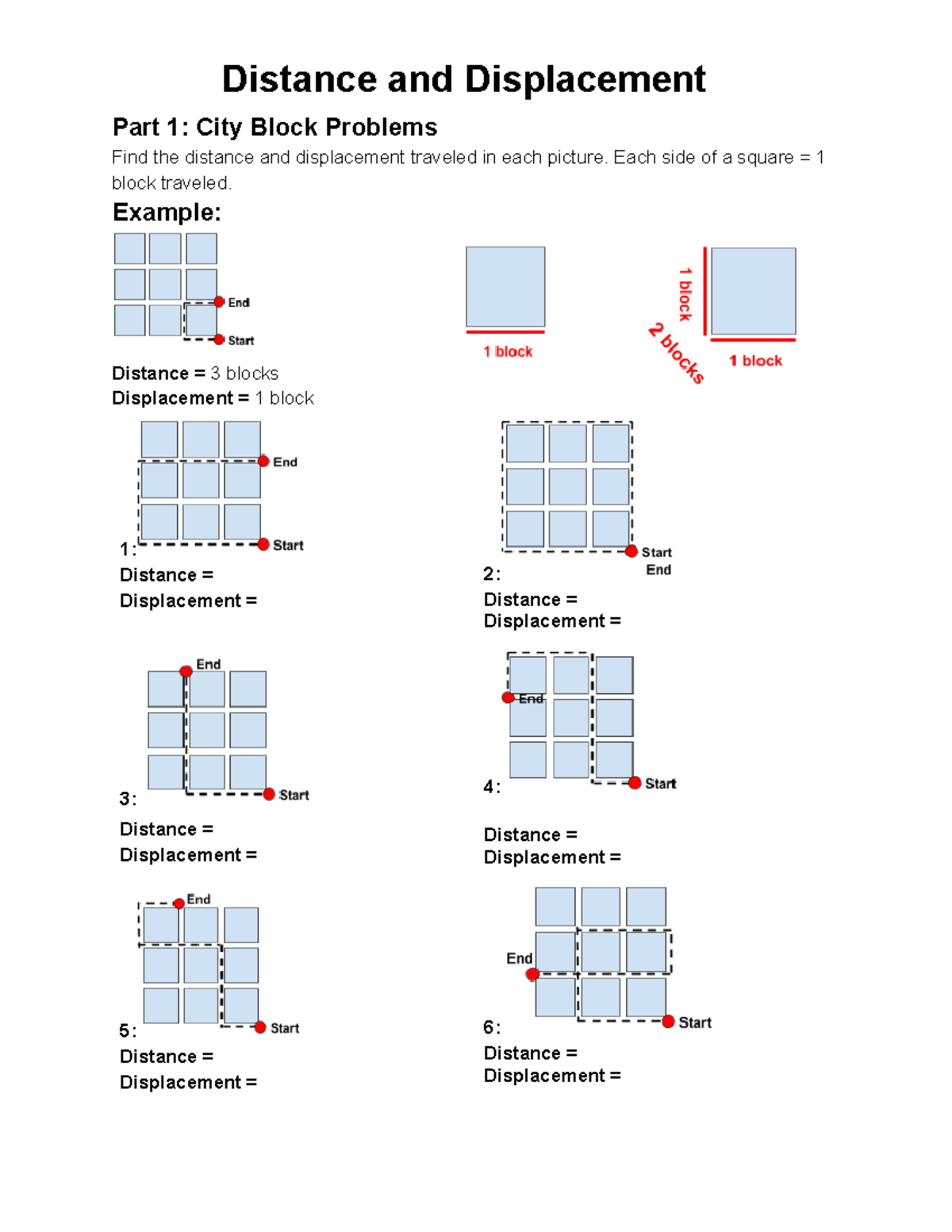
At its core, City Block Distance measures the distance between two points by summing the absolute differences of their coordinates. Unlike the “as the crow flies” approach, which allows for diagonal movement, the City Block metric assumes movement is restricted to a grid-like path—much like a taxi navigating the perpendicular streets of Manhattan. In a digital landscape dominated by pixels, voxels, and discrete data points, this metric is not just a mathematical curiosity; it is a critical tool for optimization, pathfinding, and machine learning.

The Mathematical Foundation: $L1$ Norm vs. $L2$ Norm
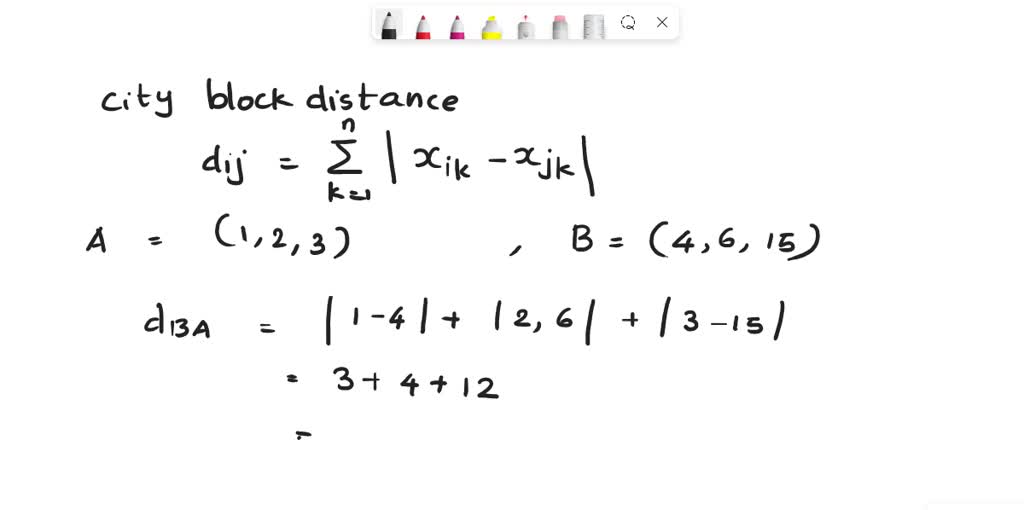
To understand why City Block Distance is so prevalent in technology, one must first understand its mathematical definition. If we have two points, $P1$ at $(x1, y1)$ and $P2$ at $(x2, y2)$, the City Block Distance is calculated as:
$$d = |x1 – x2| + |y1 – y2|$$
In higher-dimensional spaces, such as those used in data science, the formula extends to the sum of the absolute differences across all dimensions. This simplicity is its greatest strength.
Computational Efficiency
One of the primary reasons developers favor City Block Distance over Euclidean distance ($L2$ norm) is computational overhead. The Euclidean distance formula requires squaring the differences and then taking the square root of the sum: $sqrt{(x1-x2)^2 + (y1-y2)^2}$. In high-performance computing, square root operations and exponentiation are significantly more “expensive” in terms of CPU cycles than simple addition and absolute value calculations. When an algorithm needs to calculate distances between millions of vectors—common in real-time recommendation engines or image processing—the cumulative time saved by using the $L1$ norm is substantial.
The Grid Constraint
The metric is intuitively tied to grid-based environments. In software development, many environments are naturally discrete rather than continuous. For example, a computer screen is a grid of pixels. Moving a cursor or an object from one pixel to another often involves traversing the grid lines. In these scenarios, calculating distance based on “steps” rather than a straight diagonal line provides a more accurate representation of the cost or effort required for the operation.
Applications in Machine Learning and Data Science
In the field of Artificial Intelligence, specifically in supervised and unsupervised learning, the choice of distance metric can drastically alter the performance of a model. City Block Distance plays a specialized role in how algorithms perceive similarity between data points.
K-Nearest Neighbors (KNN) and Clustering
In K-Nearest Neighbors (KNN) algorithms, the goal is to classify a data point based on the points closest to it. While Euclidean distance is the default, City Block Distance is often preferred when the dataset contains high-dimensional data or features with different scales. Research in data science suggests that as the number of dimensions increases (the “curse of dimensionality”), the contrast between the farthest and nearest points diminishes when using Euclidean distance. The $L_1$ norm tends to maintain better contrast, making it more effective for identifying clusters in complex datasets.
Robustness to Outliers
Another significant advantage of the Manhattan metric in data analysis is its robustness to outliers. Because Euclidean distance squares the differences, a single extreme outlier can disproportionately inflate the distance value, potentially skewing the results of a model. City Block Distance, by contrast, only considers the absolute difference. This linear progression means that an outlier has a less dramatic impact on the final calculation, leading to models that are often more stable in the face of “noisy” data.
Feature Selection and Lasso Regression
In the context of regression analysis, the $L_1$ norm is the engine behind Lasso (Least Absolute Shrinkage and Selection Operator) regression. By penalizing the absolute size of the coefficients, it encourages many coefficients to drop to zero. This effectively performs feature selection, allowing engineers to identify which variables are truly influential in a predictive model. This is a direct application of the City Block logic: finding the most efficient “path” to a solution by eliminating unnecessary dimensional “turns.”
City Block Distance in Pathfinding and Robotics
If you have ever played a grid-based strategy game or used a GPS that calculates routes through a city, you have interacted with algorithms that utilize City Block Distance. It is the backbone of efficient navigation logic.
The A* Search Algorithm
The A* algorithm is one of the most popular methods for pathfinding in software engineering and game development. To find the shortest path from a start point to a goal, A* uses a heuristic function to estimate the remaining distance. In a grid where movement is restricted to four directions (up, down, left, right), the Manhattan distance is the “admissible heuristic.”
Because it never underestimates the actual cost to reach the goal (since you can’t move through walls or move diagonally), it ensures that the algorithm finds the optimal path without wasting time exploring unnecessary nodes. This makes it indispensable for NPC (non-player character) AI in gaming and for the logic used by warehouse robots navigating floor grids.
Logistics and Circuit Design
Beyond software, City Block Distance is vital in hardware engineering, specifically in Very Large Scale Integration (VLSI) circuit design. On a microchip, wires are typically laid out in horizontal and vertical layers. When calculating the length of a wire needed to connect two components on a chip, the straight-line distance is irrelevant because the wire cannot cut diagonally across the semiconductor architecture. Engineers use the Manhattan metric to optimize the layout, minimize signal delay, and reduce the physical footprint of the circuitry.
Image Processing and Computer Vision
Computer vision is another tech niche where City Block Distance is heavily utilized. Digital images are essentially matrices of numerical values representing pixel intensities. When comparing two images or searching for a pattern within an image, the software must calculate the “distance” between sets of pixels.
Template Matching and Recognition
In template matching, a small “template” image is slid across a larger image to find a match. The Sum of Absolute Differences (SAD) is a common metric used here, which is essentially the City Block Distance applied to pixel values. By summing the absolute differences between the template pixels and the corresponding pixels in the search area, the software can identify the location with the lowest distance, indicating a potential match. This method is preferred in real-time video processing because of its speed compared to more complex correlation techniques.
Compression and Signal Processing
The metric also finds its way into video compression standards like MPEG and H.264. During motion estimation—the process of determining how objects move between frames—the encoder uses City Block calculations to find the best motion vectors. Minimizing the $L_1$ norm allows the encoder to compress data more efficiently without the heavy computational burden of calculating Euclidean norms for every frame transition.
Choosing the Right Metric: When to Use City Block Distance
For developers and tech architects, the choice between City Block and Euclidean distance is not always binary. It depends on the specific requirements of the project, the nature of the data, and the hardware constraints.
Use City Block Distance When:
- Working with Discrete Grids: If the environment or data structure is restricted to orthogonal movement (like pixels, city streets, or grid-based maps).
- High Dimensionality is a Factor: When dealing with datasets that have many features, the $L1$ norm often provides more meaningful distance measures than the $L2$ norm.
- Computing Power is Limited: In embedded systems, mobile apps, or real-time systems where every millisecond counts, the simplicity of addition and subtraction is a major advantage.
- Data Contains Outliers: When you need a metric that is less sensitive to extreme values that could skew results.
Use Euclidean Distance When:
- Movement is Unrestricted: In a 3D physics engine or an open-world game where an object can move in any direction, the straight-line distance is more natural.
- Circular Symmetry is Required: Euclidean distance is rotationally invariant, meaning the distance doesn’t change if you rotate the coordinate system. City Block Distance changes depending on the orientation of the grid.
In conclusion, City Block Distance is a cornerstone of digital logic. From the way an AI learns to distinguish between data points to the way a robot navigates a fulfillment center, this metric provides a computationally elegant and robust solution for measuring proximity. By understanding the “Manhattan” approach to geometry, tech professionals can build faster algorithms, more accurate models, and more efficient digital systems.
aViewFromTheCave is a participant in the Amazon Services LLC Associates Program, an affiliate advertising program designed to provide a means for sites to earn advertising fees by advertising and linking to Amazon.com. Amazon, the Amazon logo, AmazonSupply, and the AmazonSupply logo are trademarks of Amazon.com, Inc. or its affiliates. As an Amazon Associate we earn affiliate commissions from qualifying purchases.