
In the modern hyper-connected era, the ability to curate one’s digital environment is not just a convenience—it is a fundamental component of digital security and mental well-being. At the center of this curation is the “block” function. While it appears to be a simple toggle switch for the user, the underlying technical processes that occur when a number is blocked are a complex dance between hardware protocols, software algorithms, and carrier-level communication. Understanding what happens when a number is blocked requires a deep dive into the architecture of mobile operating systems and the global telecommunications infrastructure.

The Mechanics of Mobile Filtering: OS vs. Carrier Blocking
The first layer of understanding involves distinguishing between where the block actually occurs. When you tap “Block this Caller” on a smartphone, the action typically happens at the Operating System (OS) level. This is fundamentally different from a carrier-level block, which happens at the network infrastructure level.
The OS-Level Filter (iOS and Android)
On modern smartphones, blocking is primarily a software-side operation. When a number is blocked on an iPhone or a Samsung Galaxy, the device essentially maintains a “blacklist” database. When an incoming signal (a call or a packet of data representing a text) reaches the device, the OS cross-references the incoming metadata with its blacklist.
If a match is found, the OS intercepts the notification before it can alert the user. On the recipient’s side, the phone doesn’t ring, and no vibration is triggered. The software essentially acts as a silent gatekeeper, discarding the “handshake” request from the incoming caller. This is why, if you factory reset your phone without a cloud backup of your settings, your blocked list often disappears; the “wall” was stored locally in the software, not on the cellular line itself.
Carrier-Level Blocking and Signal Routing
Carrier-level blocking is a more robust, server-side solution. When you block a number through your service provider (like Verizon, AT&T, or Vodafone), the block occurs at the Mobile Switching Center (MSC). In this scenario, the call or text never even reaches your device. The network identifies the originating number and terminates the connection at the exchange. This is often used for persistent telemarketers or in legal situations where a total cessation of contact is required. Because the network handles the rejection, the “blocked” experience for the caller may differ, often resulting in a specific recording stating that the party is not accepting calls.
Text Messaging and the Ghosting Protocol
Communication via text is perhaps the most nuanced aspect of blocking. Because of the various protocols—SMS, MMS, RCS, and proprietary systems like iMessage—the behavior of a “blocked” message varies significantly depending on the ecosystem.
iMessage and the “Delivered” Status
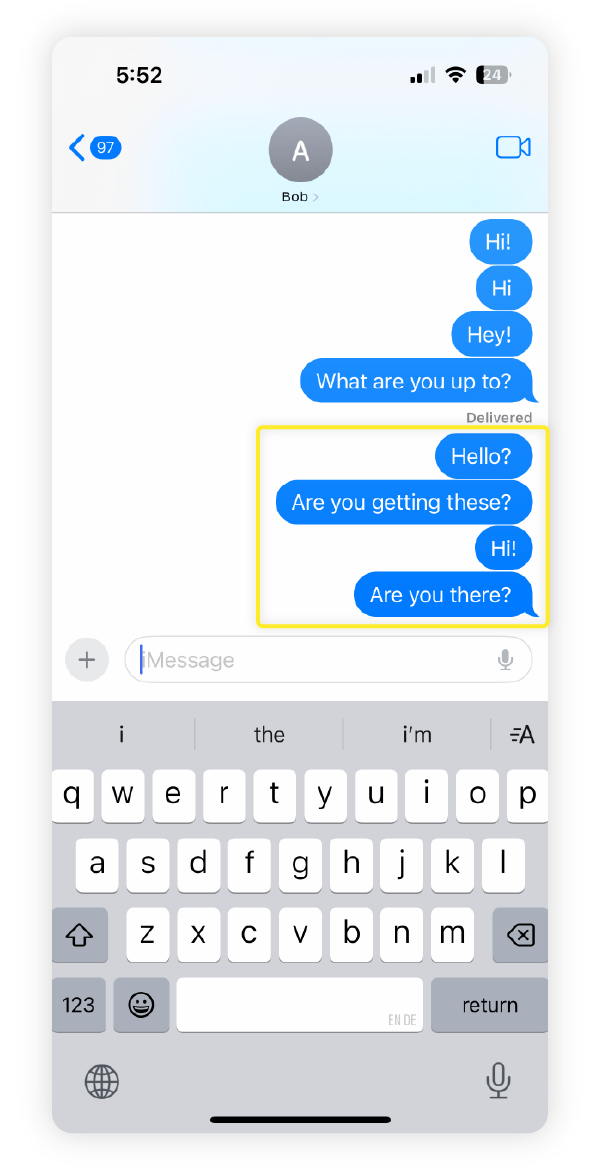
Apple’s iMessage system is a data-based service. When you block someone on iMessage, the sender’s device will still attempt to push the message to Apple’s servers. However, Apple’s server-side logic recognizes the block on the recipient’s Apple ID or phone number.
To the sender, the message may appear as “Sent,” but the crucial “Delivered” status will never appear under the blue bubble. This is a deliberate design choice for privacy; by not providing an error message, the system prevents the sender from immediately knowing they have been blocked. The message essentially enters a digital void—it is processed by the server but never pushed to the recipient’s local database.
SMS and RCS: The Silent Failure
For standard SMS (Short Message Service) or the newer RCS (Rich Communication Services) on Android, the process is slightly different. Since SMS relies on older telephony protocols, the sender’s carrier sends the message to the recipient’s carrier. If the recipient has blocked the number on their handset, the phone receives the data packet but immediately deletes it without notifying the user or the sender.
There is no “Delivery Receipt” in standard SMS, so the sender simply sees their message as “Sent.” In the case of RCS, which supports read receipts and typing indicators, the behavior mimics iMessage: the indicators simply vanish, leaving the sender with no feedback on whether the communication was successful.
The Voice Call Experience: Behind the Scenes of the Routing Table
What a blocked caller hears when they attempt to reach you is one of the most common points of curiosity. The experience is dictated by how the mobile OS handles the “Initial Address Message” from the cellular network.
The Single Ring and Diverted Routing
In many iOS and Android configurations, a blocked call will ring exactly once before being diverted. This occurs because the phone’s hardware must first receive the call signal to identify the Caller ID. Once the software identifies the number as being on the block list, it triggers a “busy” or “divert” command.
From the caller’s perspective, the transition from a standard ring to a voicemail prompt is abrupt. This “single ring” is a telltale sign of a software-level block. However, some newer OS versions have optimized this to happen so fast that the caller hears no ring at all, going straight to a “mailbox full” or a generic recording.
The Voicemail Purgatory
Perhaps the most interesting technical detail is that blocking a number does not usually prevent the caller from leaving a voicemail. On both iOS and Android, blocked calls are often routed to a hidden folder within the voicemail system.
The “Blocked Messages” folder exists at the bottom of the voicemail list. The recipient is never notified of these messages, but the data is stored on the carrier’s server and downloaded to the device. This allows the user to maintain a record of communication—useful for security or legal purposes—without being actively disturbed by the contact. The caller, meanwhile, is led to believe they have left a standard message, unaware that it has been sequestered into a folder that the recipient may never open.
Beyond the Phone App: Social Media and VoIP Integration
In the modern tech stack, blocking a phone number is often only one part of the equation. Most users also interact via Voice over IP (VoIP) services like WhatsApp, Signal, or Telegram. Blocking a number in the phone’s native app does not automatically block them on these third-party platforms.
Cross-Platform Discrepancies
Applications like WhatsApp use their own internal servers and encryption protocols. When you block a contact on WhatsApp:
- Status Updates and Profile Pictures: The blocked user can no longer see your “Last Seen” status or profile picture updates. The app stops sending this metadata to the blocked user’s client.
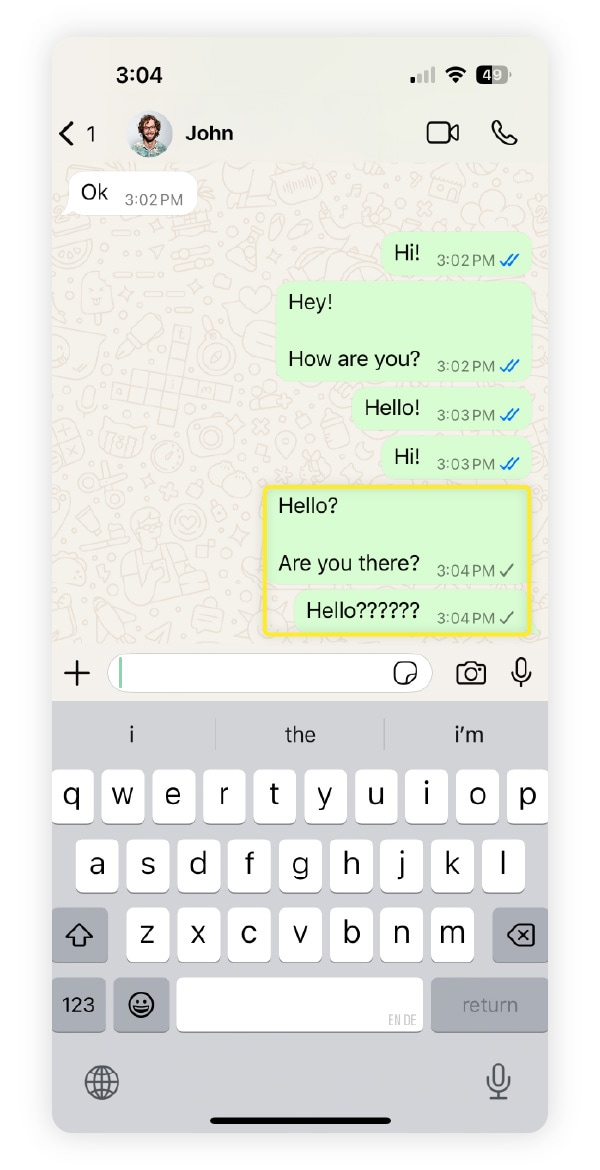
- Message Ticks: WhatsApp uses a “one tick” (sent) and “two ticks” (delivered) system. A blocked message will stay at one tick forever.
- Calls: Calls will appear to ring on the caller’s end, but the recipient’s app will never receive the signal.
This fragmentation means that “blocking” is not a single action but a series of adjustments across various digital silos. For true digital isolation, a user must replicate the block across every API and service that utilizes their phone number as a primary key for identification.
Security Implications and Data Privacy
The block function is a critical tool for digital security, acting as a front-line defense against social engineering, phishing, and harassment. When you block a number, you are effectively reducing your “attack surface” in the digital world.
Preventing “Ping” Calls and Scams
Many modern scams rely on “Ping” calls—short rings intended to entice the recipient to call back a high-toll international number. By utilizing automated blocking databases (often built into the OS, such as Google’s “Verified Calls” and spam protection), the software can block thousands of known malicious numbers before they ever reach the user. This is done through real-time analysis of call patterns and crowdsourced data.
The Right to Be Forgotten
In the context of data privacy and the “Right to be Forgotten,” blocking serves as a user-controlled mechanism for data exclusion. While the blocked caller’s information remains in your contact list (unless deleted), the flow of incoming data from that source is halted. This creates a technical barrier that protects the integrity of the user’s local data environment.
As we move toward a more integrated AI-driven future, the “block” function is likely to become even more sophisticated. We are already seeing “Smart Blocking,” where AI assistants screen calls and provide transcripts in real-time, allowing users to block numbers based on the content of the conversation rather than just the digits on the screen. Ultimately, what happens when a number is blocked is a testament to the power of user agency in an era of constant connectivity—a silent, technical boundary that preserves the sanctity of the digital personal space.
aViewFromTheCave is a participant in the Amazon Services LLC Associates Program, an affiliate advertising program designed to provide a means for sites to earn advertising fees by advertising and linking to Amazon.com. Amazon, the Amazon logo, AmazonSupply, and the AmazonSupply logo are trademarks of Amazon.com, Inc. or its affiliates. As an Amazon Associate we earn affiliate commissions from qualifying purchases.