
The name McMahon has been synonymous with professional wrestling and sports entertainment for over half a century. However, as the landscape of the WWE (World Wrestling Entertainment) transitioned from a family-owned regional promotion to a global multi-billion dollar media conglomerate, the trajectory of the family members themselves became a fascination for brand strategists and corporate analysts. Specifically, the journey of Shane McMahon, the only son of Vince McMahon, serves as a compelling case study in personal branding, corporate identity, and the complexities of succession within a high-profile family dynasty.

To understand what happened to Shane McMahon, one must look past the choreographed stunts and high-flying maneuvers. His story is a nuanced narrative of a professional trying to carve out an identity separate from a legendary, and often overbearing, parental brand, while navigating the shifting tides of a corporate world that eventually outgrew the “family business” model.
The Architecture of a Family Dynasty: Shane McMahon’s Early Brand Identity
Shane McMahon’s entry into the professional world was inextricably linked to the WWE brand. Unlike many heirs who step directly into executive suites, Shane’s early career was a masterclass in ground-up brand immersion. He started in the mailroom, worked as a referee, and eventually moved into the production and television side of the business. This “all-access” apprenticeship was crucial in building his internal brand as a hardworking successor rather than a privileged beneficiary.
Stepping Out of the Shadow
For much of the 1990s and early 2000s, Shane’s personal brand was defined by his role as the “Prodigal Son.” He was the bridge between the traditional wrestling world and the burgeoning digital media era. Shane was instrumental in the launch of WWE.com, recognizing early on that the brand’s future lived in the digital space. By spearheading the company’s digital transformation, he established himself as the forward-thinking strategist, a counterpoint to his father’s more traditional, television-centric approach.
The “Prodigal Son” Narrative
In the ring, Shane’s brand was built on a “nothing to lose” mentality. Despite being the son of the chairman, he performed stunts that even seasoned professionals shied away from. This high-risk behavior was a calculated branding move; it earned him the respect of both the locker room and the global audience. It signaled that he was willing to bleed for the family brand, a narrative that solidified his status as the heir apparent in the eyes of the public.
The Great Departure: Diversifying the McMahon Portfolio
In 2009, a seismic shift occurred in the McMahon family dynamic. Shane McMahon resigned from his executive positions within WWE. To the outside observer, this was a shocking abandonment of a legacy. From a brand strategy perspective, however, it was a necessary pivot. Shane recognized that within the walls of WWE, his personal brand would always be secondary to his father’s. To be seen as a legitimate businessman on a global stage, he needed to succeed outside the wrestling “bubble.”
China Broadband Inc. and International Business Ventures
Upon leaving WWE, Shane moved to East Asia, a market where he saw immense growth potential. He became the CEO of China Broadband Inc., a provider of cable broadband services. This move was a radical departure from sports entertainment. It rebranded Shane as an international executive capable of navigating complex regulatory environments and emerging markets. By distancing himself from the family business, he sought to prove that his value was not merely a byproduct of his surname.
Establishing Authority Outside the Ring
Shane’s tenure in the corporate world outside of wrestling included serving on the board of Directors for various companies and his involvement with You On Demand (now known as WEVO), the first video-on-demand service in China. This era of his life was focused on building a portfolio of “Business Authority.” He was no longer just the “daredevil son”; he was a media executive with a global perspective. This period of his life is often overlooked by fans, but it remains the most critical phase for his professional branding, as it provided him with the leverage to return to the sports world on his own terms.
The Return and the Erosion of Corporate Hierarchy
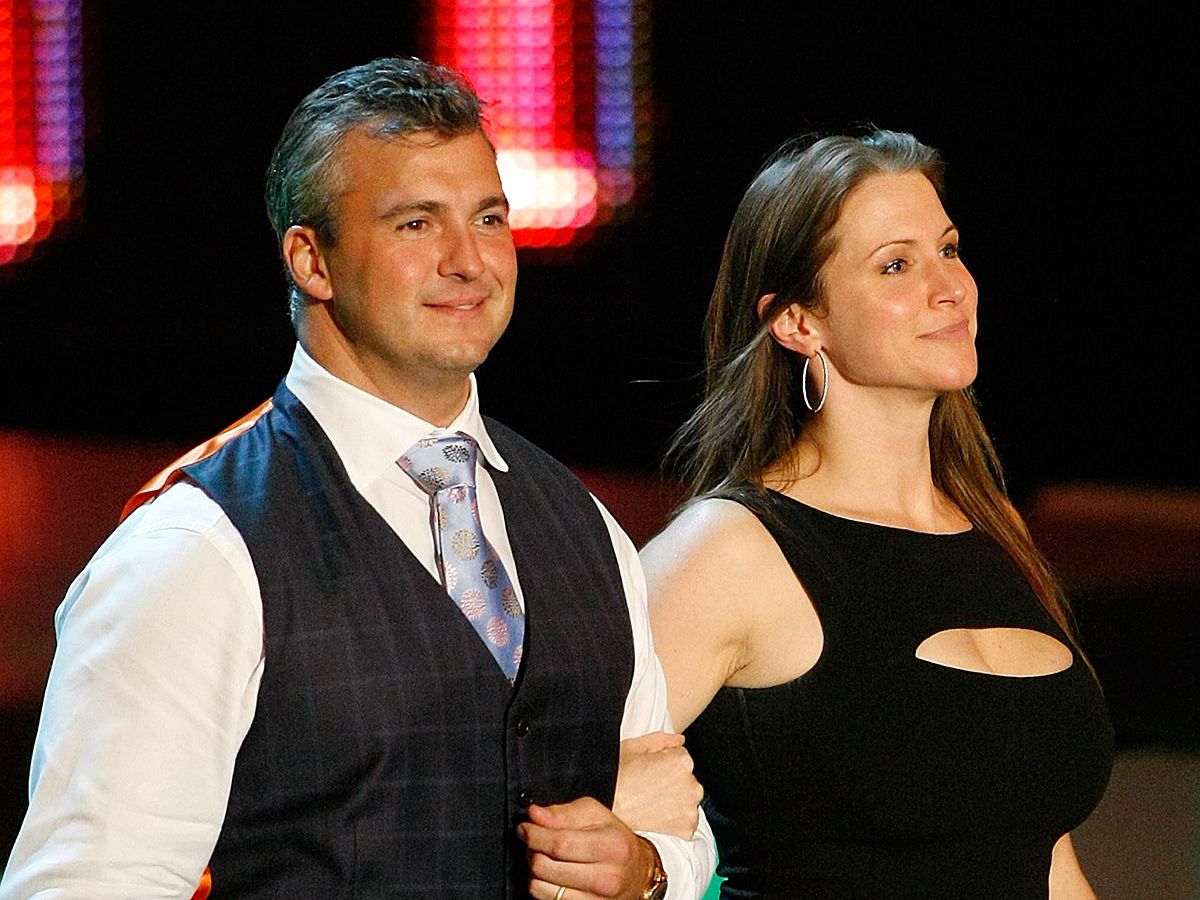
Shane McMahon’s return to WWE in 2016 was one of the most successful “re-branding” moments in modern sports history. He returned not as an executive initially, but as a personality who represented a “change in direction” for the brand. The narrative was that the fans wanted a new era, and Shane was the face of that modernization.
Strategic Re-entry into WWE
His return capitalized on nostalgia while promising innovation. However, the corporate landscape of WWE had changed significantly during his seven-year absence. The company was now a publicly-traded entity with a more rigid corporate structure, a board of directors, and a clear move toward professionalizing its management beyond family ties. Shane’s re-entry highlighted the tension between the old-school “family rule” and the new-school “corporate governance.”
The Collision of Legacy and Modern Corporate Structure
As Shane moved back into an on-screen role and various backstage capacities, the brand identity of the company began to struggle with the concept of “The McMahons” as a whole. The “What happened to Shane?” question became more prevalent as his role became increasingly marginalized in favor of his sister, Stephanie McMahon, and her husband, Paul “Triple H” Levesque. While Shane brought the “renegade” brand, the company was moving toward a more polished, corporate-friendly identity that prioritized stability over unpredictability.
The Current Landscape: A Brand Without a McMahon
The most significant development in the story of Vince McMahon’s son occurred in the early 2020s. Following a series of creative and backstage disagreements during the 2022 Royal Rumble event, Shane McMahon was reportedly “let go” from his role within the company. This was a watershed moment: for the first time in history, the heir to the throne was effectively exiled from the kingdom.
TKO Group Holdings and the New Corporate Identity
The subsequent sale of WWE to Endeavor and the formation of TKO Group Holdings marked the official end of the McMahon family’s total control over the brand. In this new corporate era, the brand identity is built on synergy with the UFC and global media rights, rather than the lineage of a single family. Shane McMahon’s absence from this new structure is the answer to “what happened.” He exists now as an independent entity, a free agent in both a literal and a branding sense.
Shane McMahon’s Future: Independent Venture or Strategic Asset?
Today, Shane McMahon’s personal brand is at a crossroads. He is no longer an active executive in WWE, nor is he a regular on-screen character. Recent reports have linked him to potential discussions with rival promotions like AEW (All Elite Wrestling). From a brand strategy standpoint, this is a fascinating possibility. If Shane were to join a competitor, it would be the ultimate subversion of the McMahon legacy. It would transition his brand from “The Loyal Son” to “The Ultimate Disrupter.”
Lessons in Personal Branding and Succession Planning
The trajectory of Shane McMahon provides several vital lessons for executives, brand managers, and family business owners. His story illustrates that a name can get you in the door, but a distinct brand identity is what keeps you in the room.
The Risks of Over-reliance on Family Heritage
Shane’s career shows that when a personal brand is too closely tied to a corporate brand, the individual is vulnerable to shifts in that corporation’s leadership or ownership. Because Shane’s identity was so intertwined with the “McMahon/WWE” mythos, his professional standing was compromised when the company transitioned to the TKO era. For any professional in a family business, the lesson is clear: cultivate a “portable brand” that holds value independent of the family name.

Pivot Strategies for High-Profile Executives
Shane’s move to China and his subsequent return demonstrate the power of the “Pivot.” He successfully rebranded himself multiple times—from referee to executive, from international CEO to returning hero. The “what happened” in his case is not a story of failure, but a story of the difficulties of navigating a legacy that is both a launchpad and a cage.
As of now, Shane McMahon remains a significant figure in the business of sports and entertainment, but he operates in the “grey space” outside the corporate walls his father built. Whether he returns to the fold under the new TKO management or strikes out to redefine a competitor’s brand, his journey remains a definitive study in how individuals within a dynasty must eventually choose between the comfort of the legacy or the risk of their own independent name. The McMahon brand has changed forever, and Shane’s current “independent” status is perhaps the clearest indicator that the era of the family-run wrestling empire has officially come to a close.
aViewFromTheCave is a participant in the Amazon Services LLC Associates Program, an affiliate advertising program designed to provide a means for sites to earn advertising fees by advertising and linking to Amazon.com. Amazon, the Amazon logo, AmazonSupply, and the AmazonSupply logo are trademarks of Amazon.com, Inc. or its affiliates. As an Amazon Associate we earn affiliate commissions from qualifying purchases.