
For over a century, the visual representation of dinosaurs was relegated to the realm of artistic speculation. In the absence of soft tissue, paleontologists and “paleo-artists” relied on modern analogues like crocodiles and elephants, draping prehistoric skeletons in muted earth tones, muddy greens, and leathery browns. This “shrink-wrapped” and drab aesthetic dominated the public consciousness, from museum murals to the early iterations of cinematic blockbusters. However, the last two decades have witnessed a technological revolution that has permanently altered our perception of the Mesozoic era.
Today, the question “what color were dinosaurs” is no longer a matter of creative guesswork. Through the application of high-resolution scanning electron microscopy, synchrotron X-ray fluorescence, and sophisticated machine learning algorithms, scientists are now able to extract chemical and structural data from fossils that have been buried for 100 million years. We are moving beyond the grayscale of the fossil record into a high-definition, full-spectrum understanding of prehistoric life.
The Microscopic Revolution: Scanning Electron Microscopy and Melanosomes
The breakthrough in dinosaur coloration began not with the discovery of new fossils, but with the application of advanced imaging technology to existing ones. The primary tool in this endeavor is the Scanning Electron Microscope (SEM), a piece of technology that uses a focused beam of electrons to create high-resolution images of a specimen’s surface.
Melanosomes: The Biological Hard Drive
In 2008, researchers began identifying microscopic structures within fossilized feathers and skin that had previously been dismissed as bacteria. Utilizing SEM technology, scientists identified these structures as melanosomes—organelles found in animal cells that contain melanin, the pigment responsible for color in hair, skin, and feathers.
The power of SEM technology lies in its ability to reveal the morphology of these melanosomes. In modern birds, the shape of a melanosome is a reliable indicator of its color. Eumelanosomes, which are rod-shaped or “sausage-like,” produce blacks and grays. Pheomelanosomes, which are spherical or “meatball-like,” produce reddish-browns and oranges. By scanning the surfaces of exceptionally preserved fossils, such as those from the Jehol Biota in China, tech-driven paleontology has been able to map the exact color patterns of creatures like the Sinosauropteryx, revealing it had a ginger-colored tail with white rings.
Digital Mapping of Microstructures
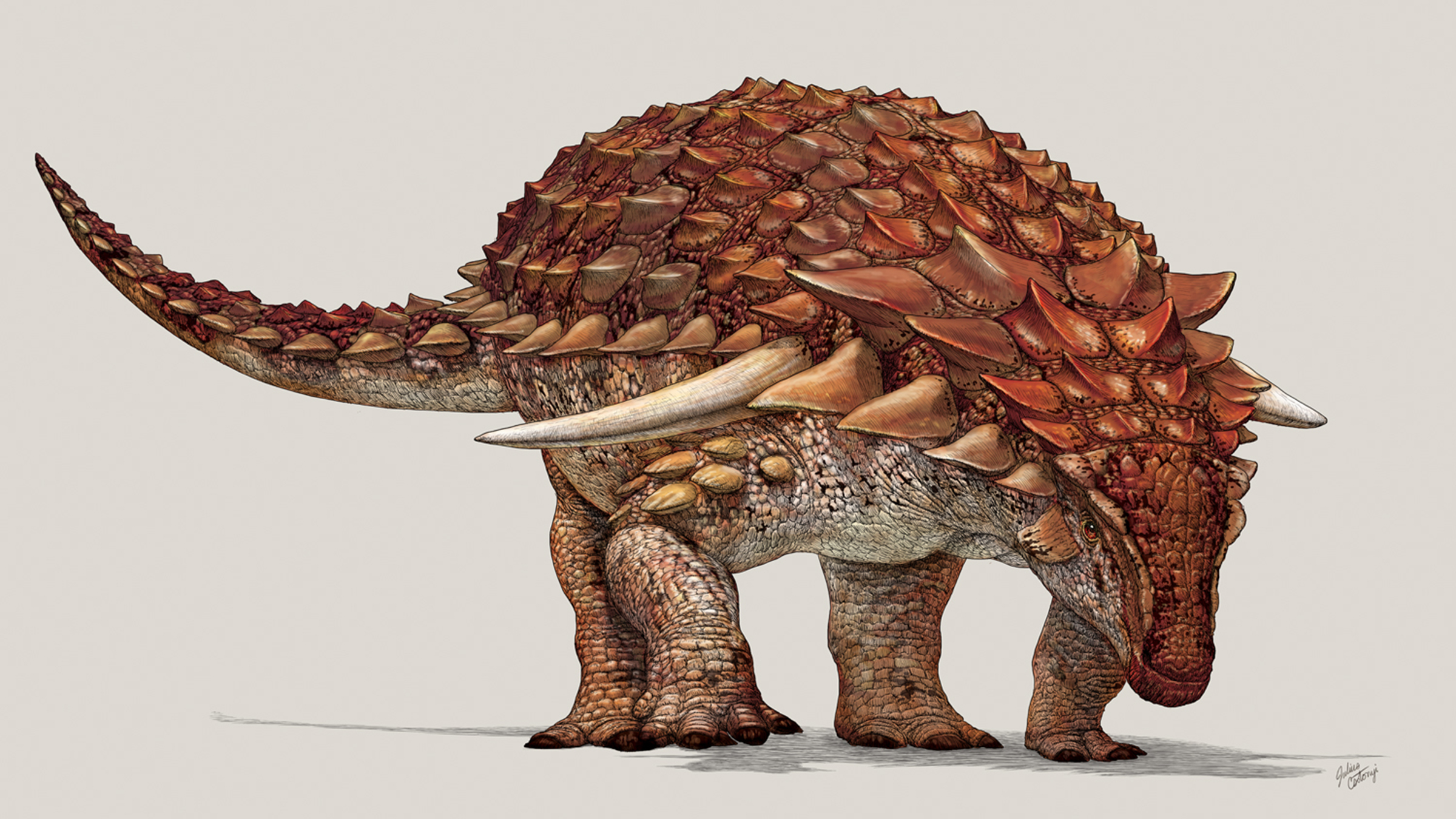
The transition from identifying a single melanosome to mapping an entire organism requires immense data processing. Technicians take hundreds of samples across different parts of a fossilized specimen. Each sample is imaged via SEM, and the resulting data is digitized to create a topographical map of pigment distribution. This process allows researchers to identify complex patterns, such as countershading—a form of camouflage where an animal is darker on its top side and lighter on its underside. This high-tech forensic approach was used to determine that the armored dinosaur Borealopelta utilized sophisticated camouflage to hide from apex predators.
Computational Paleontology: AI and Machine Learning in Pigment Mapping
As the volume of microscopic data grows, the role of software has become as critical as the hardware. Computational paleontology is an emerging field that utilizes artificial intelligence (AI) and machine learning to interpret the vast datasets generated by SEM and chemical analysis.
Training Models on Extant Phylogenetic Bracketing
To accurately predict dinosaur colors, AI models must be trained on modern biological data. This involves a process called Extant Phylogenetic Bracketing. Software engineers and biologists collaborate to build databases containing the melanosome signatures of thousands of modern species, primarily birds and reptiles.
Machine learning algorithms are then used to find correlations between melanosome density, shape, and the resulting visual hue. When a fossil’s melanosome data is fed into these models, the AI can predict the likely color with a high degree of statistical confidence. This removes human bias from the reconstruction process, ensuring that the vibrant blues, iridescent blacks, and stark whites we now attribute to dinosaurs like Microraptor are backed by data-driven evidence.
Predictive Analytics for Prehistoric Patterns
Beyond simple color, AI is being used to reconstruct patterns and textures. By analyzing the structural integrity of fossilized integument (skin and feathers), algorithms can predict how light would have interacted with the surface. For example, the discovery of iridescence in Microraptor was facilitated by analyzing how melanosomes were stacked in layers. AI modeling demonstrated that these layers would have created a “thin-film interference” effect, similar to the shimmer seen on a modern raven or a coat of metallic paint. This level of detail is only possible through the intersection of biology and high-performance computing.
Synchrotron X-ray Fluorescence: Chemical Fingerprinting
While SEM is excellent for analyzing physical structures, it is limited when the melanosomes themselves have been degraded or destroyed over millions of years. This is where Synchrotron X-ray Fluorescence (SRS-XRF) enters the fold. A synchrotron is a massive particle accelerator that cycles electrons at near-light speeds to produce incredibly intense X-ray light.
Mapping Trace Elements
When these high-energy X-rays hit a fossil, they cause the atoms within the specimen to emit their own characteristic X-rays. This allows scientists to create a “chemical map” of the fossil. Melanin is known to bind with specific trace metals, such as copper, zinc, and calcium. By using SRS-XRF to map the distribution of these metals across a fossilized skeleton or skin impression, researchers can identify where pigment was once present, even if no physical melanosomes remain.
This technology has been instrumental in studying fossils that were previously thought to be “blank” in terms of color data. It allows for a non-destructive analysis of rare specimens, providing a chemical blueprint of an animal’s appearance. In the case of the early bird Archaeopteryx, synchrotron mapping revealed the presence of pigment in the feathers that SEM alone might have missed, confirming that at least some of its plumage was matte black.
Overcoming Taphonomic Noise
One of the greatest challenges in digital paleontology is “taphonomic noise”—the chemical changes that occur during the fossilization process. Heat, pressure, and mineral replacement can alter the original chemical signature of a dinosaur. Advanced software is required to filter out these geological signals from the biological ones. By applying geochemical modeling, tech-focused researchers can “subtract” the minerals of the surrounding rock to reveal the organic remnants of the creature hidden beneath.
The Digital Frontier: VR and 3D Visualization of Ancient Ecosystems
Once the data has been collected via SEM and chemical mapping, and processed via AI, the final stage of the technological pipeline is visualization. The shift from 2D illustrations to 3D, tech-integrated models has transformed both scientific research and public education.
Real-Time Rendering of Dynamic Camouflage
Modern graphics engines, such as Unreal Engine 5, are being repurposed by paleontologists to test how dinosaur coloration would have functioned in its natural habitat. By placing a 3D-rendered, accurately colored model of a dinosaur into a simulated prehistoric environment, researchers can test the effectiveness of its camouflage.
For instance, if data suggests a dinosaur was reddish-brown with a pale belly, tech-driven simulations can calculate how light filters through a Cretaceous canopy and hits that specific color profile. If the model becomes nearly invisible to a simulated predator’s eye, it validates the color theory. This synthesis of paleontology and game-design tech provides a functional understanding of why certain dinosaurs evolved specific colors.
The Democratization of Discovery through AR and VR
Technology is also changing how this data is consumed. Museums are increasingly moving away from static displays in favor of Augmented Reality (AR) and Virtual Reality (VR) experiences. By pointing a smartphone at a gray fossil, visitors can see a digital overlay of the animal as it truly appeared—vibrant, feathered, and pulsing with life based on the latest melanosome data. This creates a feedback loop where the tech used in the lab directly informs the consumer tech used in education, fostering a more accurate public understanding of evolutionary biology.

Future Tech: Proteomics and the Quest for Molecular Color
The next frontier in the search for dinosaur color lies in the field of paleoproteomics. While melanin is a hardy molecule, proteins can provide even more granular detail about an animal’s physiology and appearance. Using High-Performance Liquid Chromatography (HPLC) and Mass Spectrometry, scientists are beginning to sequence ancient proteins trapped within fossilized bones and tissues.
This molecular-level technology could potentially identify pigments beyond melanin, such as carotenoids (responsible for bright yellows and reds) or porphyrins (responsible for greens and pinks). Currently, our color palette for dinosaurs is largely limited to the melanin spectrum (blacks, browns, reds), but as mass spectrometry technology becomes more sensitive, we may soon unlock the full “technicolor” reality of the Mesozoic.
The journey to discover what color dinosaurs were is a testament to the power of cross-disciplinary technology. It is a field where the particle accelerator meets the pickaxe, and where AI algorithms breathe life into stones. We are no longer guessing at the past; we are digitally reconstructing it, pixel by pixel and atom by atom. The drab, gray world of the dinosaurs has been permanently replaced by a high-definition reality, proven by the very tools that define our modern technological age.
aViewFromTheCave is a participant in the Amazon Services LLC Associates Program, an affiliate advertising program designed to provide a means for sites to earn advertising fees by advertising and linking to Amazon.com. Amazon, the Amazon logo, AmazonSupply, and the AmazonSupply logo are trademarks of Amazon.com, Inc. or its affiliates. As an Amazon Associate we earn affiliate commissions from qualifying purchases.