
In the early days of the social internet, the “What Celebrity Do I Look Like Quiz” was a rudimentary tool, often relying on randomized scripts or basic metadata tagging to yield results. Today, these tools have transformed into sophisticated demonstrations of computer vision and machine learning. What appears to be a simple digital diversion is, in reality, a complex orchestration of neural networks, biometric data mapping, and high-velocity cloud computing. Understanding the technology behind these quizzes provides a window into how modern artificial intelligence perceives human identity and how these algorithms are shaping the future of digital interaction.
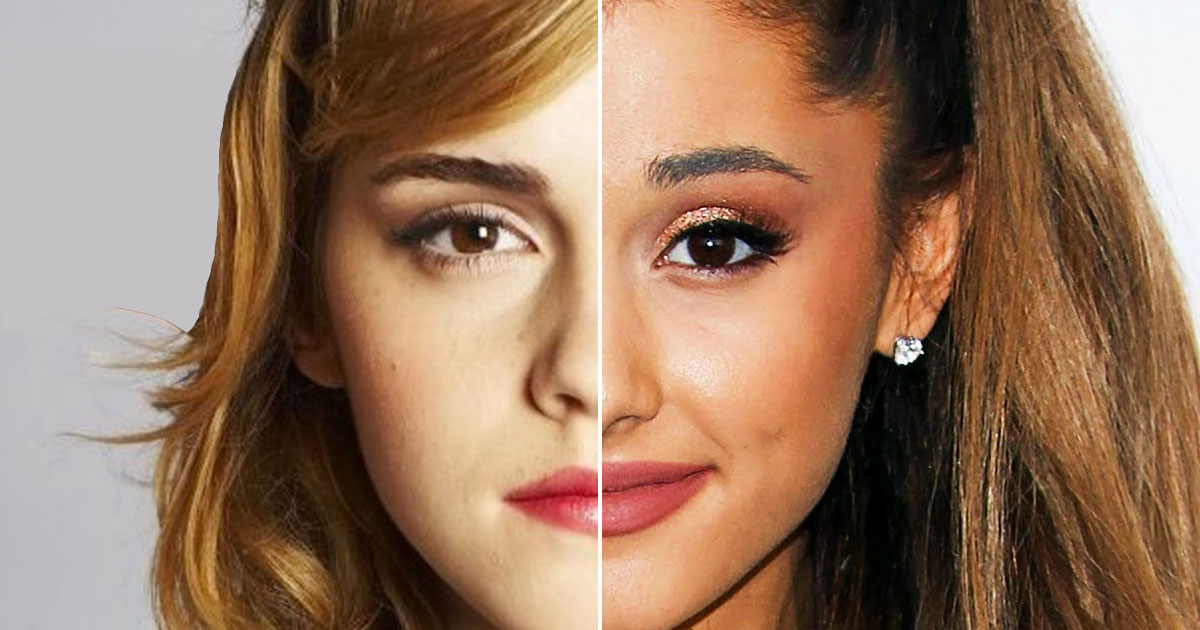
The Architecture of Modern Face-Matching Technology
The transition from “fun clickbait” to high-accuracy facial matching is driven by the advancement of Deep Learning. At the core of every modern celebrity look-alike application is a Convolutional Neural Network (CNN). Unlike traditional software that follows a rigid set of if-then rules, a CNN is designed to mimic the human visual cortex, identifying patterns through layers of abstraction.
Neural Networks and Deep Learning
When a user uploads a photo to a celebrity look-alike quiz, the image is first pre-processed to normalize lighting, orientation, and scale. The CNN then begins its work through multiple layers. The initial layers identify basic edges and shadows. As the data moves deeper into the network, it begins to recognize complex shapes—the curve of a jawline, the distance between the eyes, or the specific contour of a nose.
The “intelligence” of these quizzes comes from their training. To accurately identify which celebrity a user resembles, the AI must have been exposed to millions of reference images. By analyzing massive datasets of high-resolution celebrity photography, the model learns to associate specific facial geometries with certain identities. This process, known as feature extraction, allows the AI to represent a human face as a high-dimensional vector—a string of numbers that mathematically defines a person’s unique appearance.
Training Data: The CelebA Dataset
A significant portion of the technology driving these quizzes relies on open-source datasets such as CelebFaces Attributes (CelebA). This large-scale face attributes dataset contains over 200,000 celebrity images, each annotated with various facial landmarks and attributes. For developers building face-matching tools, these datasets serve as the “textbook” for the AI. By studying these images, the algorithm learns the nuances of human facial diversity, enabling it to distinguish between subtle differences in bone structure and skin tone across different ethnicities and ages.
Biometric Landmark Detection: The Math Behind Your Mirror Image
To find a match, the AI does not simply “look” at the photo in the way a human does. Instead, it performs a series of biometric calculations. This process is known as landmark detection or keypoint localization.
Keypoint Localization
Modern facial recognition APIs (Application Programming Interfaces) typically identify between 68 and 128 specific landmarks on a human face. These points are mapped onto the corners of the eyes, the bridge of the nose, the perimeter of the lips, and the outline of the chin. By connecting these points, the software creates a “face mesh.”
The “What Celebrity Do I Look Like Quiz” then compares the proportions of your face mesh to a database of pre-calculated meshes of famous individuals. The software isn’t looking for a perfect twin; it is looking for the highest statistical correlation between your facial ratios and those of a celebrity. If the ratio of your forehead height to your chin width matches that of a specific actor, the algorithm flags it as a potential hit.
Euclidean Distance and Vector Space
Once the face is mapped, the data is converted into a vector—a point in a multi-dimensional space. The “matching” process is actually a mathematical calculation of Euclidean distance. The closer two points (the user and the celebrity) are in this mathematical space, the more similar they are deemed to be. High-end AI tools use “cosine similarity” to ensure that the match remains accurate even if the lighting or the angle of the user’s photo is suboptimal.
The Tech Stack: APIs and Real-Time Processing

The seamless experience of uploading a photo and receiving an instant result is made possible by a robust tech stack that balances local processing with cloud power.
Cloud vs. Edge Computing
Processing a high-resolution image through a deep-layered neural network requires significant computational resources. Most web-based quizzes utilize cloud computing platforms like AWS (Amazon Web Services), Google Cloud Vision, or Microsoft Azure. When you upload your photo, it is sent to a high-powered server equipped with GPUs (Graphics Processing Units) that can handle thousands of simultaneous matrix multiplications in milliseconds.
However, many mobile apps are shifting toward “edge computing.” Using frameworks like TensorFlow Lite or Core ML, developers can compress these AI models to run directly on a smartphone’s hardware. This reduces latency and improves user privacy, as the image never has to leave the device to be analyzed.
Mobile Frameworks: ARKit and ML Kit
On mobile devices, the “What Celebrity Do I Look Like” experience is often integrated with Augmented Reality (AR). Using Apple’s ARKit or Google’s ML Kit, developers can track facial movements in real-time. This allows the quiz to transition from a static photo analysis to a live video filter, where the celebrity’s features are overlaid onto the user’s face. This requires a high frame rate and low-latency processing to ensure the “mask” aligns perfectly with the user’s movements.
Privacy and Security: The Cost of Digital Convenience
As facial recognition technology becomes more prevalent through entertainment-based quizzes, it raises significant technical questions regarding data security and digital ethics.
Biometric Data Encryption
A person’s face is a permanent biometric identifier, unlike a password that can be changed. When interacting with AI-driven quizzes, the primary security concern is how the uploaded image and the resulting vector data are stored. Professional-grade applications use end-to-end encryption and “salting” techniques to protect this data. However, many “free” quizzes may monetize user data by selling the extracted facial patterns to third-party marketing firms or using them to further train surveillance algorithms.
Ethical AI and Bias Mitigation
One of the greatest challenges in the tech industry is algorithmic bias. If a facial recognition model is trained primarily on a dataset that lacks diversity, its accuracy for underrepresented groups will suffer. Developers of celebrity look-alike tools must implement “bias mitigation” strategies. This involves auditing the training data to ensure a wide range of skin tones, ages, and genders are represented, preventing the AI from returning inaccurate or offensive results based on flawed logic.
Future Trends: From Quizzes to Hyper-Realistic Avatars
The underlying technology of these quizzes is a stepping stone toward more immersive digital identities. We are moving beyond simple “look-alike” matches into the realm of generative AI.
Generative Adversarial Networks (GANs)
The next generation of these tools will likely utilize Generative Adversarial Networks (GANs). Instead of just telling you which celebrity you look like, a GAN can merge your features with that celebrity to create a “deepfake” or a hybrid avatar. This technology uses two neural networks—one to create the image and one to critique it—resulting in hyper-realistic visual content that is increasingly difficult to distinguish from reality.
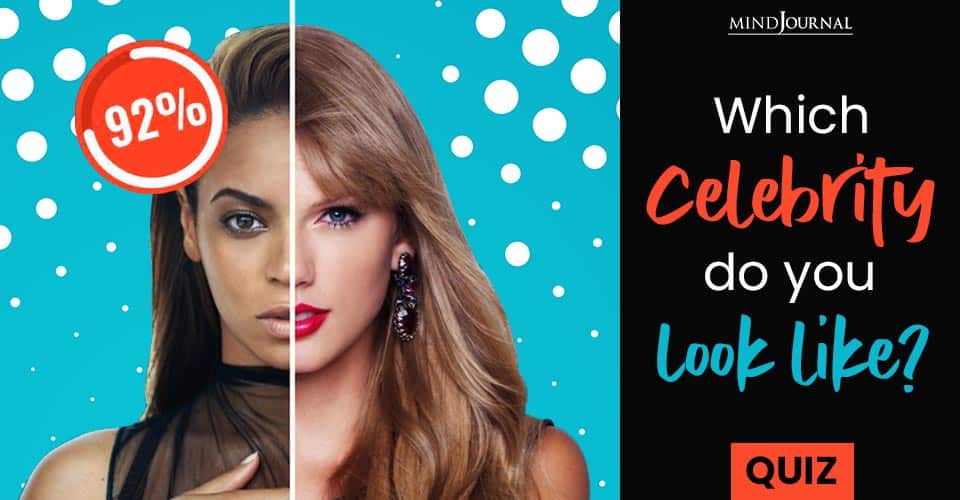
The Intersection of AR and Identity
In the context of the emerging metaverse and digital fashion, “look-alike” technology is becoming a functional tool for personal branding. Users can use these AI scans to generate 3D avatars for virtual environments that maintain their real-world likeness while incorporating stylized elements. The technology that once powered a simple celebrity quiz is now the foundation for virtual try-on services in e-commerce, allowing users to see how glasses, makeup, or clothing would look on their specific facial structure before making a purchase.
The “What Celebrity Do I Look Like Quiz” is more than just a viral trend; it is a demonstration of how far computer vision has come. By turning complex biometric analysis into an accessible consumer experience, it has normalized the presence of AI in our daily lives. As the technology continues to refine its accuracy and speed, the line between our physical appearance and our digital representation will continue to blur, driven by the same algorithms that first helped us find our Hollywood doubles.
aViewFromTheCave is a participant in the Amazon Services LLC Associates Program, an affiliate advertising program designed to provide a means for sites to earn advertising fees by advertising and linking to Amazon.com. Amazon, the Amazon logo, AmazonSupply, and the AmazonSupply logo are trademarks of Amazon.com, Inc. or its affiliates. As an Amazon Associate we earn affiliate commissions from qualifying purchases.