
For decades, the removal of nail polish was a rudimentary process, reliant primarily on harsh industrial solvents and manual abrasion. However, as the beauty industry merges with materials science and advanced engineering, the question of what can remove nail polish has shifted from simple household liquids to a sophisticated landscape of chemical engineering, hardware innovation, and biotechnology. Understanding how to strip high-performance polymers from organic surfaces without damaging the underlying keratin structure is a significant challenge in beauty-tech today.
To understand the tools used for removal, one must first understand the “tech” of the polish itself. Modern manicures, especially gels and long-wear lacquers, are essentially complex polymer chains—plastics that are often cross-linked using UV light or chemical catalysts. Removing them requires breaking these bonds or disrupting the molecular adhesion between the film and the nail plate.

The Chemistry of Solvents: Molecular Engineering in Liquid Form
At the core of nail polish removal is the science of solvents. A solvent is a substance that dissolves a solute, resulting in a solution. In the context of nail care, the “solute” is the dried film of nitrocellulose, resins, and plasticizers.
The Dominance of Acetone: A High-Polarity Powerhouse
Acetone (propanone) remains the gold standard in removal technology due to its high polarity and small molecular size. It works through a process of rapid diffusion; the small molecules penetrate the polymer matrix of the polish, swelling the film and breaking the intermolecular forces holding the plastic together.
From a technical standpoint, acetone is highly effective because it can dissolve both polar and non-polar substances. However, its high vapor pressure means it evaporates quickly, often requiring “soak-off” techniques where the nail is encased in a controlled environment to maintain contact. While effective, the tech industry is currently looking for “smarter” solvents that offer the same efficacy without the aggressive dehydration of the surrounding lipid barriers of the skin.
Non-Acetone Alternatives and Bio-Tech Solvents
The push for “Green Tech” in the beauty sector has led to the development of bio-based solvents. These include ethyl acetate (often derived from acetic acid and ethanol) and more recently, methyl soyate, which is derived from soybean oil.
The engineering challenge with non-acetone removers is the “evaporation rate vs. solubility” trade-off. Bio-solvents often have lower volatility, meaning they stay on the nail longer without evaporating, but they lack the aggressive bond-breaking speed of acetone. Recent breakthroughs in “solvent blending” utilize synergistic effects where two less-aggressive chemicals are combined to create a removal agent that outperforms the sum of its parts, utilizing molecular modeling to find the perfect balance.
Beauty-Tech Hardware: The Rise of Removal Devices
We are moving away from the era of the simple cotton ball. Today, dedicated hardware is being engineered to make the removal process faster, safer, and more automated. These gadgets represent a significant leap in “At-Home Tech,” bringing professional-grade physics to the consumer.
Steam-Off Technology and Thermal Acceleration
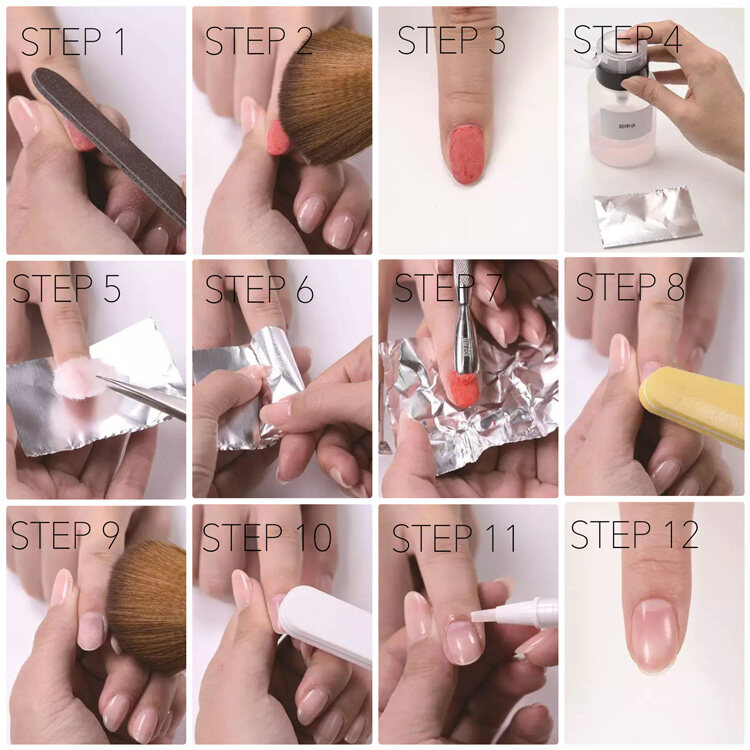
One of the most significant hardware innovations in the last decade is the electronic “Steam-Off” system. This device utilizes the principle of thermal acceleration to enhance chemical reactions. Instead of soaking nails in liquid, the user places their hands into a chamber where a removal solution is heated to a precise temperature, creating a localized vapor.
The science behind this is twofold:
- Kinetic Energy: Heating the solvent increases the kinetic energy of the molecules, allowing them to penetrate the tough UV-cured topcoats of gel polish much faster than at room temperature.
- Vapor Permeability: The gaseous state of the solvent allows for more uniform coverage and deeper penetration into the microscopic crevices of the polish.
Ultrasonic Vibration and Cavitation
While still emerging in the consumer market, ultrasonic technology—already a staple in medical and jewelry cleaning—is being adapted for nail polish removal. These devices use high-frequency sound waves to create “cavitation bubbles” in a removal liquid. When these microscopic bubbles implode near the surface of the nail, they create a mechanical scrubbing action at a molecular level. This removes the need for physical scraping, which is the primary cause of nail plate thinning and damage.
AI and Digital Diagnostics in Manicure Management
The “Internet of Things” (IoT) and Artificial Intelligence (AI) are now playing a role in how we determine when and how to remove nail polish. The integration of digital tools ensures that removal happens at the optimal time to prevent fungal growth or structural degradation.
Computer Vision for Nail Health
New mobile applications utilize high-resolution smartphone cameras and computer vision algorithms to analyze the state of a manicure. These “Digital Dermatologist” tools can detect micro-fractures in the polish or early signs of “lifting.” When lifting occurs, moisture can become trapped between the polish and the nail, leading to bacterial infections.
The AI analyzes the surface integrity and notifies the user via an app that the “bond-strength has compromised,” recommending immediate removal. This data-driven approach shifts nail care from a purely aesthetic routine to a health-monitoring protocol.
Smart Polish and RFID Integration
In experimental labs, “Smart Nails” are being developed with embedded ultra-thin RFID (Radio Frequency Identification) tags or NFC (Near Field Communication) chips. While primarily used for digital payments or access control, these chips can also monitor the moisture levels of the nail bed. If the chemical composition of the polish begins to degrade and leak potentially harmful monomers into the nail, the chip can signal a smartphone, prompting the user to use a specific removal agent to neutralize the reaction.
The Future of Smart Materials: Self-Removing and Programmable Polymers
The ultimate goal of nail technology is to eliminate the need for external solvents or abrasive hardware altogether. This brings us to the frontier of material science: programmable matter.
Photo-Degradable and Thermo-Responsive Polymers
Researchers are currently developing “smart lacquers” that are engineered to remain stable under normal conditions but undergo a rapid phase change when exposed to a specific “trigger.”
- Photo-degradation: Imagine a nail polish that stays perfectly intact for two weeks but dissolves instantly when exposed to a specific frequency of light (not found in the natural spectrum). This would allow for “laser-guided” removal that is instantaneous and mess-free.
- Thermo-response: Polymers are being designed to lose all adhesive properties when they reach a certain temperature threshold—slightly higher than body temperature but lower than the threshold for skin discomfort. A simple warm soak would cause the entire manicure to slide off as a single, recyclable plastic unit.
The Sustainability Tech Angle: Circular Beauty
As the tech world pivots toward sustainability, the chemical makeup of polish removers is being redesigned for a circular economy. The industry is looking at “solvent recovery” systems where used removal agents can be filtered and distilled for reuse, as well as the development of water-soluble polishes that utilize advanced H2O-reactive polymers. These polymers are designed to be waterproof against cold and room-temperature water but dissolve when treated with a specific pH-balanced aqueous solution.

The Engineering of Protection: Post-Removal Recovery Tech
What removes nail polish is only half of the technological equation; the other half is what restores the biological substrate afterward. The “Post-Removal Tech” niche is expanding with the use of nanotech-delivery systems.
After a solvent has stripped the polish, it often leaves the keratin dehydrated. New “Nano-Serums” are being engineered with lipid particles small enough to penetrate the nail’s dorsal layer. These serums use “encapsulation technology” to deliver keratin proteins and vitamin E directly into the nail matrix, bypassing the barrier that traditional oils cannot bridge.
The evolution of nail polish removal is a testament to how technology can refine even the most mundane tasks. From the molecular modeling of bio-solvents to the use of ultrasonic waves and AI diagnostics, the process of removing nail polish has become an intersection of chemistry, physics, and digital innovation. As smart materials continue to advance, the very concept of “scrubbing” or “soaking” may soon become an obsolete relic of a pre-tech era.
aViewFromTheCave is a participant in the Amazon Services LLC Associates Program, an affiliate advertising program designed to provide a means for sites to earn advertising fees by advertising and linking to Amazon.com. Amazon, the Amazon logo, AmazonSupply, and the AmazonSupply logo are trademarks of Amazon.com, Inc. or its affiliates. As an Amazon Associate we earn affiliate commissions from qualifying purchases.