
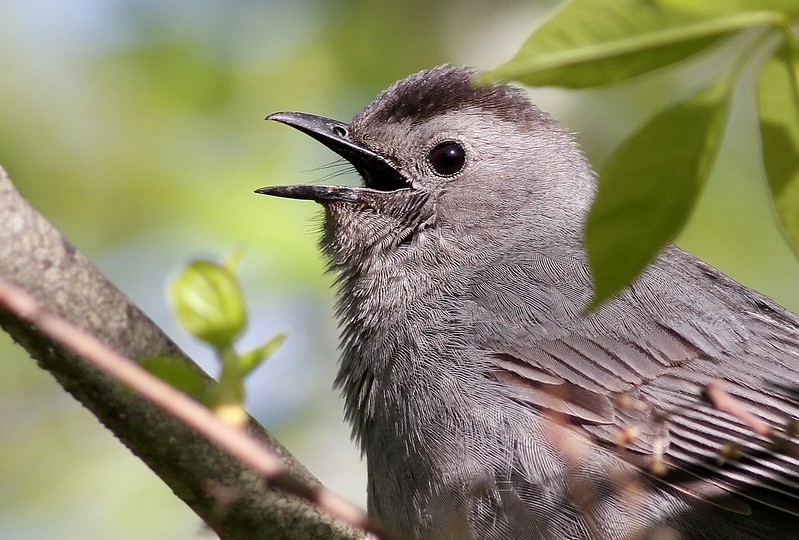
The intersection of ornithology and digital technology has shifted from simple field guides to sophisticated, AI-driven bioacoustic platforms. When a user asks a digital assistant or a search engine, “What bird sounds like a cat?” they are engaging with a complex ecosystem of audio signal processing, machine learning, and massive cloud-based databases. This query serves as a primary entry point into the world of sound recognition technology, highlighting the engineering challenges involved in distinguishing biological mimicry—such as the call of the Gray Catbird or the Lyrebird—from the actual domestic feline sounds they imitate.
As the tech industry moves toward more integrated IoT environments, the ability of software to interpret and categorize non-human vocalizations has become a frontier for innovation. From neural networks trained on millions of spectrograms to edge-computing devices that monitor biodiversity in real-time, the technology behind identifying “cat-like” bird sounds represents a significant leap in environmental data science and consumer-facing software engineering.
The Digital Ear: How Machine Learning Decodes the Avian Soundscape
At the core of modern sound identification technology is the ability to transform raw audio into a format that a computer can understand. Unlike text, which is discrete and categorical, audio is continuous and messy. To identify a bird that sounds like a cat, software must first strip away environmental noise—wind, traffic, and rain—to isolate the specific acoustic signature of the subject.
The Role of Spectrograms in Audio Data Processing
The foundational step in this tech stack is the creation of a spectrogram. A spectrogram is a visual representation of the spectrum of frequencies in a sound as they vary with time. In the context of bioacoustics, software uses a Fast Fourier Transform (FFT) to convert the time-domain signal (the recording) into the frequency domain.
For a developer building an app to identify a Gray Catbird, the spectrogram becomes the “image” that the AI analyzes. The cat-like “mew” of the bird has a specific frequency curve and harmonic structure that differs slightly from a house cat. By treating audio identification as a visual recognition problem, tech companies have been able to leverage existing breakthroughs in computer vision to achieve near-human accuracy in species identification.
Convolutional Neural Networks (CNNs) and Pattern Recognition
Once the audio is converted into a spectrogram, it is fed into a Convolutional Neural Network (CNN). This is the same type of architecture used by autonomous vehicles to recognize stop signs or by social media platforms to tag faces. The CNN is trained on a “gold standard” dataset—thousands of verified recordings of birds and cats.
The neural network looks for “features” within the spectrogram. It identifies the “slope” of the whistle and the “texture” of the sound. When identifying a bird that sounds like a cat, the AI must go beyond simple frequency matching. It evaluates the cadence, the repetition rate, and the spectral flux. Modern models can now identify subtle nuances that even experienced birders might miss, filtering out the “false positives” that occur when a cat is actually meowing in the background of a recording.
Algorithmic Differentiation: Distinguishing Mimicry from Reality
One of the most significant challenges in audio engineering is the problem of “mimicry.” Some birds, like the Northern Mockingbird or the European Starling, are biological hackers; they evolve to replicate the sounds of their environment. This creates a fascinating technical hurdle: how does an algorithm distinguish between a primary sound source and a mimic?
The Gray Catbird and the Challenges of Mimicry Data
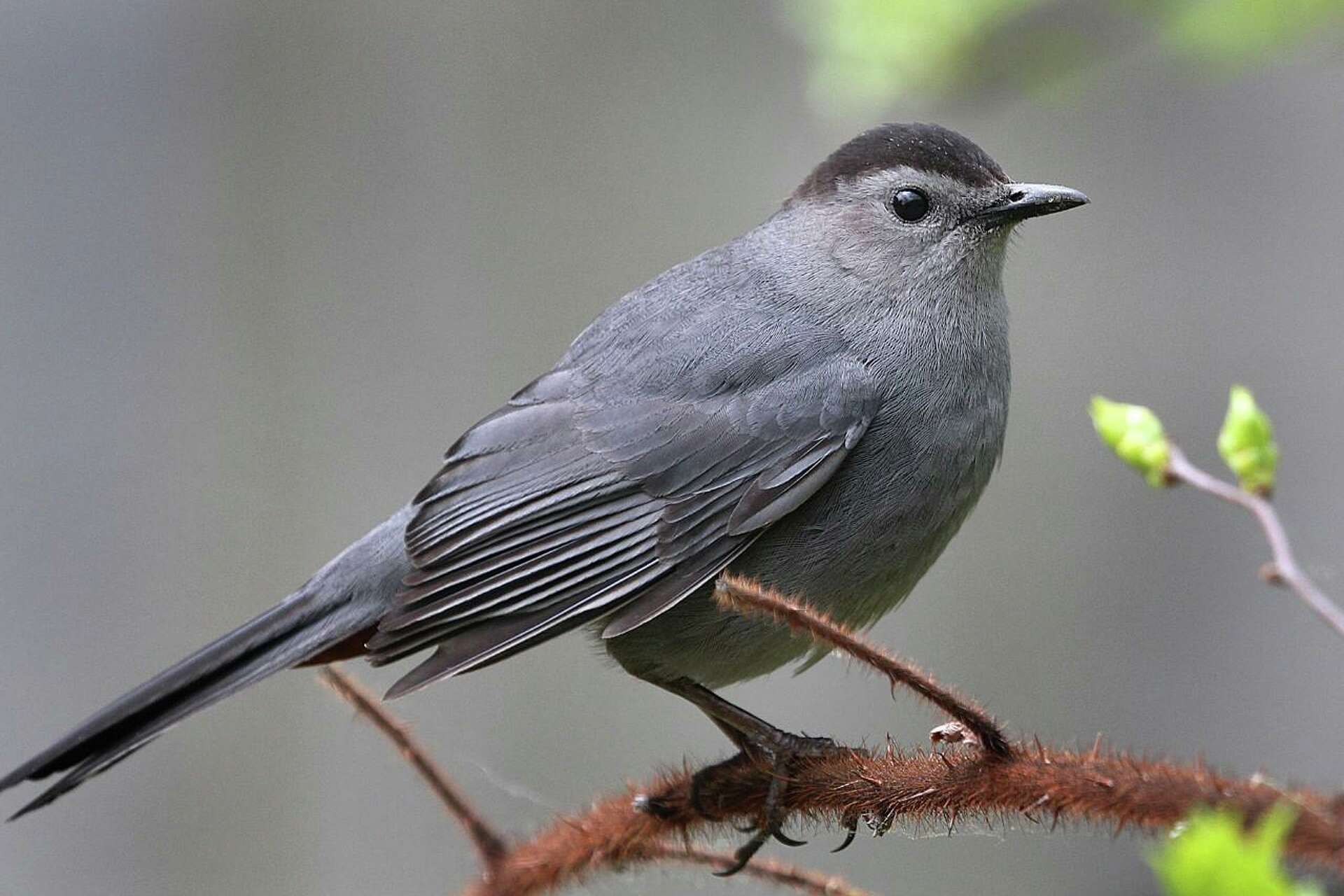
The Gray Catbird (Dumetella carolinensis) is the most common answer to the titular question. Its call is a raspy, nasal “mew” that can easily trick basic sound-detection software. For developers, this requires “fine-grained categorization.”
To solve this, engineers implement hierarchical classification models. The software first identifies the sound as “biological,” then “avian,” and then narrows it down to the specific genus. By analyzing the temporal context—the sounds that come before and after the “mew”—the software can determine if the sound is part of a complex bird song (indicating a catbird) or a standalone vocalization (potentially a cat). This contextual analysis is a hallmark of advanced Natural Language Processing (NLP) applied to non-human communication.
Training Models on Environmental Noise and Interference
A major trend in bioacoustic tech is the move toward “robustness.” A recording taken on a high-end parabolic microphone is easy for an AI to identify, but a recording taken on a low-end smartphone in a windy suburban backyard is another story.
To improve the accuracy of apps that answer the “what bird sounds like a cat” query, engineers use “data augmentation.” They take clean recordings of bird calls and artificially add wind noise, digital distortion, and overlapping sounds. This forces the neural network to focus on the “invariant features” of the bird’s call—those parts of the sound that remain consistent regardless of the recording quality.
The App Ecosystem: From Niche Tools to Mass-Market Tech
The technology that identifies cat-like bird sounds is no longer confined to university labs. It has been democratized through a robust ecosystem of consumer apps and professional-grade software. These tools represent a masterclass in UI/UX design, making complex data science accessible to the general public.
Case Study: The Merlin Bird ID Architecture
The Merlin Bird ID app, developed by the Cornell Lab of Ornithology, is perhaps the most visible example of this technology in action. It utilizes a massive database called eBird, which provides the “ground truth” data needed for training its models.
From a tech perspective, Merlin’s “Sound ID” feature is a marvel of optimization. It performs real-time inference on a mobile device, meaning the AI is processing the audio as it happens, rather than uploading a file to a server and waiting for a response. This requires highly optimized code and “model quantization,” where the neural network is compressed to run on mobile processors without a significant loss in accuracy.
Edge Computing and Real-Time Sound Identification
While apps like Merlin handle individual queries, the professional sector is moving toward “edge computing.” Devices like the AudioMoth are low-cost, low-power acoustic loggers used by researchers. These devices are being integrated with on-board AI chips that can identify specific sounds—like the call of a rare bird or the sound of a chainsaw in a protected forest—locally on the device.
This shift to the “Edge” is crucial for IoT (Internet of Things) integration. Imagine a smart home system that can hear a bird sounding like a cat through an outdoor camera and automatically log the sighting in a citizen-science database, or adjust outdoor lighting to be more bird-friendly during migration seasons. This represents the synthesis of environmental awareness and smart-home automation.
Beyond Identification: The Strategic Impact of Bioacoustic Big Data
The ability to identify a bird by its sound has implications far beyond satisfying a user’s curiosity. The data generated by these queries and identifications is becoming a valuable asset for corporate strategy, digital security, and environmental ESG (Environmental, Social, and Governance) reporting.
Environmental Monitoring and Digital Security
In the realm of digital security, “acoustic fingerprinting” is an emerging field. The same technology used to identify a catbird can be used to monitor the “health” of a data center or a mechanical facility. Changes in the “acoustic background”—the subtle hum of machines—can be analyzed using the same CNN architectures used in bioacoustics to predict hardware failure before it happens.
Furthermore, for developers working in the defense and security sectors, the ability to filter out biological “noise” (like birds) is essential for perfecting microphones designed to detect human footsteps or unauthorized vehicles. The catbird’s mimicry is, in a sense, the natural world’s version of a “false signal,” and learning to bypass it improves the sensitivity of security algorithms.

Integrating Natural Language Processing with Audio Queries
As voice-activated tech (like Alexa, Siri, and Google Assistant) becomes more prevalent, the way users interact with audio data is changing. The query “what bird sounds like a cat” is increasingly handled by Natural Language Processing (NLP) engines that must bridge the gap between a descriptive text string and a library of audio files.
The future of this tech lies in “multi-modal” learning. This involves training models that understand the relationship between text descriptions (“raspy cat-like sound”), visual images (the Gray Catbird’s plumage), and audio files. For tech companies, mastering this multi-modal approach is the key to creating more intuitive, human-like AI that can interpret the world with the same nuance that a biological brain does.
In conclusion, while the question “what bird sounds like a cat” may seem like a simple nature query, it is actually a gateway into some of the most advanced fields in modern technology. From the way we process audio signals to the deployment of neural networks on the edge, the quest to identify the sounds of the natural world is driving innovation across the software and hardware landscapes. As AI continues to evolve, our digital ears will only grow more sensitive, turning the vast, chaotic soundscape of the planet into a searchable, actionable database.
aViewFromTheCave is a participant in the Amazon Services LLC Associates Program, an affiliate advertising program designed to provide a means for sites to earn advertising fees by advertising and linking to Amazon.com. Amazon, the Amazon logo, AmazonSupply, and the AmazonSupply logo are trademarks of Amazon.com, Inc. or its affiliates. As an Amazon Associate we earn affiliate commissions from qualifying purchases.