
In the rapidly evolving landscape of Natural Language Processing (NLP) and Artificial Intelligence (AI), the most fundamental elements of human language often present the greatest computational challenges. Among these, the “to be” verbs—am, is, are, was, were, be, being, and been—function as the essential connective tissue of communication. While a primary school student learns these as “linking verbs” that connect a subject to a state of being, in the world of technology, software engineering, and large language models (LLMs), they represent the foundational logic of identity, existence, and relational data structures.
Understanding what these verbs are and how they function is no longer just a task for grammarians; it is a critical requirement for developers, prompt engineers, and data scientists. These eight words serve as the bedrock for how machines interpret the world, categorize information, and generate human-like responses.
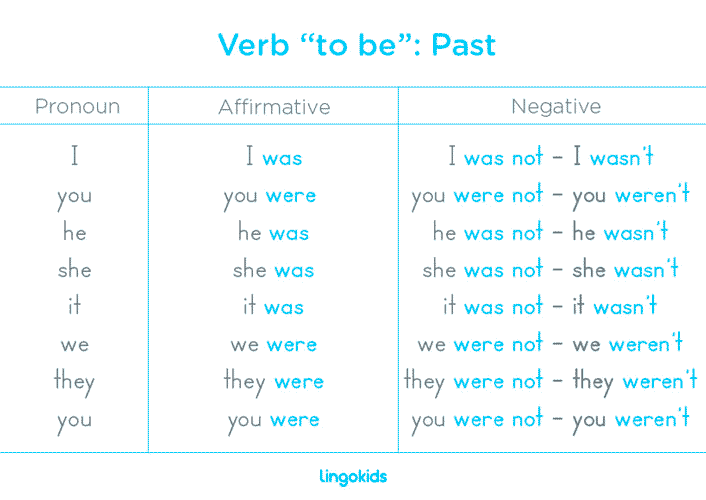
The Linguistic Infrastructure of AI: Why “To Be” Verbs Matter in Tech
In traditional computer science, logic is often binary: true or false, 1 or 0. However, human language is nuanced and fluid. The “to be” verbs provide the necessary bridge between static data and dynamic state descriptions. When an AI model encounters the phrase “The server is down,” the verb “is” acts as a logical operator that assigns the attribute of “down” to the object “server.”
The Eight Forms of Existence
To understand the technology behind language, one must first identify the components. The “to be” verbs are categorized by tense and number:
- Am: First-person singular present (e.g., “I am logging in”).
- Is: Third-person singular present (e.g., “The app is updating”).
- Are: Second-person and plural present (e.g., “You are authorized”; “The files are encrypted”).
- Was: First and third-person singular past (e.g., “The code was bug-free”).
- Were: Second-person and plural past (e.g., “The systems were compromised”).
- Be: The base form, often used in commands or after modal verbs (e.g., “To be or not to be”; “It will be ready”).
- Being: The present participle, indicating ongoing states (e.g., “The data is being processed”).
- Been: The past participle, used in perfect tenses (e.g., “The patch has been applied”).
From Logical Assignments to Semantic Mapping
In software development, we often see these verbs mirrored in variable assignments. When a programmer writes isActive = true, they are essentially creating a digital “to be” verb. The machine understands that for the duration of this state, the object is active. Modern AI takes this a step further through semantic mapping. By analyzing the “to be” verbs in vast datasets, models like GPT-4 or Claude learn to understand the relationship between entities. They don’t just see words; they see a web of identities and states, where “to be” verbs serve as the primary links.
Computational Linguistics: How Machines Process States of Being
The way a machine “reads” a “to be” verb has changed dramatically over the last decade. Early iterations of search engines and simple text-processing tools often treated these verbs as “stop words.”
The Era of Stop Words
In the early days of SEO and digital indexing, words like “is,” “the,” and “at” were frequently discarded by algorithms. These were considered low-value words that took up unnecessary processing power without adding much meaning to a search query. If you searched for “What is the best cloud storage,” the algorithm might only focus on “best,” “cloud,” and “storage.” This was efficient but lacked the ability to understand complex queries or the subtle differences in state that “to be” verbs provide.
The Shift to Neural Networks and Vectorization
With the advent of neural networks, the industry moved toward vectorization—converting words into high-dimensional numerical coordinates. In this system, “to be” verbs are no longer ignored; they are vital. Through a process called “self-attention,” a transformer-based model analyzes how a “to be” verb relates to every other word in a sentence.
For instance, in the sentence “The virus was neutralized,” the word “was” is the bridge that allows the model to understand that the “neutralization” is a completed state of the “virus.” Without the “to be” verb, the relationship between the noun and the adjective becomes ambiguous for a machine. By mapping these verbs into vector space, AI can maintain a coherent “understanding” of the timeline and status of any given subject.
Prompt Engineering and the Identity of Digital Agents

As we move deeper into the age of AI-driven productivity, the “to be” verbs have become the primary tools for prompt engineering. This is the practice of refining inputs to get the most accurate or creative outputs from a generative AI.
Defining the Persona
The most common instruction in a prompt often begins with a “to be” verb: “You are a senior software architect,” or “Act as if you were a cybersecurity expert.” By using these verbs, the user is not just giving a command; they are defining the “state of being” for the AI. This sets the parameters for the latent space the AI will navigate, influencing its tone, vocabulary, and logic.
Conditional Logic in Prompting
Advanced users use “to be” verbs to create conditional frameworks within their workflows. Using phrases like “If the output is a JSON file, ensure it is minified” utilizes the “to be” verb as a logical gate. This mirrors the “if-then” logic found in programming languages like Python or JavaScript. In this context, “to be” verbs are the syntax of the human-to-AI interface, allowing non-programmers to “code” using natural language.
Real-Time Processing and State Management
In the development of AI agents—autonomous programs that can perform tasks—the “to be” verbs are crucial for state management. An agent must constantly ask: “What is my current task?” “What has been completed?” “What is being blocked?” By structuring their internal logs and external communications around these verbs, agents can maintain a “memory” of their progress and adjust their actions accordingly.
Digital Security and the Language of Authentication
Beyond generative AI, “to be” verbs play a surprising role in digital security and forensic linguistics. Cybersecurity tools now use NLP to detect phishing attempts and social engineering by analyzing the specific ways “to be” verbs are used in emails.
Linguistic Fingerprinting
Every person has a “linguistic fingerprint”—a unique way of structuring sentences. Some individuals may rely heavily on passive voice (which uses “to be” verbs like “The report was sent”), while others prefer active voice. Security software can analyze the frequency and placement of “to be” verbs in a corporate executive’s past communications. If an email arrives that claims to be from that executive but uses “to be” verbs in a way that deviates from their established pattern, the system can flag it as a potential “Man-in-the-Middle” or “Business Email Compromise” (BEC) attack.
Sentiment Analysis and Fraud Detection
In the realm of financial tech (FinTech), sentiment analysis tools scan millions of data points to predict market shifts or detect fraudulent activity. These tools pay close attention to “to be” verbs because they often signal the difference between a fact and an opinion. “The stock is rising” (Fact/Present State) carries a different weight in an algorithm than “The stock could be rising” (Speculation). By isolating these verbs, software can categorize text based on its certainty and urgency, providing better data for automated trading or risk assessment.
The Future of Syntactic Intelligence: Beyond Pattern Matching
As we look toward the future of technology, the role of “to be” verbs will likely shift from mere pattern matching to deeper symbolic reasoning. Current AI models are excellent at predicting that “is” should follow “The sky,” but they don’t necessarily “know” what it means to “be.”
The Quest for Machine Consciousness and Logic
The ultimate goal for many in the AI field is to move from “Weak AI” (which simulates intelligence) to “General AI” (which possesses it). This transition will require machines to understand the concept of existence—the “be” in “to be.” Researchers are currently working on “Neuro-Symbolic AI,” which combines the pattern recognition of neural networks with the hard-coded logic of symbolic reasoning. In these systems, “to be” verbs act as the permanent links in a knowledge graph, representing unchanging truths about the world.

The Ethical “To Be”
As technology continues to integrate into our daily lives, we must also consider the ethical implications of how machines define what “is.” Algorithms used in hiring, lending, and law enforcement are constantly making “to be” assignments: “This candidate is qualified,” or “This transaction is suspicious.” Because these verbs define reality for the system, the data used to train them must be free from bias. If a machine’s understanding of “to be” is built on flawed data, it will perpetuate those flaws with the cold, unyielding logic of a computer.
In conclusion, “to be” verbs are the unsung heroes of the digital age. They are the linguistic code that allows us to communicate identity, state, and relationship to our machines. Whether it is through the complex vector spaces of an LLM, the logical gates of a software program, or the security filters of a firewall, these eight simple words—am, is, are, was, were, be, being, and been—are what allow our technology to understand not just what we are saying, but what we are. As we continue to refine our AI and software, our mastery over these fundamental verbs will dictate the clarity, safety, and intelligence of our digital future.
aViewFromTheCave is a participant in the Amazon Services LLC Associates Program, an affiliate advertising program designed to provide a means for sites to earn advertising fees by advertising and linking to Amazon.com. Amazon, the Amazon logo, AmazonSupply, and the AmazonSupply logo are trademarks of Amazon.com, Inc. or its affiliates. As an Amazon Associate we earn affiliate commissions from qualifying purchases.