
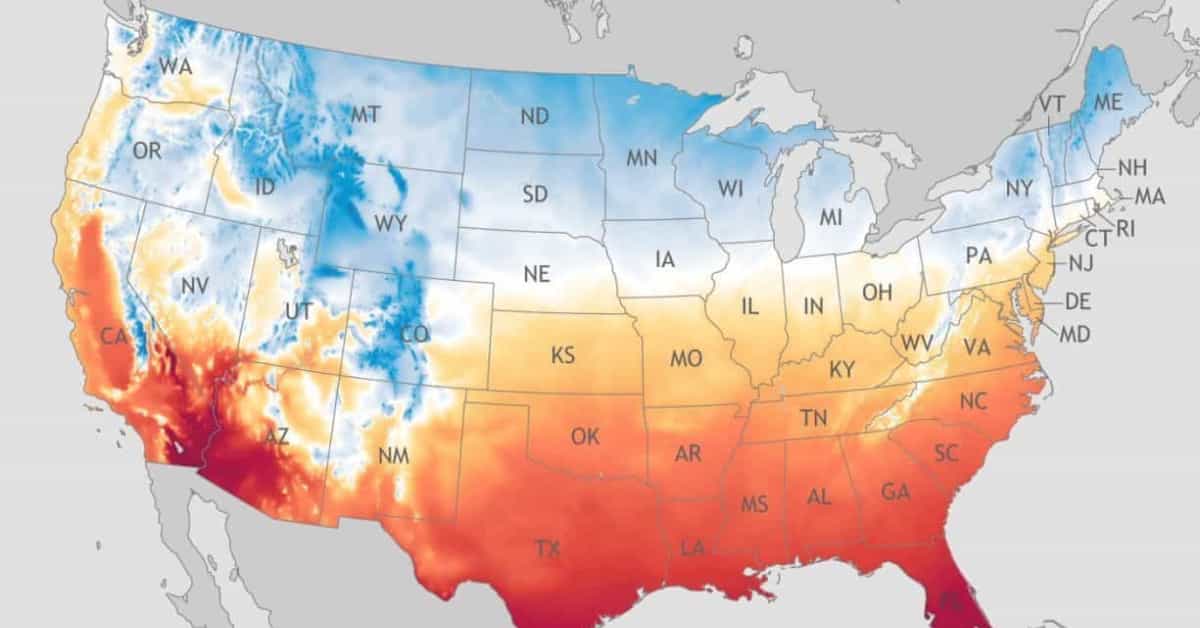
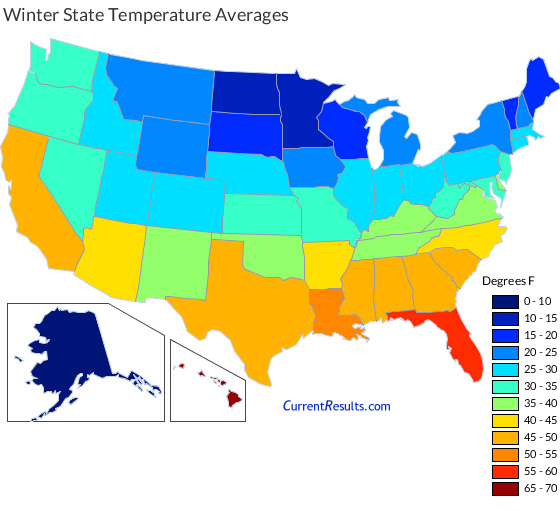
When most people evaluate the “coldest” states in the U.S., they look at thermometers and snowfall totals. However, from a financial and investment perspective, the temperature is merely a baseline for a complex series of economic variables. Living or investing in a state where the mercury regularly drops below zero requires a sophisticated understanding of energy markets, real estate resilience, and fiscal policy. The five coldest states—Alaska, North Dakota, Maine, Minnesota, and Wyoming—each present a unique set of financial opportunities and challenges that go far beyond the cost of a winter coat.
Understanding the economic geography of these regions is essential for anyone looking to diversify a real estate portfolio, start a business in a climate-resilient sector, or relocate to a state with specific tax advantages. In this analysis, we will break down the financial profiles of the five coldest states, examining how their climates shape their markets, their tax structures, and their long-term economic viability.
1. The Fiscal Giants of the North: Alaska and Wyoming
Alaska and Wyoming are frequently cited as the two coldest states in the union, but they are also two of the most unique fiscal environments in the United States. For investors and individuals focused on wealth preservation, these states offer a “cold weather premium” in the form of aggressive tax incentives.
The Alaskan Paradox: High Costs vs. High Dividends
Alaska is indisputably the coldest state in the nation. From a financial perspective, it operates differently than any other state due to the Alaska Permanent Fund. Since the state has no personal income tax and no state sales tax, it is a primary destination for those looking to maximize their take-home pay. However, the “Money” story in Alaska is one of high overhead.
The cost of living in Alaska is significantly higher than the national average due to the logistics of transporting goods into the sub-arctic. Investors in Alaskan real estate must account for “permafrost engineering,” where foundations must be built to withstand shifting frozen ground. Despite these costs, the energy sector provides a robust bedrock for the state’s economy, making it a niche market for industrial investment and specialized logistics services.
Wyoming’s Wealth Preservation Climate
Wyoming, ranking consistently among the top five coldest states due to its high elevation and wind-chill factors, is a powerhouse for personal finance. It is frequently ranked as the most business-friendly state in the country. With no corporate income tax, no personal income tax, and no inventory tax, Wyoming has become a hub for family offices and trust administration.
The financial strategy for Wyoming is centered on “low-density, high-value” investing. While the harsh winters limit agricultural cycles and certain types of development, they create a scarcity in the high-end real estate market. Jackson Hole, for instance, represents one of the most resilient luxury real estate markets in the world, where the cold climate is marketed as a premium asset for privacy and winter recreation.
2. The Economic Engines of the Midwest: North Dakota and Minnesota
While Alaska and Wyoming rely on resource extraction and tax-haven status, North Dakota and Minnesota represent the industrial and corporate core of the American cold belt. For investors looking for steady dividends and employment stability, these two states offer a different financial narrative.
North Dakota: The Energy and Ag-Tech Frontier
North Dakota is often the coldest of the “lower 48” states. Financially, it is defined by the Bakken formation and its massive agricultural output. For those in the “Money” sector, North Dakota offers one of the lowest unemployment rates in the country and a very low cost of doing business.
The investment opportunity in North Dakota lies in infrastructure. As the state deals with extreme temperature swings, there is a constant demand for climate-hardened industrial technology and logistics. Furthermore, the state’s Bank of North Dakota—the only state-owned facility of its kind in the U.S.—provides a unique financing environment for local businesses and farmers, offering a level of credit stability that is rare in more volatile coastal markets.
Minnesota: The Corporate Cold-Weather Standard
Minnesota may be cold, but its economy is one of the most diverse in the nation. It is home to a disproportionately high number of Fortune 500 companies, including UnitedHealth Group, Target, and 3M. From a personal finance perspective, Minnesota offers a trade-off: high state income taxes in exchange for high-quality public services, a top-tier education system, and a robust labor market.
Investors in Minnesota real estate benefit from a highly stable market. Unlike the boom-and-bust cycles seen in the Sun Belt, Minnesota’s “Twin Cities” corridor offers steady appreciation. The cold climate has also spurred a unique economic sector: indoor commerce. The development of extensive skyway systems and massive indoor retail hubs like the Mall of America are examples of how Minnesota has monetized the cold, creating year-round economic activity despite the external temperature.

3. Maine and the New England Resource Economy
Maine rounds out the list of the five coldest states, representing the northeastern extreme of the U.S. climate. Its financial identity is undergoing a significant transition from traditional resource industries (timber and fishing) to a modern economy driven by remote work and renewable energy.
The Real Estate Shift in the North Woods
Maine’s economy has historically been seasonal, but the rise of the “Zoom town” phenomenon has changed the financial landscape. As remote work becomes a permanent fixture of the corporate world, Maine’s lower-than-average real estate prices (compared to the rest of New England) have attracted a wave of professional-class buyers. This influx of capital is transforming rural economies, though it presents challenges for local affordability.
Energy Independence as an Investment Thesis
Because Maine is at the “end of the tailpipe” for natural gas and electricity grids, it has some of the highest energy costs in the nation. From a personal finance and investment standpoint, this has made Maine a leader in energy efficiency and heat-pump adoption. For investors, there is a significant market in Maine for “green” retrofitting and sustainable development. The state’s necessity to overcome its cold-weather energy costs has created a burgeoning sector of specialized contractors and energy-tech startups.
4. The Hidden Costs and Rewards of Sub-Zero Investing
When evaluating the five coldest states through a financial lens, one must look at the “Winter Overhead.” This is the unavoidable tax that the climate levies on every dollar earned or invested. However, where there is cost, there is often a corresponding opportunity for those who know how to mitigate risk.
The Energy Expenditure Gap
In states like Maine and North Dakota, heating costs can represent a significant percentage of a household’s or business’s annual budget. For a personal finance enthusiast, the “Money” play here is in capital improvements. Investing in high-grade insulation, geothermal heating, or solar-plus-storage systems in these states often yields a much higher Internal Rate of Return (IRR) than similar investments in temperate climates. The “avoided cost” of expensive heating oil or propane becomes a tax-free dividend for the property owner.
Infrastructure Resilience as a Business Opportunity
The five coldest states require specialized infrastructure. Road maintenance, snow removal, and cold-weather logistics are multi-billion-dollar industries in these regions. For those looking at side hustles or business ventures, the “winter economy” is a recession-resistant sector. Whether it is specialized chemical de-icing agents or heavy equipment leasing, the cold creates a mandatory demand that does not fluctuate with consumer sentiment.
The “Cold-Weather Discount” in Real Estate
There is often a psychological discount applied to real estate in the coldest states. While Florida and Arizona see massive influxes of retirees, the “Great Northern” states often offer much better price-to-rent ratios for investors. Institutional investors are increasingly looking at “Climate Haven” states—regions that are less likely to suffer from extreme heat, water scarcity, or sea-level rise. In this long-term financial view, the five coldest states are actually some of the most undervalued assets in the American real estate market.
5. Strategic Financial Planning for Cold-Climate Living
If you are considering moving to or investing in one of the five coldest states, your financial strategy must be as robust as your winter gear. The goal is to leverage the unique fiscal benefits of these states while insulating yourself from the higher operational costs.
Tax Optimization
If wealth preservation is your primary goal, Wyoming and Alaska are the clear winners. The absence of state income tax can effectively give a high-earner a 5% to 10% “raise” immediately upon relocation. However, you must weigh this against the higher cost of goods. A sophisticated financial plan for these states involves maximizing “tax-free” zones and utilizing the low-tax environment to fund retirement accounts or brokerage portfolios that would otherwise be eroded by state-level capital gains taxes.
Asset Protection and Insurance
In cold climates, “acts of God” take a different form. Burst pipes, ice dams, and heavy snow loads are the primary threats to property assets. When investing in the coldest states, your insurance strategy is paramount. Ensure that policies specifically cover “weight of snow” and “frozen plumbing,” which are sometimes excluded from standard policies in warmer regions. Furthermore, the use of LLCs for property holding in states like Wyoming offers an additional layer of asset protection that is among the strongest in the legal world.
Diversification via the North
Ultimately, including the five coldest states in your financial worldview is a play on diversification. As the global economy shifts and the climate changes, these regions represent a stable, resource-rich, and fiscally unique segment of the market. Whether it’s the tech-driven corporate stability of Minnesota, the energy-backed dividend of Alaska, or the tax-haven status of Wyoming, the coldest states offer some of the hottest opportunities for the savvy investor.
In conclusion, “What are the 5 coldest states?” is a question that leads to a deep dive into the heart of American economic resilience. By understanding the fiscal nuances of Alaska, North Dakota, Maine, Minnesota, and Wyoming, you can turn a sub-zero thermometer into a net-positive balance sheet. The cold is not an obstacle; it is a market condition that, when mastered, provides a path to significant financial growth.
aViewFromTheCave is a participant in the Amazon Services LLC Associates Program, an affiliate advertising program designed to provide a means for sites to earn advertising fees by advertising and linking to Amazon.com. Amazon, the Amazon logo, AmazonSupply, and the AmazonSupply logo are trademarks of Amazon.com, Inc. or its affiliates. As an Amazon Associate we earn affiliate commissions from qualifying purchases.