
In the global commodities market, few elements carry as much weight—yet receive as little retail investor attention—as phosphorus. Unlike precious metals that fluctuate based on currency sentiment or industrial metals tied to consumer electronics, phosphorus is the bedrock of the global food economy. As a critical component of the NPK (nitrogen, phosphorus, and potassium) triad of fertilizers, phosphorus has no synthetic substitute in biology. For the strategic investor and the financial analyst, identifying the primary non-living sources of this element is not merely a geological exercise; it is an analysis of finite capital assets, supply chain monopolies, and the future of global food security.

The vast majority of the world’s phosphorus is derived from non-living, geological formations. Understanding these sources, their extraction costs, and their geographical concentration is essential for anyone looking to navigate the complexities of the agricultural chemicals sector or the emerging lithium-iron-phosphate (LFP) battery market.
Phosphate Rock: The World’s Primary Mineral Asset
The most significant non-living source of phosphorus is phosphate rock. This is a general term referring to marine sedimentary deposits and, to a lesser extent, igneous rocks containing high concentrations of phosphate minerals, primarily from the apatite group. From a business perspective, phosphate rock is the raw feedstock that fuels a multi-billion dollar downstream industry.
Sedimentary Marine Deposits
Approximately 95% of the world’s phosphorus production comes from sedimentary deposits. These were formed over millions of years by the accumulation of organic matter and chemical precipitation on the ocean floor. Over geological timescales, these deposits solidified into massive beds of phosphorite.
For the investor, sedimentary deposits are the “low-cost” leaders of the industry. Because they are often located near the surface and occur in thick, horizontal layers, they are conducive to large-scale open-pit mining. This lowers the Capital Expenditure (CAPEX) required for extraction compared to deep-vein mining. The most famous example of this is the Western Sahara and Moroccan deposits, which hold the vast majority of the world’s known reserves. The financial “moat” here is the sheer scale and the relatively low cost of beneficiation—the process of separating the phosphorus from the surrounding sand and clay.
Igneous Deposits
The remaining 5% of global phosphorus comes from igneous sources. These occur when phosphate minerals crystallize from cooling magma within the Earth’s crust. While sedimentary deposits are more common, igneous deposits are often higher in purity. They contain fewer heavy metal impurities, such as cadmium, which is a major regulatory concern in the European Union and other strictly governed markets.
From a corporate strategy standpoint, companies that own igneous assets—such as those in Russia, Brazil, and parts of Canada—often command a “purity premium.” As environmental, social, and governance (ESG) criteria become more integrated into investment decisions, the demand for “clean” phosphorus from igneous sources is expected to rise, potentially justifying the higher Operational Expenditure (OPEX) associated with these harder-to-mine formations.
Guano and Fossilized Remains
While historically significant, guano (the accumulated excrement of seabirds or bats) is technically considered a non-living source once it has fossilized into rock. During the 19th century, guano was the primary driver of international phosphorus trade, even sparking territorial wars. Today, however, fossilized guano represents a negligible fraction of the global market. In the modern financial landscape, it is a niche asset, largely superseded by the industrial-scale mining of phosphate rock.
The Geopolitics of Phosphorus Supply Chains
When analyzing the non-living sources of phosphorus, one cannot ignore the geographic concentration of these assets. Unlike oil, which is distributed across dozens of major producing nations, phosphorus is concentrated in a handful of regions. This creates a “geopolitical moat” that has profound implications for market volatility and investment risk.
The Moroccan Monopoly
Morocco, including the Western Sahara region, controls an estimated 70% to 75% of the world’s remaining phosphate reserves. This makes the Office Chérifien des Phosphates (OCP Group), a state-owned enterprise, the most influential player in the global market. For the institutional investor, Morocco is the “Saudi Arabia of Phosphorus.” Any political instability in the Maghreb or changes in OCP’s export strategies can lead to massive price swings in global fertilizer markets.
Investors must view phosphorus through a lens of sovereign risk. Because phosphorus is a non-renewable mineral source, the long-term wealth of these nations is tied to the price-per-ton of phosphate rock. As reserves in other parts of the world, such as the United States and China, face depletion or domestic export restrictions, the market’s reliance on Moroccan sedimentary deposits will only intensify.
The Rise of Chinese Export Quotas
China is currently one of the world’s largest producers of phosphorus, tapping into its extensive sedimentary reserves. However, the Chinese government has increasingly prioritized domestic food security over export revenues. By implementing export quotas and taxes on phosphate fertilizers, China has periodically squeezed the global supply, driving up prices for international buyers.
This shift highlights a critical trend for financial analysts: the transition of phosphorus from a globally traded commodity to a protected strategic asset. For companies in the agricultural sector, this necessitates a diversification of supply chains, moving away from a reliance on Chinese mineral sources and toward emerging projects in regions like Australia, Brazil, and Northern Africa.
The Economic Drivers: Beyond Agriculture
While 90% of phosphorus extracted from non-living sources is used for fertilizers, a new and rapidly growing demand profile is emerging in the technology and energy sectors. This shift is changing the way analysts value phosphate mining companies.
The LFP Battery Revolution
The transition to electric vehicles (EVs) has traditionally been a story of lithium, cobalt, and nickel. However, Lithium Iron Phosphate (LFP) batteries are rapidly gaining market share due to their safety, longevity, and lower cost. Tesla, Ford, and various Chinese EV manufacturers have shifted significant portions of their fleets to LFP chemistry.
This creates a new “industrial grade” demand for phosphorus. Unlike the “fertilizer grade” market, which is highly seasonal and tied to crop prices, the LFP market offers a steadier, high-growth revenue stream. Mining companies that can produce high-purity phosphoric acid—a derivative of phosphate rock—are positioned to benefit from this energy transition. From a portfolio management perspective, this provides a hedge: if agricultural demand dips due to a recession, the structural growth of the EV market may provide a floor for phosphorus prices.
White Phosphorus and Industrial Chemicals
A smaller but high-value segment of the market involves the production of white phosphorus and high-purity phosphoric acid for use in the semiconductor industry, flame retardants, and food additives. These applications require intensive processing of the raw ore, often using thermal or chemical “purified wet process” (PWP) methods. The companies that control the processing infrastructure for these non-living sources often enjoy higher margins than those selling raw phosphate rock, as they capture more of the value chain.
Investing in the Circular Economy: Recovery as a “Source”
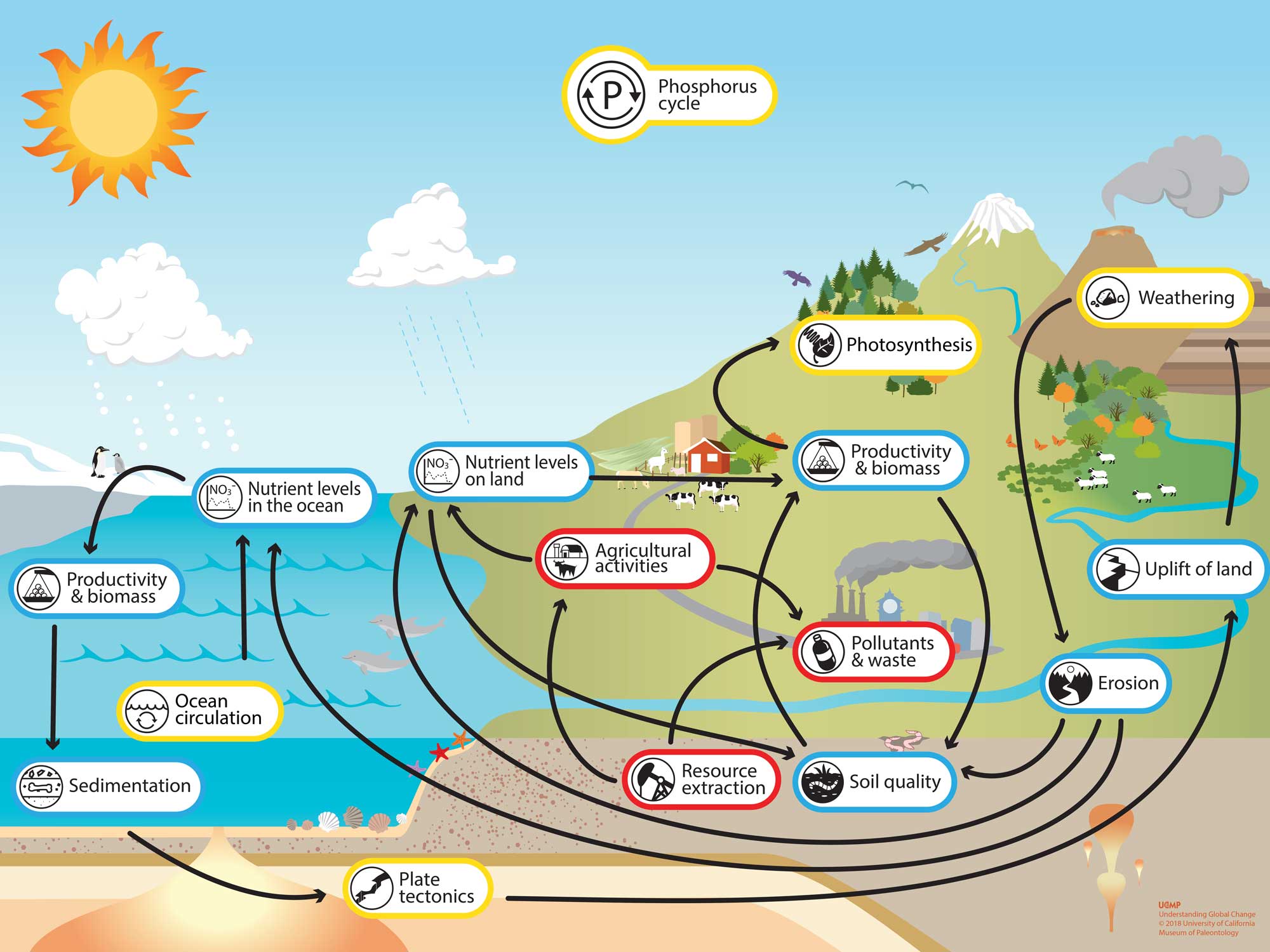
As the cost of mining traditional non-living sources increases and the grade of available ore declines, the financial world is looking toward “phosphorus recovery” as a secondary source. While phosphorus originates in the living world (through food), the industrial recovery of phosphorus from waste streams—such as sewage sludge or industrial runoff—transforms it back into a non-living, tradeable commodity.
The Business of Struvite Recovery
Technological advancements now allow wastewater treatment plants to precipitate phosphorus into “struvite” (magnesium ammonium phosphate). From a financial standpoint, this turns a waste disposal liability into a revenue-generating asset. Companies specializing in recovery technology are attracting venture capital and ESG-focused institutional investment.
While recovered phosphorus currently accounts for a tiny fraction of the total market, it represents a “disruptive source.” As environmental regulations tighten and the “polluter pays” principle is more widely enforced, the economic incentive to recover phosphorus from non-living waste streams will grow. This creates a circular economy play for investors who are wary of the geopolitical risks associated with traditional mining.
Market Outlook and Portfolio Allocation
The long-term economic outlook for phosphorus is characterized by “scarcity value.” Because there is no substitute for phosphorus in biology or agriculture, and because the primary non-living sources are finite and geographically concentrated, the element is subject to structural price appreciation over the coming decades.
Risk Factors for Investors
Investing in phosphorus is not without its pitfalls. The industry is highly sensitive to energy prices, as the production of phosphoric acid and fertilizers is energy-intensive. Furthermore, environmental regulations regarding “tailings” (mining waste) and the runoff of phosphorus into waterways (causing eutrophication) pose significant regulatory risks. A company’s ability to manage its environmental footprint is now a primary indicator of its long-term financial viability.
Conclusion: A Strategic Commodity
In summary, the primary non-living sources of phosphorus are the sedimentary and igneous phosphate rock deposits scattered across the globe. For the financier, these are more than just rocks; they are the fundamental inputs of global stability. As the world’s population grows and the demand for meat (which requires more grain and thus more fertilizer) increases, the pressure on these non-living sources will only intensify.
Whether through direct investment in mining giants like Nutrien or Mosaic, or through more speculative plays in phosphorus recovery technology and LFP battery supply chains, the financial community must treat phosphorus with the same strategic gravity as oil or semiconductors. It is a finite, essential, and increasingly contested resource that sits at the intersection of the old economy (agriculture) and the new economy (energy storage). Understanding its sources is the first step in mastering its market.
aViewFromTheCave is a participant in the Amazon Services LLC Associates Program, an affiliate advertising program designed to provide a means for sites to earn advertising fees by advertising and linking to Amazon.com. Amazon, the Amazon logo, AmazonSupply, and the AmazonSupply logo are trademarks of Amazon.com, Inc. or its affiliates. As an Amazon Associate we earn affiliate commissions from qualifying purchases.