
In the fast-paced world of financial markets, particularly within the foreign exchange (Forex) landscape, terminology can often act as a barrier to entry for novice investors. Among the most fundamental yet frequently misunderstood terms is the “pip.” Whether you are looking to grow a small trading account or manage a corporate portfolio, understanding what a pip is, how it is calculated, and why it dictates your risk profile is essential for long-term success in the world of money and investing.
A pip represents the smallest incremental price move that a given exchange rate makes based on market convention. For the majority of currency pairs, it is the equivalent of a single digit movement in the fourth decimal place. However, as financial technology has evolved and liquidity has increased, the definition has expanded to include more granular measurements. To master the mechanics of trading, one must first master the mathematics of the pip.

Understanding the Fundamentals of the Pip
The word “pip” is an acronym for “Percentage in Point” or “Price Interest Point.” It serves as a standardized unit of measure for the fluctuations in the valuation of one currency against another. Because currency values change in very small increments, using whole numbers would be impossible for tracking market movements. Instead, the industry uses decimals to reflect these subtle shifts in purchasing power.
The Standard Four-Decimal Format
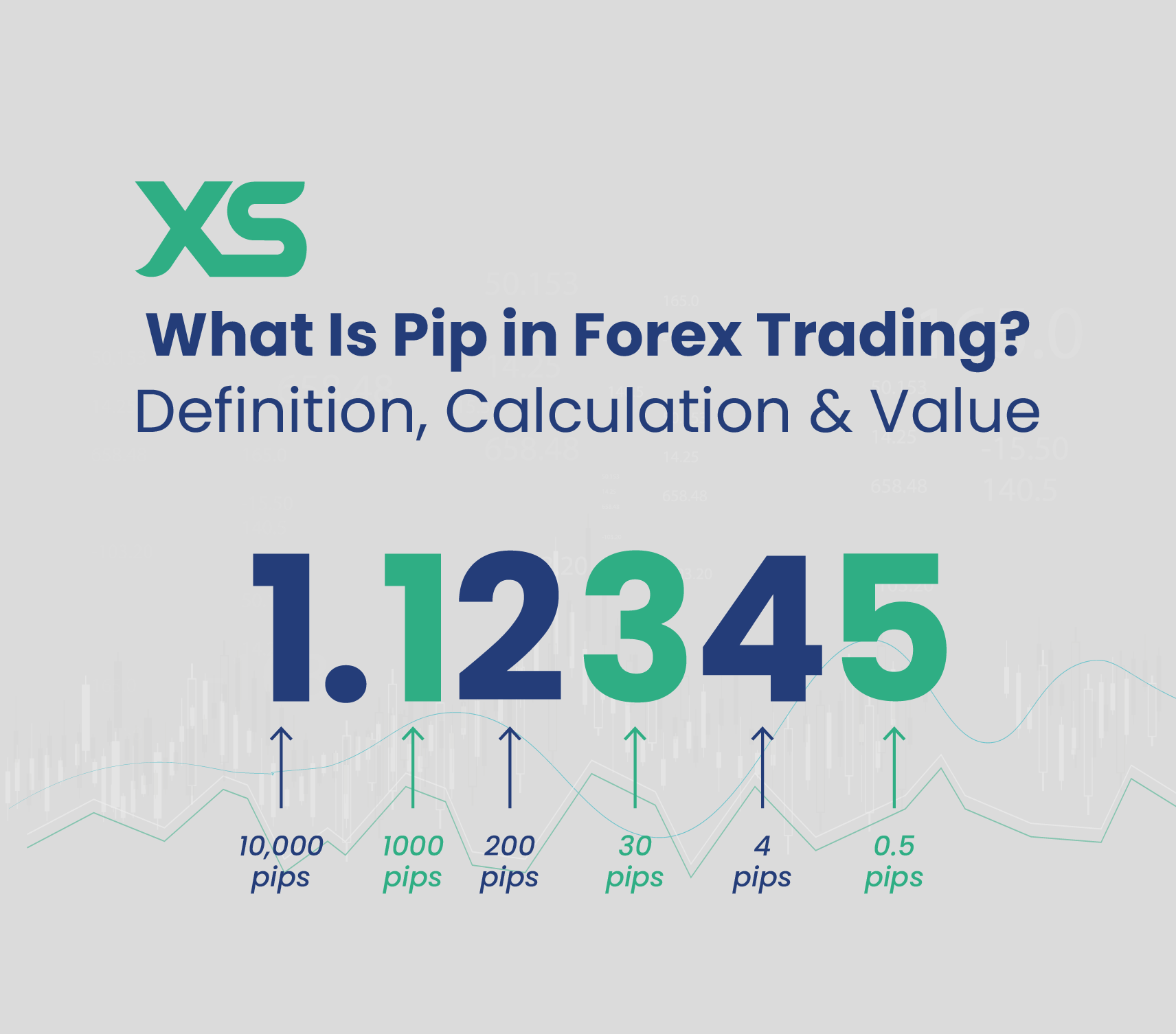
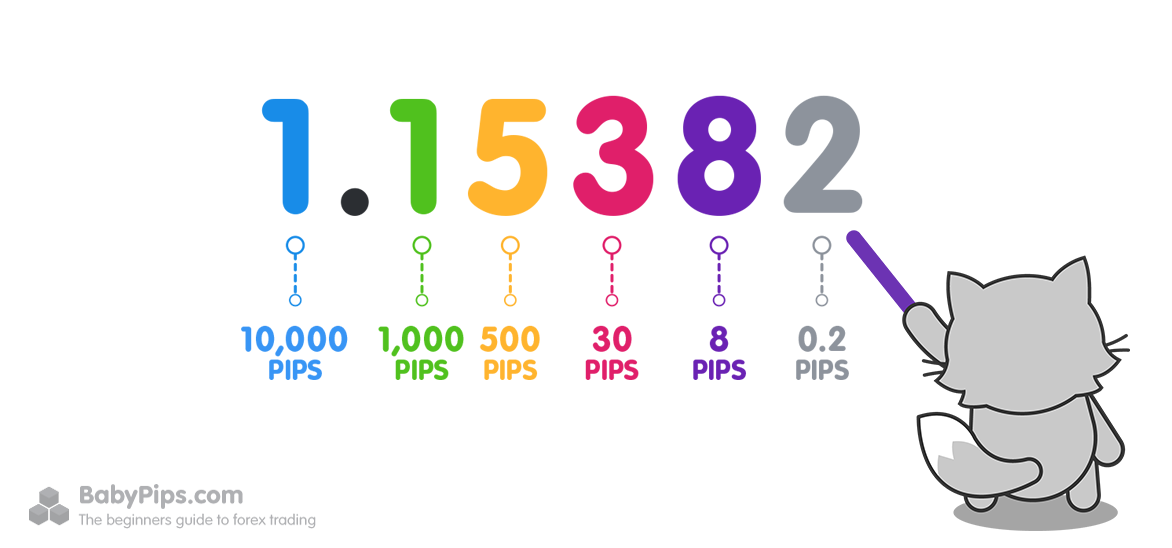
For most major currency pairs, such as the EUR/USD or the GBP/USD, a pip is represented by the fourth decimal place (0.0001). If the EUR/USD moves from 1.0850 to 1.0851, it has moved by exactly one pip. This tiny movement might seem insignificant to the casual observer, but when applied to large capital allocations—known as “lots”—these small increments translate into significant profit or loss.
The Japanese Yen Exception
One of the first hurdles for new investors is identifying the exceptions to the four-decimal rule. The most notable exception is the Japanese Yen (JPY). Because the Yen has a much lower unit value compared to the Dollar or the Euro, its currency pairs are typically quoted to only two or three decimal places. In pairs like the USD/JPY or EUR/JPY, a pip is the second decimal place (0.01). Therefore, a move from 148.50 to 148.51 constitutes a one-pip change.
The Rise of the Pipette (The 5th Decimal)
As electronic trading platforms became more sophisticated and competition among brokers grew, the industry introduced fractional pips, often called “pipettes.” Most modern brokers now quote currency pairs to a fifth decimal place (or a third for Yen pairs). A pipette is one-tenth of a pip. While this allows for tighter spreads and more precise pricing, it can be confusing for beginners. When looking at a quote like 1.10524, the “4” is the pipette, while the “2” represents the pip.
How to Calculate Pip Value
While knowing what a pip is provides a foundation, the true utility for an investor lies in understanding the “pip value.” Pip value refers to the actual monetary worth of a one-pip movement in a specific trade. This value is not fixed; it fluctuates based on three primary factors: the currency pair being traded, the size of the position, and the investor’s account currency.
The Math Behind the Movement
The basic formula for calculating the value of a pip in the base currency of a pair is:
(One Pip / Exchange Rate) × Lot Size = Pip Value
However, most traders prefer to know the value in their own account currency (typically USD). For pairs where the USD is the “quote” currency (the second currency in the pair, such as EUR/USD), the math is simplified. For a standard lot of 100,000 units, one pip is always worth $10. For a mini lot (10,000 units), it is worth $1, and for a micro lot (1,000 units), it is worth $0.10.
Impact of Account Currency
If your account is funded in USD but you are trading a pair where the USD is not the quote currency—for example, the USD/CHF—the pip value will fluctuate along with the exchange rate. As the USD/CHF rate changes, the value of each pip in your USD-denominated account will shift slightly. This requires investors to use automated calculators provided by financial platforms to ensure they are not over-leveraging their positions during periods of high volatility.
Calculating Pip Value in Cross Pairs
Cross pairs, or “crosses,” are currency pairs that do not involve the US Dollar, such as the EUR/GBP or AUD/NZD. Calculating the pip value for these requires an extra step: converting the value of the pip from the quote currency (e.g., GBP) back into the account currency (e.g., USD). This complexity is why many professional money managers emphasize the use of robust financial tools to track real-time exposure.
Why Pips Matter in Risk Management
In the realm of personal finance and institutional investing, risk management is the difference between longevity and bankruptcy. Pips are the primary unit used to define risk parameters. An investor does not simply decide to “buy some Euro”; they decide how many pips they are willing to risk to achieve a certain profit target.
Determining Position Sizing
Position sizing is arguably the most critical skill in trading. By knowing the pip value, an investor can calculate exactly how much money they will lose if a trade goes against them. For example, if a trader has a $10,000 account and decides to risk only 1% ($100) on a trade, and their stop-loss is 20 pips away, they can use the pip value to determine the appropriate lot size. This mathematical approach removes emotion from the decision-making process.
Setting Stop-Loss and Take-Profit Levels
Strategic investing requires clear exit points. Traders use pips to set “Stop-Loss” orders (to limit losses) and “Take-Profit” orders (to secure gains). A common strategy involves the “Risk-to-Reward Ratio.” For instance, a trader might risk 10 pips to gain 30 pips. By measuring these targets in pips rather than arbitrary dollar amounts, the trader stays focused on market structure and volatility rather than their personal bank balance.
Leverage and the “Pip Trap”
Leverage allows investors to control large positions with a small amount of capital. While this magnifies the value of each pip, it also magnifies the risk. In a highly leveraged account, a movement of just 10 or 20 pips can result in a margin call if the position size is too large. Understanding the relationship between pips and leverage is vital for anyone using margin to trade.
Pips Across Different Asset Classes
While the term “pip” originated in the Forex market, its logic applies to other financial instruments, though the terminology may differ. As investors diversify their portfolios into commodities, indices, and cryptocurrencies, they must adapt their understanding of price increments.
Forex vs. Commodities
In commodity trading, such as Gold (XAU) or Oil (WTI), the term “pip” is often replaced by “ticks” or “points.” For Gold, a move from $2,000.00 to $2,000.01 is often referred to as a cent or a tick. However, many retail Forex brokers treat the first decimal in Gold (0.10) as the equivalent of a pip for the sake of platform consistency. Understanding the specific contract specifications for each commodity is essential for accurate financial planning.
Indices and the Concept of Points
When trading stock indices like the S&P 500 or the Nasdaq 100, price movements are measured in “points.” A point is the smallest whole unit of price change. Within each point, there are “ticks.” For example, the S&P 500 might move in 0.25-point ticks. While the math is similar to pip calculation, the scale is different, as a single point movement in an index can represent a much larger percentage of the asset’s total value than a single pip in Forex.
Cryptocurrencies: Do Pips Exist?
The cryptocurrency market is the newest frontier for retail investors. Because Bitcoin and Ethereum are highly volatile and priced in the thousands, “pips” are rarely mentioned. Instead, investors focus on percentage changes or whole dollar movements. However, for those trading “Crypto-CFDs” through traditional brokers, the platform may still display movements in pips to standardize the user experience across different asset classes.
Strategic Trading: Maximizing Profits per Pip
Successful investing is not necessarily about catching the largest number of pips; it is about the quality and consistency of those pips relative to the risk taken. Professional traders often focus on “pip yield” and “expectancy” to evaluate their performance.
Scaling and Volatility
Not all pips are created equal. A 50-pip move in a stable pair like EUR/GBP might take a week, whereas the same move in a volatile pair like GBP/JPY could happen in minutes. Strategic investors analyze the Average True Range (ATR) of a pair to understand how many pips it typically moves in a day. This helps in setting realistic expectations and avoiding the frustration of “flat” markets.
Psychological Aspects of Pip Counting
There is a psychological trap in trading known as “counting pips.” Many novice investors become obsessed with the number of pips they gain, leading to overtrading or “revenge trading” to win back lost pips. Professional financial management suggests focusing on the process and the percentage of capital growth rather than the raw number of pips. By viewing pips as a measurement tool rather than a scoreboard, investors can maintain the emotional discipline required for long-term wealth accumulation.
In conclusion, the pip is the pulse of the trading world. It is the fundamental unit that dictates profit, loss, and risk. For anyone serious about personal finance and investing in the global markets, a deep-seated understanding of pips is not optional—it is the bedrock upon which successful strategies are built. By mastering the calculation, application, and risk-management properties of the pip, investors can navigate the complexities of the financial markets with confidence and precision.
aViewFromTheCave is a participant in the Amazon Services LLC Associates Program, an affiliate advertising program designed to provide a means for sites to earn advertising fees by advertising and linking to Amazon.com. Amazon, the Amazon logo, AmazonSupply, and the AmazonSupply logo are trademarks of Amazon.com, Inc. or its affiliates. As an Amazon Associate we earn affiliate commissions from qualifying purchases.