
In the rapidly evolving landscape of biotechnology and computational science, the term “isoform” has transitioned from a niche biological descriptor to a central challenge for high-performance computing, artificial intelligence, and software architecture. As we push the boundaries of personalized medicine and synthetic biology, understanding isoforms is no longer just a task for geneticists; it is a critical frontier for data scientists and software engineers. At its core, an isoform represents a functional variation of a protein or an mRNA molecule, derived from the same gene but possessing a distinct structure and function. In the digital realm, we can view isoforms as “biological software versions”—different builds of the same source code optimized for specific environments or tasks.

The technological pursuit of mapping, identifying, and predicting these isoforms is driving a new era of AI-driven discovery. With the advent of deep learning models like AlphaFold and the massive scaling of cloud-based genomic pipelines, the tech industry is providing the tools necessary to decode the complex logic of alternative splicing—the process that creates these isoforms. This article explores the technological architecture, the AI tools, and the data-driven frameworks that define our modern understanding of isoforms.
The Computational Complexity of Alternative Splicing
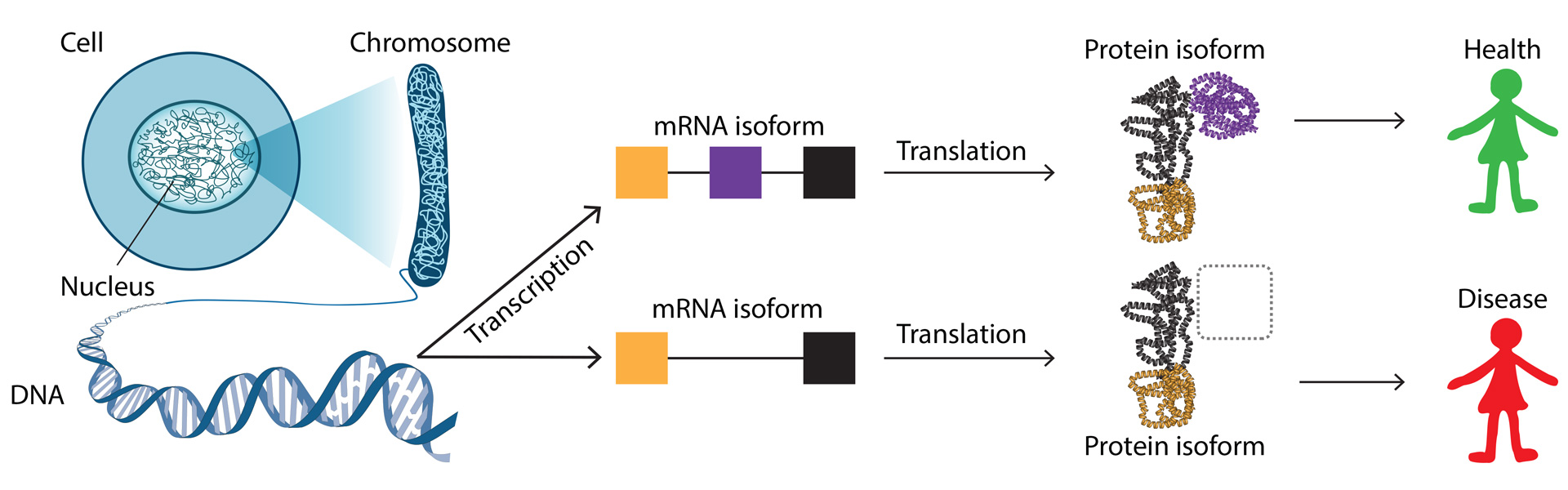
To understand isoforms from a technology perspective, one must first understand the “source code” and the “compiler.” If a gene is the source code, the process of transcription and translation is the build pipeline. However, unlike traditional software where one codebase typically results in one executable, biological systems utilize a process called alternative splicing. This allows a single gene to produce multiple distinct mRNA transcripts, which in turn translate into different protein isoforms.
This process is essentially a biological logic gate. Depending on the cellular environment, certain exons (coding regions) are included or excluded. This results in proteins that may have different binding affinities, enzymatic activities, or cellular localizations. For technologists, the challenge is the sheer volume of permutations. Human DNA contains roughly 20,000 protein-coding genes, but through the mechanism of isoforms, these genes can produce hundreds of thousands of distinct protein variants.
High-Throughput Sequencing and Data Pipelines
The primary tech stack used to identify isoforms involves Next-Generation Sequencing (NGS) and Long-Read Sequencing (LRS). Traditionally, NGS produced short “reads” of DNA/RNA, which were difficult to reassemble into complete isoforms. This created a “defragmentation” problem in bioinformatics software. Engineers had to develop sophisticated algorithms to piece together these short fragments, often leading to high error rates in isoform quantification.
The emergence of Long-Read Sequencing technologies, such as those developed by Oxford Nanopore and Pacific Biosciences, has revolutionized this. These tools allow for the sequencing of entire RNA molecules in a single pass. From a data architecture standpoint, this shifts the burden from algorithmic reconstruction to raw data processing. Handling these massive, high-fidelity datasets requires robust ETL (Extract, Transform, Load) pipelines that can operate at the petabyte scale, utilizing distributed computing frameworks like Apache Spark to manage the flow of genetic information.
The Problem of “Dark Data” in Genomics
For years, many isoforms were considered “dark data”—variations that existed but were invisible to our software tools due to low expression levels or technical noise. The current technological trend focuses on increasing the sensitivity of detection software. By leveraging signal processing and advanced statistical modeling, developers are creating software that can distinguish between a functional isoform and a transcriptional error. This distinction is vital for digital health platforms that rely on accurate biomarker identification for cancer diagnostics and rare disease screening.
AI and Deep Learning: Predicting Isoform Structure
One of the most significant breakthroughs in the tech world’s interaction with isoforms is the application of deep learning to protein folding and structure prediction. When a new isoform is identified via sequencing, its functional utility is often unknown. This is where AI tools step in to bridge the gap between “sequence” and “function.”
The Impact of AlphaFold and ESMFold
Google DeepMind’s AlphaFold has fundamentally changed the landscape. By treating protein sequences as strings of data—not unlike natural language—AlphaFold uses neural networks to predict the 3D structure of proteins with incredible accuracy. For isoforms, this is a game-changer. Since isoforms often differ by only a few amino acids or a missing domain, predicting how that specific change affects the 3D shape allows researchers to understand the isoform’s “logic” without needing expensive, time-consuming laboratory experiments.
Meta’s ESMFold (Evolutionary Scale Modeling) takes this a step further by using Large Language Models (LLMs) trained on vast biological databases. These models treat the “language of life” as a series of patterns. By inputting an isoform sequence into these AI tools, developers can generate structural insights in seconds. This speed is essential for the “Design-Build-Test-Learn” cycle in synthetic biology, where software is used to design custom isoforms for industrial or therapeutic use.
Transformers and Genomic NLP
The transformer architecture, which powers models like GPT-4, is now being applied directly to genomic sequences. In this context, isoforms are viewed as semantic variations of a sentence. Genomic Transformers can predict which isoforms are likely to be expressed in specific tissue types or disease states. This predictive power allows software platforms to suggest “in silico” drug targets, significantly reducing the R&D costs for pharmaceutical companies. The integration of these AI models into user-friendly SaaS platforms is democratizing access to high-end proteomics, allowing smaller labs to perform complex isoform analysis that was previously restricted to tech giants and major research universities.
The Infrastructure for Isoform Discovery: Cloud and Edge
The data generated by isoform sequencing and AI modeling is gargantuan. A single human genome can produce hundreds of gigabytes of data; when you multiply that by the temporal and spatial variations of isoforms (the “transcriptome”), the storage and processing requirements become a massive infrastructure challenge.
Cloud Scalability and Bioinformatics as a Service (BaaS)
Major cloud providers like AWS, Google Cloud, and Microsoft Azure have developed specialized instances for genomic workloads. These platforms offer pre-configured environments for tools like GATK (Genome Analysis Toolkit) and Nextflow. The scalability of the cloud is essential for isoform analysis because the compute demand is highly “bursty.” A lab might need 10,000 cores for a few hours to process a batch of isoform sequences and then go back to minimal usage.
Serverless computing and containerization (Docker, Kubernetes) have become standard in this niche. By containerizing bioinformatics pipelines, developers ensure that the software used to identify isoforms is reproducible across different environments—a critical requirement for clinical validation and regulatory approval.
Edge Computing in the Lab
While the cloud handles the heavy lifting of structural prediction, edge computing is becoming increasingly important at the point of data collection. Portable sequencing devices now come equipped with powerful GPUs and FPGAs (Field-Programmable Gate Arrays) that can perform real-time basecalling and initial isoform filtering. This “Edge Bio-Computing” allows for rapid diagnostics in field settings, such as tracking viral isoforms during an outbreak. The software running on these edge devices must be highly optimized, often written in low-level languages like C++ or Rust to maximize throughput while minimizing energy consumption.
Digital Security and Ethical Data Management
As isoforms become central to personalized medicine and digital health, the security of this data is paramount. An individual’s “isoform profile” is a highly specific biological identifier—more unique than a fingerprint and containing deeply personal health information.
Encryption and Privacy-Preserving Computation
The tech industry is responding to these privacy concerns through the implementation of Zero-Knowledge Proofs (ZKP) and Homomorphic Encryption. These technologies allow researchers to analyze isoform data and run AI models on genetic information without ever “seeing” the raw data itself. In a decentralized health ecosystem, this ensures that a patient can share their isoform-based diagnostic data with a hospital or an AI tool while maintaining total ownership and privacy of their underlying genetic code.
Blockchain for Genomic Integrity
There is also a growing movement to use blockchain technology to create immutable logs of genomic data. As we identify more isoforms and associate them with specific diseases or traits, maintaining the integrity of these databases is crucial. Blockchain can provide a transparent audit trail for how isoform data was collected, who accessed it, and what AI models were used to interpret it. This transparency is vital for building trust in the AI-driven systems that are increasingly making decisions about human health.

The Future: Digital Twins and Isoform Simulation
The ultimate goal of the technological push into isoform research is the creation of a “Digital Twin” of the human cell. By integrating data on every possible protein isoform, metabolic pathway, and genetic interaction, software engineers hope to build high-fidelity simulations of human biology.
In this future, “what are isoforms” becomes a question of software configuration. If we can simulate how different isoforms react to a new drug in a virtual environment, we can bypass many stages of clinical trials. We are moving toward a world where biological isoforms are managed through Digital Twin interfaces, allowing doctors to “debug” a patient’s protein expression patterns as if they were fixing a software bug.
The convergence of AI, cloud infrastructure, and advanced sequencing technology has turned the study of isoforms into a cornerstone of modern tech. As our algorithms become more sophisticated and our hardware more powerful, our ability to understand and manipulate these biological “software versions” will redefine the limits of medicine, longevity, and human potential. The journey from raw sequence data to functional understanding is a tech-driven odyssey, proving that the most complex software in existence is the one running inside our own cells.
aViewFromTheCave is a participant in the Amazon Services LLC Associates Program, an affiliate advertising program designed to provide a means for sites to earn advertising fees by advertising and linking to Amazon.com. Amazon, the Amazon logo, AmazonSupply, and the AmazonSupply logo are trademarks of Amazon.com, Inc. or its affiliates. As an Amazon Associate we earn affiliate commissions from qualifying purchases.