
In the realms of mathematics and physics, a direct variation represents a simple relationship: as one variable changes, another changes in a consistent, proportional manner. However, when we transition this concept into the world of finance, “direct variation” becomes the fundamental architecture of wealth creation, business scaling, and risk management. Understanding what direct variations are in a financial context is the difference between guessing at your future and engineering it.
At its core, a direct variation in finance describes a relationship where two quantities increase or decrease at the same rate. If you double your input, your output doubles. If you halve your investment, your potential return halves. While the real world is often messy and non-linear, the most successful financial models are built upon identifying and optimizing these direct proportions.
The Fundamental Mathematics of Money: Defining Direct Variations in Finance
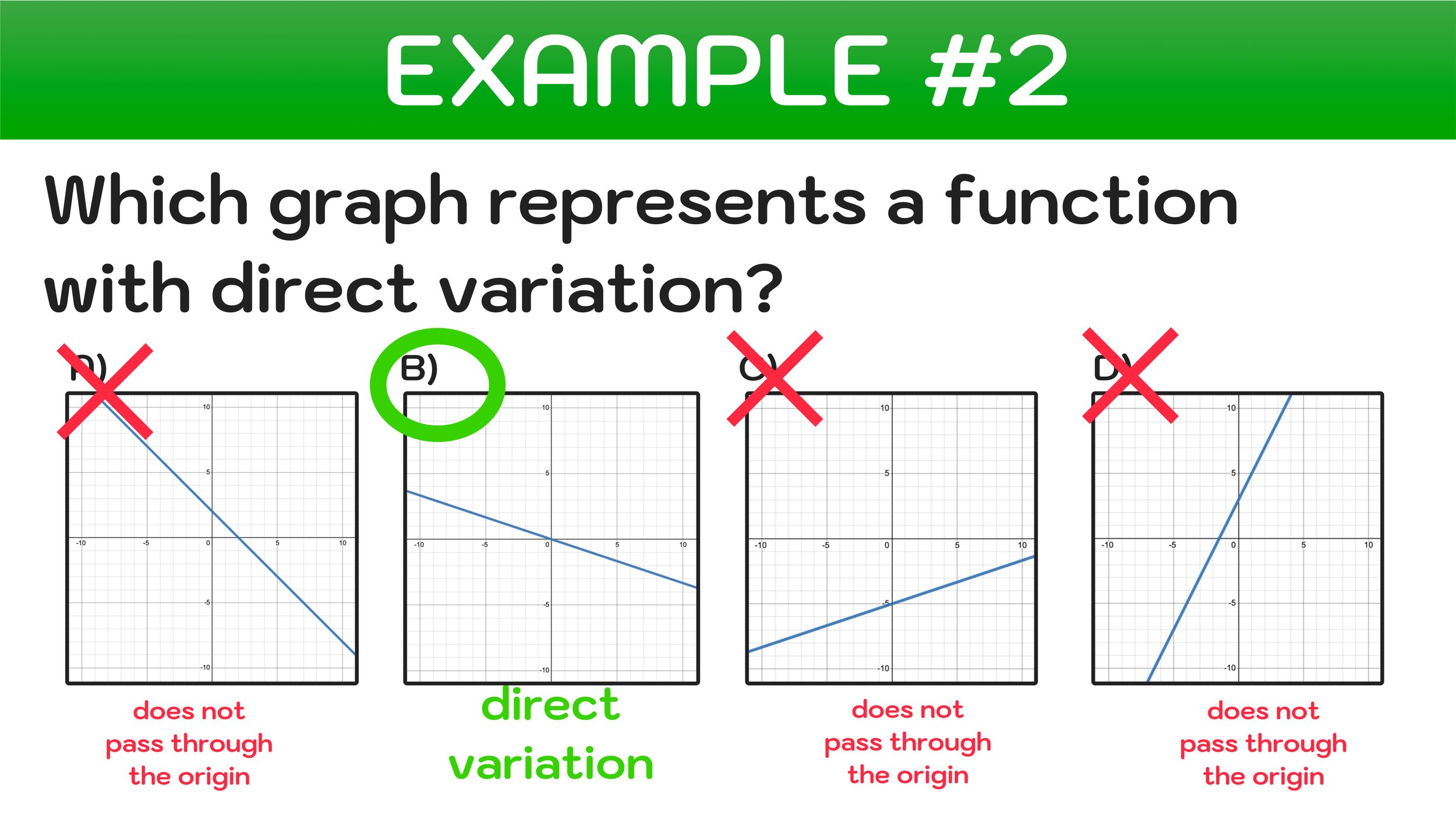
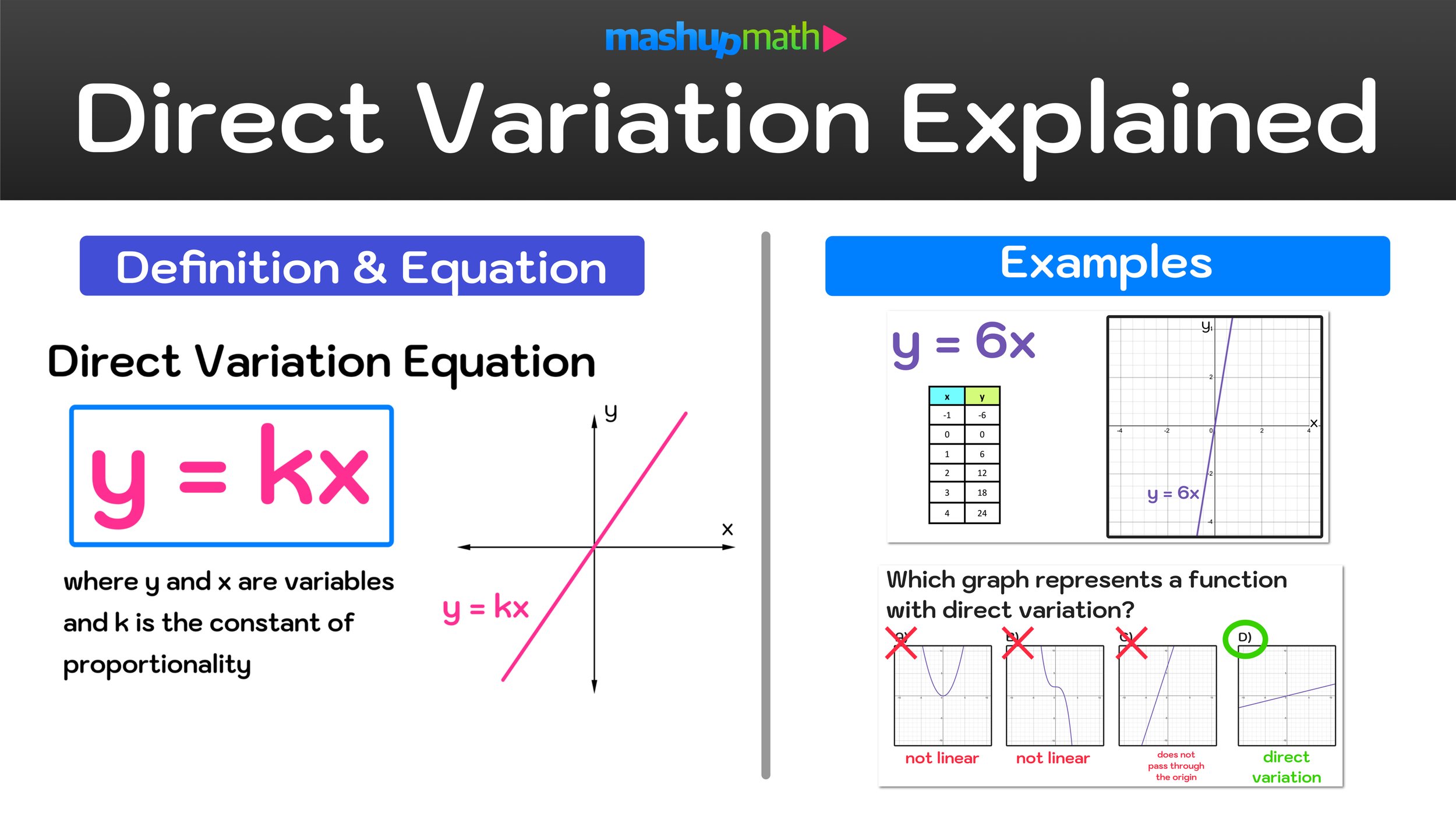
To master your finances, you must first understand the equation that governs direct variation: y = kx. In this formula, y is the dependent variable (your result, such as total profit or savings), x is the independent variable (your input, such as hours worked or capital invested), and k is the constant of proportionality.
The Equation of Growth
In a financial setting, the “k” factor is the most critical element. It represents the efficiency of your money or your effort. For a salaried employee, k is their hourly rate. For an investor, k might be the annual yield of a bond or the dividend rate of a stock. When we ask “what are direct variations” in money, we are essentially asking how our outputs respond to our inputs.
If you are operating in a direct variation model where y (income) = k (wage) times x (hours), your growth is linear. To increase y, you must either increase your hours or negotiate a higher k. This is the basic financial reality for the vast majority of the global workforce.
Identifying the Constant of Proportionality
The “constant” is rarely truly constant in the volatile world of finance, but for the purpose of modeling, we treat it as the expected rate of return or the margin of profit. In business finance, identifying the constant allows for predictable scaling. If a digital marketing campaign has a direct variation relationship where every $1 spent (x) yields $5 in revenue (y), the constant k is 5. Knowing this allows a business to forecast growth with mathematical precision, provided the market conditions remain stable.
Direct Variation in Revenue and Sales Operations
For entrepreneurs and corporate leaders, direct variation is the language of the income statement. It provides a framework for understanding how operational changes impact the bottom line. When a business is in its “scaling” phase, it is essentially looking for direct variations that it can exploit.
Scaling Revenue Through Volume
The most obvious example of direct variation in business is the relationship between units sold and gross revenue. In a retail environment, if the price of a product is fixed, the revenue varies directly with the number of customers. This simplicity is why many businesses focus heavily on “top-of-funnel” activities. If the conversion rate is a constant k, then increasing the number of leads x will directly increase the number of sales y.
However, savvy financial managers also look for the direct variation in costs. Variable costs, such as raw materials or shipping fees, often move in direct proportion to sales volume. Understanding this relationship is vital for maintaining “Contribution Margin,” which is the amount of money left over from each sale to cover fixed costs.
Commission-Based Structures and Incentive Alignment
Direct variation is also the primary tool used in performance-based compensation. Sales commissions are a textbook example of y = kx. The salesperson’s take-home pay (y) varies directly with the volume of deals closed (x). This aligns the interests of the individual with the interests of the firm. By making the “constant” (the commission percentage) attractive, a company can motivate its workforce to maximize the “input” (sales effort), leading to a proportional increase in corporate wealth.
Marketing Spend and Customer Acquisition
In the modern tech-driven economy, direct variation is used to measure the efficacy of ad spend. Marketers look for a direct correlation between the budget allocated to platforms like Google or Meta and the resulting customer acquisitions. When this relationship is linear—meaning the cost to acquire a customer remains steady as you spend more—the business has achieved a “scalable” direct variation. The goal of financial optimization here is to increase the constant k (the return on ad spend) while managing the input x to avoid the point of diminishing returns.
Investment Strategies and Direct Proportionality
Investors live and die by the laws of variation. Every asset class—from real estate to equities to commodities—exhibits certain direct relationships that dictate how a portfolio will perform under different market conditions.
Risk vs. Reward: The Core Financial Variation
One of the most famous direct variations in the financial world is the relationship between risk and potential return. In an efficient market, the potential for higher gains (y) varies directly with the level of risk assumed (x). This is why a government-backed Treasury bond offers a lower “k” (interest rate) than a speculative startup investment.
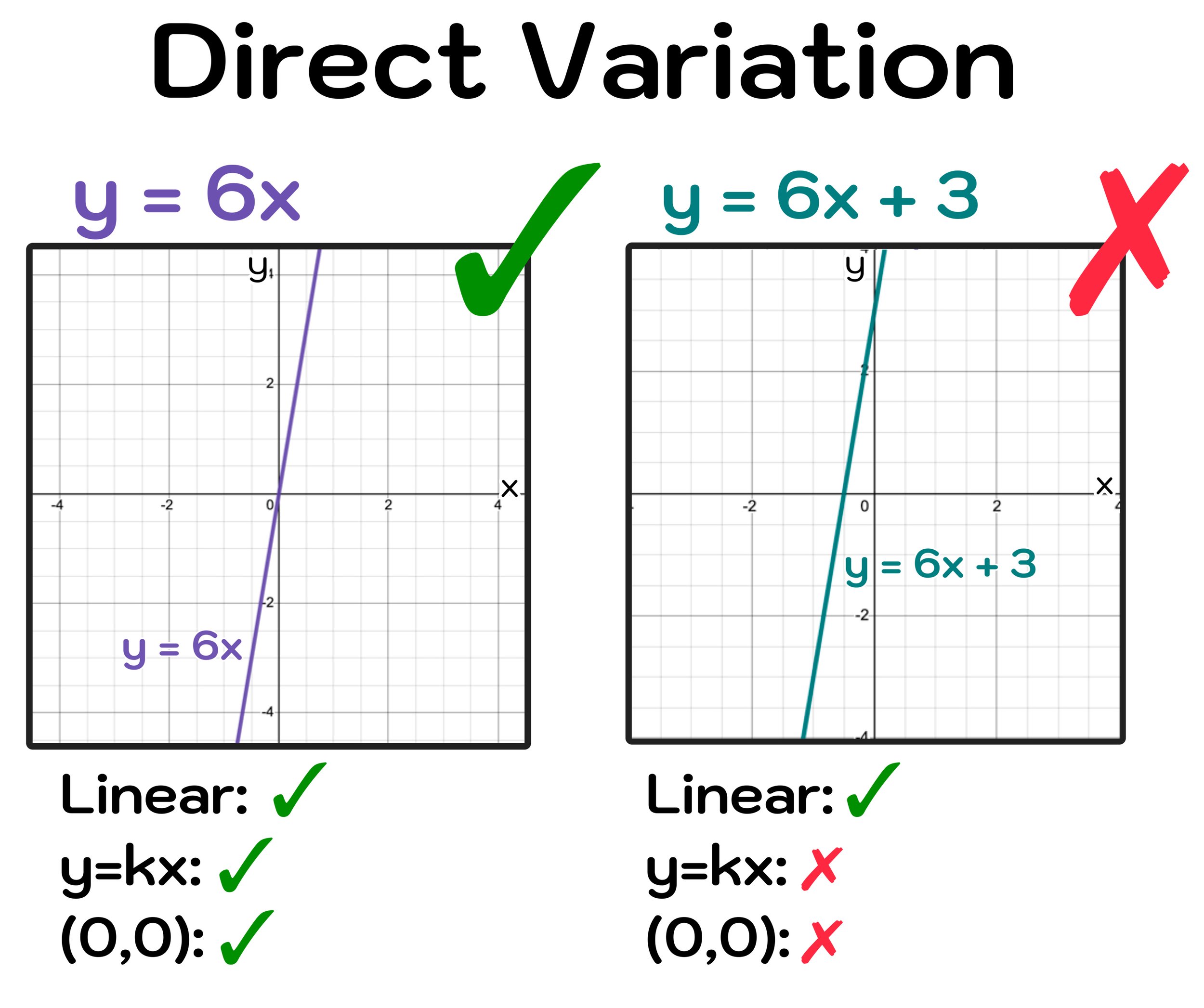
Investors must decide where they want to sit on this linear path. If you desire a higher output, you must mathematically accept a higher input of risk. Attempting to break this direct variation—by seeking high rewards with zero risk—is often where investors fall prey to scams or “bubbles” that defy economic logic.
Index Funds and Market Tracking
Passive investing is a strategy built entirely on direct variation. An index fund, such as one tracking the S&P 500, is designed so that its value (y) varies directly with the performance of the underlying market (x). The constant k in this scenario is ideally 1.0 (minus a small expense ratio).
For the individual investor, this provides a predictable way to capture market growth. If the broad economy grows by 7%, your portfolio grows by 7%. This direct variation removes the “human error” variable of active stock picking, relying instead on the proportional growth of the largest companies in the world.
Leverage and the Multiplier Effect
Leverage is a way of artificially inflating the “constant” in a direct variation equation. When an investor uses margin or a mortgage to purchase an asset, they are magnifying the relationship between the asset’s price movement and their own equity.
If you buy a property with 20% down, a 5% increase in the property’s value results in a 25% return on your invested capital. In this case, the leverage acts as a coefficient that steepens the slope of the direct variation. While this accelerates wealth creation when prices move up, it also creates a direct variation in losses when prices move down, highlighting the “double-edged sword” nature of proportional finance.
Direct Variations in Personal Finance and Wealth Building
On a personal level, understanding direct variations helps individuals move from “accidental” saving to “intentional” wealth building. It allows for the creation of a financial roadmap that is grounded in reality rather than hope.
Savings Rates and Future Net Worth
There is a direct variation between your savings rate and the time it takes to reach financial independence. If we hold investment returns constant, the speed of your wealth accumulation (y) varies directly with the percentage of your income you choose to save (x).
People often look for complex “hacks” to get rich, but the most powerful tool is the direct proportion of the savings rate. By increasing the input (savings), the output (net worth) must respond. This is a mathematical certainty that bypasses market volatility and economic cycles.
The Impact of Time on Compound Growth
While compound interest is technically an exponential function, in the short-to-medium term, we can view the relationship between time and interest earned as a form of direct variation. For an investor, every additional year the money stays in the market (x) leads to a proportional increase in the interest generated (y).
The “constant” here is the interest rate. By understanding that time is the most valuable input in the wealth equation, individuals can prioritize early investing. When you see time as a direct variable of wealth, you stop viewing “saving for later” as a chore and start seeing it as a proportional growth engine.
Navigating the Limitations: When Direct Variation Becomes Non-Linear
While the concept of direct variation is a powerful tool for financial planning, the most sophisticated investors and business owners know when the model breaks down. In the real world, “direct” relationships are often interrupted by external forces.
Diminishing Returns and Economies of Scale
The law of diminishing returns is the primary antagonist of direct variation. In business, you might find that doubling your marketing spend (x) does not double your sales (y) because you have already saturated your target audience. In this case, the “constant” k begins to shrink.
Conversely, “Economies of Scale” can create a “super-linear” relationship where your outputs grow faster than your inputs. As a company grows, it might be able to negotiate lower costs for materials, meaning that for every dollar spent, the profit margin (k) actually increases. Recognizing when a relationship shifts from direct variation to exponential growth—or to stagnation—is the hallmark of an expert financier.
Managing Systemic Risk
Finally, direct variation assumes that the “constant” k remains stable. In finance, this is rarely the case forever. Interest rates change, consumer preferences shift, and geopolitical events occur. A strategy that relies on a direct variation between “buying a home” and “gaining equity” can be decimated by a housing market crash that turns the constant negative.
Therefore, the ultimate financial application of direct variation is diversification. By spreading investments across different “equations”—each with its own independent variables and constants—an individual can protect themselves from a failure in any single proportional relationship.
In summary, when we ask “what are direct variations” within the context of money, we are looking for the levers of control in our financial lives. Whether it is the direct link between sales and revenue, risk and reward, or savings and net worth, these proportional relationships are the bedrock of economic logic. By identifying the constants that govern your income and investments, you can stop reacting to the economy and start calculating your way to success.
aViewFromTheCave is a participant in the Amazon Services LLC Associates Program, an affiliate advertising program designed to provide a means for sites to earn advertising fees by advertising and linking to Amazon.com. Amazon, the Amazon logo, AmazonSupply, and the AmazonSupply logo are trademarks of Amazon.com, Inc. or its affiliates. As an Amazon Associate we earn affiliate commissions from qualifying purchases.