
At the heart of every technological advancement—from the smartphone in your pocket to the supercomputers driving artificial intelligence—lies a fundamental understanding of the microscopic world. While the concept of the atom dates back to ancient philosophy, it is the mastery of the three primary subatomic particles—protons, neutrons, and electrons—that has enabled the modern digital age. Understanding these particles is not merely a task for physicists; it is the foundation of material science, semiconductor engineering, and the burgeoning field of quantum computing.
In the context of technology, an atom is more than a unit of matter; it is a complex system of interactions that we have learned to manipulate to store data, transmit signals, and generate power. By examining the roles of the electron, the proton, and the neutron, we can trace the lineage of today’s most sophisticated hardware and software ecosystems.

The Electron: The Engine of the Digital Revolution
The electron is arguably the most critical subatomic particle in the realm of technology. As a negatively charged particle that orbits the nucleus, its mobility and responsiveness to electromagnetic fields form the basis of all electronic devices. Without the ability to harness the flow of electrons, the concept of a digital circuit would be impossible.
The Foundation of Semiconductors and Transistors
The modern tech landscape is built upon the silicon chip. The functionality of these chips depends entirely on the manipulation of electrons within semiconductor materials. By introducing impurities into silicon—a process known as doping—engineers can create regions with an abundance of electrons (n-type) or a deficit of electrons (p-type, or “holes”).
The interaction between these regions allows for the creation of transistors, which act as microscopic switches. When a voltage is applied, electrons flow or are blocked, representing the binary states of 1 and 0. This simple subatomic movement is the physical manifestation of every line of code ever written. As we push toward 2-nanometer and 3-nanometer processes, the challenge for tech giants like TSMC and Intel is managing electron leakage and quantum tunneling, where electrons move in ways that defy classical physics.
Electrons in Data Storage and Transmission
Beyond processing, electrons are the primary medium for data transmission. In fiber-optic networks, while photons (particles of light) carry data over long distances, it is the conversion of these signals back into electron-driven electrical pulses that allows our devices to interpret the information.
In terms of storage, Flash memory—used in Solid State Drives (SSDs)—relies on trapping electrons in a “floating gate.” The presence or absence of these electrons determines the data bit stored. The evolution of this technology has allowed for the miniaturization of high-capacity storage, enabling the cloud computing infrastructure that powers modern AI tools and global software platforms.
The Proton: Defining Identity and Precision in High-Tech Applications
While electrons handle the “work” of moving data, the proton serves as the anchor of atomic identity. Located in the nucleus and carrying a positive charge, the number of protons defines what an element is. In the world of technology, this identity is crucial for specialized hardware and advanced medical tech.
Proton Exchange Membranes in Green Technology
One of the most promising frontiers in sustainable technology is the hydrogen fuel cell. This technology relies on Proton Exchange Membrane (PEM) fuel cells. In this system, hydrogen molecules are stripped of their electrons, leaving behind bare protons. These protons then pass through a specialized polymer membrane to react with oxygen, creating electricity and water.
This technological application of subatomic particles is a cornerstone of the shift toward “Green Tech” and sustainable logistics. Companies are currently investing billions into PEM technology to power data centers and heavy transport, proving that subatomic manipulation is key to solving the energy demands of the future digital economy.
Precision Engineering and Proton Therapy
The mass and charge of the proton make it an ideal candidate for precision-based technologies. In the medical tech sector, proton therapy represents the pinnacle of oncological treatment. Unlike traditional X-rays, which can damage healthy tissue as they pass through the body, proton beams can be calibrated to release their maximum energy at a specific depth—the “Bragg Peak.”

This level of precision is only possible through sophisticated software and hardware interfaces that calculate subatomic trajectories in real-time. It is a prime example of how physics and high-end computing intersect to create life-saving gadgets and machinery. Furthermore, mass spectrometry—a tool used in everything from digital security sensors to pharmaceutical research—relies on measuring the mass-to-charge ratio of ions, a process fundamentally governed by the number of protons present.
The Neutron: Stability, Energy, and Material Science
The neutron, a subatomic particle with no net electric charge, resides in the nucleus alongside protons. While it might seem less “active” than the electron, the neutron is the silent partner that makes modern material science and large-scale energy production possible.
Powering the Grid for AI and Big Data
The massive energy requirements of modern AI models and global server farms require a stable and dense power source. Nuclear fission technology, which provides a significant portion of the world’s carbon-free baseload power, is entirely dependent on the behavior of neutrons.
In a nuclear reactor, neutrons act as the catalyst for the chain reaction. When a neutron strikes the nucleus of a heavy atom like Uranium-235, it causes the atom to split, releasing an immense amount of thermal energy and more neutrons to continue the cycle. The technology required to monitor, dampen, and control these neutron fluxes involves some of the most advanced digital twin software and real-time monitoring sensors in existence.
Neutron Scattering and Material Innovation
In the tech industry, the search for the next “wonder material”—be it for better batteries or lighter aerospace components—often leads to neutron scattering facilities. Because neutrons are neutral, they can penetrate deep into materials without being repelled by the electrical charges of protons or electrons.
By observing how neutrons bounce off the nuclei of atoms within a material, scientists can create high-resolution 3D maps of a material’s internal structure at the atomic level. This “subatomic microscopy” is essential for developing the high-performance alloys used in high-end gadgets and the specialized ceramics used in digital security hardware. It allows engineers to see exactly how lithium ions move within a smartphone battery, leading to faster charging and longer-lasting tech.
The Future: Quantum Tech and the Subatomic Frontier
As we look toward the next decade of technology, we are moving beyond simply using subatomic particles as tools and toward treating them as the fundamental components of a new type of computing: Quantum Computing.
Qubits and the Power of Subatomic States
In classical computing, we use the flow of electrons to represent bits. In quantum computing, we use the properties of subatomic particles—such as the spin of an electron or the state of an ion—to create “qubits.” Unlike a standard bit, a qubit can exist in a state of superposition, representing both 1 and 0 simultaneously.
This allows quantum computers to solve complex problems—such as decrypting legacy security protocols or simulating molecular structures for new drugs—at speeds that are mathematically impossible for even the most powerful classical supercomputers. This shift marks the transition from “Electronics” (the study of electron flow) to “Quantum Informatics” (the study of subatomic information states).
Digital Security in a Subatomic World
The manipulation of subatomic particles also presents new challenges for digital security. As quantum computing advances, the potential to break current encryption standards increases. This has birthed the field of Quantum Key Distribution (QKD), which uses the principles of subatomic physics to create unhackable communication channels. In this tech niche, if an intruder attempts to observe the subatomic state of a photon or electron carrying a key, the state is altered, immediately alerting the system to a breach.
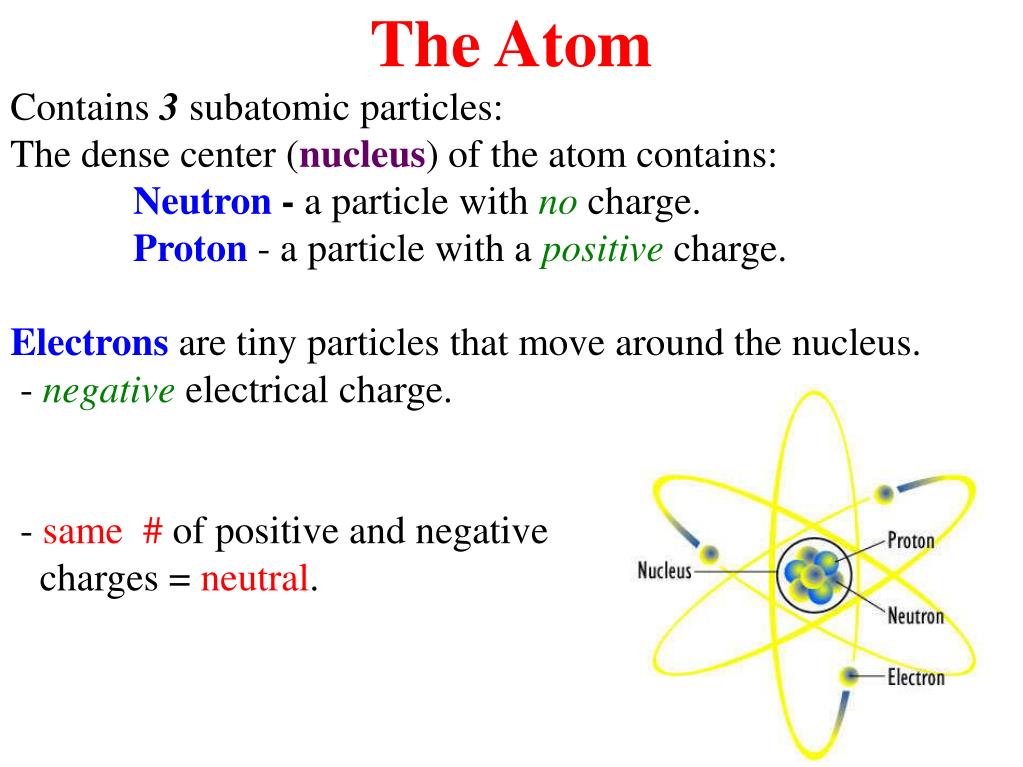
Conclusion: The Atom as a Technological Map
Understanding the three subatomic particles—the electron, the proton, and the neutron—is no longer just the domain of the classroom. For the tech professional, these particles are the hardware of the universe. The electron provides the mobility for our circuits, the proton defines the materials we build with, and the neutron provides the energy and the analytical depth needed for innovation.
As we continue to shrink our devices and expand our computational power, our relationship with these three particles will only deepen. We are no longer just building machines that use electricity; we are building a world that operates at the subatomic scale, turning the fundamental building blocks of matter into the ultimate tools of the digital age.
aViewFromTheCave is a participant in the Amazon Services LLC Associates Program, an affiliate advertising program designed to provide a means for sites to earn advertising fees by advertising and linking to Amazon.com. Amazon, the Amazon logo, AmazonSupply, and the AmazonSupply logo are trademarks of Amazon.com, Inc. or its affiliates. As an Amazon Associate we earn affiliate commissions from qualifying purchases.