
In the intricate world of corporate finance and accounting, few entries are as fundamental—yet frequently misunderstood—as accumulated depreciation. For business owners, investors, and financial professionals, understanding exactly what account accumulated depreciation belongs to is not just a matter of bookkeeping pedantry; it is a vital component of interpreting the true value of a company’s physical infrastructure.
At its core, accumulated depreciation is classified as a contra asset account. To understand why this classification exists and how it functions, one must look beyond simple subtraction and delve into the principles of accrual accounting, the matching principle, and the lifecycle of tangible assets.
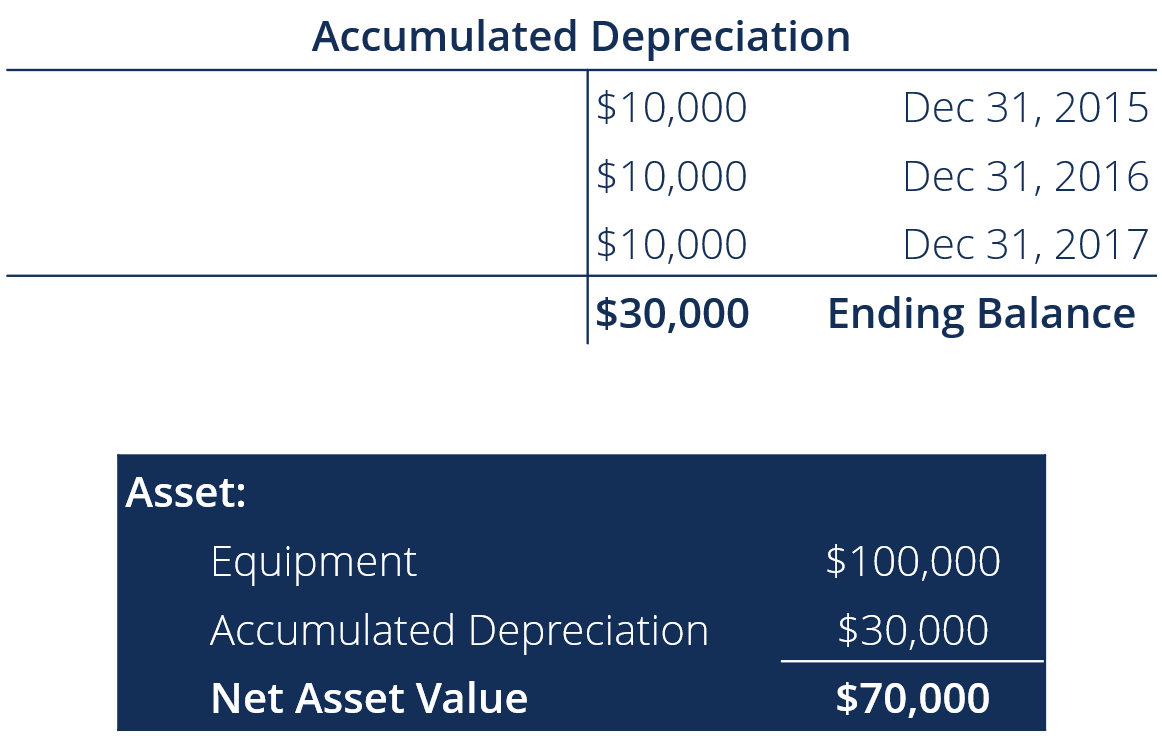
The Anatomy of a Contra Asset Account
In standard accounting, most asset accounts carry a natural debit balance. When you purchase a piece of machinery or a fleet of vehicles, those assets are recorded on the balance sheet at their historical cost as a debit. However, as these assets are used to generate revenue, they inevitably lose value through wear and tear, usage, or obsolescence.
Instead of directly reducing the value of the original asset account every time it loses a bit of value, accountants use a “contra” account. A contra asset account is an asset account that carries a natural credit balance—the opposite of a standard asset.
Why Not Credit the Asset Directly?
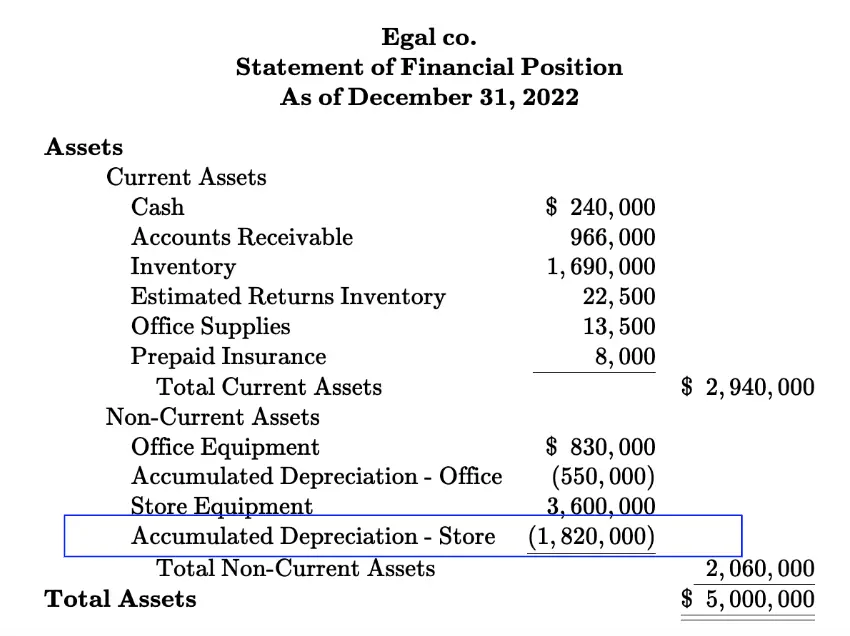
One might wonder why a business doesn’t simply lower the value of the “Equipment” or “Building” account directly. The reason lies in transparency and historical accuracy. By using a contra asset account like accumulated depreciation, a company can display two critical pieces of information on its balance sheet simultaneously:
- Historical Cost: The original purchase price of the asset.
- Total Depreciation Taken: The cumulative amount of the asset’s cost that has been allocated as an expense since it was placed in service.
When these two figures are presented together, they provide a clear picture of how old the company’s assets are and how much of their useful life remains. This transparency is essential for stakeholders who need to gauge when a company might be facing significant capital expenditures to replace aging infrastructure.
The Impact on Total Assets
Because accumulated depreciation is a contra asset with a credit balance, it is subtracted from the total gross assets. This result is known as the Net Book Value (NBV) or simply the “carrying value” of the asset. The formula is straightforward:
Gross Asset Cost – Accumulated Depreciation = Net Book Value.
Accumulated Depreciation vs. Depreciation Expense
One of the most common points of confusion in business finance is the distinction between “Depreciation Expense” and “Accumulated Depreciation.” While they are inextricably linked, they live on different financial statements and serve different purposes.
The Income Statement: Depreciation Expense
Depreciation expense represents the cost of using an asset during a specific, singular reporting period (such as a month, quarter, or year). It appears on the Income Statement and reduces the company’s net income for that specific period. It is a “non-cash” expense because the actual cash outflow usually happened years ago when the asset was purchased.
The Balance Sheet: Accumulated Depreciation
Accumulated depreciation, on the other hand, is a cumulative account. It is found on the Balance Sheet and represents the total sum of all depreciation expenses recorded for an asset from the day it was acquired until the present moment. Each time a period’s depreciation expense is recorded, that same amount is added to the accumulated depreciation account.
The Matching Principle in Action
The existence of these two accounts is a direct result of the Matching Principle in accounting. This principle dictates that expenses must be matched to the revenues they help generate. If a company buys a delivery truck for $50,000 that will last for five years, it would be inaccurate to record the entire $50,000 expense in the first year. Doing so would make the first year look unprofitable and the following four years look artificially profitable.
Instead, the cost is spread over the truck’s five-year lifespan. Each year, a portion of the cost is moved to the Income Statement (as Depreciation Expense) and added to the cumulative total on the Balance Sheet (as Accumulated Depreciation).
Strategic Implications for Financial Analysis

Understanding the state of the accumulated depreciation account is vital for any deep-dive financial analysis. It offers insights into a company’s capital management strategy and its future financial obligations.
Assessing Asset Age and Replacement Cycles
By comparing accumulated depreciation to the gross value of fixed assets, analysts can calculate the “average age” of a company’s physical plant. If accumulated depreciation represents 80% or 90% of the total asset value, the company is likely operating with very old equipment. This suggests that a massive cash outflow for asset replacement is imminent. Conversely, a low percentage of accumulated depreciation relative to gross assets indicates a company that has recently modernized its operations.
Tax Strategy and Cash Flow
In the realm of business finance, depreciation is a powerful tool for tax shielding. While accumulated depreciation is a book-keeping entry, the methods used to calculate it—such as Modified Accelerated Cost Recovery System (MACRS) for tax purposes—can significantly impact a company’s tax liability.
Because depreciation reduces taxable income without requiring an immediate cash outflow, it acts as a protector of cash. Businesses often use accelerated depreciation methods to front-load these expenses, thereby reducing taxes in the early years of an asset’s life and keeping more cash within the business for reinvestment.
Impairment and the Limits of Depreciation
It is important to note that accumulated depreciation only tracks the systematic allocation of an asset’s cost. It does not necessarily reflect the actual market value. If an asset’s market value drops precipitously due to damage or sudden technological obsolescence, the company may need to record an “impairment.” This is a separate adjustment that reduces the carrying value of the asset immediately, independent of the regular depreciation schedule.
Methods of Calculation and Their Effect on the Account
The speed at which the accumulated depreciation account grows depends entirely on the depreciation method chosen by the company’s management. Each method carries different implications for financial reporting.
Straight-Line Depreciation
This is the most common and simplest method. The asset’s cost (minus its salvage value) is divided equally over its useful life. This results in a steady, predictable growth of the accumulated depreciation account. It is preferred for assets whose utility is consumed evenly over time, such as office furniture or buildings.
Double-Declining Balance (DDB)
This is an accelerated method that results in higher depreciation expenses in the early years and lower expenses later on. Under DDB, the accumulated depreciation account grows very quickly in the beginning. This is often used for assets that lose their value rapidly or become technologically obsolete quickly, such as computers and high-tech manufacturing equipment.
Units of Production
Under this method, depreciation is based on actual usage rather than the passage of time. If a machine is rated for 1 million units, the depreciation expense is calculated based on how many units were produced during the period. In this scenario, the accumulated depreciation account grows in direct correlation with manufacturing output. This provides a very accurate matching of costs to revenue for heavy industrial operations.
The Finality of Accumulated Depreciation: Disposal and Sale
The lifecycle of the accumulated depreciation account ends when the underlying asset is retired, sold, or scrapped. This process is known as “derecognizing” the asset.
When an asset is sold, the accounting department must “zero out” both the original asset account and its corresponding accumulated depreciation account. To do this, they:
- Debit Accumulated Depreciation (to remove the credit balance).
- Credit the Asset Account (to remove the debit balance).
- Record the cash received from the sale.
- Record a gain or loss on the sale based on the difference between the cash received and the asset’s Net Book Value.
If the accumulated depreciation equals the original cost of the asset (meaning it is “fully depreciated”), and the asset is scrapped for no value, the two accounts simply cancel each other out, leaving no impact on the company’s bottom line at the moment of disposal.
Conclusion
Accumulated depreciation is much more than a technical accounting term; it is a critical financial barometer. As a contra asset account, it serves as the bridge between a company’s historical investments and its current financial reality. It allows businesses to adhere to the matching principle, provides a mechanism for tax planning, and offers investors a transparent look at the age and health of a company’s infrastructure.
By maintaining a clear distinction between the historical cost of an asset and the cumulative depreciation taken against it, the balance sheet provides a comprehensive narrative of a company’s operational history and its future capital needs. Whether you are managing a small business or analyzing a Fortune 500 corporation, a firm grasp of this account is essential for navigating the complexities of modern finance.
aViewFromTheCave is a participant in the Amazon Services LLC Associates Program, an affiliate advertising program designed to provide a means for sites to earn advertising fees by advertising and linking to Amazon.com. Amazon, the Amazon logo, AmazonSupply, and the AmazonSupply logo are trademarks of Amazon.com, Inc. or its affiliates. As an Amazon Associate we earn affiliate commissions from qualifying purchases.