
For the global traveler or the casual observer, asking “What’s the time in Canada?” seems like a straightforward query. However, for software engineers, systems architects, and digital product managers, the answer is a complex tapestry of geopolitical history, algorithmic logic, and network protocols. Canada is not a monolith; it spans six distinct time zones, ranging from the rugged coasts of Newfoundland to the Pacific shores of British Columbia. Managing this vast longitudinal spread requires a sophisticated understanding of digital chronometry, the Network Time Protocol (NTP), and the intricacies of the IANA Time Zone Database.

As our world becomes increasingly decentralized, the technical infrastructure required to synchronize a meeting between a developer in Halifax and a product owner in Vancouver involves more than just a simple clock. It requires a robust stack of technologies designed to mitigate the risks of “time drift” and the shifting sands of local legislative changes regarding Daylight Saving Time (DST).
The Architecture of Time: How Canada’s Six Zones Impact Digital Systems
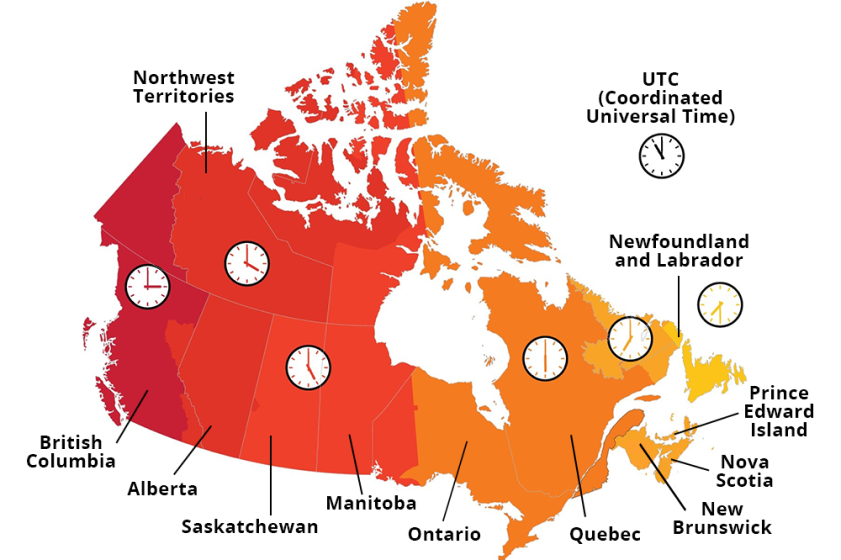
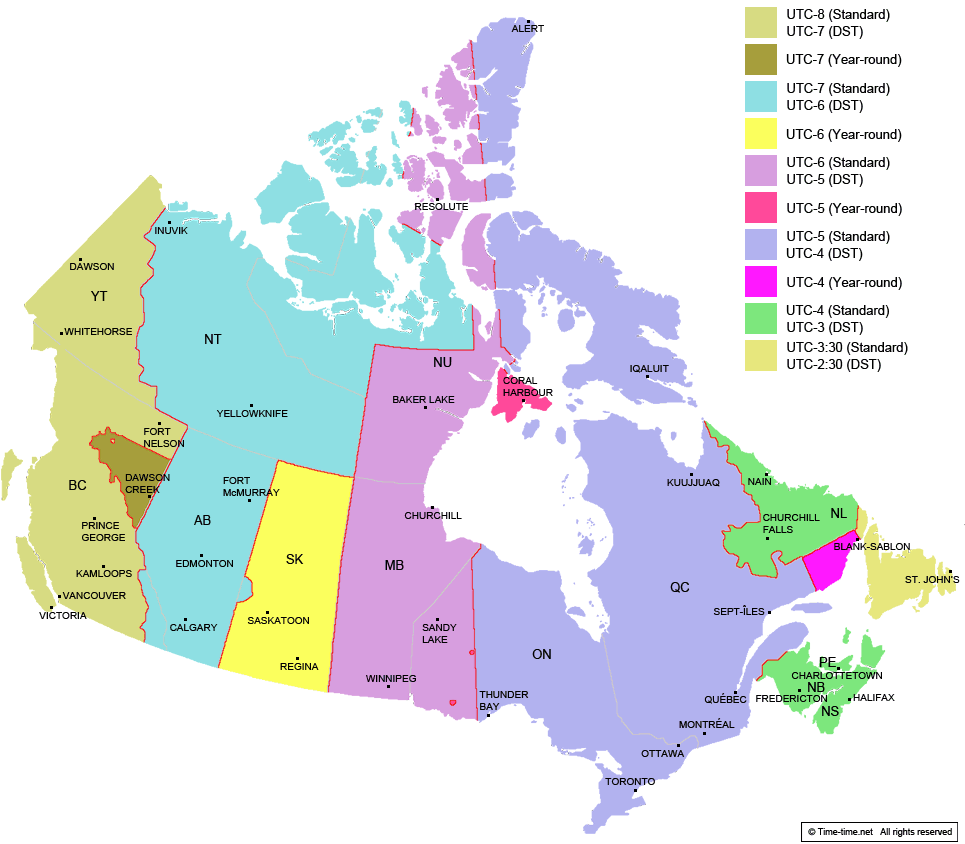
Canada’s geography dictates its chronological complexity. The country spans roughly 90 degrees of longitude, necessitating a division into six standard time zones: Pacific, Mountain, Central, Eastern, Atlantic, and Newfoundland. For any application operating on a national scale, hardcoding time offsets is a recipe for catastrophic system failure.
The Complexity of the Canadian Time Map
From a technical standpoint, the most interesting anomaly is the Newfoundland Time Zone. While most global time zones are separated by full one-hour increments, Newfoundland sits at a unique UTC-3:30 offset (UTC-2:30 during DST). This half-hour deviation often creates bugs in poorly designed software that assumes all UTC offsets are integers.
Developers must account for these variations by utilizing the IANA Time Zone Database (often called the “Olson database”). This database provides a comprehensive history of local time zone changes across the globe. In Canada, this includes tracking which specific municipalities might opt out of Daylight Saving Time or change their zone boundaries. When a user asks a digital assistant “What’s the time in Canada?”, the system must first geolocate the user or the specific Canadian city in question and then query the current offset relative to Coordinated Universal Time (UTC).
Network Time Protocol (NTP) and Global Synchronization
Behind every accurate digital clock in Canada lies the Network Time Protocol (NTP). This is one of the oldest internet protocols still in use, designed to synchronize the clocks of computers over a network to within a few milliseconds of UTC.
In Canada, high-precision timing is maintained by organizations like the National Research Council (NRC). They operate primary time servers that are synchronized to atomic clocks. Digital infrastructure—ranging from banking systems to telecommunications networks—regularly polls these servers. Without NTP, the distributed systems that power the Canadian economy would suffer from “clock skew,” leading to out-of-order data processing, security certificate failures, and corrupted transactional logs.
Software Engineering Challenges: Dealing with Daylight Saving and Regional Anomalies
Perhaps the greatest challenge in Canadian chronometry is the management of Daylight Saving Time. While the majority of the country follows the “spring forward, fall back” tradition, the implementation is not uniform. This lack of uniformity creates a significant burden for developers who must ensure that scheduling software and time-sensitive automated tasks remain accurate.
The DST Algorithmic Nightmare
Daylight Saving Time transitions are notorious for causing “edge case” bugs. For example, during the autumn transition when the clock falls back, a specific hour (usually 1:00 AM to 2:00 AM) occurs twice. If a database is recording logs using local time rather than UTC, it might show an event occurring “before” the event that actually preceded it.
In Canada, the rules for DST are set by provincial and territorial governments, not the federal government. This means that at any given moment, a province could decide to move to permanent Standard Time or permanent Daylight Time. Tech companies must remain vigilant, updating their TZ database files and ensuring that servers are patched to reflect these legislative shifts. The most professional approach for any Canadian-facing application is to store all timestamps in UTC and only convert to local time at the presentation layer (the UI).
Saskatchewan: The Outlier in the Code
Saskatchewan serves as a unique case study in digital time management. Most of the province stays on Central Standard Time (CST) year-round, effectively observing the same time as Alberta in the summer and Manitoba in the winter. However, the border city of Lloydminster officially observes Mountain Time, including DST, to stay in sync with its Alberta counterpart.
For a developer building a logistics or delivery app, this means that a simple provincial check isn’t enough. The software must use precise GPS coordinates or specific postal code mapping to determine the correct time. Failing to account for the Saskatchewan anomaly can result in missed appointments, incorrect billing, and frustrated users who find their digital clocks out of sync with their physical reality.
Tools for the Modern Distributed Workforce
With the rise of remote work, particularly within the North American tech sector, managing time across Canada’s zones has become a daily operational requirement. Companies like Shopify, which pioneered “digital by design” work models in Canada, rely heavily on software stacks that prioritize time zone transparency.
Scheduling APIs and Integration
Modern developers rarely build time-management systems from scratch. Instead, they leverage robust APIs. The Google Calendar API, Microsoft Graph, and specialized services like World Time API provide the heavy lifting for time zone conversions. These tools allow developers to pass a UTC timestamp and a target location, receiving back the perfectly formatted local time, accounting for current DST status and regional quirks.
When integrating these APIs, it is crucial to handle “leap seconds” and the occasional drift. High-frequency trading platforms in Toronto or data centers in Montreal often use PTP (Precision Time Protocol) instead of standard NTP to achieve sub-microsecond accuracy, which is necessary for the synchronization of high-speed hardware.
AI-Powered Calendaring Solutions
The next frontier in managing Canadian time zones is the integration of Artificial Intelligence. Traditional calendars show you when people are busy, but AI-driven scheduling tools like Reclaim.ai or Motion analyze time zone spreads across a team to suggest “golden hours”—the limited windows where a colleague in St. John’s and a colleague in Vancouver can meet during their respective 9-to-5 windows without one of them working through dinner or waking up at dawn.
These AI tools use predictive modeling to account for “meeting fatigue” and prioritize deep work blocks, automatically adjusting for the four-and-a-half-hour gap between Canada’s easternmost and westernmost points. For a tech-forward company, “What’s the time in Canada?” is no longer a question of what the clock says, but a question of how to optimize human productivity across a massive geographic expanse.
The Future of Chronometry in Canadian Tech Infrastructure
As we move toward a more integrated digital future, the way we handle time in Canada is evolving. The push for 5G connectivity and the expansion of the Internet of Things (IoT) require even more granular control over time synchronization.
Precision Timing for Financial and 5G Networks
In the financial hubs of Toronto, “time” is a commodity. For algorithmic trading on the TSX (Toronto Stock Exchange), the time it takes for a signal to travel from one server to another is measured in nanoseconds. This requires “traceable time”—a technical standard where every timestamp can be traced back to a primary reference clock.
Furthermore, the rollout of 5G across Canada depends on incredibly tight time synchronization between base stations. If two towers are even slightly out of sync, the handoff of a data signal from a moving vehicle will fail. This is pushing Canadian tech infrastructure toward the adoption of satellite-based timing (GNSS) and the implementation of boundary clocks within the network fabric to ensure that “Canada time” is consistent down to the billionth of a second.
The Move Toward a Unified Time Standard?
There is ongoing debate within the tech and political spheres about whether Canada should move to a more unified time system—perhaps by eliminating DST or even adopting a single national time for digital operations. While the latter is unlikely for human schedules, many backend systems are already moving toward a “Time-as-a-Service” (TaaS) model.
In this model, time is treated as a cloud resource. Instead of every device calculating its own time, they subscribe to a high-availability time stream that is verified and secure. This mitigates the risk of “time-shifting” attacks, where hackers manipulate a system’s clock to bypass security protocols or expire certificates prematurely.
For the modern professional operating within the Canadian tech ecosystem, understanding the “time” is about more than just looking at a watch. It is about understanding the intersection of geography, law, and distributed computing. As Canada continues to grow as a global tech powerhouse, the ability to master these chronological complexities will remain a hallmark of sophisticated engineering and effective digital strategy. Whether you are syncing a database in Calgary or launching an app in Quebec City, time is the invisible thread that holds the digital fabric together.
aViewFromTheCave is a participant in the Amazon Services LLC Associates Program, an affiliate advertising program designed to provide a means for sites to earn advertising fees by advertising and linking to Amazon.com. Amazon, the Amazon logo, AmazonSupply, and the AmazonSupply logo are trademarks of Amazon.com, Inc. or its affiliates. As an Amazon Associate we earn affiliate commissions from qualifying purchases.