
In the rapidly evolving landscape of technology, from software engineering to artificial intelligence, the “scientific method” is often viewed as a relic of biology labs or chemistry classrooms. However, the foundational logic of scientific inquiry—beginning with a single, critical first step—remains the most powerful framework for digital innovation. Whether a developer is troubleshooting a cryptic kernel panic or a data scientist is fine-tuning a deep learning model, they are participating in a process that dates back centuries.
The question “what’s the first step in the scientific method?” is frequently answered with a single word: Observation. In the context of modern technology, observation is more than just looking; it is the active, systematic gathering of data and the identification of patterns, anomalies, or gaps within a system. This initial phase dictates the success of every subsequent stage, from hypothesis to deployment.
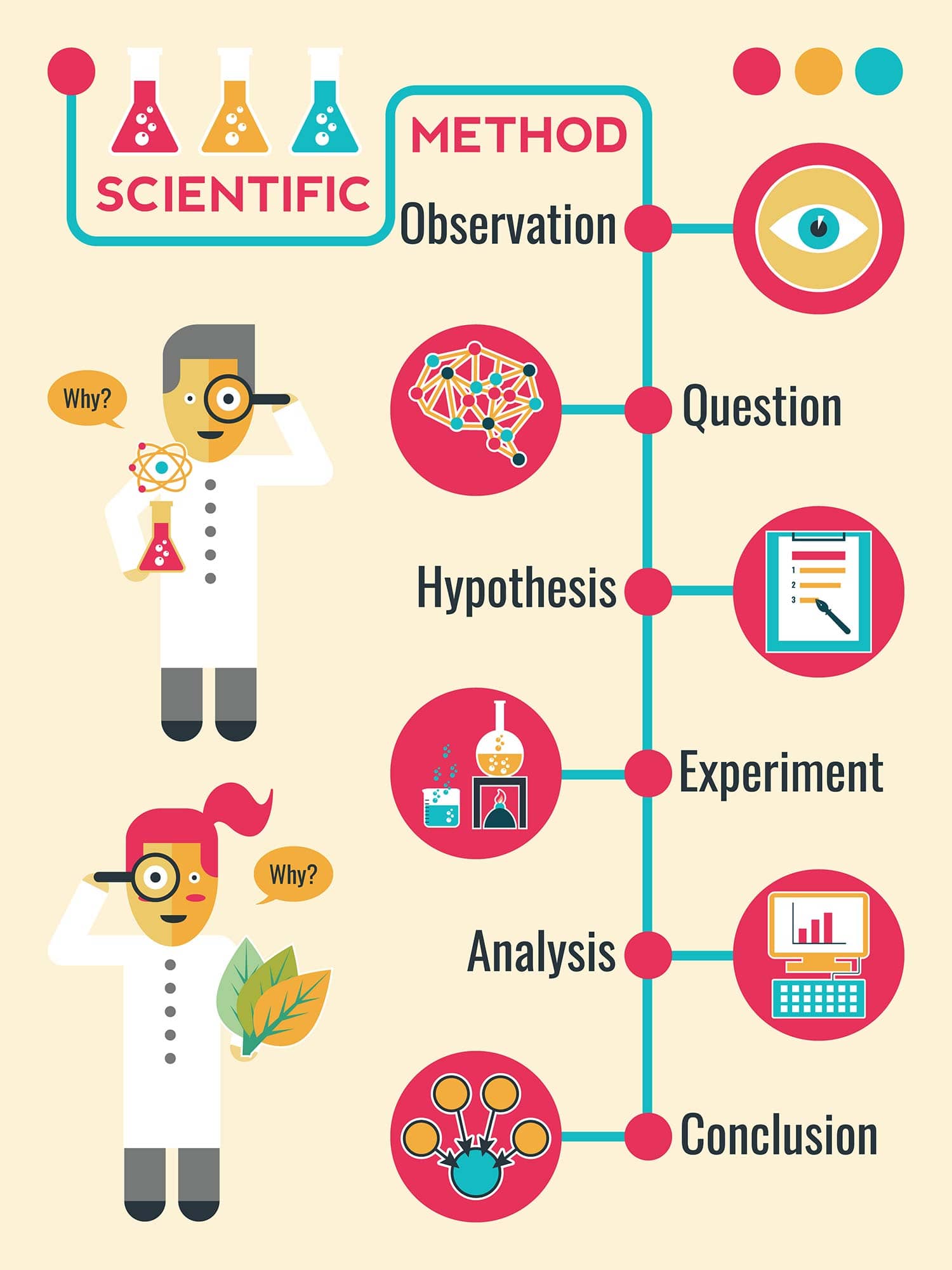
The Foundation of Inquiry: Observation in the Digital Ecosystem
In tech, observation is the process of identifying a problem or a potential area for improvement through telemetry, logs, and user behavior analysis. It is the catalyst for innovation. Without a rigorous observational phase, technical teams risk solving the wrong problems or building features that offer no real-world value.
From Monitoring to Observability
Traditionally, IT teams relied on “monitoring”—checking to see if a system was up or down. Modern tech has transitioned into the era of “observability.” While monitoring tells you that something is wrong, observability uses the first step of the scientific method to help you understand why it is wrong by looking at the internal state of a system through its external outputs.
In high-scale cloud environments, observation involves parsing millions of data points across microservices. An engineer might observe a slight latency spike in an API response time. This observation isn’t just a casual glance at a dashboard; it is the collection of evidence that suggests a deviation from the expected norm. This is the “What” that leads to the “Why.”
Identifying Market Gaps and User Friction
For product managers and software architects, observation often takes the form of user experience (UX) research. By observing how a user interacts with a mobile app or a SaaS platform, developers can identify points of friction. If data shows that 40% of users drop off at a specific checkout screen, that observation becomes the bedrock for the next phase of the scientific method. In this sense, data is the “microscope” of the tech world, allowing us to see details in user behavior that were previously invisible.
Formulating the Digital Hypothesis: The Architect’s Blueprint
Once an observation has been made—such as “the server crashes under 10,000 concurrent requests” or “the AI model exhibits bias in sentiment analysis”—the second step is to formulate a hypothesis. This is an educated guess that provides a testable explanation for the observation.
Predictive Modeling and If-Then Logic
In software development, a hypothesis often follows the “If-Then” structure. For instance: “If we implement a Redis caching layer, then the database query latency will decrease by 30%.” This step is critical because it narrows the scope of work. Without a clear hypothesis, developers often fall into the trap of “shotgun debugging,” where they change multiple variables at once without understanding which one actually fixed the issue.
In the realm of Artificial Intelligence and Machine Learning, hypotheses are even more foundational. When training a model, a data scientist might hypothesize that increasing the depth of a neural network will improve accuracy on a specific dataset. The hypothesis serves as the bridge between raw observation and active experimentation.
A/B Testing as Hypothesis Validation
The most common application of the scientific method in tech-driven brand growth is A/B testing. A company observes low conversion rates on a landing page. They hypothesize that a “Dark Mode” interface will appeal more to their developer-centric audience. The hypothesis is specific, measurable, and actionable. It sets the stage for a controlled experiment where variables can be isolated.
Controlled Experimentation: The Lifecycle of Agile Development

The third step of the scientific method is experimentation. In tech, this is where the code is written, the infrastructure is provisioned, and the tests are run. The goal of an experiment is to prove or disprove the hypothesis in a controlled environment.
The Sandbox and Environment Isolation
One of the core principles of scientific experimentation is the control of variables. In technology, this is achieved through virtualization, containerization (like Docker), and staging environments. If an engineer wants to test a new security patch, they don’t deploy it directly to the production server. Instead, they replicate the environment in a “sandbox.”
By isolating the experiment, the engineer ensures that the results are caused by the change they introduced and not by external factors like fluctuating network traffic or unrelated background processes. This rigorous control is what separates a professional tech stack from a hobbyist project.
Failure as a Critical Data Point
In the scientific method, a “failed” experiment is just as valuable as a successful one. If a new compression algorithm doesn’t actually reduce file sizes, the experiment has still provided vital data. In the Tech industry, this is often referred to as “failing fast.” By using automated testing suites and Continuous Integration (CI) pipelines, developers can run hundreds of experiments daily. Each failure narrows the path toward the correct solution, refining the system through a process of elimination.
Data Synthesis and the Continuous Feedback Loop
After the experiment comes the analysis. In this stage, the tech professional looks at the results to see if they align with the hypothesis. This is where big data tools and analytical engines come into play.
Quantitative vs. Qualitative Analysis
Modern tech relies on a mix of quantitative data (numbers, logs, speeds) and qualitative data (user feedback, sentiment). Analyzing an experiment might involve looking at a Grafana dashboard to see if CPU usage dropped, while also reviewing Jira tickets to see if the bug reports have decreased.
If the data supports the hypothesis, the change is integrated into the main codebase (the “Theory” or “Law” stage of the scientific method in a localized context). If the data contradicts the hypothesis, the process starts over with a new observation. This is the essence of the “Agile” methodology: a perpetual loop of observing, hypothesizing, testing, and analyzing.
Continuous Deployment: The Modern Lab
The scientific method used to be a slow, linear process. In the modern tech world, it is instantaneous. Through Continuous Deployment (CD), the results of an experiment can be analyzed in real-time by a small subset of users (Canary Releases). This allows companies like Netflix or Google to run thousands of scientific experiments simultaneously, constantly refining their algorithms based on the immediate feedback of their global user base.
The Future of Discovery: AI and the Automation of the Scientific Method
As we move deeper into the age of Artificial Intelligence, the first step of the scientific method—observation—is increasingly being handled by machines. AI tools can observe patterns in trillions of lines of code or petabytes of network traffic far more efficiently than any human.
Autonomous Troubleshooting and Self-Healing Systems
We are entering an era where AI can not only observe a problem but also generate its own hypothesis and test it. “Self-healing” networks are a prime example. When an AI observes a security threat (Observation), it hypothesizes that blocking a specific IP range will mitigate the attack (Hypothesis). It then implements the block (Experiment) and monitors the results (Analysis).
This automation doesn’t replace the scientific method; it accelerates it to a speed that was previously unimaginable. However, the human element remains vital in defining the ethical boundaries and the ultimate goals of these automated inquiries.

Conclusion: The Eternal Relevance of Systematic Inquiry
What is the first step in the scientific method? It is the spark of curiosity fueled by data. In technology, observation is the act of looking at a screen, a log, or a user and asking, “Why is it like this?” and “How can it be better?”
By adhering to this structured approach, tech professionals can navigate the complexity of modern systems with clarity. Whether you are building the next revolutionary app, securing a global financial network, or training a generative AI, the scientific method provides the roadmap. It turns guesswork into engineering, and intuition into innovation. In a world of “move fast and break things,” the scientific method is the discipline that ensures we eventually stop breaking things and start building the future.
aViewFromTheCave is a participant in the Amazon Services LLC Associates Program, an affiliate advertising program designed to provide a means for sites to earn advertising fees by advertising and linking to Amazon.com. Amazon, the Amazon logo, AmazonSupply, and the AmazonSupply logo are trademarks of Amazon.com, Inc. or its affiliates. As an Amazon Associate we earn affiliate commissions from qualifying purchases.