
When discussing the financial landscape of North America, the currency of the Great White North stands out not just for its colorful appearance, but for its unique place in the global economy. If you are asking what Canadian money is called, the official name is the Canadian Dollar. In the world of international finance, it is designated by the ISO code CAD and is often symbolized as C$ to distinguish it from the United States Dollar (USD) and other dollar-denominated currencies.
However, the story of Canadian money goes far beyond its official title. It is a currency defined by its resilience, its early adoption of advanced security technologies, and a collection of colloquialisms that have become ingrained in the nation’s cultural and financial identity. Understanding Canadian money is essential for anyone interested in personal finance, international investing, or the mechanics of North American business.
The Structure of Canadian Currency: Coins and Banknotes
Canadian money is a decimal-based system, where one dollar is divided into 100 cents. While this structure is similar to that of many other nations, the physical manifestations of the Canadian dollar are distinct.
The Famous Coins: Loonies and Toonies
One of the first things people notice about Canadian money is the terminology used for its coins. In 1987, Canada replaced its one-dollar paper bill with a gold-colored (bronze-plated nickel) eleven-sided coin. Because the coin features an image of a common loon—a bird iconic to the Canadian wilderness—on its reverse side, it quickly earned the nickname “the loonie.” The name became so popular that the Royal Canadian Mint even trademarked the word.
In 1996, the government followed suit by replacing the two-dollar bill with a bimetallic coin. This coin features a silver-colored inner core surrounded by a gold-colored outer ring, with an image of a polar bear. Maintaining the theme started by the one-dollar coin, Canadians dubbed it the “toonie” (a portmanteau of “two” and “loonie”).
The Rest of the Change: Nickels, Dimes, and Quarters
Beyond the loonie and toonie, Canada uses several smaller denominations:
- The Nickel (5 cents): Traditionally made of nickel, but now mostly steel with nickel plating, usually featuring a beaver.
- The Dime (10 cents): The smallest coin in physical size, featuring the Bluenose schooner, a famous Canadian racing and fishing vessel.
- The Quarter (25 cents): Featuring a caribou, this is the workhorse of Canadian change.
A significant shift in Canadian personal finance occurred in 2013 when the government officially took the penny (1 cent) out of circulation. The cost of producing the penny had exceeded its face value, leading to a decision to phase it out. Today, while digital transactions are still recorded to the exact cent, cash transactions in Canada are rounded to the nearest five-cent increment.
Polymer Banknotes: A Leap in Financial Security
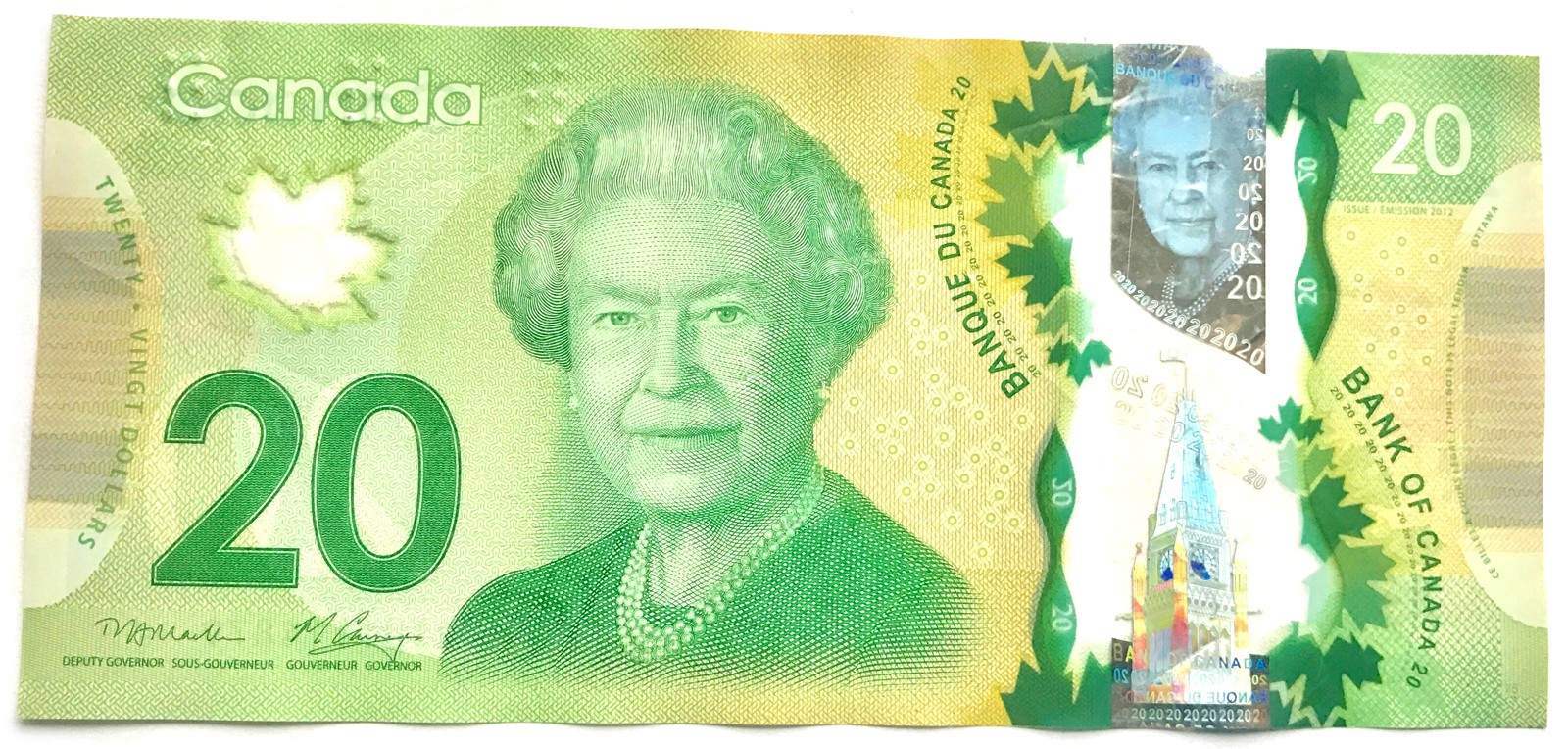
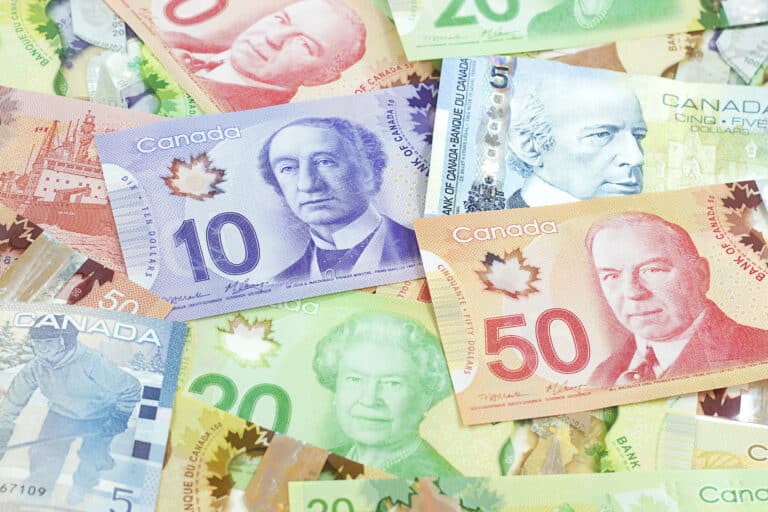
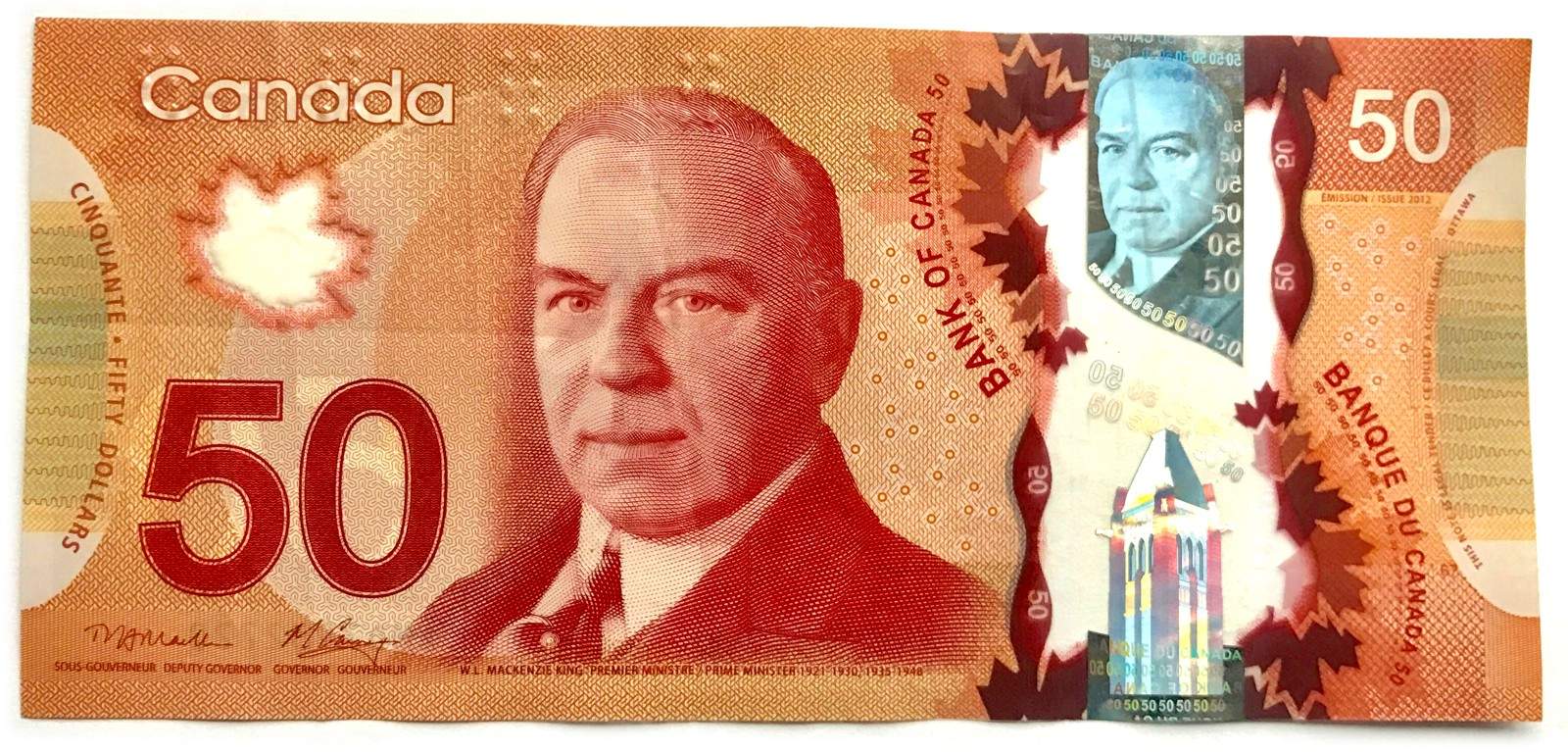
In 2011, the Bank of Canada began transitioning from cotton-paper banknotes to polymer (plastic) notes. This was a strategic financial move designed to increase the lifespan of the currency and drastically reduce counterfeiting. Polymer notes last at least 2.5 times longer than paper notes, which provides a long-term cost-saving benefit for the central bank.
Currently, Canadian bills come in denominations of $5 (blue), $10 (purple), $20 (green), $50 (red), and $100 (brown). These notes feature transparent windows and holographic elements that make them some of the most secure currencies in the world. For investors and businesses, the stability and security of the physical currency reflect the underlying stability of the Canadian financial system.
The Economic Identity: The Loonie as a Commodity Currency
In the world of foreign exchange (Forex) and global investing, the Canadian dollar is often referred to as a “commodity currency.” This classification is vital for anyone looking to understand the movements of the CAD in relation to other major currencies like the USD or the Euro.
The Correlation with Oil and Energy
Canada possesses the world’s third-largest proven oil reserves and is a major exporter of energy and natural resources. As a result, the value of the Canadian dollar often fluctuates in tandem with global crude oil prices. When oil prices are high, the demand for Canadian dollars increases as international buyers need CAD to purchase Canadian energy products. This strengthens the loonie. Conversely, when the energy market dips, the CAD often follows.
For personal finance enthusiasts and investors, this means that holding Canadian assets often provides a hedge or exposure to the energy sector. Understanding this correlation is key to managing a diversified portfolio that includes Canadian equities or bonds.
A “Safe Haven” in the Global Market
While not as dominant as the US dollar, the Canadian dollar is considered one of the world’s most stable and liquid currencies. It is frequently held as a reserve currency by central banks around the globe. This status is backed by Canada’s historically conservative fiscal policies, a robust banking sector, and a stable political environment. During times of global economic uncertainty, the Canadian dollar is often viewed as a “safe haven,” maintaining its value better than currencies from emerging markets.
Modern Payment Systems and Digital Finance in Canada
While the physical “loonie” is iconic, the way money moves within Canada is increasingly digital. Canada has one of the most advanced and integrated electronic payment systems in the world, which significantly impacts how individuals manage their personal finances and how businesses operate.
Interac e-Transfer: A National Financial Standard
For anyone doing business or managing money in Canada, the term “Interac” is ubiquitous. Interac e-Transfer is a domestic funds transfer service that allows individuals and businesses to send and receive money instantly using just an email address or mobile phone number.
Unlike the fragmented landscape of third-party payment apps in other countries, Interac is integrated directly into almost every Canadian bank and credit union. This has made the movement of money incredibly efficient, reducing the reliance on physical cash and checks. For the self-employed and side-hustlers, this system facilitates seamless invoicing and payments without the high fees often associated with credit card processing or international wire transfers.
The Rise of Contactless and Mobile Payments
Canada was an early adopter of “tap-to-pay” technology. Whether using a debit card, credit card, or mobile wallet (like Apple Pay or Google Pay), contactless payments are the standard at nearly every point of sale across the country. This shift toward a cashless society has prompted the Bank of Canada to explore the possibilities of a Central Bank Digital Currency (CBDC). While a “digital loonie” is not currently in circulation, the central bank continues to research how a sovereign digital currency could ensure the stability of the Canadian economy in an increasingly digital world.
Personal Finance and the Canadian Dollar
Understanding what Canadian money is called and how it functions is the first step toward effective financial management within the country. Several factors unique to the Canadian financial ecosystem influence how residents and investors handle their money.
Dealing with Sales Taxes
One nuance of the Canadian financial system is that prices displayed in stores generally do not include sales tax. Depending on the province, consumers are charged a combination of Goods and Services Tax (GST), Provincial Sales Tax (PST), or a unified Harmonized Sales Tax (HST). For example, in Ontario, the HST is 13%, while in Alberta, there is only a 5% GST. When budgeting or managing business expenses, it is crucial to account for these additional costs that are calculated at the point of sale.
Cross-Border Banking and the USD/CAD Relationship
Given Canada’s massive trading relationship with the United States, many Canadians hold “US Dollar accounts” alongside their standard CAD accounts. This is a common personal finance strategy for those who travel frequently to the US, shop online from American retailers, or invest in US stock markets.
The exchange rate between the CAD and the USD is one of the most closely watched financial metrics in North America. A “weak” loonie (where 1 CAD buys significantly less than 1 USD) can be beneficial for Canadian exporters and the tourism industry, as it makes Canadian goods and services cheaper for foreigners. However, it increases the cost of living for Canadians who rely on imported goods or wish to travel abroad.
The Future of the Canadian Dollar
The Canadian dollar continues to evolve as both a physical currency and a digital asset. As the world moves toward more sustainable and technologically integrated financial systems, the Bank of Canada remains focused on maintaining the loonie’s purchasing power and its reputation for security.
Whether you are admiring the vibrant colors of the polymer banknotes, using an e-Transfer to pay a friend, or tracking the loonie’s performance on the foreign exchange market, Canadian money represents a sophisticated blend of tradition and innovation. It is more than just a means of exchange; it is a reflection of Canada’s economic priorities, its natural wealth, and its commitment to a stable financial future. For those looking to grow their wealth or expand their business horizons within the North American market, the Canadian dollar remains a cornerstone of financial opportunity.
aViewFromTheCave is a participant in the Amazon Services LLC Associates Program, an affiliate advertising program designed to provide a means for sites to earn advertising fees by advertising and linking to Amazon.com. Amazon, the Amazon logo, AmazonSupply, and the AmazonSupply logo are trademarks of Amazon.com, Inc. or its affiliates. As an Amazon Associate we earn affiliate commissions from qualifying purchases.