
To the casual observer, the Gulf of Tonkin Resolution of 1964 is a chapter in a history textbook—a pivotal legislative moment that escalated American involvement in the Vietnam War. However, for those looking through the lens of business finance, personal investing, and global macroeconomics, the resolution represents something far more systemic. It was the fiscal “blank check” that fundamentally reorganized the American economy, birthed the modern era of the military-industrial complex, and set in motion a series of inflationary pressures that would eventually collapse the international gold standard.
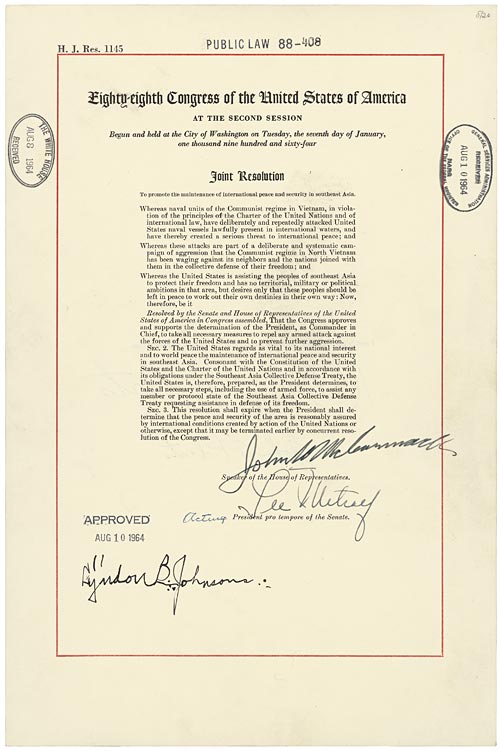
Understanding what the Gulf of Tonkin Resolution was requires looking past the tactical skirmishes in the South China Sea and focusing on the massive shift in capital allocation it authorized. By granting President Lyndon B. Johnson the power to use “all necessary measures,” Congress effectively deregulated military spending, creating a windfall for defense contractors and altering the trajectory of the U.S. dollar for decades to come.
The Fiscal “Blank Check”: A Turning Point for Government Spending
At its core, the Gulf of Tonkin Resolution was an extraordinary grant of budgetary authority. Before 1964, the U.S. military budget was subject to the traditional friction of congressional oversight and incremental increases. The resolution removed these barriers, allowing for a rapid and nearly limitless expansion of defense appropriations. From a financial perspective, this was a paradigm shift in how the federal government managed its balance sheet.
The Surge in Defense Appropriations
Immediately following the resolution, the flow of capital from the Treasury to the Department of Defense accelerated at an unprecedented rate. In 1964, U.S. defense spending stood at approximately $50 billion. By the peak of the conflict in the late 1960s, this figure had ballooned, fueled by the legislative freedom provided by the resolution. For investors of the era, this signaled a massive redirection of taxpayer wealth into specific industrial sectors. This was not merely spending; it was a wholesale subsidy of the aerospace and engineering industries.
The “Guns and Butter” Macroeconomic Model
President Johnson’s attempt to fund both the Vietnam War (Guns) and his “Great Society” social programs (Butter) simultaneously is a classic case study in fiscal overextension. The Gulf of Tonkin Resolution provided the legal framework to pursue this dual-track spending. However, without a corresponding increase in taxes to offset these costs, the government turned to deficit financing. This decision had a ripple effect on personal finance and the purchasing power of the average American, as the influx of capital into the economy began to drive up prices, marking the beginning of the Great Inflation of the 1970s.
The Rise of the Defense Sector: Investment Lessons from the 1960s
For the savvy investor in the mid-1960s, the Gulf of Tonkin Resolution served as a high-conviction buy signal for the defense and aerospace sectors. The resolution essentially guaranteed a long-term, high-volume customer for hardware, logistics, and technology. This era solidified the relationship between private corporations and the federal government, creating a “moat” around the defense industry that persists in modern portfolios today.
The Growth of Aerospace Giants
Companies like Lockheed, Boeing, McDonnell Douglas, and Northrop became the primary beneficiaries of the resolution’s fallout. The demand for helicopters, fighter jets, and advanced munitions skyrocketed. This period saw the transition of these companies from medium-sized manufacturers into the global conglomerates we recognize today. The Resolution ensured that research and development (R&D) costs were largely socialized through government contracts, while the profits remained private—a financial model that redefined corporate strategy in the 20th century.
Institutionalizing the Military-Industrial Complex
The resolution did more than just buy equipment; it institutionalized a cycle of dependency between the economy and military readiness. This created a new asset class for institutional investors: the “defense prime.” These companies offered a unique profile of stability and growth, backed by the “full faith and credit” of the U.S. government. Even today, when looking at the “Money” aspect of geopolitics, the precedent set in 1964 remains the blueprint for how conflict drives market capitalization in the defense sector.
Macroeconomic Consequences: The Collapse of Bretton Woods
The financial legacy of the Gulf of Tonkin Resolution extends far beyond the defense industry. It was a primary driver in the eventual collapse of the Bretton Woods system—the international financial order that pegged the U.S. dollar to gold. The sheer volume of spending authorized by the resolution forced the U.S. to print more money to cover its deficits, which led to a global surplus of dollars.
The Gold Drain and the Nixon Shock
As the war’s costs mounted, foreign central banks began to lose confidence in the dollar’s value. They started redeeming their dollar holdings for gold, depleting U.S. reserves at an alarming rate. The spending spree initiated by the 1964 resolution made it impossible for the U.S. to maintain the $35-per-ounce gold peg. This fiscal pressure culminated in 1971 when President Richard Nixon officially suspended the convertibility of the dollar into gold. For anyone interested in the history of money, the Gulf of Tonkin Resolution is the “patient zero” for the modern era of pure fiat currency.
Long-term Inflationary Trends
The resolution taught investors a harsh lesson about the relationship between government mandates and currency devaluation. The “Great Inflation” that defined the 1970s was, in many ways, the delayed bill for the spending authorized in 1964. For personal finance enthusiasts, this era serves as a reminder of why hedging against inflation—through assets like real estate, commodities, or modern equities—is a necessity when government policy shifts toward unchecked expansion.
Strategic Financial Analysis: Evaluating Risk in Geopolitical Shifts
The Gulf of Tonkin Resolution provides a masterclass in risk assessment for the modern business leader and investor. It highlights how a single piece of legislation can shift the entire risk profile of a national economy. When analyzing current geopolitical tensions, modern investors look for similar “trigger events” that might authorize massive capital shifts.
Identifying Defensive Assets in Times of Conflict
History shows that when a government issues a “blank check” for security, certain sectors become “recession-proof.” During the post-1964 era, while the broader market faced volatility due to social unrest and rising interest rates, the defense sector remained robust. In today’s financial landscape, this translates to diversifying into cybersecurity, infrastructure, and energy—sectors that are often the first to receive government backing during periods of strategic realignment.
The Opportunity Cost of War Spending
From a business finance perspective, it is also essential to analyze the opportunity cost. The billions of dollars funneled into the Vietnam War as a result of the resolution were billions not invested in domestic infrastructure, technology for the private sector, or education. For a nation’s “brand” and long-term economic health, the resolution represented a pivot from investment-led growth to consumption-led spending (via military hardware), a move that some economists argue slowed the potential growth of the American middle class in the latter half of the century.

The Legacy of 1964 on Modern Business and Finance
To answer “what was the Gulf Tonkin Resolution” is to describe the birth of the modern American fiscal state. It was the moment the United States decided that the price of global leadership would be paid through deficit spending and a permanent military-industrial partnership.
For the modern professional in the “Money” niche, the resolution is a reminder that politics and personal finance are inextricably linked. The decisions made in a Senate chamber in 1964 still dictate the volatility of the bond market, the strength of the dollar, and the composition of the S&P 500 today. It serves as a stark example of how a legislative “blank check” can create short-term booms for specific industries while baking long-term inflationary risks into the global economy.
Understanding the financial mechanics behind this resolution allows investors to better navigate today’s world, where government appropriations and geopolitical maneuvering continue to be the most significant drivers of market movement. The Gulf of Tonkin Resolution was not just a military order; it was a fundamental reconfiguration of the American capitalistic engine.
aViewFromTheCave is a participant in the Amazon Services LLC Associates Program, an affiliate advertising program designed to provide a means for sites to earn advertising fees by advertising and linking to Amazon.com. Amazon, the Amazon logo, AmazonSupply, and the AmazonSupply logo are trademarks of Amazon.com, Inc. or its affiliates. As an Amazon Associate we earn affiliate commissions from qualifying purchases.