
Executive Order 9981, signed by President Harry S. Truman on July 26, 1948, is often discussed in the halls of history as a civil rights milestone. However, when viewed through the lens of modern brand strategy and corporate identity, it represents one of the most significant institutional pivots in human history. It was the moment the United States military—one of the world’s most powerful and visible “brands”—decided to fundamentally overhaul its internal culture to align with its external value proposition. In the business world, we call this identity alignment. For an organization as vast as the U.S. Armed Forces, this wasn’t just a policy change; it was a total rebranding of the American military identity from a segregated, legacy institution into a unified, merit-based organization.
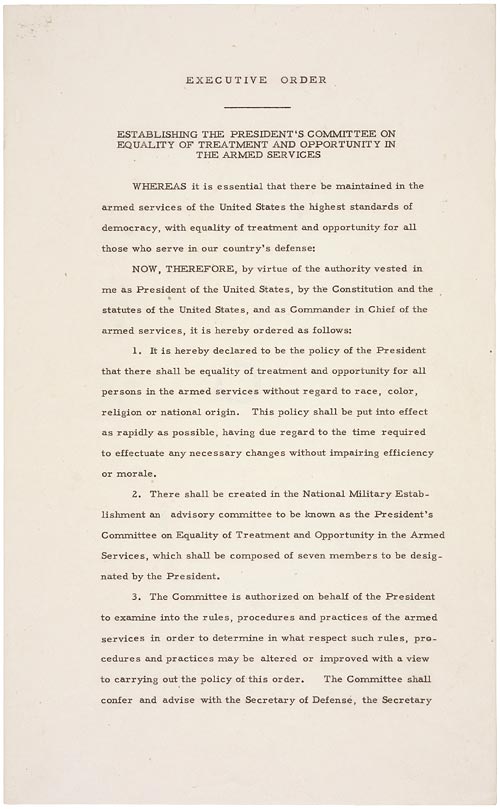
Understanding Executive Order 9981 requires looking past the legal jargon to the core brand crisis the United States faced in the mid-20th century. To remain competitive on the global stage and maintain brand equity during the Cold War, the U.S. government had to address a glaring inconsistency between its “marketing” (the promise of democracy and freedom) and its “product” (a segregated military). This case study explores how Executive Order 9981 functioned as a strategic mandate for institutional transformation, establishing a blueprint for modern corporate diversity, equity, and inclusion (DEI) initiatives.
The Brand Narrative Conflict: Why Executive Order 9981 Was Necessary
Every successful brand relies on authenticity. When there is a gap between what a brand says and what it does, “brand friction” occurs, leading to a loss of trust among stakeholders. By 1948, the United States was facing a massive brand narrative conflict. Having just won World War II as the “Arsenal of Democracy,” the U.S. was positioning itself as the leader of the free world. However, its internal corporate structure—specifically the military—was built on a foundation of systemic segregation.
The Cold War and the Global Reputation Crisis
In the realm of international marketing and reputation management, the U.S. was under fire. The Soviet Union seized upon American segregation as a primary tool for “anti-brand” propaganda. For the U.S. to successfully “sell” democracy to emerging nations in Africa, Asia, and Latin America, it needed to clean up its own institutional identity. Executive Order 9981 was, in many ways, a high-stakes reputation management strategy. Truman realized that the “American Brand” could not be exported effectively if its most visible representative—the soldier—remained a symbol of domestic inequality.
By mandating “equality of treatment and opportunity for all persons in the armed services without regard to race, color, religion or national origin,” Truman was effectively launching a global PR recovery campaign. He was signaling to the world that the American product was being updated to match its marketing materials. In modern brand strategy, this is known as closing the “say-do gap.”
Reconciling the “Arsenal of Democracy” Identity
Internally, the brand conflict was equally damaging. Black veterans who had served in WWII returned home to find that the “company” they had risked their lives for did not value them as equal shareholders. This created a crisis of brand loyalty. For an organization that relies on recruitment and morale, having a significant portion of the talent pool feel alienated is a recipe for long-term failure. Executive Order 9981 was an attempt to reclaim the loyalty of this demographic by promising a seat at the table, thereby strengthening the institution’s human capital.
The Logistics of Institutional Rebranding: Moving from Policy to Culture
A brand is more than a logo or a slogan; it is the sum of every interaction a stakeholder has with the organization. For the military, “rebranding” meant changing the daily lived experience of millions of individuals. This is the hardest part of any corporate identity shift: moving from a top-down executive mandate to bottom-up cultural adoption.
Leadership and the “CEO” Mandate
In corporate strategy, major shifts rarely happen through consensus; they require a “CEO” with a clear vision and the willingness to risk political capital. President Truman acted as the chief executive officer of the federal government, bypassing a gridlocked Congress (the “Board of Directors”) to issue an executive order. This was a bold leadership move that defined the new corporate direction.
Executive Order 9981 also established the Fahy Committee (The President’s Committee on Equality of Treatment and Opportunity in the Armed Services). In business terms, this was the implementation task force. Their job was to audit the various branches of the military, identify “brand detractors” (leaders resisting the change), and ensure that the new identity was being integrated into the operational DNA of the Army, Navy, Air Force, and Marines.
Overcoming Internal Resistance and Operational Friction

Any major rebranding effort faces internal pushback, particularly from legacy employees who are comfortable with the old way of doing business. The U.S. Army, in particular, showed significant resistance to desegregation. Senior leaders argued that integration would damage “unit cohesion”—a term that, in modern corporate speak, refers to team synergy.
The strategy used to overcome this was a masterclass in change management. Rather than relying solely on moral arguments, the Fahy Committee and Truman focused on operational efficiency. They argued that segregation was a waste of resources, creating redundant facilities and preventing the best talent from rising to the top. By framing desegregation as a “performance optimization” strategy, they were able to win over the pragmatists within the organization. This shifted the internal brand perception from “forced social change” to “strategic modernization.”
Meritocracy as a Competitive Brand Advantage
The long-term goal of Executive Order 9981 was to transition the military into a “Meritocratic Brand.” In a meritocracy, the brand promise is simple: if you perform, you will be rewarded, regardless of your background. This is a powerful recruiting tool and a massive competitive advantage.
Efficiency and Resource Optimization in Large Organizations
From a management perspective, segregation was a logistical nightmare. It required separate barracks, separate training pipelines, and separate mess halls. By integrating the services, the military realized massive cost savings and logistical simplifications—what we might call “operational brand streamlining.”
More importantly, it allowed for better talent acquisition. When you restrict high-level positions to a specific demographic, you artificially limit your talent pool. By opening up all roles to all qualified individuals, the military brand became synonymous with high performance. Over time, this made the U.S. Armed Forces the most diverse and effective fighting force in the world, a core component of its modern brand identity.
The Military as a “Lead Brand” for Social Change
In the world of marketing, some brands are “influencers” that set the tone for the rest of the market. Because the military is one of the largest employers and most influential institutions in the U.S., its rebranding had a “halo effect” on the rest of society. The success of integration in the military provided a case study that the private sector and other public institutions eventually followed. It proved that a massive, tradition-bound organization could change its identity without collapsing, effectively “de-risking” the concept of desegregation for other brands.
Lessons for Modern Brand Strategy: Authenticity and Systemic Change
Executive Order 9981 offers vital lessons for today’s brand managers and corporate leaders. In an era where “purpose-driven branding” is a buzzword, Truman’s order serves as a reminder that true brand transformation requires more than a press release; it requires systemic policy changes and a commitment to long-term cultural shifts.
Moving Beyond Performative Marketing
Many modern brands struggle with “performative” activism—changing their social media avatars for a month without changing their internal hiring practices or corporate board composition. Executive Order 9981 was the opposite of performative. It was a rigorous, often painful, restructuring of the organization’s core operations. The lesson for modern brands is that identity starts from within. If your internal culture doesn’t reflect your external brand values, the market will eventually see through the facade.

The Long-Term Value of Corporate Identity Alignment
Today, the U.S. Military is often cited as one of the most successful examples of institutional integration. While challenges remain, the brand identity established by Executive Order 9981—one of unity, merit, and service—remains its greatest asset. For businesses, the takeaway is clear: investing in a cohesive and inclusive corporate identity isn’t just “the right thing to do”; it is a strategic imperative that drives loyalty, attracts top talent, and ensures long-term viability in a competitive global marketplace.
In conclusion, Executive Order 9981 was far more than a legal document. It was a strategic rebranding initiative that saved the American Brand from a crisis of hypocrisy. By aligning the military’s internal operations with the nation’s stated values, Truman created a more resilient, efficient, and respected institution. It stands as a powerful reminder that when an organization’s identity and actions are in sync, it possesses a competitive advantage that no amount of traditional marketing can replicate.
aViewFromTheCave is a participant in the Amazon Services LLC Associates Program, an affiliate advertising program designed to provide a means for sites to earn advertising fees by advertising and linking to Amazon.com. Amazon, the Amazon logo, AmazonSupply, and the AmazonSupply logo are trademarks of Amazon.com, Inc. or its affiliates. As an Amazon Associate we earn affiliate commissions from qualifying purchases.