
While the history of science is often relegated to dusty textbooks, certain principles serve as the bedrock for the most advanced technologies of the twenty-first century. Jacques Charles’s eighteenth-century discovery, known as Charles’s Law, is far more than a relic of classical physics. It is a fundamental pillar of thermodynamics that dictates how we design modern hardware, develop simulation software, and manage the thermal output of massive data centers. In the tech industry, understanding the relationship between volume and temperature is not just an academic exercise—it is a prerequisite for engineering the gadgets and infrastructures that define our digital age.

The Thermodynamic Blueprint for Modern Hardware
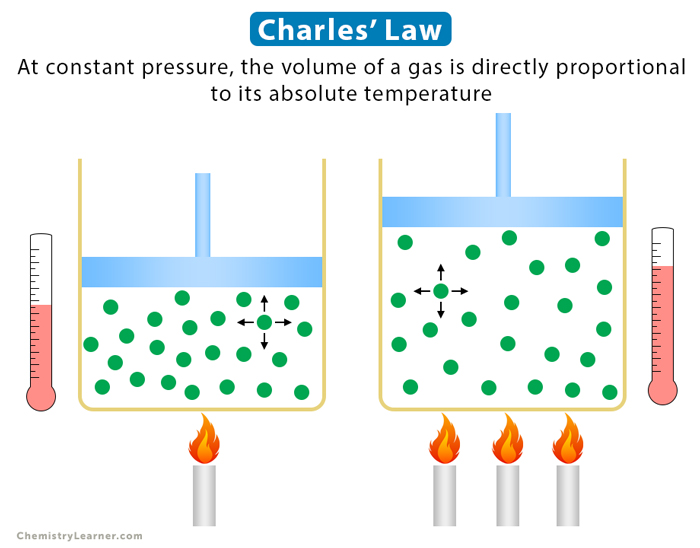
At its simplest, Charles’s Law states that the volume of a gas is directly proportional to its absolute temperature, provided the pressure remains constant. In the context of modern technology, this principle explains the behavior of air and gases used in cooling systems, pneumatic components, and even the internal environments of high-performance computing (HPC) hardware.
Thermal Management in Semiconductor Design
As transistors shrink and clock speeds increase, heat management becomes the primary bottleneck in hardware performance. Charles’s Law is central to the design of heat sinks and active cooling solutions. When a CPU or GPU generates heat, the air surrounding the component expands. Modern laptop and desktop cooling systems utilize “heat pipes” filled with a working fluid that undergoes phase changes. The expansion of these vapors, governed by the relationships discovered by Charles, allows for the efficient transfer of heat away from critical silicon components. Without an intimate understanding of gas expansion and volume shifts, we could not build the compact, high-powered smartphones or ultra-slim ultrabooks that dominate the market today.
The Role of Airflow in Server Architecture
In the enterprise tech space, server racks are the engines of the internet. Charles’s Law informs the “hot aisle/cold aisle” configurations used in world-class data centers. By understanding how air expands as it absorbs heat from servers, engineers can calculate the exact volume of air required to maintain stable operating temperatures. Tech giants like Google and Amazon utilize custom-designed cooling shrouds that leverage these physics principles to ensure that expanding air is channeled efficiently, preventing the thermal throttling that could otherwise cripple global digital services.
Computational Fluid Dynamics: How Software Visualizes the Invisible
The application of Charles’s Law has moved from the laboratory to the software suite. Today, software developers and mechanical engineers use Computational Fluid Dynamics (CFD) to simulate how gases will behave in a virtual environment before a single physical prototype is built. This represents a massive shift in how tech products are brought to market.
The Evolution of Simulation SaaS
Software platforms like ANSYS, Autodesk CFD, and Siemens Star-CCM+ are built on the foundational equations of gas laws, including Charles’s Law. These tools allow developers to create “digital twins” of hardware. By inputting the variables of temperature and volume, these programs can predict how a high-altitude drone or a high-performance gaming PC will react under various thermal loads. For tech firms, this reduces the “time-to-market” by eliminating the need for dozens of expensive physical iterations. The software effectively “knows” what Charles’s Law will do to the air inside a device, allowing for a level of precision that was impossible just two decades ago.
Optimization for Edge Computing
As edge computing grows—placing processing power closer to the source of data in rugged or outdoor environments—software must account for extreme temperature fluctuations. Engineers use simulation tools to ensure that hardware enclosures can handle the internal air expansion that occurs when a device is exposed to direct sunlight or high-load processing. By integrating Charles’s Law into the code of these simulation tools, tech companies can guarantee the reliability of IoT devices in everything from smart agriculture to autonomous vehicle infrastructure.
AI-Driven Physics: The Rise of Physics-Informed Neural Networks (PINNs)
The most exciting frontier in the intersection of physics and tech is the emergence of Artificial Intelligence that understands the laws of nature. Traditionally, AI models were purely data-driven, requiring massive datasets to recognize patterns. However, a new category of AI, known as Physics-Informed Neural Networks (PINNs), integrates fundamental laws like Charles’s Law directly into the machine learning architecture.
Training AI with Physical Constraints
By teaching AI the “rules” of thermodynamics, developers can create models that require significantly less training data. For instance, an AI designed to optimize the cooling system of a Tesla battery pack doesn’t just look at historical temperature data; it “understands” that as the temperature of the cooling gases or liquids increases, their volume and pressure will change according to Charles’s and the Combined Gas Laws. This makes the AI’s predictions far more accurate and physically realistic.
Real-Time Anomaly Detection
In industrial tech and smart manufacturing, AI tools utilize these physical laws to detect hardware failures before they happen. If a sensor detects a volume/temperature ratio that deviates from what Charles’s Law predicts should happen in a sealed system, the AI can flag a potential leak or component failure. This proactive digital security for physical assets is a growing trend in “Industry 4.0,” where software intelligence and physical laws merge to prevent catastrophic downtime.
Aerospace and IoT: Engineering for Variable Environments
Charles’s Law is particularly relevant in the tech sectors that operate in fluctuating environments, such as aerospace, satellite technology, and the Internet of Things (IoT). When devices move through different altitudes or climate zones, the temperature changes have a direct impact on the internal pressure and volume of gases within sensors and housings.
Precision in Sensor Technology
Modern gadgets rely on a suite of sensors—barometers, altimeters, and thermistors—that must account for gas behavior. In high-tech wearables and drones, the software compensates for the effects described by Charles’s Law to provide accurate readings. For example, a drone’s flight controller uses real-time atmospheric data to adjust motor speeds. Because air density changes with temperature (a direct consequence of volume expansion), the drone’s software must “solve” for these variables hundreds of times per second to maintain stability.
Satellite and Space Tech
In the vacuum of space and the thin upper atmosphere, thermal management is a matter of survival for billion-dollar hardware. Satellites are equipped with sophisticated thermal louvers and gas-based heat pipes. As these systems move from the shadow of the Earth into direct sunlight, they experience extreme temperature swings. The tech designed to manage these shifts is a direct application of Charles’s Law, ensuring that as gases expand, they don’t rupture delicate electronic housings or cause mechanical failures in the vacuum.
Sustainable Tech and the Future of Data Centers
As the tech industry faces increasing pressure to reduce its carbon footprint, Charles’s Law is being leveraged to develop “greener” cooling solutions. Traditional air conditioning is energy-intensive, leading to the rise of innovative cooling technologies that work with, rather than against, the laws of physics.
Liquid Immersion and Two-Phase Cooling
Some of the most advanced data centers are now experimenting with liquid immersion cooling, where servers are submerged in a dielectric fluid. Others use “two-phase” cooling, where a liquid boils into a gas on the surface of the chip. The expansion of this gas (the “volume” component of Charles’s Law) carries the heat away with incredible efficiency. Software-controlled valves and pumps then manage the cycle. This “Physics-First” approach to tech infrastructure can reduce energy consumption by up to 90% compared to traditional fans, proving that 18th-century science is the key to 21st-century sustainability.
The Role of Smart Building Software
The “Smart City” trend relies heavily on building management systems (BMS) that use AI to regulate the climate of massive tech hubs. These software platforms utilize thermodynamic principles to predict how air will move through a structure. By understanding the expansion of air as a building warms throughout the day, these systems can optimize ventilation, reducing the load on the power grid. It is a perfect example of how an ancient scientific law is encoded into the modern software that runs our cities.

The Legacy of Charles Law in a Digital World
What was Charles Law? It was the discovery that temperature and volume are inextricably linked. But today, it is much more than that. It is a design constraint for the engineers at Apple and Nvidia. It is a set of parameters in the code of every CFD software package. It is a training rule for the next generation of Physics-Informed AI.
As we push toward more powerful gadgets, more complex software, and more sustainable technology, we are not moving away from the fundamental laws of physics—we are embedding them more deeply into our digital world. Jacques Charles could never have imagined a microchip or a neural network, but his work remains the invisible framework upon which all of our modern technological wonders are built. Whether it is the cooling fan in your laptop or the thermal shielding on a SpaceX Dragon capsule, the “tech” of today is simply the physical laws of yesterday, mastered through software and innovation.
aViewFromTheCave is a participant in the Amazon Services LLC Associates Program, an affiliate advertising program designed to provide a means for sites to earn advertising fees by advertising and linking to Amazon.com. Amazon, the Amazon logo, AmazonSupply, and the AmazonSupply logo are trademarks of Amazon.com, Inc. or its affiliates. As an Amazon Associate we earn affiliate commissions from qualifying purchases.