
The landscape of personal finance has undergone a radical transformation over the last decade, shifting from manual, paper-based processes to a streamlined digital ecosystem. One of the most significant shifts for American taxpayers is the ability to settle obligations with the Internal Revenue Service (IRS) through digital channels. Understanding how to pay the IRS online is no longer just a matter of convenience; it is a critical component of modern financial management. By leveraging digital payment tools, taxpayers can ensure accuracy, improve their cash flow management, and maintain a transparent audit trail of their fiscal responsibilities.

The Evolution of Tax Compliance: Why Paying Online is the Gold Standard
In the realm of personal finance, timing and verification are everything. The traditional method of mailing a paper check via the U.S. Postal Service carries inherent risks, including mail delays, potential loss, and the lag time between sending the payment and the IRS processing it. Digital payments mitigate these risks by providing an immediate, verifiable record of the transaction.
Speed and Efficiency in Financial Planning
For individuals managing a tight budget or businesses overseeing complex cash flows, the speed of online payments is a strategic advantage. When you pay the IRS online, the transaction is often acknowledged instantly or within 24 hours. This allows for more precise “just-in-time” financial planning. Instead of sending a check a week early to account for mail delivery, taxpayers can retain their funds in interest-bearing accounts until the actual due date, maximizing their own liquidity.
Ensuring Accuracy and Proof of Payment
One of the most common stressors during tax season is the uncertainty of whether a payment was received and applied to the correct tax year. Online systems are designed with built-in validation. When you enter your information into the IRS portal, the system matches your Social Security Number (SSN) or Employer Identification Number (EIN) in real-time. Once the transaction is complete, you receive a confirmation number. In the world of finance, this digital receipt is your ultimate defense against late fees or disputes regarding payment history.
Direct Pay and Electronic Funds Withdrawal: The Cost-Effective Choice
For most individual taxpayers, the most financially sound way to settle a tax bill is through direct bank transfers. These methods are typically free of service charges, ensuring that every dollar sent goes directly toward reducing your tax liability rather than being consumed by processing fees.
Understanding IRS Direct Pay for Individuals
IRS Direct Pay is the flagship tool for individual taxpayers to pay Form 1040 expenses, estimated taxes, and other individual tax liabilities. This service allows you to pay directly from your checking or savings account without any prior registration. From a financial strategy perspective, Direct Pay is the “cleanest” transaction. Because there are no middleman fees, it is the preferred method for those looking to minimize the “cost of compliance.” It also allows you to schedule payments up to 30 days in advance, providing a helpful tool for those who want to set their finances on autopilot.
Leveraging the Electronic Federal Tax Payment System (EFTPS) for Business
While Direct Pay is excellent for individuals, the EFTPS is the powerhouse for business owners and high-net-worth individuals with complex tax requirements. EFTPS requires a registration process, which includes receiving a PIN via mail, but once established, it offers the highest level of reporting and scheduling capabilities. For a business, using EFTPS is a best practice for managing payroll taxes and corporate income taxes. It provides a comprehensive history of all payments made over the last 16 months, which is invaluable for bookkeeping and preparing for financial audits.
Strategic Use of Credit and Debit Cards for Tax Liabilities
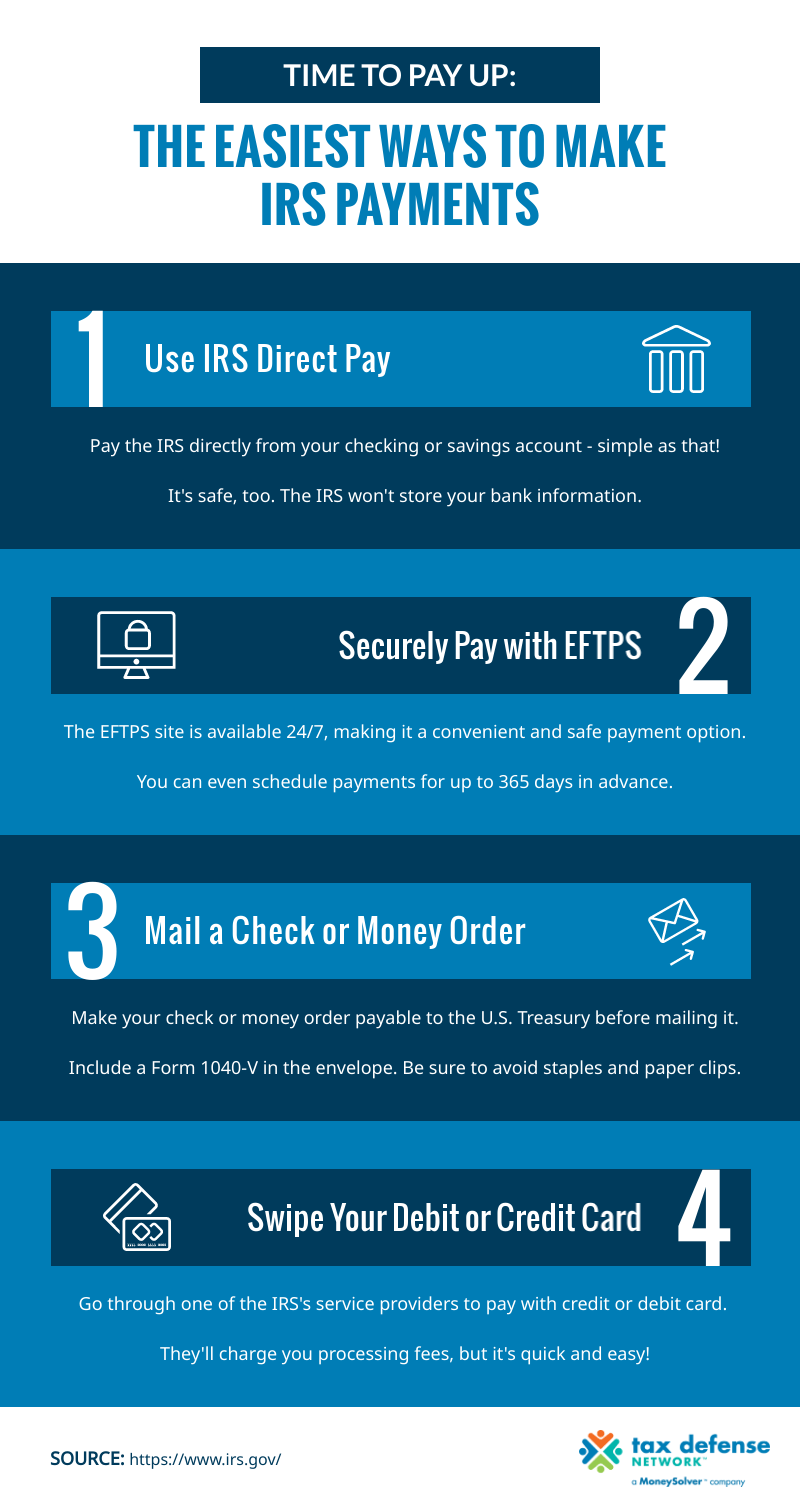
While direct transfers are free, many taxpayers choose to pay via credit or debit cards. This approach requires a more nuanced financial analysis, as third-party payment processors charge a convenience fee for these transactions. However, under the right circumstances, this can be a savvy financial move.
Calculating the Cost-Benefit of Processing Fees
The IRS does not collect these fees; they go to the payment processors (such as PayUSAtax, ACI Payments, or Pay1040). Typically, debit card fees are a flat rate (usually around $2.00 to $2.50), while credit card fees are a percentage of the total payment (ranging from 1.87% to 1.98%). To determine if this is a sound financial decision, one must compare the fee against the potential cost of an IRS late payment penalty. If you do not have the liquid cash available, paying the processing fee and the credit card interest might actually be cheaper than the combined interest and failure-to-pay penalties charged by the IRS, which can reach up to 25% of the unpaid tax.
Earning Rewards and Points: A Financial Strategy
High-level practitioners of “credit card churning” or rewards optimization often use tax season to meet minimum spend requirements on new credit cards. If you have a significant tax bill—say $10,000—and a new credit card offers a $1,000 sign-up bonus after spending $5,000, the ~2% processing fee ($200) is dwarfed by the $1,000 reward. In this specific scenario, paying the IRS online via a credit card becomes a net-positive financial event, turning a liability into an opportunity for travel points or cash back. However, this strategy only works if the balance is paid off immediately to avoid high-interest credit card debt.
Managing Cash Flow through Digital Installment Agreements
Not every taxpayer has the immediate liquidity to settle their debt in full. The IRS offers several “Online Payment Agreements” (OPA) that allow individuals and businesses to set up monthly payment plans. Managing these agreements digitally is significantly cheaper and faster than doing so via paper applications.
The Online Payment Agreement (OPA) Tool
The OPA tool allows taxpayers to apply for a short-term extension (up to 180 days) or a long-term monthly installment agreement. From a personal finance perspective, the setup fees are a critical consideration. Setting up a long-term plan online costs significantly less than doing so over the phone or through a paper Form 9465. For example, as of recent guidelines, an online setup for a Direct Debit installment agreement is approximately $31, compared to $107 for non-online setups. Choosing the digital route saves the taxpayer nearly $76 instantly.
Minimizing Interest and Penalties through Prompt Digital Action
The IRS interest rate is adjusted quarterly and is based on the federal short-term rate plus 3%. By setting up an online payment plan as soon as you realize you cannot pay in full, you demonstrate “good faith” and can sometimes mitigate the severity of failure-to-pay penalties. Digital installment plans ensure that payments are automatically deducted from your account, preventing the risk of a missed payment which could default the agreement and trigger further financial collections.
Security and Verification in the Digital Financial Ecosystem
In an era of increasing cyber-related financial fraud, security is the paramount concern for anyone paying the IRS online. The transition to digital payments has necessitated the implementation of robust identity verification protocols to protect sensitive financial data.
Protecting Your Financial Identity
The IRS has partnered with ID.me to provide a secure sign-in experience. While the identity verification process—which often involves uploading a government ID and performing a “video selfie”—can seem intrusive, it is a vital layer of financial security. It ensures that only the authorized taxpayer can access their records or make payments. From a wealth management perspective, protecting your Social Security Number and banking details from phishing attempts is essential. Always ensure that any payment is made through the official “IRS.gov” domain to avoid sophisticated scams that mimic government websites.
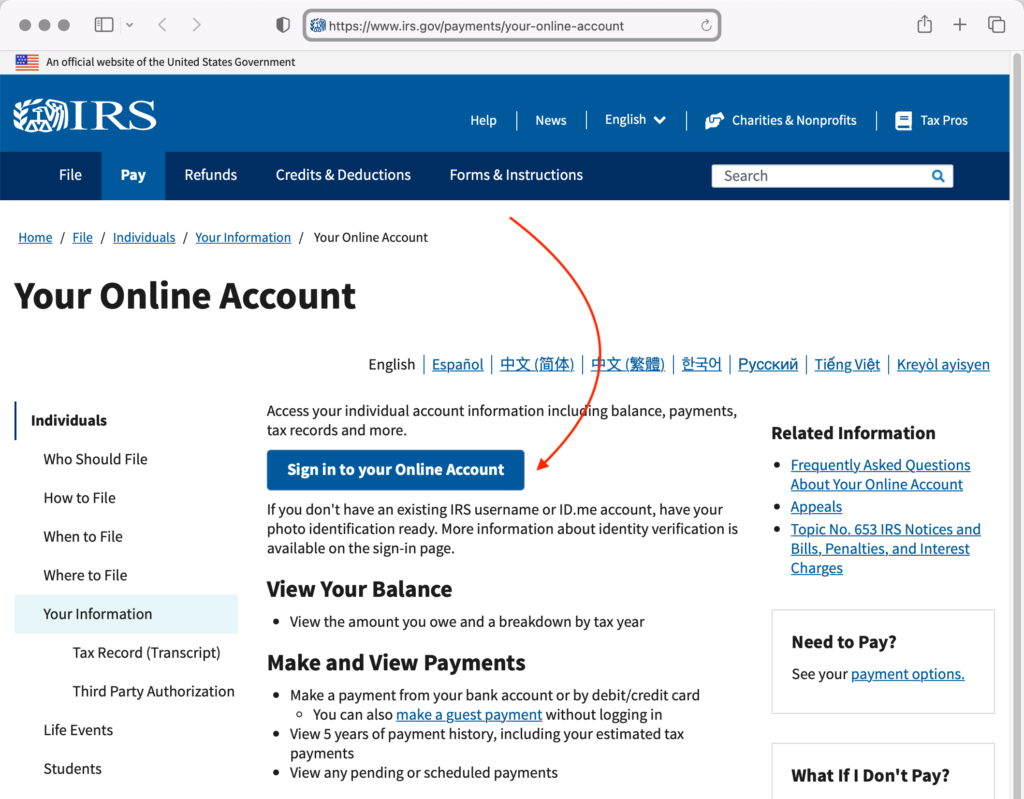
Navigating the IRS Online Account Portal
The “Your Online Account” feature is perhaps the most powerful tool for managing personal finances regarding taxes. Beyond just making payments, it allows you to view your payoff amount, your payment history for the last 24 months, and digital copies of select notices from the IRS. Having this data at your fingertips allows for better long-term tax planning. You can track your estimated tax payments throughout the year to ensure you aren’t under-withholding, which helps avoid a massive, unexpected bill come April. By integrating the IRS Online Account into your regular financial check-ups, you treat your tax obligations as a manageable variable rather than a looming uncertainty.
By mastering the various online payment avenues—from Direct Pay to strategic credit card usage and digital installment plans—taxpayers can transform an often-dreaded annual task into a streamlined, efficient, and even mathematically advantageous component of their broader financial strategy. Embracing these digital tools is the hallmark of a fiscally responsible modern taxpayer.
aViewFromTheCave is a participant in the Amazon Services LLC Associates Program, an affiliate advertising program designed to provide a means for sites to earn advertising fees by advertising and linking to Amazon.com. Amazon, the Amazon logo, AmazonSupply, and the AmazonSupply logo are trademarks of Amazon.com, Inc. or its affiliates. As an Amazon Associate we earn affiliate commissions from qualifying purchases.