
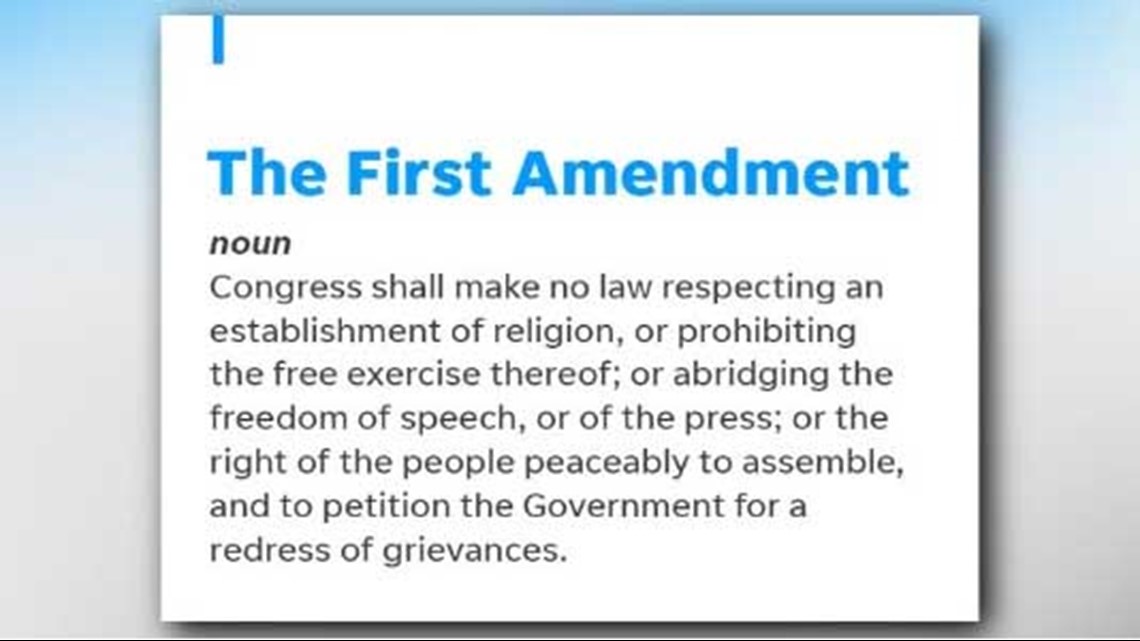
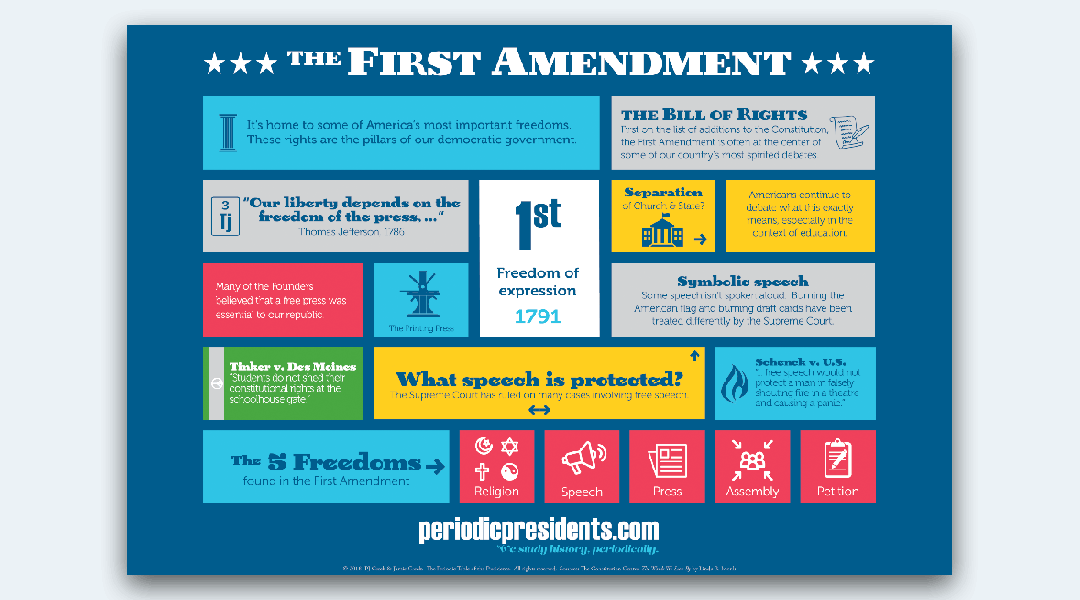
The First Amendment of the United States Constitution is the bedrock of democratic society, providing a legal framework that protects freedom of speech, press, assembly, petition, and religion. Historically, these protections were debated in the context of town squares, physical printing presses, and handwritten letters. However, in the 21st century, the theater of constitutional law has shifted from physical ground to digital code. As we navigate an era defined by artificial intelligence, global social media platforms, and complex surveillance technologies, the question of what right is protected by the First Amendment has evolved into a sophisticated technological inquiry.
In the tech sector, the First Amendment is no longer just a legal abstract; it is a design principle. It governs how platforms moderate content, how developers write code, and how users interact with the vast digital infrastructure of the modern world. Understanding the First Amendment today requires a deep dive into the intersection of constitutional law and technological innovation.
The Digital Public Square: Redefining Freedom of Expression
The most visible application of the First Amendment in the modern tech landscape involves social media platforms. For years, these platforms have been colloquially referred to as the “digital public square.” However, this metaphor often leads to a fundamental misunderstanding of how the First Amendment operates in a digital ecosystem controlled by private entities.
The Private Entity vs. State Actor Distinction
One of the most critical nuances in tech law is the distinction between a government entity and a private corporation. The First Amendment prohibits the government from abridging speech; it does not, historically, apply to private businesses. When a tech giant like Meta or X (formerly Twitter) removes a user or suppresses a specific hashtag, they are generally not violating the First Amendment. In fact, these companies often argue that their right to curate and moderate content is, itself, a form of protected “editorial discretion” under the First Amendment.
This creates a complex tension. As these platforms become essential for political discourse and news distribution, the tech industry faces increasing pressure to act as “neutral conduits.” Recent legal battles, such as those involving state-level social media laws in Texas and Florida, have forced the Supreme Court to weigh in on whether the state can compel a private tech platform to host speech it disagrees with. For the tech industry, the outcome of these cases defines the boundary between corporate autonomy and the public’s right to free expression.
Section 230 and the Liability Shield
While the First Amendment provides the constitutional framework, Section 230 of the Communications Decency Act provides the technological framework. This law allows platforms to host third-party content without being treated as the “publisher” of that content. This legal “safe harbor” has enabled the growth of the modern internet. Without it, the risk of litigation would force tech companies to censor almost all user-generated content to avoid liability. The ongoing debate over reforming Section 230 is fundamentally a debate about the First Amendment: how much control should tech companies have over the digital dialogue, and what rights do users have when those companies exercise that control?
Code as Speech: The Technological Interpretation of the First Amendment
One of the most profound shifts in legal theory is the recognition that software code itself is a form of protected speech. This concept, often summarized as “Code is Speech,” bridges the gap between computer science and constitutional law.
The Legacy of Bernstein v. Department of State
In the 1990s, the case Bernstein v. Department of State established that computer source code is a form of expression protected by the First Amendment. Daniel Bernstein, a graduate student, wanted to publish an encryption algorithm he had developed. The U.S. government argued that the code was a “functional” tool (a weapon) rather than “expressive” speech. The courts ultimately disagreed, ruling that because code is a medium for scientists and engineers to communicate ideas, it deserves constitutional protection.
This precedent has massive implications for today’s tech landscape. It protects developers who create open-source software, encryption tools, and even decentralization protocols. If code is speech, then a government ban on a specific type of software—such as a privacy-focused crypto mixer or a secure messaging app—could be challenged as an unconstitutional prior restraint on expression.
Artificial Intelligence and Algorithmic Speech
As generative AI becomes a staple of the tech industry, a new question emerges: Is AI-generated content protected by the First Amendment? If a Large Language Model (LLM) produces a political essay, does that output belong to the developer, the user, or the machine?
Currently, the legal consensus suggests that the First Amendment protects the rights of the humans who use or create the technology. The algorithms themselves do not have constitutional rights, but the companies that build them argue that the “outputs” of their models are a form of corporate expression. This becomes particularly contentious when governments attempt to regulate AI “bias” or “misinformation.” Tech firms argue that government-mandated AI “guardrails” may constitute compelled speech or a violation of their right to determine what their software communicates to the world.
Digital Security and the First Amendment Right to Privacy
While the First Amendment specifically mentions speech and press, the Supreme Court has long recognized that these rights imply a “penumbra” of privacy—specifically the right to anonymous speech and the right to receive information without government interference. In the tech world, this right is protected through digital security measures.
Encryption as a Tool for Free Expression
End-to-end encryption (E2EE) is perhaps the most significant technological safeguard for First Amendment rights. For journalists, whistleblowers, and activists, the ability to communicate securely is a prerequisite for a free press. Without the digital security afforded by encryption, the “chilling effect” of government surveillance would effectively silence many forms of protected speech.
The tech industry has frequently found itself at odds with law enforcement over “backdoor” access to encrypted devices. From a First Amendment perspective, forcing a tech company to weaken its encryption is often viewed as an infringement on the right to private association and anonymous speech. If the government can monitor every digital interaction, the fundamental right to “assemble” digitally is compromised.
The Right to Receive Information and Anti-Surveillance
The First Amendment also protects the “right to receive information.” In the digital age, this means protecting users from technologies that manipulate the flow of information or track their reading habits in a way that discourages the exploration of diverse ideas.
Digital security tools like VPNs, Tor, and decentralized browsers are the modern-day equivalents of the anonymous pamphlet. They allow users to exercise their First Amendment right to access information without the threat of being tracked by state actors or commercial entities. As data privacy regulations (like the GDPR or CCPA) evolve, they are increasingly being viewed through a First Amendment lens: protecting data is not just about consumer rights; it is about protecting the intellectual privacy necessary for free expression.
The Future of Decentralized Tech and Constitutional Protections
As we move toward Web3 and decentralized architectures, the relationship between tech and the First Amendment is entering a new phase. In a decentralized network, there is no central authority (like a Big Tech CEO) to moderate content or respond to government subpoenas.
Un-censorable Systems and Law Enforcement
Blockchain technology and InterPlanetary File System (IPFS) protocols allow for the creation of websites and data repositories that cannot be taken down by any single entity. This is the ultimate technological manifestation of First Amendment protections. It creates a space where “the right to speak” is hard-coded into the protocol itself.
However, this poses a significant challenge for regulators. If a decentralized platform is used to spread harmful content, who is held responsible? The tech industry is currently grappling with how to balance the “immutable” nature of blockchain with the social responsibility of preventing harm. From a First Amendment standpoint, these decentralized systems represent a “pure” form of speech that exists outside the traditional reach of both corporate policy and state regulation.

Conclusion: The Code-Based Constitution
The First Amendment is no longer just a document kept under glass in Washington, D.C.; it is a living set of principles embedded in the software we use every day. Whether it is the fight over social media moderation, the protection of encryption, or the development of AI, the tech industry is the front line for constitutional rights in the 21st century.
As technology continues to advance, the “right protected by the First Amendment” will increasingly depend on the integrity of our digital infrastructure. For tech professionals, developers, and users alike, the goal is to ensure that the digital tools of the future continue to empower expression rather than suppress it. The marriage of code and constitution is the only way to safeguard our most fundamental liberties in an increasingly connected world.
aViewFromTheCave is a participant in the Amazon Services LLC Associates Program, an affiliate advertising program designed to provide a means for sites to earn advertising fees by advertising and linking to Amazon.com. Amazon, the Amazon logo, AmazonSupply, and the AmazonSupply logo are trademarks of Amazon.com, Inc. or its affiliates. As an Amazon Associate we earn affiliate commissions from qualifying purchases.