
In the landscape of modern digital gaming, few applications have achieved the cultural ubiquity and technical intrigue of Wordle. What began as a simple web-based software project developed by Josh Wardle for his partner eventually transformed into a global phenomenon, ultimately acquired by The New York Times. While players see a grid of gray, yellow, and green tiles, the underlying structure of the game is a masterclass in minimalist software design and statistical distribution. When users ask “what letter does Wordle start with,” they are not just asking about a single day’s puzzle; they are tapping into a complex conversation about letter frequency, algorithmic optimization, and information theory.
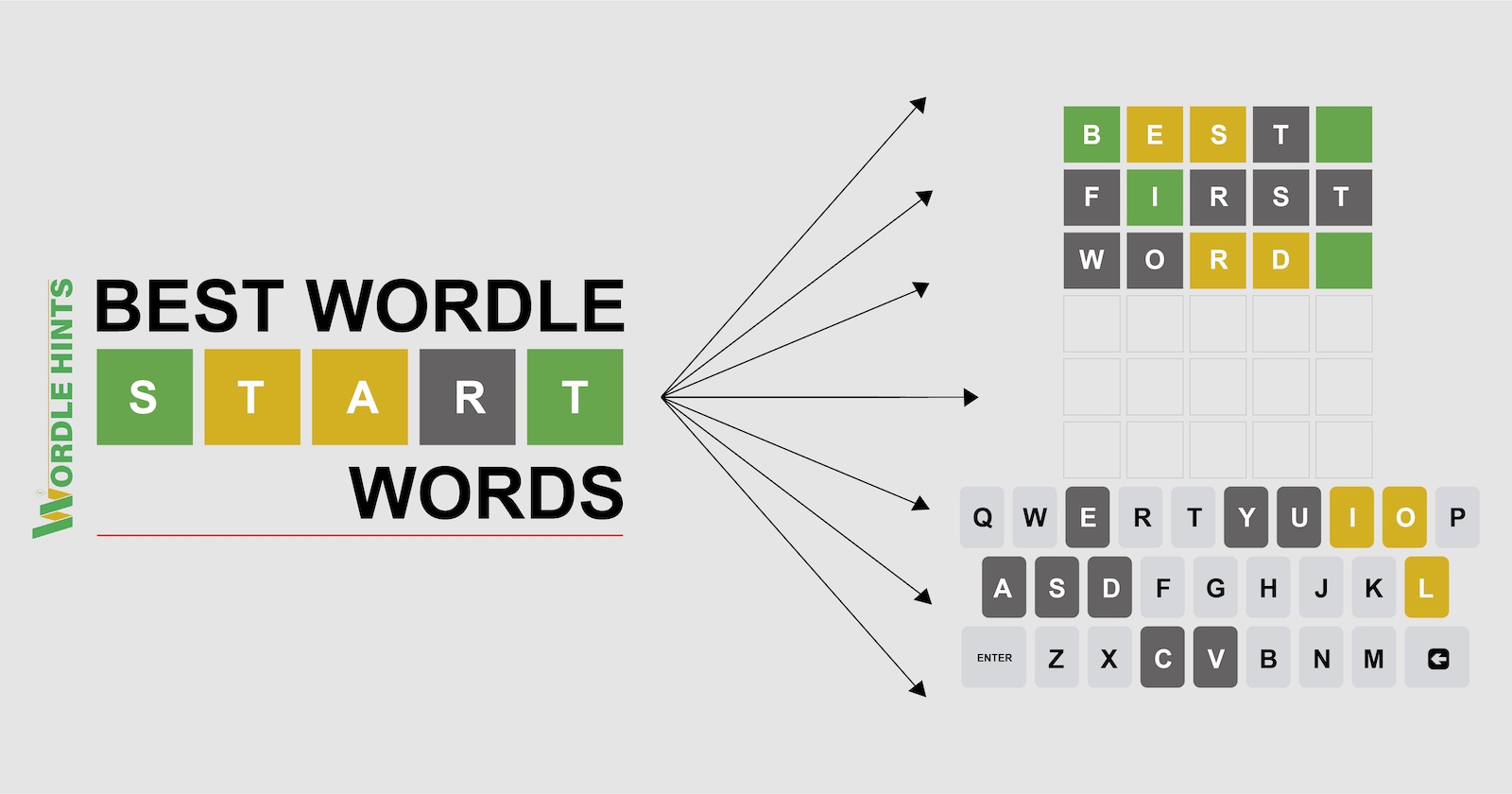
To understand the mechanics of Wordle, one must look past the interface and into the data. The game operates on a curated list of five-letter words, and the distribution of their starting letters is far from random. By analyzing the software’s internal word bank, we can uncover the most frequent starting characters and how they impact the digital strategy used by millions every morning.
The Algorithm Behind the Game: Understanding Wordle’s Software Framework
At its core, Wordle is a client-side JavaScript application. Before its acquisition and subsequent integration into the New York Times ecosystem, the game’s entire logic—including the daily solution list—was accessible within the browser’s source code. This transparency allowed software developers and data scientists to scrape the “solution bank” and analyze the linguistic patterns programmed into the game’s DNA.
The Source Code and Word Banks
Wordle utilizes two distinct word lists. The first is a primary list of approximately 2,309 “solution words.” These are the curated, relatively common five-letter words that the game cycles through as the daily answer. The second is a much larger “allowable list” of over 10,000 words that the game recognizes as valid guesses but will never use as a solution (such as obscure pluralizations or technical terms).
From a tech perspective, the starting letter of a Wordle solution is governed by the frequency of that letter in the 2,309-word solution set. Because the game is designed to be accessible, the software avoids ultra-rare words, meaning the starting letters mirror the patterns of standard English, albeit with specific constraints inherent to five-letter lemmas.
How the Randomization Logic Works
While the word selection appears random to the user, it is actually deterministic. The original code used a simple counter that transitioned to the next word in the array every 24 hours based on the user’s local time. This programmatic simplicity is what made the game so robust and easy to share across different platforms without the need for complex server-side synchronization. Consequently, the “starting letter” for any given day is a predetermined entry in a static array, making the study of the entire array essential for anyone looking to master the game through a technical lens.
Decrypting the Data: Which Letters Dominate the Starting Position?
When we break down the 2,309 words in the Wordle solution set, a clear hierarchy of starting letters emerges. This isn’t just trivia; it is the foundation for building high-performance Wordle solvers and AI bots.
Statistical Frequency in the Wordle Lexicon
Data analysis reveals that the letter S is the most frequent starting letter in the Wordle solution bank. Approximately 15% of all Wordle solutions begin with S. Following S, the most common starting letters are C, B, T, P, and A.
The prevalence of S is a result of how English words are structured. Many common five-letter words start with S followed by a consonant (like “STARE,” “SNORT,” or “SLATE”) or a vowel (“SHARK,” “SIGHT”). Interestingly, while S is the most common starter, it is rarely used as a pluralizing S at the end of the word in the solution set, as the game’s curators intentionally omitted most simple “-s” plurals to keep the puzzles challenging.
The “C” and “B” Factor
Behind S, the letter C accounts for roughly 8% of starting positions, followed closely by B at 7%. For a digital strategist, this means that a starting guess beginning with S, C, or B has a statistically higher probability of securing a “green” tile on the first attempt than a word starting with X, Y, or Z, which appear as starters in fewer than 0.5% of the solution set.
Software Tools and AI Solvers: How Tech Has Solved the Wordle Puzzle
The tech community’s response to Wordle was immediate. Within weeks of its viral explosion, GitHub was flooded with Wordle solvers, Python scripts, and browser extensions designed to calculate the “mathematically perfect” first guess.
The Rise of Wordle Bots
Applications like WordleBot, developed by the New York Times, use a “minimax” algorithm to determine the best possible move. These bots don’t just look for the starting letter; they look for the letter that provides the most information. By simulating thousands of possible games, these software tools have identified that the starting letter’s value is tied to its “branching factor”—how many potential words it eliminates from the remaining pool.
Information Theory and Entropy
One of the most famous technical deep dives into Wordle was conducted by Grant Sanderson of the YouTube channel 3Blue1Brown. He applied Shannon’s Information Theory to the game. In this context, the goal of the first word (and its starting letter) is to maximize “entropy,” or the expected amount of information gained.
While S is the most common starting letter, a bot might suggest a word like “CRANE” or “SALET” because the combination of that starting letter with high-frequency vowels and consonants provides the most efficient reduction of the search space. From a software engineering perspective, the game is a search optimization problem where the starting letter serves as the primary filter.
Optimization Strategies for the Modern Digital Player
For users who want to leverage technology to improve their game, understanding the “starting letter” distribution is the first step in a broader digital strategy.
Hard Mode vs. Regular Mode Constraints
In Wordle’s “Hard Mode,” players must use any identified hints in subsequent guesses. This adds a layer of algorithmic complexity. If you start with a word beginning with “S” and it turns green, you are locked into that branch of the word tree. Data suggests that starting with a common letter like S in Hard Mode can actually be a double-edged sword; while you are likely to get a match, you may find yourself in a “trap” where multiple words share the same ending (e.g., _IGHT or _ATCH), making the starting letter the only variable that can save or sink your game.
The Best Starting Words Based on Computational Models
Based on various Python-based simulations, the “best” starting words often begin with the letters found in the top 10% of the frequency distribution.
- ADIEU: High vowel density, though “A” is only the 6th most common starting letter.
- STARE: Uses the #1 starting letter (S) and common vowels.
- TRACE: Uses the #4 starting letter (T) and is considered one of the most efficient words by many AI solvers.
By choosing words that align with the software’s internal frequency, players are essentially performing a manual version of a binary search, narrowing down the 2,309 possibilities as quickly as the code allows.
The Future of Browser-Based Gaming: Beyond the Daily Puzzle
Wordle’s success has sparked a new era of minimalist, web-based gaming that prioritizes clean code and social sharing over heavy graphics or microtransactions.
Integration into the New York Times Digital Ecosystem
The transition of Wordle from a standalone site to the NYT Games app demonstrated the scalability of simple web apps. The tech stack remained lightweight, ensuring that the game could be played on any device with a browser, from a decade-old laptop to the latest smartphone. This accessibility is part of why the “starting letter” remains a topic of digital fascination—it is the entry point into a daily ritual for millions.

The Lasting Impact of Simple Web Apps on Global Tech Trends
Wordle proved that in an age of high-fidelity VR and 4K gaming, there is still a massive market for logic-based software that uses minimal data and relies on linguistic patterns. The technical community continues to use Wordle as a sandbox for teaching coding, data science, and AI. Whether you are building a clone in React or writing a script to solve the daily puzzle, the question of what letter Wordle starts with remains the foundational prompt for a much larger exploration of how humans and machines interact with language.
In conclusion, while the daily Wordle might start with any letter from A to Z, the technical reality is that the game is heavily weighted toward a specific set of high-frequency characters. By understanding the distribution of letters like S, C, and B within the game’s internal solution bank, players and developers alike can appreciate the elegant intersection of linguistics and software engineering that makes Wordle a perennial favorite in the digital age.
aViewFromTheCave is a participant in the Amazon Services LLC Associates Program, an affiliate advertising program designed to provide a means for sites to earn advertising fees by advertising and linking to Amazon.com. Amazon, the Amazon logo, AmazonSupply, and the AmazonSupply logo are trademarks of Amazon.com, Inc. or its affiliates. As an Amazon Associate we earn affiliate commissions from qualifying purchases.