
Wichita, Kansas, is frequently recognized as the “Air Capital of the World,” but from a financial and economic perspective, it represents much more than just a hub for aviation. For investors, entrepreneurs, and those seeking to optimize their personal finance strategies, Wichita stands as a unique case study in Midwestern economic resilience and value-based growth. It is a city where industrial legacy meets modern fiscal opportunity, offering a cost-of-living profile that consistently outperforms national averages. Understanding what Wichita is known for requires looking past the surface level to examine the corporate strategies, real estate potential, and entrepreneurial ecosystems that define its financial landscape.

The Aviation Powerhouse: A Corporate and Industrial Economic Engine
The primary driver of Wichita’s economy is its storied aviation industry. From a money and business perspective, this sector provides a level of industrial density that is rare for a city of its size. The presence of major players like Spirit AeroSystems, Textron Aviation (the parent company of Cessna and Beechcraft), and Bombardier’s Flight Test Center creates a massive inflow of capital and high-paying engineering and manufacturing jobs.
The Multiplier Effect of Aerospace Manufacturing
What Wichita is known for financially is the “multiplier effect” generated by these anchor corporations. For every job created at a major manufacturer like Spirit AeroSystems, several more are supported in the local supply chain. This includes specialized tooling shops, logistics firms, and industrial service providers. For business investors, this ecosystem offers a stable B2B environment where long-term contracts and government defense spending provide a buffer against consumer-led economic downturns.
Defense Spending and Economic Stability
A significant portion of Wichita’s industrial output is tied to defense and military contracts. This provides a unique layer of financial security for the region. Unlike cities that rely heavily on volatile tech cycles or discretionary retail, Wichita’s economy is anchored by the long-term budget cycles of the Department of Defense and international aerospace demand. This stability makes the city an attractive location for institutional investors who prioritize consistent industrial performance.
Cost of Living: The Personal Finance Advantage
When discussing what Wichita is known for, its status as one of the most affordable cities in the United States is a central theme. For the individual focused on personal finance and wealth accumulation, Wichita offers a “geo-arbitrage” opportunity—the ability to earn a professional salary while maintaining a low overhead.
Housing Affordability and Wealth Building
The most significant factor in Wichita’s financial appeal is the housing market. Median home prices in Wichita traditionally sit significantly lower than the national average, often 30% to 50% below costs in coastal or major metropolitan hubs. This allows residents to allocate a smaller percentage of their gross income to housing, freeing up capital for retirement accounts, stock market investments, or diverse side hustles. In the context of “Money,” Wichita is known as a place where the American dream of debt-free homeownership is still a mathematical reality.
Low Overhead for Business and Quality of Life
Beyond housing, the overall cost of doing business in Wichita—from utility rates to commercial lease prices—is highly competitive. This low-barrier entry point is a primary reason why the city has historically birthed major global franchises. For the individual, lower costs for groceries, transportation, and taxes mean that a six-figure salary in Wichita has the purchasing power of nearly double that in cities like San Francisco or New York. This discrepancy is the foundation of Wichita’s reputation as a wealth-builder’s hidden gem.
Real Estate Investing: Cash Flow vs. Appreciation

Wichita is a prominent name in the circles of real estate investing, specifically known for its high “rent-to-value” ratios. While coastal markets often focus on speculative appreciation, Wichita is a cash-flow market, making it a staple for those building passive income portfolios.
Single-Family Rental (SFR) Market
Real estate investors favor Wichita because it is possible to acquire properties at low price points that command strong rental rates. The city’s large population of skilled laborers and industrial workers creates a consistent demand for high-quality rental housing. For the personal finance-minded investor, Wichita offers a pathway to financial independence through the acquisition of cash-flowing assets that are less prone to the wild swings seen in “bubble” markets.
Commercial and Multi-Family Development
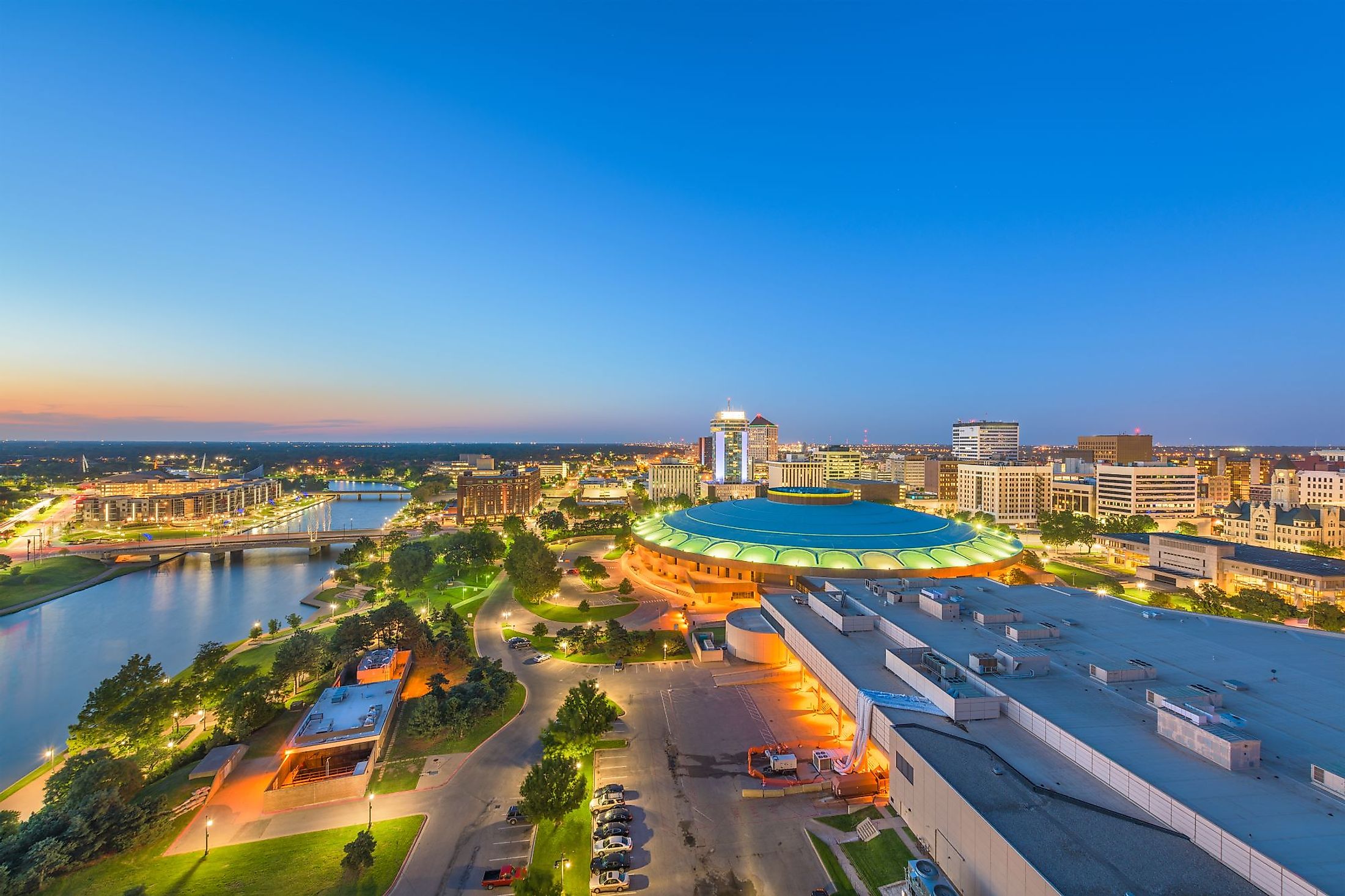
The downtown revitalization efforts in Wichita have opened new doors for commercial real estate and multi-family development. What Wichita is known for currently is a shift toward “urban infill” projects—converting historic industrial buildings into luxury lofts and modern office spaces. These developments are supported by local tax incentives and Opportunity Zone designations, providing savvy investors with significant tax-advantaged growth. The city’s focus on maintaining a vibrant core ensures that commercial investments remain backed by a stable and growing demand for lifestyle amenities.
Entrepreneurial Heritage and Startup Capital
Wichita’s identity is inextricably linked to entrepreneurship. This is the city that gave birth to Pizza Hut, Coleman, and Garmin (which started in nearby Olathe but has deep ties to the region’s engineering talent). Today, this legacy continues through a robust ecosystem designed to foster small business growth and venture capital investment.
A Legacy of Global Franchising
The story of Pizza Hut, founded by two Wichita State University students with a $600 loan from their mother, is legendary in business circles. It highlights what Wichita is known for: the ability to scale a business from a local startup to a global powerhouse. This history has left behind a culture of mentorship and a sophisticated network of angel investors who are eager to fund the next generation of Midwestern entrepreneurs.
Modern Innovation and Tech-Manufacturing Fusion
While aviation remains the king, Wichita is diversifying into tech-manufacturing and cybersecurity. With the presence of Wichita State University’s National Institute for Aviation Research (NIAR), the city has become a hub for research and development. From a money and investment perspective, this creates a fertile ground for “deep tech” startups—companies that solve complex physical problems using advanced software and materials. Investors are increasingly looking at Wichita as a place where the “Silicon Prairie” meets hard-core industrial capability.
Long-Term Wealth and Economic Diversification
As Wichita looks toward the future, it is focusing on diversifying its economic base to ensure long-term financial health. The city is known for its proactive approach to economic development, using public-private partnerships to attract new industries and retain top talent.
The Growth of Healthcare and Logistics
In addition to aerospace, Wichita has developed a massive healthcare sector, which serves as a regional hub for the central United States. Healthcare provides a recession-resistant financial pillar for the city, offering high-paying jobs and requiring constant capital investment in infrastructure and technology. Furthermore, Wichita’s central geographic location makes it a logical choice for logistics and distribution centers. As e-commerce continues to grow, the city’s role as a transit hub for moving goods across North America is becoming a major driver of commercial tax revenue.
Strategic Financial Planning for the Future
Wichita’s municipal government is known for maintaining a conservative fiscal approach, which has historically protected the city from the debt crises faced by other urban centers. For residents and business owners, this translates to stable tax rates and reliable public services. This environment of fiscal predictability is essential for long-term financial planning, allowing individuals and corporations to forecast their growth with a high degree of confidence.
In conclusion, Wichita, Kansas, is known for being a powerhouse of industrial finance and an oasis of personal affordability. It is a city that rewards those who understand the value of cash flow, the stability of defense-backed manufacturing, and the potential of a low-cost, high-output lifestyle. Whether viewed through the lens of a real estate investor seeking passive income or an entrepreneur looking for a supportive ecosystem, Wichita remains one of the most fiscally sound locations in the American heartland. Its reputation as the Air Capital is well-deserved, but its identity as a bastion of financial opportunity is what truly defines its place in the modern economy.
aViewFromTheCave is a participant in the Amazon Services LLC Associates Program, an affiliate advertising program designed to provide a means for sites to earn advertising fees by advertising and linking to Amazon.com. Amazon, the Amazon logo, AmazonSupply, and the AmazonSupply logo are trademarks of Amazon.com, Inc. or its affiliates. As an Amazon Associate we earn affiliate commissions from qualifying purchases.