
For most prospective homeowners, the mortgage process feels like a series of increasingly difficult hurdles. You find a home, negotiate a price, and sign a mountain of preliminary paperwork. However, once the initial excitement fades, the loan enters a phase often described as a “black box”: underwriting. This is the most critical stage of the mortgage lifecycle, where a lender’s financial experts determine whether your dream of homeownership becomes a reality or remains a distant ambition.
Underwriting is the formal process of evaluating a borrower’s financial risk. It is the gatekeeper of the lending world, ensuring that both the borrower and the lender are protected from a potentially catastrophic financial commitment. In the realm of personal finance, understanding the nuances of underwriting is essential for anyone looking to secure the best possible terms on a home loan.
The Core Components of the Underwriter’s Evaluation
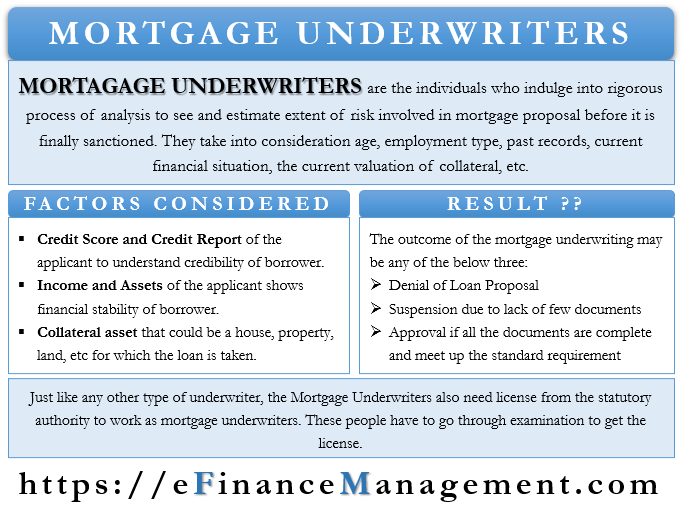
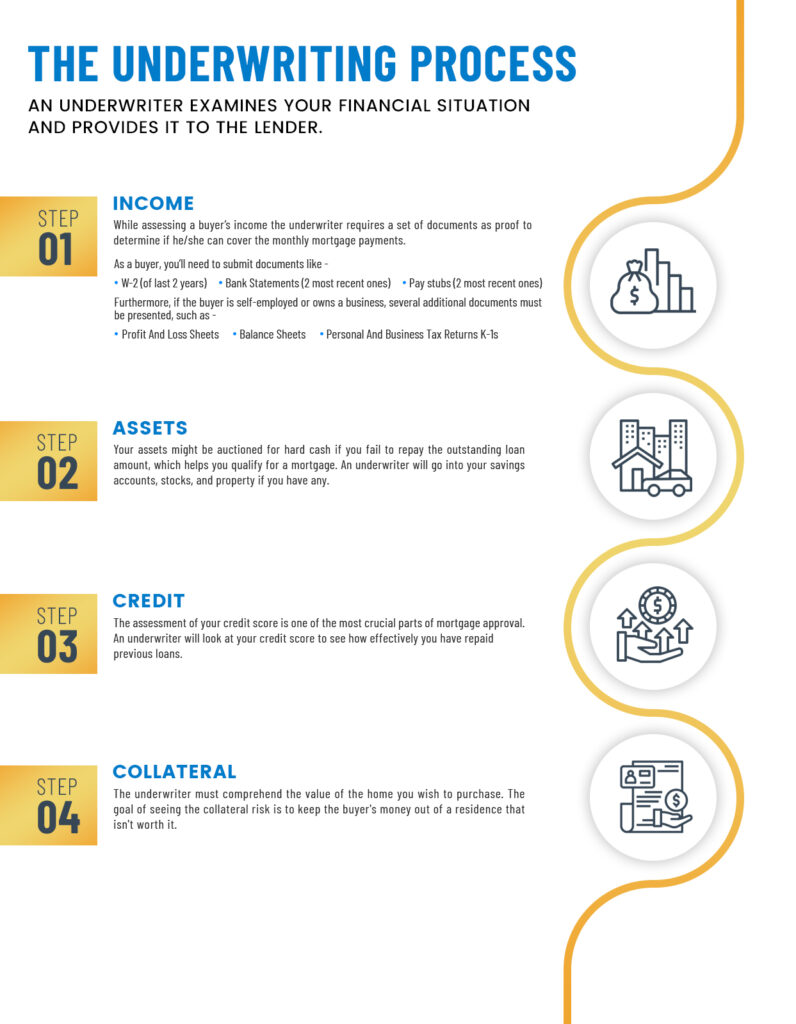
At its heart, underwriting is an exercise in risk assessment. An underwriter’s primary job is to answer one fundamental question: If we lend this person hundreds of thousands of dollars, what is the mathematical probability that they will pay it back? To answer this, they look at the “Three C’s” of underwriting: Credit, Capacity, and Collateral.
Credit History and the Narrative of Risk
While many borrowers fixate on their three-digit FICO score, an underwriter looks far deeper. They examine the credit report as a narrative of financial behavior. They are looking for patterns—consistency in making on-time payments, the age of accounts, and the diversity of credit types.
A high credit score generally suggests a lower risk, but underwriters also watch for “red flags” that a simple score might mask. These include recent “hard” inquiries that suggest a borrower is desperate for credit, or “thin” files where there isn’t enough historical data to make a sound judgment. In the money niche, credit is viewed as your financial reputation; the underwriter is the person vetting that reputation before the bank commits its capital.
Capacity and the Debt-to-Income (DTI) Ratio
Capacity refers to the borrower’s ability to actually afford the monthly payments. This is measured primarily through the Debt-to-Income ratio. Underwriters split this into two categories: the “front-end” ratio (the percentage of gross monthly income that goes toward the new mortgage payment) and the “back-end” ratio (the percentage that goes toward all monthly debt obligations, including credit cards, car loans, and student loans).
Most conventional loans look for a back-end DTI of 43% or lower, though some programs allow for more flexibility. The underwriter must also verify that the income is stable and likely to continue. This involves a granular look at tax returns, W-2s, and even “Verification of Employment” (VOE) calls to HR departments. For the self-employed, this process is even more rigorous, often requiring two years of profit-and-loss statements to prove income consistency.
Collateral and the Loan-to-Value (LTV) Ratio
The third pillar is collateral, which is the property itself. Because a mortgage is a secured loan, the lender needs to ensure that the asset is worth the investment. This is where the appraisal comes in. The underwriter reviews the appraisal report to ensure the home’s value justifies the loan amount.
If a borrower is putting 20% down, the LTV is 80%. If the appraisal comes in lower than the purchase price, the LTV increases, which might trigger the need for Private Mortgage Insurance (PMI) or cause the loan to be denied altogether. In the world of finance, collateral is the safety net; it ensures that if the borrower defaults, the lender can recoup their losses.
The Underwriting Workflow: From Application to Approval
Modern underwriting is a blend of high-tech algorithms and human intuition. The process generally follows a structured path that takes anywhere from a few days to several weeks, depending on the complexity of the borrower’s financial profile.
Automated Underwriting Systems (AUS)
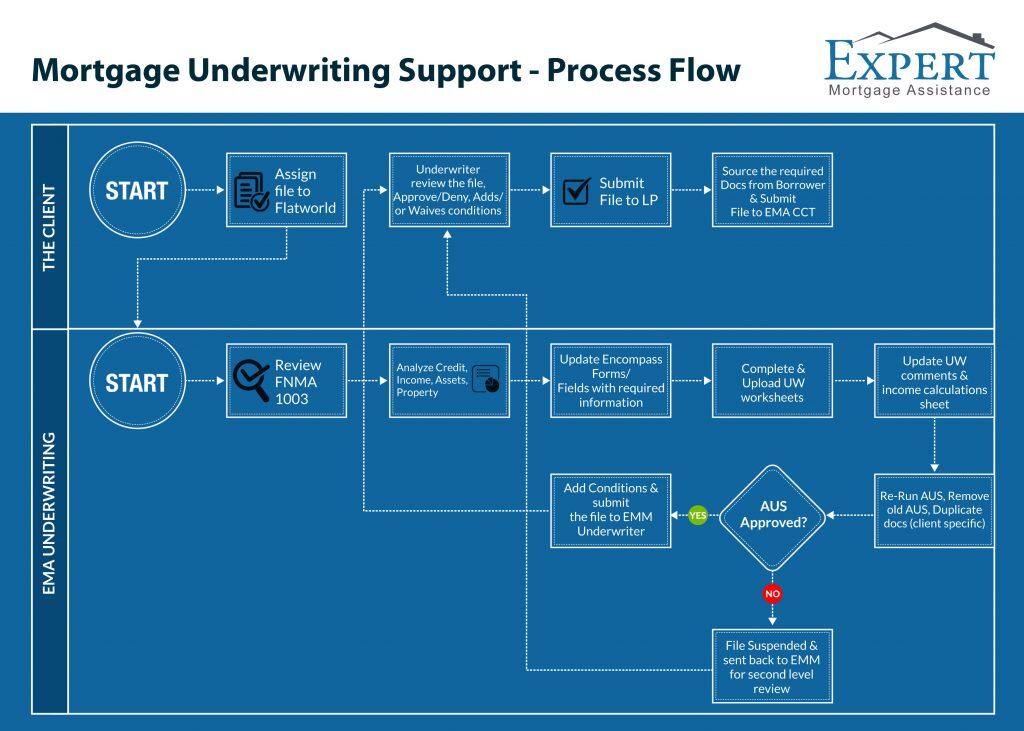
Most loans today start with an Automated Underwriting System. The most common are Fannie Mae’s “Desktop Underwriter” (DU) and Freddie Mac’s “Loan Product Advisor” (LPA). These systems process the borrower’s data against thousands of data points and algorithmically determine if the loan meets basic eligibility.
An “Approve/Eligible” finding from an AUS is a strong start, but it is not a final guarantee. The automated system is only as good as the data entered by the loan officer. The human underwriter must then go back and verify that every piece of data in the system is backed by physical or digital documentation.
The Manual Review and Conditional Approval
Once the AUS provides a preliminary result, a human underwriter takes over. They cross-reference bank statements to ensure there are no “large unidentified deposits” that might signal an undisclosed loan or a gift that hasn’t been properly documented. They look for inconsistencies in employment dates or discrepancies in tax filings.
If the underwriter is satisfied but needs more information, they will issue a “Conditional Approval.” This is a pivotal moment in the mortgage process. It means the loan is approved, provided the borrower meets a specific list of conditions. These conditions might include providing a more recent paystub, a letter of explanation (LOE) for a specific credit inquiry, or proof that a certain debt has been paid off.
The Clear to Close (CTC)
The final milestone in the underwriting process is the “Clear to Close.” This status is achieved when the underwriter has reviewed all the submitted conditions and determined that the file is complete and risk-compliant. At this stage, the “closing disclosure” is issued, and the legal documents are prepared for the final signing. In the context of personal finance, the CTC is the finish line of the acquisition phase and the starting line of the long-term debt management phase.
Common Challenges and How to Navigate Them
Even the most qualified borrowers can hit snags during underwriting. Because the underwriter’s job is to be skeptical, they often find issues that the borrower didn’t realize were problematic.
Large Deposits and Sourcing Funds
One of the most frequent delays in underwriting involves “un-sourced” funds. If a borrower deposits $5,000 in cash into their savings account right before applying for a mortgage, the underwriter will flag it. In a post-Patriot Act and post-2008 financial environment, lenders must ensure that the down payment is coming from a legitimate source and is not a “bridge loan” from a friend that would increase the borrower’s debt load.
The Appraisal Gap
In a competitive real estate market, borrowers often bid more than the asking price. However, if the appraiser determines the house is worth less than the contract price, the underwriter will only approve the loan based on the appraised value. This creates an “appraisal gap.” From a financial strategy standpoint, the borrower must then choose to pay the difference in cash, negotiate a lower price with the seller, or walk away from the deal.
Employment and Financial Changes
Underwriters typically perform a final credit pull and a final employment verification just 24 to 48 hours before the loan closes. If a borrower makes a large purchase on a credit card, switches jobs, or loses their source of income during the underwriting period, the entire approval can be revoked instantly. Maintaining a “financial freeze”—no new debt, no job changes, and no major spending—is the golden rule of surviving the underwriting process.
Strategies for a Smoother Underwriting Experience
While the underwriter holds the power, the borrower has the ability to influence the speed and success of the process through meticulous organization and transparency.
Total Transparency and Early Disclosure
The quickest way to get a loan denied is for an underwriter to discover something the borrower tried to hide. Whether it is a side business that lost money, a previous bankruptcy, or a child support obligation, disclosing these facts early allows the loan officer to structure the file correctly from the beginning. In finance, surprises are almost always negative; preemptive disclosure is a risk-mitigation strategy for the borrower.
Digital Document Management
Underwriting requires a staggering amount of paperwork. Borrowers who keep digital copies of their last two years of tax returns, W-2s, and bank statements can respond to conditions in minutes rather than days. Speed is essential because mortgage interest rate locks have expiration dates. If the underwriting process drags on too long, the borrower may have to pay a fee to extend their rate lock, or worse, lose a favorable rate altogether.
Understanding the “Why” Behind the Questions
It is easy to feel insulted by an underwriter’s questions. When they ask for a letter explaining a $200 mystery deposit, it can feel like an invasion of privacy. However, looking at this through a financial lens, the underwriter is simply building a fortress around the loan to ensure it can be sold on the secondary market (to entities like Fannie Mae or Freddie Mac). If the underwriter misses a detail, the bank may be forced to buy back the loan, which is a massive financial hit. Understanding that this is a technical requirement, not a personal judgment, can help borrowers navigate the stress of the process.
The Final Verdict on Underwriting
Underwriting is the most rigorous financial audit the average person will ever undergo. It is the bridge between a theoretical loan application and a funded mortgage. While it may seem like a bureaucratic hurdle, it serves a vital purpose in the global economy by ensuring that the housing market is built on a foundation of verified, sustainable debt.
For the individual, the underwriting process is an opportunity to see their financial health through the eyes of a professional risk assessor. By mastering the Three C’s—Credit, Capacity, and Collateral—and maintaining extreme financial discipline throughout the process, borrowers can move through the “black box” of underwriting with confidence, securing not just a house, but a solid financial future.
aViewFromTheCave is a participant in the Amazon Services LLC Associates Program, an affiliate advertising program designed to provide a means for sites to earn advertising fees by advertising and linking to Amazon.com. Amazon, the Amazon logo, AmazonSupply, and the AmazonSupply logo are trademarks of Amazon.com, Inc. or its affiliates. As an Amazon Associate we earn affiliate commissions from qualifying purchases.