
Savings bonds have long been a staple of the American financial landscape, often gifted at births, graduations, or weddings as a symbol of long-term security. However, because these instruments are designed to be held for decades, many investors find themselves with a stack of paper certificates or a digital account balance without a clear understanding of what those assets are actually worth today. Determining the value of a savings bond is not as simple as looking at the denomination printed on the face of the paper; it involves a complex calculation of interest rates, accrual periods, inflation adjustments, and maturity dates.
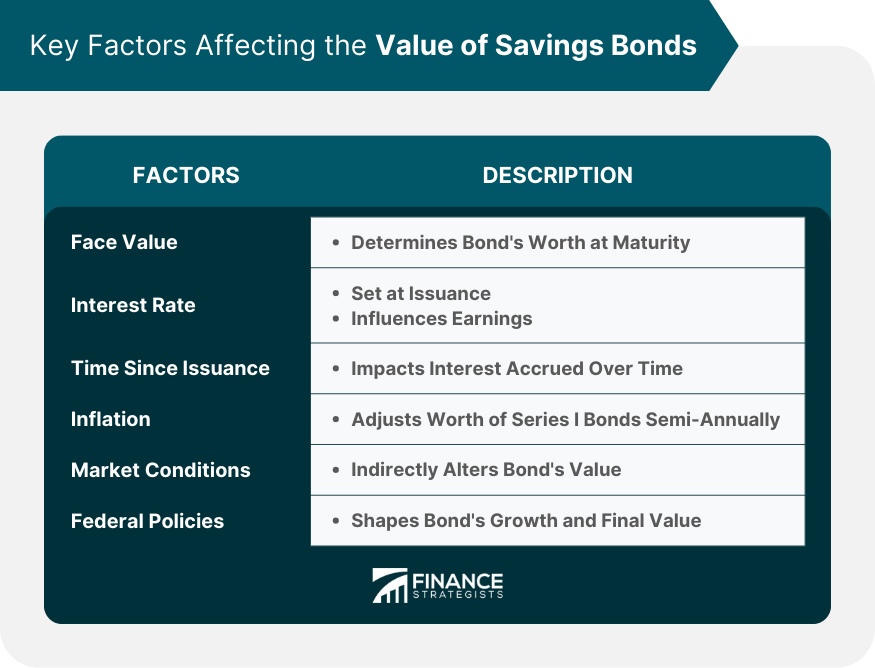
To truly understand the value of your savings bond, you must look beyond the “face value” and delve into the mechanics of how these government-backed securities grow over time. Whether you hold the classic Series EE bond or the inflation-protected Series I bond, knowing your bond’s current worth is essential for effective tax planning and portfolio management.
Decoding the Series: Understanding EE and I Bonds
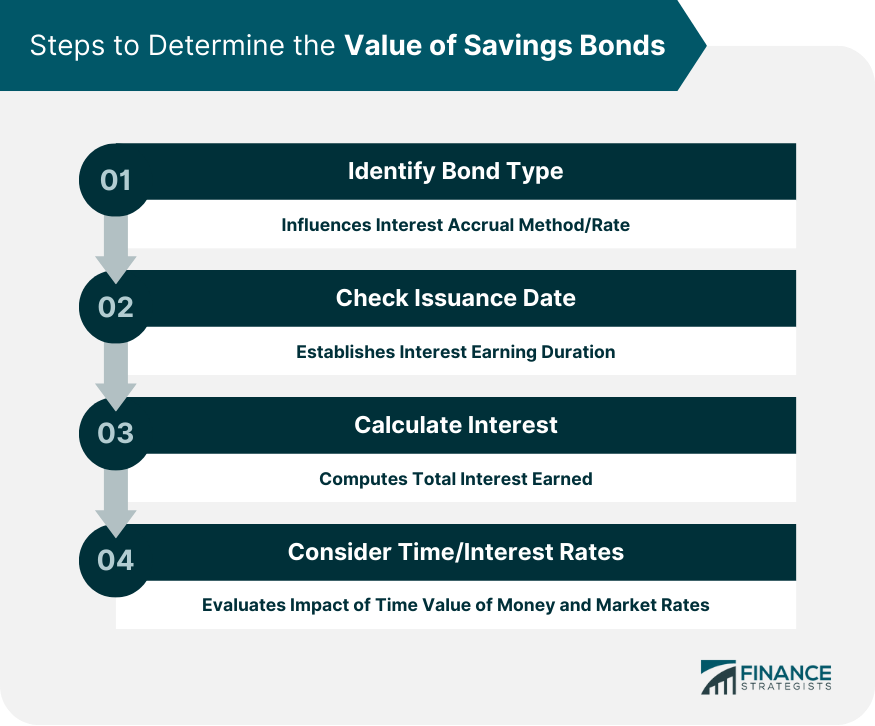
The first step in valuing your savings bond is identifying which type you own. The United States Treasury has issued various types of bonds over the decades, but the most common ones still earning interest today are Series EE and Series I bonds.
Series EE Bonds: The Long-Term Staple
Series EE savings bonds are perhaps the most recognizable. If you have a paper bond issued before May 2005, you likely purchased it at a discount—specifically, half its face value. For example, a bond with “$100” printed on it was purchased for $50. The value of these bonds increases as interest is added to the purchase price.
The most critical feature of Series EE bonds issued since May 2005 is the Treasury’s guarantee that the bond will reach its full face value after 20 years. If the accrued interest has not brought the bond’s value to the face amount by the 20-year mark, the Treasury makes a one-time adjustment to fulfill that promise. This represents an effective internal rate of return of approximately 3.5%. After that 20-year jump, the bond continues to earn interest at its original fixed rate until it reaches final maturity at 30 years.
Series I Bonds: The Inflation Fighter
Series I bonds are sold at face value, meaning a $100 bond costs $100. Their value is determined by a “composite rate,” which consists of two parts: a fixed rate of return and a variable semi-annual inflation rate based on the Consumer Price Index for All Urban Consumers (CPI-U).
The value of an I bond can fluctuate significantly depending on the economic climate. In periods of high inflation, the composite rate can soar, making these bonds highly lucrative. Conversely, in periods of deflation, the inflation component can be negative, potentially reducing the total interest earned (though the composite rate can never drop below zero). Understanding the current inflation adjustment is vital to knowing if your I bond is outperforming other cash-equivalent investments.
How Interest Accrual and Compounding Affect Value
The value of a savings bond does not grow in a linear fashion. Instead, interest is handled through a process of accrual and semiannual compounding, which can make manual calculations difficult for the average investor.
The Compounding Schedule
For both Series EE and Series I bonds, interest is earned monthly but compounded semiannually. This means that every six months from the bond’s issue date, the interest earned over the previous half-year is added to the principal. Subsequent interest is then calculated based on this new, higher principal amount. This “interest on interest” is what allows savings bonds to grow substantially over a 30-year lifespan.
The Five-Year Rule and Early Redemption Penalties
If you are looking to cash in your bond to realize its value, you must be aware of the “five-year rule.” Savings bonds are intended to be long-term investments. If you redeem a bond before it is five years old, you forfeit the last three months of interest as a penalty.
For example, if you decide to cash in an I bond after holding it for four years, and the interest rate for the last quarter was particularly high, your total payout will be significantly lower than the “current value” listed on a tracking tool that doesn’t account for the penalty. Once a bond reaches the five-year mark, this penalty disappears, and you are entitled to the full accrued value.
Fixed vs. Variable Rates
For older Series EE bonds (issued between 1997 and 2005), the interest rate is variable and based on 90% of the average yield on five-year Treasury securities. For bonds issued after May 2005, the rate is fixed at the time of purchase. Knowing which era your bond belongs to is the difference between having a predictable asset and one that fluctuates with the broader bond market.
Tools and Methods for Calculating Current Value

Because of the variables mentioned above—compounding, inflation adjustments, and doubling guarantees—you should rarely rely on your own math to determine a bond’s value. Professional financial tools and official resources are necessary for accuracy.
The TreasuryDirect Savings Bond Calculator
The most authoritative way to find the value of paper savings bonds is through the TreasuryDirect website, maintained by the U.S. Department of the Treasury. By inputting the series, denomination, and serial number, along with the issue date, the calculator provides the current interest rate, the amount of interest earned to date, and the total redemption value.
It is important to note that the calculator assumes you are cashing the bond in during the current month. If you plan to hold the bond for another six months, the value will change as the next compounding period hits.
Managing Digital Bonds
If you hold electronic bonds through a TreasuryDirect account, the system automatically calculates and displays the current value of your holdings. This value includes all accrued interest up to the most recent compounding period. For I bonds, the value shown in your digital account already reflects the three-month interest penalty if the bond is less than five years old, providing a “real-time” look at what you would receive if you sold immediately.
Physical Inspection of Paper Bonds
For those with physical certificates, the issue date is the most important piece of information. The issue date is usually stamped on the upper right-hand corner. Even if you don’t use the online calculator, knowing the issue date allows you to check historical interest rate tables to estimate growth. However, physical bonds are increasingly rare as the Treasury moved to all-electronic sales in 2012; if you still have paper bonds, they may be nearing their final maturity.
Tax Implications and Strategic Redemption
The “value” of your savings bond isn’t just the number on the screen; it is the net amount you keep after the government takes its share. Savings bonds offer unique tax advantages, but they also come with specific obligations that can impact your financial bottom line.
Federal Income Tax vs. State and Local Exemptions
One of the primary benefits of savings bonds is that the interest earned is exempt from state and local income taxes. This makes them particularly valuable for investors living in high-tax states. On the federal level, however, the interest is taxable.
You have two choices for reporting this interest:
- Accrual Method: You report the interest every year as it is earned.
- Cash Basis: You defer reporting the interest until you actually cash the bond, it reaches final maturity, or you give it to someone else (taxable event).
Most individual investors choose the cash basis, which allows the interest to grow tax-deferred for up to 30 years. However, this creates a “tax bomb” upon redemption, where three decades of interest are taxed in a single year, potentially pushing you into a higher tax bracket.
The Education Tax Exclusion
Under certain circumstances, the value of your savings bond can be even higher if used for higher education. If you use the proceeds of Series EE or I bonds to pay for qualified higher education expenses at an eligible institution, you may be able to exclude the interest from your federal income tax. There are strict income limits and age requirements (the owner must have been at least 24 years old when the bond was issued), but when applicable, this exclusion significantly increases the effective yield of the bond.
Final Maturity: The “Stop Interest” Date
Every savings bond has a “final maturity” date, typically 30 years after the issue date. At this point, the bond stops earning interest entirely. Holding a bond past its final maturity date is a common financial mistake; the value remains stagnant while inflation erodes its purchasing power. If your bond has reached its 30th birthday, its maximum value has been achieved, and it should be redeemed or reinvested immediately.
Strategic Planning for Your Bond Portfolio
Understanding the value of your savings bonds is the first step toward integrating them into a broader financial strategy. Because these are low-risk, sovereign debt instruments, they serve a specific role in a diversified portfolio.
Rebalancing and Opportunity Cost
If you discover that your old Series EE bonds are only earning a fixed rate of 1.5%, but current I bonds are offering a much higher composite rate due to inflation, it may be time to redeem the older bonds. Even after paying the federal taxes, moving that capital into a higher-yielding environment can improve your long-term wealth.
Estate Planning and Ownership
Savings bonds are non-marketable, meaning they cannot be sold to other individuals on a secondary market. They can only be redeemed by the owner or a co-owner, or reissued to a beneficiary upon the owner’s death. Knowing the current value of your bonds is essential for estate planning. If you have a significant amount of paper bonds, it is often wise to convert them to electronic form via TreasuryDirect to ensure they are not lost or destroyed, and to make the valuation process seamless for your heirs.
Conclusion of Value
The value of a savings bond is a living figure that changes every month. It represents a combination of the U.S. government’s promise, the passage of time, and the shifting tides of the American economy. By using the right tools, understanding the nuances of interest accrual, and planning for the eventual tax impact, you can transform those forgotten pieces of paper into a powerful component of your financial future. Whether they are destined for a child’s education, a retirement fund, or a rainy-day reserve, knowing exactly what your bonds are worth ensures that you remain the master of your personal economy.
aViewFromTheCave is a participant in the Amazon Services LLC Associates Program, an affiliate advertising program designed to provide a means for sites to earn advertising fees by advertising and linking to Amazon.com. Amazon, the Amazon logo, AmazonSupply, and the AmazonSupply logo are trademarks of Amazon.com, Inc. or its affiliates. As an Amazon Associate we earn affiliate commissions from qualifying purchases.