
The Troubled Asset Relief Program, commonly known by its acronym TARP, represents one of the most significant and controversial government interventions in the history of the American financial system. Established in the wake of the 2008 financial crisis, TARP was a program designed to stabilize the country’s financial system, restart economic growth, and prevent the collapse of the global banking network. At its core, it was a massive injection of liquidity into a parched market, authorized by the Emergency Economic Stabilization Act of 2008.
To understand TARP, one must first understand the climate in which it was born. In late 2008, the United States was facing a systemic collapse. The subprime mortgage market had imploded, leading to a domino effect that brought down major investment banks like Lehman Brothers and pushed others to the brink of insolvency. Credit markets froze; banks stopped lending to each other and to consumers, threatening to grind the entire global economy to a halt. In this context, the U.S. Department of the Treasury proposed TARP as a “bazooka” to restore confidence in the financial markets.
The Origins and Objectives of TARP
The primary goal of TARP was to strengthen the financial sector by purchasing “troubled assets” from banks and other financial institutions. These assets were primarily mortgage-backed securities (MBS) and collateralized debt obligations (CDOs) that had plummeted in value as homeowners defaulted on their loans. Because these assets were difficult to value and impossible to sell in a panicked market, they became “toxic,” weighing down the balance sheets of every major financial institution in the country.
The Emergency Economic Stabilization Act of 2008
TARP was officially signed into law by President George W. Bush on October 3, 2008. The legislation initially authorized the Treasury to spend up to $700 billion to purchase these toxic assets. The logic was that if the government took these risky assets off the books of private banks, the banks would be freed up to start lending again, thereby stimulating the economy.
However, the strategy shifted almost immediately. Treasury Secretary Henry Paulson realized that purchasing individual toxic assets would be a slow and administratively complex process that might not act fast enough to stop the bleeding. Within weeks, the focus of TARP moved from purchasing assets to direct capital injections—buying preferred stock in banks to boost their capital reserves instantly.
Restoring Market Liquidity
The immediate objective of TARP was not to make a profit or even to save specific bankers, but to restore liquidity. Liquidity is the lifeblood of the financial system; without it, businesses cannot get short-term loans to pay employees, and consumers cannot get mortgages or car loans. By providing a government backstop, TARP signaled to the markets that the U.S. government would not allow the banking system to fail, which helped to thaw the frozen credit markets.
Key Components and Major Recipients
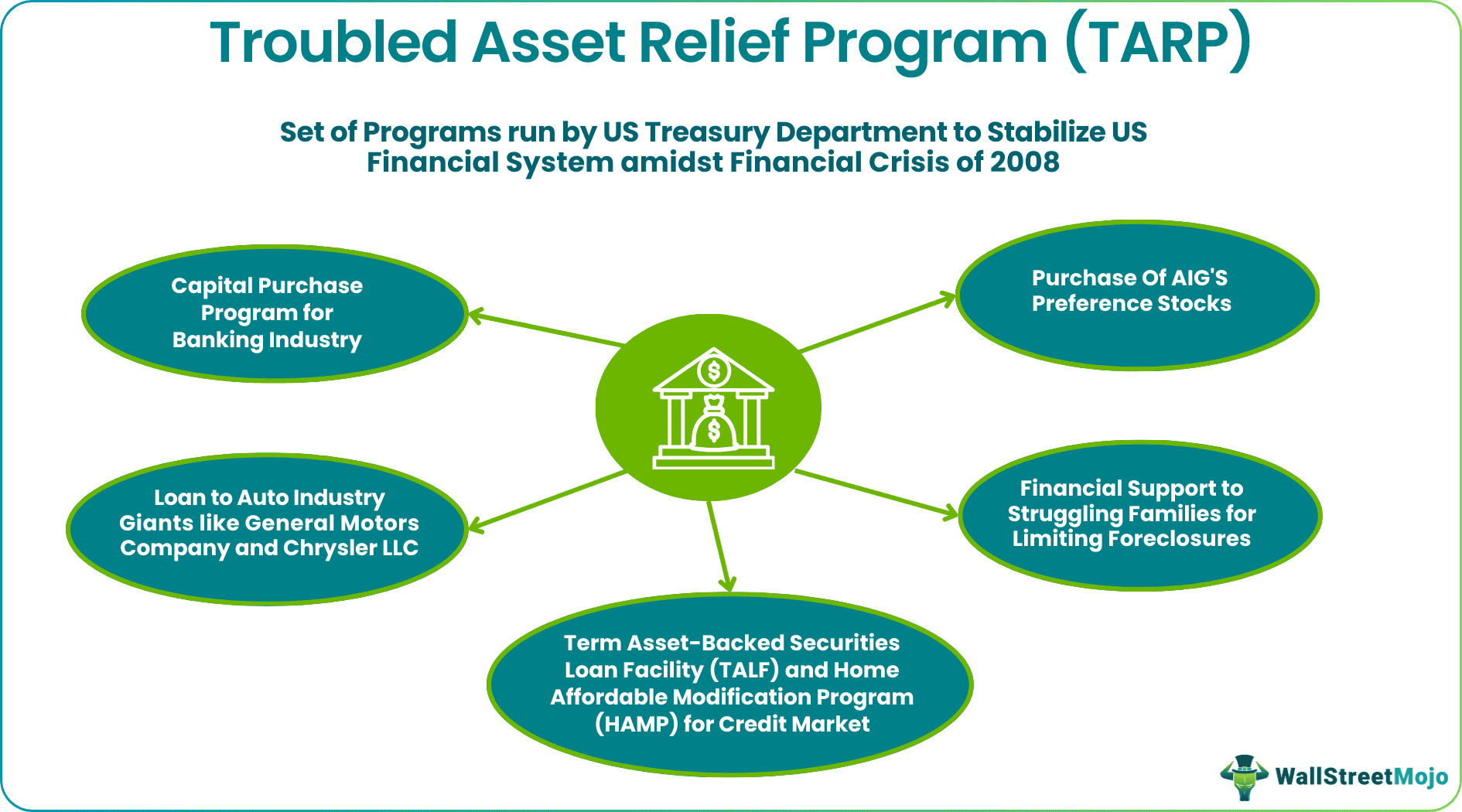
While TARP is often remembered as a “bank bailout,” the program was actually a collection of several distinct initiatives aimed at different sectors of the economy. The Treasury eventually committed funds to five main areas: the banking industry, the insurance industry, the automotive industry, mortgage programs, and credit markets.
The Capital Purchase Program (CPP)
The largest and most visible part of TARP was the Capital Purchase Program. Under this initiative, the Treasury invested approximately $205 billion in 707 financial institutions across 48 states. The “Big Nine” banks, including JPMorgan Chase, Citigroup, and Bank of America, were required to participate to prevent the market from “cherry-picking” which banks were weak and which were strong. By forcing all major players to take the money, the Treasury provided a shield for those that were truly struggling.
The AIG Intervention
American International Group (AIG), the world’s largest insurance company at the time, presented a unique challenge. AIG had sold billions of dollars in credit default swaps—essentially insurance policies on mortgage-backed securities. When those securities failed, AIG did not have the cash to pay out the claims. Because AIG was so deeply interconnected with almost every major bank in the world, its failure would have triggered a global catastrophe. TARP provided a massive lifeline to AIG, eventually totaling around $70 billion in committed funds.
The Automotive Industry Financing Program (AIFP)
One of the most debated aspects of TARP was the bailout of the American auto industry. General Motors (GM) and Chrysler were on the verge of liquidation. Unlike the banks, the auto companies were traditional industrial giants with millions of employees and retirees. The Treasury used TARP funds to provide roughly $80 billion to GM, Chrysler, and Ally Financial (formerly GMAC). This intervention allowed the companies to undergo structured bankruptcies and emerge as leaner, more competitive entities, saving an estimated one million jobs in the process.
Evaluating the Economic Impact and Financial Return
The legacy of TARP is often viewed through two different lenses: the financial return to the taxpayer and the broader impact on the American economy. While the program was initially met with public outrage, the data suggests it was more successful than many predicted at the time of its inception.
Financial Recovery and Profit
One of the most surprising outcomes of TARP is that the program actually turned a profit for the U.S. government. By the time the program was largely wound down, the Treasury had recovered more than it had disbursed. The total amount disbursed through TARP was approximately $441 billion. In return, the government received $442 billion in repayments and an additional $32 billion in interest, dividends, and other income.
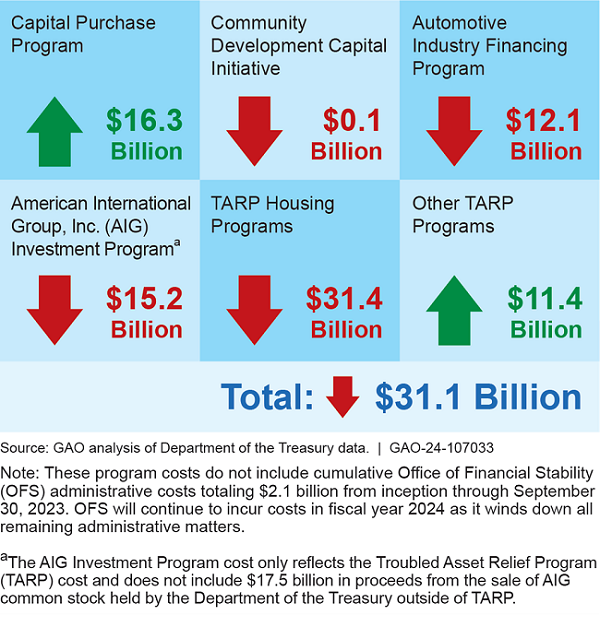
Specifically, the investments in the banking sector were highly profitable. The government made a profit of about $24 billion on its bank investments. While the auto industry and housing programs resulted in a net loss, the overall program finished in the black. This financial success, however, did little to dampen the political controversy surrounding the program.
Avoiding a Second Great Depression
From a macroeconomic perspective, many economists argue that TARP was essential in preventing a total economic collapse. By stabilizing the financial system, TARP allowed the U.S. to avoid the 25% unemployment rates seen during the Great Depression of the 1930s. Although the Great Recession was painful—with unemployment peaking at 10%—the consensus among financial historians is that without the aggressive intervention of TARP and the Federal Reserve, the outcome would have been significantly more catastrophic.
The Controversy: Moral Hazard and Public Perception
Despite its financial success, TARP remains a polarizing topic in American discourse. The primary criticism of the program centers on the concept of “moral hazard”—the idea that by bailing out large institutions, the government encouraged future risky behavior by signaling that it would always step in to prevent a collapse.
“Too Big to Fail”
TARP solidified the notion of “Too Big to Fail” (TBTF). Critics argued that if a company is so large that its failure would threaten the entire economy, it has an unfair advantage over smaller competitors. These large institutions can take greater risks, knowing that the taxpayer will ultimately shoulder the downside. This sentiment fueled both the Occupy Wall Street movement on the left and the Tea Party movement on the right, as citizens across the political spectrum felt that the government prioritized “Wall Street” over “Main Street.”
The Foreclosure Crisis and Main Street
Another significant criticism was the perceived failure of TARP’s housing programs. While billions were spent to save banks, the programs designed to help homeowners—such as the Home Affordable Modification Program (HAMP)—were often criticized for being ineffective and underfunded. Millions of Americans lost their homes to foreclosure while the executives of the banks that sold the predatory loans received bonuses. This disparity created a deep sense of injustice that persists in American politics to this day.
TARP’s Lasting Influence on Modern Finance
The Troubled Asset Relief Program fundamentally changed the relationship between the government and the financial sector. It led directly to the passage of the Dodd-Frank Wall Street Reform and Consumer Protection Act in 2010, which sought to address the systemic vulnerabilities exposed by the 2008 crisis.
Regulatory Changes and Stress Testing
As a result of the TARP experience, the Federal Reserve began conducting annual “stress tests” on major banks. These tests are designed to ensure that institutions have enough capital to survive a severe economic downturn without needing another government bailout. The requirement for higher capital buffers and more transparent accounting of “troubled assets” are direct legacies of the TARP era.

A Template for Future Crises
TARP also served as a blueprint for the government’s response to subsequent crises, such as the economic shock caused by the COVID-19 pandemic in 2020. The speed and scale of the CARES Act and other liquidity facilities mirrored the “shock and awe” strategy first deployed via TARP. The precedent was set: in times of extreme systemic risk, the U.S. government will act as the “lender of last resort” to maintain the stability of the global financial order.
Ultimately, TARP remains a complex chapter in financial history. It was a program born of desperation, characterized by radical shifts in strategy, and executed with a level of government intervention rarely seen in a capitalist economy. While it succeeded in its primary mission of stabilizing the financial system and even managed to return a profit to the Treasury, its social and political costs—in terms of public trust and the perpetuation of moral hazard—continue to be debated by economists and policymakers alike. Understanding TARP is not just about looking at a 2008 bailout; it is about understanding the modern architecture of the global financial system and the lengths to which a government will go to prevent its collapse.
aViewFromTheCave is a participant in the Amazon Services LLC Associates Program, an affiliate advertising program designed to provide a means for sites to earn advertising fees by advertising and linking to Amazon.com. Amazon, the Amazon logo, AmazonSupply, and the AmazonSupply logo are trademarks of Amazon.com, Inc. or its affiliates. As an Amazon Associate we earn affiliate commissions from qualifying purchases.