
Understanding the order of the Indiana Jones movies is not merely an exercise in narrative tracking; it is a deep dive into the evolution of filmmaking technology over four decades. From the analog mastery of the early 1980s to the cutting-edge artificial intelligence used in the 2020s, the franchise serves as a historical record of how Silicon Valley and Hollywood have intertwined to redefine the visual experience. To appreciate the series, one must look at both the release sequence and the chronological narrative, while analyzing the technological milestones that differentiate each chapter.

Navigating the Narrative: Release Dates vs. Chronological Timelines in the Streaming Era
For the modern viewer accessing these films through digital platforms like Disney+ or Paramount+, the order in which they are consumed can significantly alter the perception of the series’ technical progression. There are two primary ways to approach the franchise: by release date and by narrative chronology.
The Release Order (1981–2023)
Watching the films in the order they were released allows viewers to witness the organic development of Industrial Light & Magic (ILM) and the shifting paradigms of special effects:
- Raiders of the Lost Ark (1981)
- Indiana Jones and the Temple of Doom (1984)
- Indiana Jones and the Last Crusade (1989)
- Indiana Jones and the Kingdom of the Crystal Skull (2008)
- Indiana Jones and the Dial of Destiny (2023)
The Chronological Order
Interestingly, the second film released is actually a prequel to the first. For those who prefer a linear story timeline, the order shifts:
- Indiana Jones and the Temple of Doom (Set in 1935)
- Raiders of the Lost Ark (Set in 1936)
- Indiana Jones and the Last Crusade (Set in 1938)
- Indiana Jones and the Kingdom of the Crystal Skull (Set in 1957)
- Indiana Jones and the Dial of Destiny (Set in 1969, with a 1944 prologue)
The Metadata Challenge for Digital Libraries
From a software and UI/UX perspective, the way these films are organized in streaming libraries relies heavily on metadata tags. Digital platforms often struggle with “The Prequel Problem,” where automated sorting by year of release may confuse new viewers who expect a linear storyline. High-end media server software, such as Plex or Kodi, allows users to manually adjust sort titles to maintain chronological order, highlighting the need for robust data management in digital film collections.
From Mechanical Ingenuity to AI De-aging: The VFX Odyssey of ILM
The Indiana Jones franchise has always been at the forefront of visual effects (VFX). Each film represents a specific “tech stack” available to filmmakers at the time of production.
The Golden Age of Practical Effects (1981–1989)
The original trilogy is a masterclass in analog technology. In Raiders of the Lost Ark, the infamous “melting face” sequence was achieved through a combination of gelatin, plaster, and time-lapse photography. There were no digital pixels involved; instead, the “tech” consisted of heat lamps and mechanical rigs. During this era, ILM perfected optical compositing—the process of layering multiple film strips into a single frame using an optical printer. This required precise mathematical alignment and chemical processing that remains a benchmark for physical filmmaking.
The Digital Shift: Kingdom of the Crystal Skull (2008)
By 2008, the industry had moved firmly into the digital realm. Kingdom of the Crystal Skull marked the franchise’s transition to extensive CGI (Computer-Generated Imagery). This film utilized digital color grading and complex particle simulations for sequences involving the iconic “ant swarm” and the interdimensional climax. While controversial among purists, the film demonstrated the power of digital intermediate (DI) workflows, allowing directors to manipulate the color and texture of the film in a digital environment before printing back to 35mm.
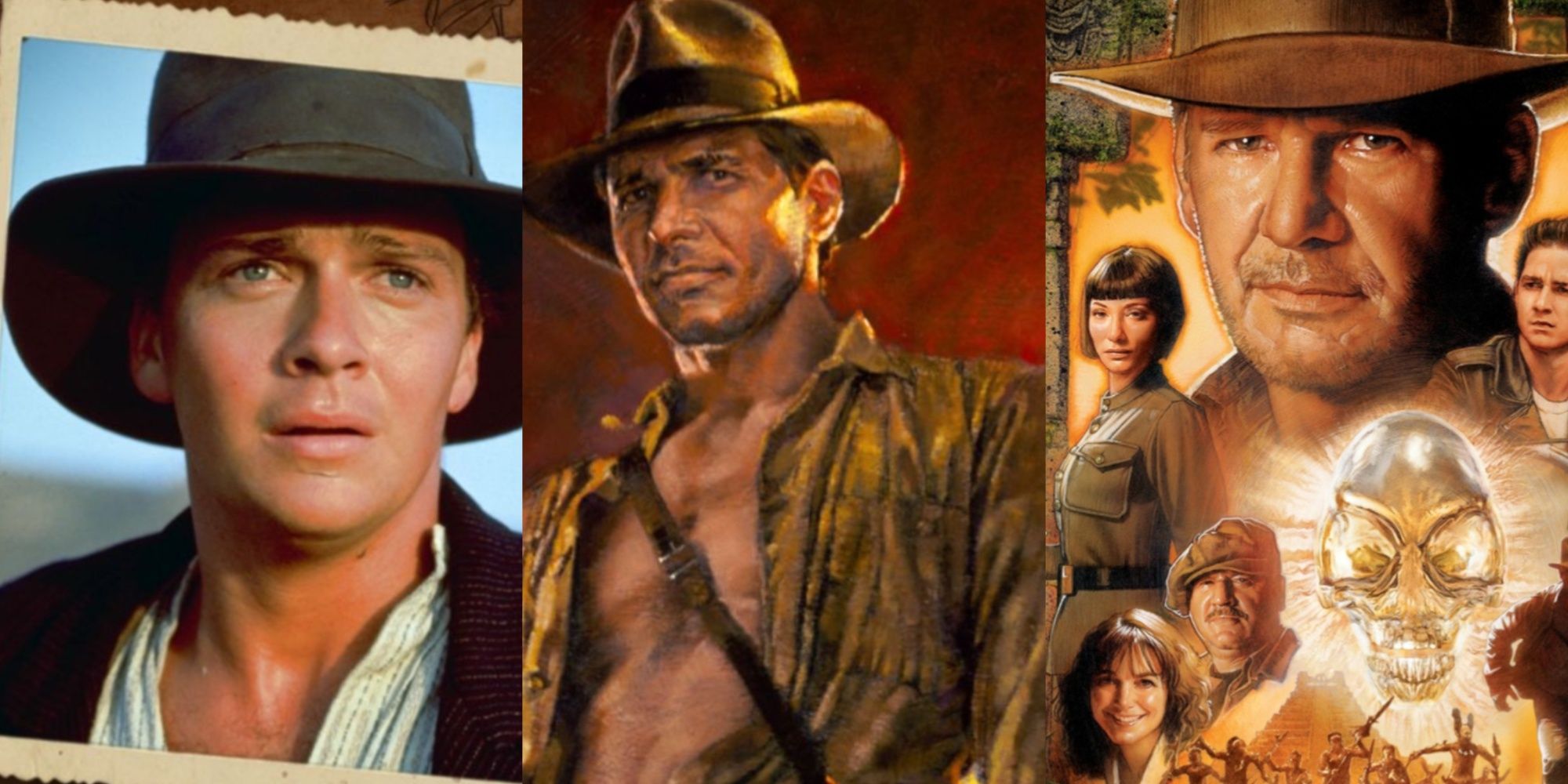
The Pinnacle of Computational Cinematography: Dial of Destiny (2023)
The most recent entry, Dial of Destiny, showcases the most significant leap in cinematic technology: AI-driven de-aging. To portray a younger version of Harrison Ford, ILM utilized a proprietary AI toolset called “FRAN” (Face Re-aging Network). Unlike traditional CGI, which requires artists to manually sculpt a digital face, FRAN was trained on thousands of hours of archival footage from the previous Indiana Jones films. This machine-learning approach allowed the software to predict how a younger Ford’s face would react to different lighting conditions and expressions, marking a new frontier in the intersection of artificial intelligence and digital performance.
Mastering the Experience: 4K Restoration and Sound Engineering
As display technology has moved from CRT televisions to 4K OLED panels, the way we archive and view the Indiana Jones movies has undergone a massive digital transformation. The technical order of the films is now defined by their “Remastered” status.
Scanning the 35mm Negatives
To bring the original trilogy into the modern era, technicians performed a frame-by-frame digital restoration. This process involves scanning the original 35mm film negatives at 4K resolution. Because film has an “analog resolution” roughly equivalent to 6K or 8K, these scans capture a level of detail—skin pores, fabric textures, and background elements—that was invisible on DVD or VHS. The restoration software identifies and removes digital “noise,” dust, and scratches that have accumulated on the physical film over decades.
High Dynamic Range (HDR) and Color Science
The application of HDR10 and Dolby Vision to the Indiana Jones collection has revolutionized the viewing experience. HDR allows for a wider color gamut and higher contrast ratios. In Raiders of the Lost Ark, the golden idol sequence benefits from expanded peak brightness, making the gold appear more metallic and reflective than ever before. This is not just a cosmetic change; it is a technical recalibration of the film’s color science to match the capabilities of modern high-performance displays.
Acoustic Engineering: From Mono to Dolby Atmos
The soundscapes of Indiana Jones, composed by John Williams, have evolved alongside the visuals. The original films were mixed for Dolby Stereo. However, for recent 4K Ultra HD releases, the audio tracks were completely re-engineered for Dolby Atmos. This object-based audio technology allows sound engineers to treat individual noises—the crack of a whip, the hum of an engine, or a swelling orchestral note—as “objects” that can be moved in a 3D space. This creates an immersive soundstage that was technically impossible during the films’ original theatrical runs.
The Intersection of Cinema and Interactive Tech
The legacy of the Indiana Jones movies extends beyond the silver screen and into the world of software development and interactive media. The order of the films has directly influenced the technical architecture of video games and virtual experiences.
Beyond the Screen: The Gaming Legacy
The technological DNA of the Indiana Jones franchise can be found in the “SCUMM” engine (Script Creation Utility for Maniac Mansion) used in LucasArts graphic adventures like Indiana Jones and the Fate of Atlantis. These games were pioneers in branching narrative software and digital sound synthesis. Today, the franchise continues to push technical boundaries with upcoming titles developed by Bethesda and MachineGames, utilizing the id Tech engine to create hyper-realistic environments that leverage ray tracing and advanced physics simulations.

Future Horizons: Virtual Production and the Metaverse
As we look forward, the technology that powers the Indiana Jones universe is migrating toward “Virtual Production.” Techniques pioneered on shows like The Mandalorian—using “The Volume” (a massive 360-degree LED video wall)—are likely to be the standard for any future expansions of the franchise. This tech allows for real-time rendering of environments in Unreal Engine, enabling actors to interact with digital backgrounds in a way that provides realistic lighting and parallax.
The Indiana Jones movies are more than just a sequence of adventure stories; they are a timeline of technological breakthroughs. Whether you watch them in release order to see the birth of the digital age or in chronological order to follow the narrative arc, you are witnessing the pinnacle of what human ingenuity and software can achieve. As AI and real-time rendering continue to evolve, the “order” of these movies will remain a vital case study for any technologist interested in the future of digital storytelling.
aViewFromTheCave is a participant in the Amazon Services LLC Associates Program, an affiliate advertising program designed to provide a means for sites to earn advertising fees by advertising and linking to Amazon.com. Amazon, the Amazon logo, AmazonSupply, and the AmazonSupply logo are trademarks of Amazon.com, Inc. or its affiliates. As an Amazon Associate we earn affiliate commissions from qualifying purchases.