
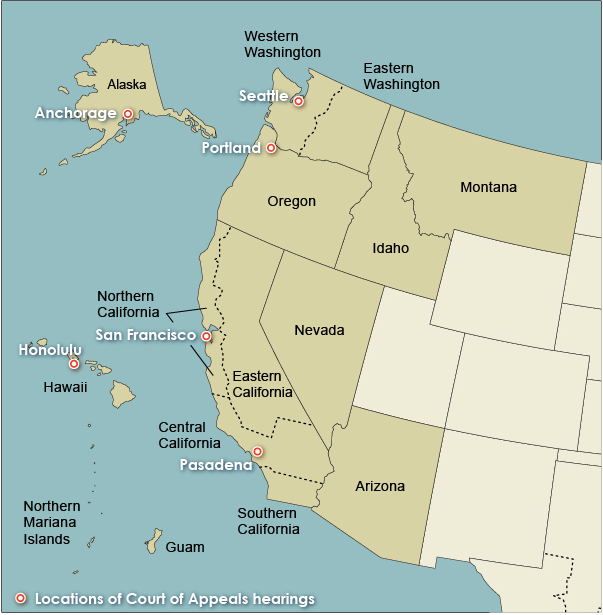
In the landscape of global technology, the lines between code and law are increasingly blurred. While software engineers focus on architecture and product managers look toward scalability, a silent but powerful force dictates the boundaries of what is possible in the digital world: the United States Court of Appeals for the Ninth Circuit. Often referred to simply as the “Ninth Circuit,” this federal court serves as the primary judicial authority for the western United States, encompassing California, Washington, Oregon, and several other states and territories.
For anyone operating in the tech sector—whether you are a startup founder in Silicon Valley, a cloud architect in Seattle, or a cybersecurity professional—the Ninth Circuit is far more than a geographical jurisdiction. It is the “Tech Court.” Because it oversees the regions where the world’s most influential technology companies are headquartered, its rulings effectively become the global standard for intellectual property, data privacy, and digital rights.
The Silicon Valley Precedent: Why the Ninth Circuit Rules Tech
The Ninth Circuit’s influence over the technology sector is rooted in geography. By presiding over the Northern District of California (the heart of Silicon Valley) and the Western District of Washington (the home of Microsoft and Amazon), the court naturally becomes the first major stop for landmark tech litigation. When a dispute arises regarding software patents, data scraping, or platform liability, it almost inevitably lands on a Ninth Circuit docket.
A Hub for Intellectual Property
In the tech world, intellectual property (IP) is the primary currency. The Ninth Circuit has spent decades refining the nuances of copyright and patent law as they apply to software. Unlike traditional manufacturing, software is iterative and often built upon existing frameworks. The court’s interpretations of “fair use” and “transformative work” determine whether a new app is a revolutionary innovation or a legal infringement. This has created a vast body of case law that developers must navigate when integrating third-party APIs or open-source libraries into their tech stacks.
Global Impact of Local Rulings
While the Ninth Circuit technically only has jurisdiction over the western U.S., its decisions often have a “de facto” national and international impact. Because tech giants like Meta, Google, and Apple are headquartered within this circuit, they tend to align their global terms of service and internal engineering protocols with Ninth Circuit rulings to maintain consistency. If the Ninth Circuit dictates a specific standard for user data consent, that standard often becomes the default setting for millions of users worldwide, simply because it is easier for a company to implement one high-standard protocol than to maintain a fragmented system.
Key Legal Battlegrounds in Modern Technology
Understanding the Ninth Circuit requires an analysis of the specific domains where its rulings have shaped the digital economy. From the way we access data to the ways platforms manage content, the court’s fingerprints are everywhere.
Data Scraping and the CFAA
One of the most consequential areas of Ninth Circuit litigation involves the Computer Fraud and Abuse Act (CFAA). For years, the tech industry wrestled with the legality of “scraping”—using automated scripts to collect public data from websites. In high-profile cases like hiQ Labs v. LinkedIn, the Ninth Circuit addressed whether scraping publicly available information constitutes “accessing a computer without authorization.”
The court’s stance has leaned toward protecting the open flow of information, ruling that if a website is public, scraping it generally does not violate the CFAA. This precedent is the bedrock of the modern data-driven economy, allowing search engines, price aggregators, and AI training models to function. Without this legal clarity, the very foundation of how we index and search the internet would be under constant threat of litigation.
Section 230 and Platform Liability
Perhaps no piece of legislation is more vital to the internet’s existence than Section 230 of the Communications Decency Act, which protects platforms from being held liable for content posted by their users. The Ninth Circuit has been the primary theater for interpreting this law. Its rulings have protected social media companies, review sites, and cloud hosting providers from a deluge of lawsuits.

However, the court also defines the limits of this protection. Recent cases have explored whether algorithmic recommendations—where an AI suggests content to a user—strip a company of its Section 230 immunity. For software developers and AI researchers, these Ninth Circuit interpretations are critical; they define the line between being a “neutral platform” and a “content creator.”
Digital Privacy and Surveillance
As data breaches and privacy concerns become more prevalent, the Ninth Circuit has emerged as a defender of digital rights. The court has frequently grappled with the “third-party doctrine,” which traditionally held that individuals lose their expectation of privacy when they share data with a third party, such as an ISP or a cloud provider. In an era of pervasive cloud computing, the Ninth Circuit has often pushed back against broad government surveillance, establishing that digital data deserves Fourth Amendment protections similar to physical documents in a filing cabinet.
Artificial Intelligence: The Ninth Circuit’s Next Frontier
The rise of Generative AI has presented a new set of challenges that the Ninth Circuit is currently beginning to address. As AI models are trained on massive datasets of copyrighted material, the court is being asked to redefine the boundaries of creativity and ownership.
Training Data and Fair Use
The most pressing question for AI developers today is whether using copyrighted data to train a Large Language Model (LLM) constitutes “fair use.” Several lawsuits involving artists, authors, and software developers against AI companies are currently moving through the Ninth Circuit system. The court’s eventual decisions on these matters will determine the financial viability of the AI industry. A ruling against fair use could force AI companies to pay billions in licensing fees, potentially stifling the rapid growth of the sector.
AI-Generated Output and Copyrightability
The Ninth Circuit is also tasked with determining if the outputs of AI—the code, text, or images generated by a prompt—can be protected by copyright. Current trends suggest that without significant human intervention, AI-generated work cannot be copyrighted. For tech companies relying on AI to generate proprietary code, this creates a significant strategic challenge: how to protect software assets if the law does not recognize the AI as a creator.
The Ninth Circuit as a Catalyst for Security and Innovation
Beyond the courtroom, the Ninth Circuit’s influence extends into the realms of digital security and technical standards. Its rulings often mandate a higher level of transparency and security from tech companies, serving as a catalyst for innovation in the cybersecurity space.
Cybersecurity Disclosure Precedents
When a major tech company suffers a data breach, the legal fallout is often handled in the Ninth Circuit. The court has established rigorous standards for how and when a company must disclose a vulnerability or a breach to its users. This has led to the development of sophisticated “LegalTech” tools and automated compliance software designed to ensure that organizations meet these judicial requirements in real-time.
Encryption and Backdoors
The Ninth Circuit has also been a critical player in the ongoing debate over encryption. When government agencies demand “backdoors” into encrypted communication platforms, the Ninth Circuit’s interpretation of constitutional rights and technical feasibility provides a bulwark for privacy-focused tech companies. By frequently siding with the principle that strong encryption is essential for digital commerce and personal safety, the court has allowed the U.S. tech industry to remain a global leader in secure communication tools.

Conclusion: Navigating the Ninth Circuit Framework
For the modern technologist, the Ninth Circuit is not just a court; it is a fundamental part of the technical landscape. It is the framework upon which the legal architecture of the internet is built. Whether you are building an AI startup, securing a multi-cloud environment, or managing a global brand, your operations are governed by the precedents set in this circuit.
As we move further into the era of decentralized web technologies, autonomous systems, and advanced AI, the Ninth Circuit will continue to be the primary arbiter of the digital frontier. Staying informed about its rulings is as essential as staying updated on the latest software patches or hardware releases. In the world of high tech, the Ninth Circuit is the ultimate authority on what it means to innovate within the bounds of the law, ensuring that the rapid pace of digital progress remains balanced with the rights and responsibilities of a civilized society.
aViewFromTheCave is a participant in the Amazon Services LLC Associates Program, an affiliate advertising program designed to provide a means for sites to earn advertising fees by advertising and linking to Amazon.com. Amazon, the Amazon logo, AmazonSupply, and the AmazonSupply logo are trademarks of Amazon.com, Inc. or its affiliates. As an Amazon Associate we earn affiliate commissions from qualifying purchases.