
In the intersection of linguistics and computer science, the concept of poetic meter—the rhythmic structure of a verse—has evolved from a purely aesthetic concern into a complex data problem. For developers, data scientists, and AI researchers, “meter” is essentially a pattern-recognition challenge that requires a deep understanding of phonetics, natural language processing (NLP), and signal processing. While a literary critic might view meter as the heartbeat of a poem, a technologist views it as a structured sequence of stressed and unstressed syllables that can be quantified, modeled, and generated through advanced computational frameworks.
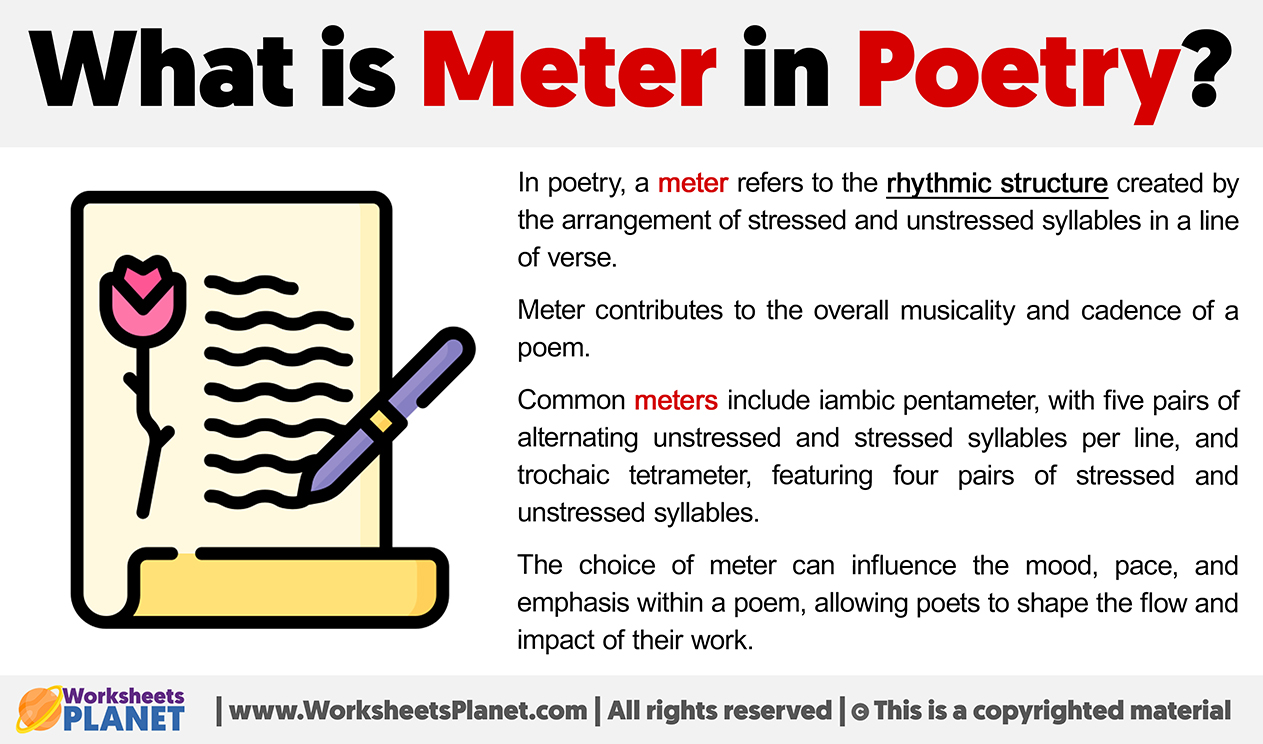
Understanding the meter of a poem is no longer just a task for the classroom; it is a foundational element in the development of sophisticated text-to-speech (TTS) engines, generative AI models, and automated sentiment analysis tools. By breaking down the rhythmic architecture of human language, we can build software that communicates with more naturalism and emotional resonance.
Decoding the Rhythmic Architecture: Meter as Data
To analyze meter through a technological lens, we must first define it as a measurable sequence. At its core, poetic meter is the recurring pattern of stressed (long/loud) and unstressed (short/quiet) syllables in a line of text. In computational prosody—the study of the rhythmic and intonational patterns of language—this is treated as a binary or tertiary data set.
The Binary of Scansion
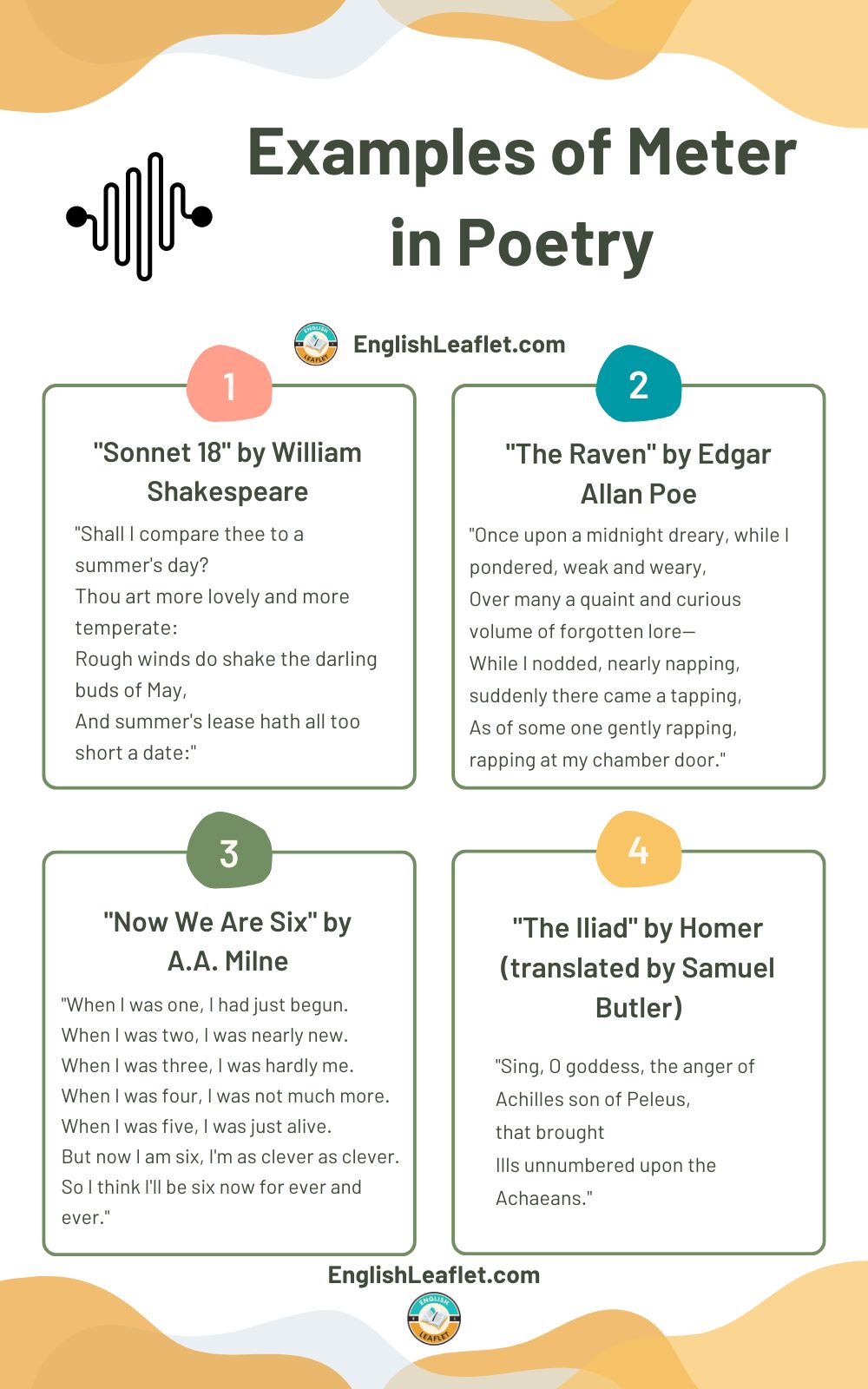
In traditional literature, the act of marking a poem’s meter is called scansion. In the world of software development, scansion is a form of data labeling. When we feed a line of poetry into an algorithm, the system must perform a “syllabication” process, breaking the string into its constituent phonetic units. Each unit is then assigned a value. For instance, in iambic pentameter, the sequence follows a 0-1 pattern (unstressed-stressed) repeated five times.
Modern NLP libraries, such as NLTK or SpaCy, often integrate with phonetic dictionaries like the Carnegie Mellon University (CMU) Pronouncing Dictionary to determine these values. This dictionary provides a mapping of words to their North American English pronunciations, including stress markers (0 for no stress, 1 for primary stress, and 2 for secondary stress). By converting a line like “To be, or not to be” into a numerical array [0 1 0 1 0 1], the software can mathematically verify the meter.
Phonetic Mapping in Natural Language Processing
The technical difficulty arises when words have multiple pronunciations or when the meter depends on the context of the sentence (rhetorical stress). This is where machine learning models, specifically Recurrent Neural Networks (RNNs) and Long Short-Term Memory (LSTM) networks, come into play. These models are designed to handle sequential data, making them ideal for identifying the flow of meter over several lines.
By training on massive corpora of verified poetic texts, these algorithms learn to predict the most likely rhythmic structure of a given string. This capability is crucial for “Natural Language Understanding” (NLU), as the meter often dictates the mood and urgency of the message—data points that are invaluable for sentiment analysis and brand monitoring tools.
The Challenges of Computational Prosody
Despite the advancements in Large Language Models (LLMs), perfectly identifying and generating poetic meter remains a significant technical hurdle. The difficulty lies in the discrepancy between how text is tokenized and how it is vocalized.
Tokenization vs. Syllabic Logic
Most modern AI models, including GPT-4 and its peers, utilize sub-word tokenization. This means they don’t see words or syllables; they see numerical representations of common character clusters. Because tokens do not always align with phonetic syllables, an AI may struggle to “hear” the rhythm it is generating. For example, the word “happening” might be one token, but it contains three syllables with a specific stress pattern (1-0-0, a dactyl).
To solve this, developers are building “phonetic-aware” layers into their models. These layers translate tokens into a phonetic alphabet (like IPA) before processing the rhythmic structure. This allows the software to maintain a consistent meter without “hallucinating” extra beats or skipping necessary stresses.
Contextual Stress and the “Nuance Gap”
Language is fluid. The word “present” is stressed on the first syllable when used as a noun (“I gave him a PRE-sent”) but on the second when used as a verb (“I will pre-SENT the findings”). For a software tool to accurately identify the meter of a poem, it must possess deep syntactic awareness. It must understand the part of speech and the surrounding semantic context to assign the correct stress value.
Current research in digital humanities and AI involves creating “transformer” architectures that focus specifically on prosodic features. These models use “attention mechanisms” to weigh the importance of certain words in a line, ensuring that the rhythmic analysis aligns with human auditory perception.
Engineering the Muse: AI Tools for Modern Poets and Developers
The practical application of meter analysis is found in a new generation of creative-tech tools. These applications range from educational software that helps students learn scansion to advanced creative writing assistants used by professional copywriters and lyricists.
Automated Scansion Engines
Tools like Prosodic (a Python library) and various web-based scanners allow users to input text and receive an immediate breakdown of the meter. These engines use rule-based algorithms combined with phonetic databases to visualize the “feet” of a poem (iambs, trochees, anapests, etc.). For developers, these tools offer an API-driven way to ensure that generated content adheres to specific structural constraints, which is particularly useful in the gaming industry for character dialogue or in the music industry for lyric generation.
Generative Models and the Mastery of Form
We are currently seeing a surge in generative AI specifically tuned for “constrained writing.” While a general-purpose AI might write a poem that looks like verse, it often fails the “ear test.” Specialized models are being developed that use “constrained decoding” techniques. During the generation process, the model filters out any word that would break the established meter. If the goal is a sonnet, the algorithm ensures that every line satisfies the 10-syllable iambic requirement before the text is even finalized. This level of technical precision is transforming the role of the “AI poet” from a novelty into a legitimate tool for structured content creation.
Practical Applications: From Voice Synthesis to Digital Marketing
The study of poetic meter isn’t just about poetry; it is about the physics of communication. When tech companies invest in understanding meter, they are investing in more human-centric technology.
Improving Text-to-Speech (TTS) Naturalism
The “robotic” voice of early GPS systems and virtual assistants was a result of poor prosody. These systems lacked an understanding of rhythm, causing them to place stress on the wrong syllables or maintain a flat, metrically dead tone. By integrating poetic meter analysis into TTS engines, companies like Google, Amazon, and Apple have created voices that “breathe” and “flow.” An AI that understands iambic or trochaic rhythms can mimic the natural cadence of human speech, leading to higher user engagement and less “uncanny valley” friction.
Algorithmic Brand Slogans
In the world of branding and marketing tech, the “meter” of a slogan can determine its “stickiness” or memorability. Think of slogans like “Maybe she’s born with it, maybe it’s Maybelline.” This follows a specific rhythmic pattern that makes it easy for the human brain to encode and recall. Marketing software is now being developed to analyze brand copy for its “metrical score.” By optimizing the meter of an ad headline, tech-driven marketing firms can statistically increase the likelihood of brand recall.
The Future of Rhythmic Computing
As we move toward a future where human-computer interaction is increasingly vocal and conversational, the technology behind “what is the meter of a poem” will become even more vital. We are entering an era of “rhythmic computing,” where our devices will not only understand what we say but the rhythm in which we say it.
Future developments in this niche will likely focus on real-time prosodic adjustment. Imagine a digital assistant that detects your stress levels through your speech rhythm and adjusts its own meter to be more soothing. Or consider a VR experience where the background music and the NPCs’ dialogue are procedurally generated to stay in perfect rhythmic sync with the player’s movements.
By mastering the meter—the ancient technology of the poem—modern software is reclaiming the most fundamental element of human connection: the beat. Whether through the development of more “poetic” AI or the refinement of phonetic data structures, the intersection of tech and prosody remains one of the most exciting frontiers in digital innovation. We are no longer just teaching machines to read; we are teaching them to feel the rhythm of our language.
aViewFromTheCave is a participant in the Amazon Services LLC Associates Program, an affiliate advertising program designed to provide a means for sites to earn advertising fees by advertising and linking to Amazon.com. Amazon, the Amazon logo, AmazonSupply, and the AmazonSupply logo are trademarks of Amazon.com, Inc. or its affiliates. As an Amazon Associate we earn affiliate commissions from qualifying purchases.