
In the contemporary marketplace, the relationship between a consumer and a corporation has shifted from a simple transactional exchange to a complex values-based partnership. Within this landscape, the term “boycotting” has evolved from a grassroots tool of social protest into a critical factor in brand strategy and corporate identity management. To understand the meaning of boycotting in a modern context is to understand the power dynamics of the digital age, where a single collective decision to abstain from a brand can reshape a company’s market positioning, stock valuation, and long-term legacy.
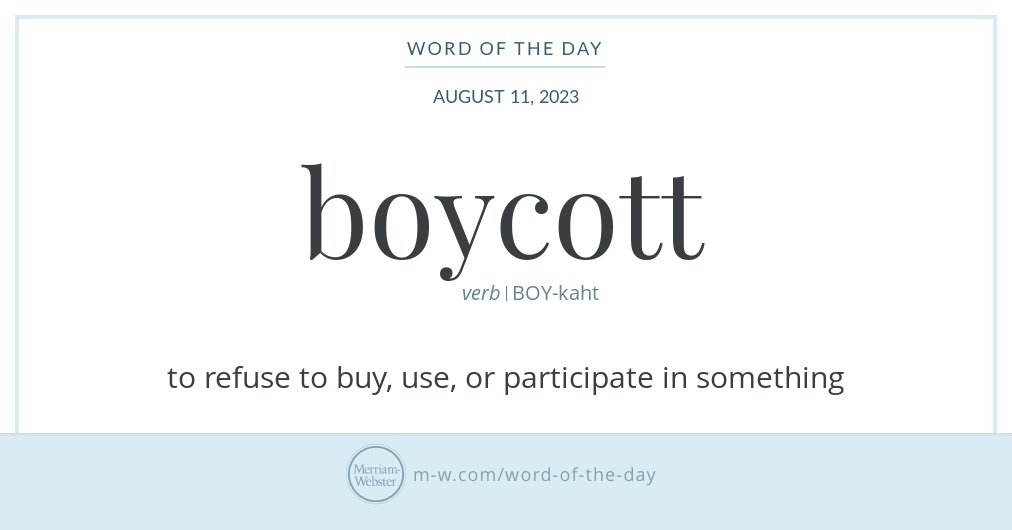
At its core, a boycott is a coordinated, voluntary refusal to engage with a brand, purchase its products, or use its services. However, from a brand strategy perspective, it represents a profound rupture in the “brand promise.” It is an organized signal from the market that a company’s actions, associations, or values have fallen out of alignment with its audience’s expectations. In an era where “brand purpose” is a primary driver of loyalty, boycotting serves as the ultimate corrective mechanism used by consumers to demand corporate accountability.
The Evolution of Boycotting in the Modern Brand Landscape
Historically, boycotts were often localized and focused on tangible labor disputes or civil rights issues. Today, the meaning of boycotting has expanded, fueled by the viral nature of social media and the rise of the “conscious consumer.” For brand managers, this means that a boycott is no longer just a physical picket line; it is a digital movement that can dismantle decades of brand equity in a matter of hours.
From Local Refusal to Global Digital Movements
The digitalization of the marketplace has removed geographical barriers to collective action. A consumer in Tokyo can now participate in a boycott against a retail giant headquartered in New York based on an environmental concern in Southeast Asia. This globalization of boycotting means that brand strategy must now be hyper-aware of global socio-political climates. A brand’s identity is no longer defined solely by its advertising campaigns but by its entire global footprint, including supply chain ethics and political affiliations.
The Rise of the Values-Driven Consumer
Modern branding has moved toward “lifestyle” and “identity” marketing. When consumers buy a product, they are often buying into a set of values. Consequently, when a brand violates those values, the consumer feels a personal sense of betrayal. This psychological connection is why modern boycotts are so intense; they are not just about the product’s quality but about the consumer’s own moral identity. A boycott, in this sense, is an act of identity preservation for the consumer.
The Anatomy of a Modern Brand Boycott
To effectively manage a brand, one must understand the structural components of a boycott. It is rarely a spontaneous event; rather, it is a sequence of failures in corporate identity and communication that culminates in public rejection.
The Triggering Event and the Breach of Trust
Every boycott begins with a trigger—a controversial advertisement, a leaked internal memo, an unethical sourcing discovery, or a public stance on a polarizing social issue. In brand strategy terms, this is a breach of the “Brand-Customer Contract.” This contract is the unwritten agreement that the brand will behave in a way that reflects the values it projects in its marketing. When a brand that promotes “sustainability” is found to be polluting, the hypocrisy becomes the catalyst for the boycott.
The Role of Social Media and Hashtag Activism
Social media serves as the infrastructure for modern boycotts. Platforms like X (formerly Twitter), TikTok, and Instagram allow for the rapid dissemination of information and the coordination of collective action. “Hashtag activism” provides a unified banner under which disparate groups of consumers can gather. For a brand’s corporate identity, the danger here is the “echo chamber” effect, where negative sentiment is amplified and becomes the dominant narrative surrounding the brand, often appearing at the top of search engine results and social feeds.
The Spillover Effect on Brand Partners
A modern boycott rarely affects just the target company. It often creates a “spillover effect” that impacts subsidiaries, celebrity endorsers, and retail partners. Brand strategy must now account for these interconnected dependencies. If a brand is being boycotted, its associated influencers may face pressure to cut ties to protect their own personal brands. This isolation is often what forces a corporation to make significant policy changes.
Assessing the Strategic Impact on Brand Equity
While the immediate concern of a boycott is often a drop in sales, the true damage occurs at the level of brand equity. Brand equity is the intangible value a company holds based on consumer perception, and it is the foundation of long-term profitability.
Short-Term Revenue vs. Long-Term Reputation
Most research suggests that the immediate financial impact of a boycott is often temporary. Consumers may return once the news cycle moves on. However, the reputational damage can be permanent. A boycott can tarnish a brand’s “reputational capital,” making it harder to attract top talent, secure favorable partnerships, or command a premium price for its products. The meaning of boycotting, for a CFO or a CMO, is a significant increase in “brand risk” which can lead to higher costs of capital and lower market valuation.
Erosion of Brand Loyalty and Customer Lifetime Value (CLV)
Boycotts often provide an opening for competitors. When a consumer decides to boycott their “usual” brand, they are forced to try an alternative. If the competitor’s product and brand experience are satisfactory, the original brand may lose that customer’s Lifetime Value (CLV) permanently. This shift in market share is one of the most quantifiable impacts of a successful boycott and a primary reason why brands must take these movements seriously.
The Impact on Internal Brand Culture
A brand’s identity is not only outward-facing; it is also internal. A public boycott can devastate employee morale, especially if the employees themselves disagree with the company’s actions. This can lead to internal leaks, high turnover rates, and difficulty in recruiting. A brand that is seen as “toxic” in the public eye will struggle to maintain a high-performing corporate culture.
Navigating Crisis Management and Brand Recovery
When a brand finds itself the target of a boycott, the response strategy determines whether the brand will recover or face a long-term decline. Effective brand recovery requires a balance between firm corporate identity and empathetic public relations.
The Fallacy of Silence
In the past, the standard PR advice was to “wait it out.” In the digital age, silence is often interpreted as complicity or indifference. A brand that does not address a boycott quickly loses control of its own narrative. However, the response must be more than just a template apology. It requires a strategic alignment of words and actions.
Authenticity vs. Virtue Signaling
One of the greatest risks in responding to a boycott is “virtue signaling”—making superficial statements of support for a cause without making any substantive changes. Consumers are increasingly adept at spotting inauthenticity. A brand that promises change but continues the same practices will likely face a secondary, more intense boycott. Authentic recovery involves transparent reporting, third-party audits, and genuine policy shifts that align with the brand’s stated identity.
Proactive Brand Activism
Some brands have turned the “meaning of boycotting” on its head by leaning into brand activism. By taking clear, bold stances on social issues, these brands may alienate one segment of the market but deeply solidify the loyalty of another. This “polarized branding” strategy acknowledges that it is impossible to please everyone and instead focuses on building a “fortress brand” supported by a dedicated, values-aligned community.
Developing a Resilient Brand Identity in an Era of Activism
To survive and thrive in an environment where boycotting is a common consumer tool, companies must build resilience into their brand DNA. This involves more than just crisis management; it involves a fundamental shift in how corporate identity is constructed.
Stakeholder Theory in Brand Management
Modern brand strategy is increasingly moving toward “Stakeholder Theory,” which suggests that a company is responsible not just to its shareholders, but to its customers, employees, suppliers, and the community at large. By considering the impact of every business decision on all stakeholders, a brand can identify potential “boycott triggers” before they manifest.
Radical Transparency and Traceability
The most effective defense against a boycott is transparency. If a brand is open about its supply chain, its hiring practices, and its corporate contributions, it leaves less room for “gotcha” moments. Digital tools, such as blockchain for supply chain traceability, are becoming essential components of brand strategy, providing verifiable proof that the brand is living up to its promises.
Building a Community, Not Just a Customer Base
Brands that have a deep, emotional connection with their community are more resilient to boycotts. When a brand treats its customers as a community with a shared purpose, those customers are more likely to engage in constructive dialogue rather than immediate public condemnation. The meaning of boycotting changes when there is a channel for “voice” before “exit.”
In conclusion, the meaning of boycotting in the contemporary business world is a reflection of the democratization of brand power. It is a signal that the market demands more from corporations than just products; it demands ethics, consistency, and a clear sense of social responsibility. For those in brand strategy and corporate management, the boycott is no longer an external threat to be feared, but a critical feedback loop that, if navigated with integrity and transparency, can lead to a more authentic and resilient brand identity. In the end, a brand’s ability to withstand a boycott is the ultimate test of its relationship with its audience and the strength of its core values.
aViewFromTheCave is a participant in the Amazon Services LLC Associates Program, an affiliate advertising program designed to provide a means for sites to earn advertising fees by advertising and linking to Amazon.com. Amazon, the Amazon logo, AmazonSupply, and the AmazonSupply logo are trademarks of Amazon.com, Inc. or its affiliates. As an Amazon Associate we earn affiliate commissions from qualifying purchases.