
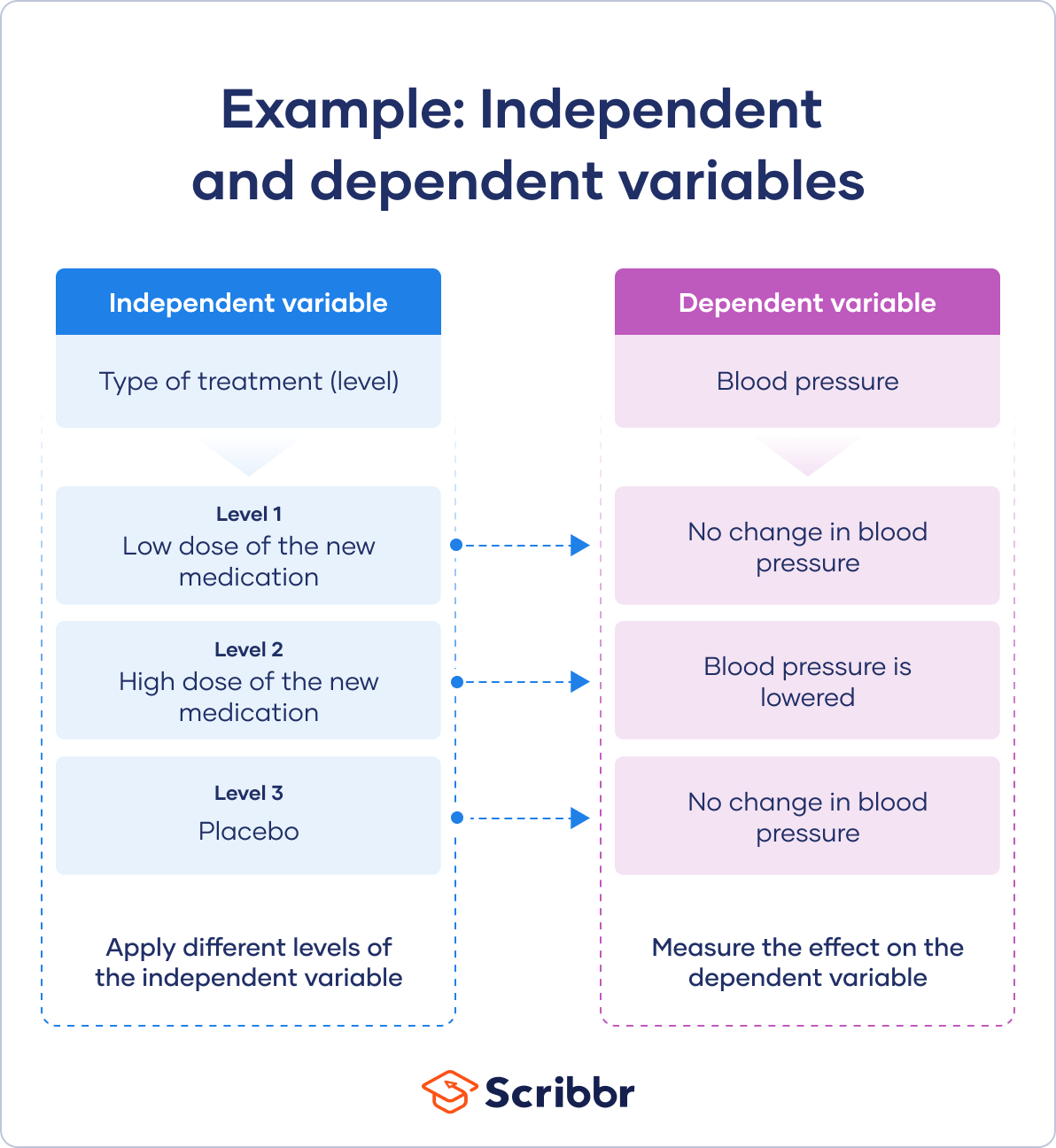
In the rapidly evolving landscape of technology, from software engineering to machine learning, the concept of the independent variable serves as the fundamental building block for experimentation, optimization, and system design. At its core, an independent variable is the input or the condition that is intentionally changed or controlled in a technological experiment to observe its effects on a dependent variable—the outcome. Whether a developer is fine-tuning an algorithm, a data scientist is training a neural network, or a UX researcher is conducting A/B testing, identifying and manipulating the right independent variables is the difference between a high-performing system and a failed project.

Understanding the independent variable requires a shift in perspective from traditional mathematics to practical application within the digital ecosystem. In the world of tech, independent variables are often referred to as features, parameters, inputs, or predictors. They are the levers that engineers pull to drive innovation and ensure that software behaves predictably under varying conditions.
Decoding the Independent Variable in Software Architecture and Development
In the context of software development, the independent variable is most frequently encountered during the testing and debugging phases. Every function, API call, and user interaction involves a set of inputs that dictate how the system will respond.
Functional Inputs and State Changes
When a developer writes a function, the arguments passed into that function act as the independent variables. For example, in a cloud-based pricing engine, the independent variables might include the user’s location, the volume of data processed, and the time of day. By altering these inputs, the developer can test the dependent variable—the calculated cost—to ensure accuracy. In complex software architectures, these variables are not always static; they can be dynamic states within a distributed system, requiring rigorous isolation to ensure that one variable does not unintentionally influence another.
Environment Variables as Independent Factors
Beyond the code itself, the environment in which the software runs serves as a critical independent variable. This includes hardware specifications, operating system versions, and network latency. In DevOps and Site Reliability Engineering (SRE), engineers treat infrastructure as code (IaC), allowing them to manipulate independent variables such as CPU allocation or memory limits to see how they impact the application’s throughput and latency. This systematic approach allows for the creation of scalable systems that can handle unpredictable loads.
The Role of Variables in Quality Assurance (QA)
Quality Assurance professionals rely heavily on the isolation of independent variables to conduct stress tests and regression testing. By holding all conditions constant and changing only one variable—such as the number of concurrent users—QA teams can identify the exact breaking point of an application. This methodology prevents the “noise” of other factors from obscuring the root cause of a system failure, ensuring that patches and updates are effective.
Independent Variables in Machine Learning: Feature Selection and Engineering
In the realm of Artificial Intelligence (AI) and Machine Learning (ML), the independent variable takes on a more sophisticated form known as a “feature.” The success of an AI model is almost entirely dependent on how these features are selected, weighted, and engineered.
Feature Engineering: The Art of Variable Selection
Machine learning models are designed to find patterns between independent variables (features) and a dependent variable (the label or prediction). For instance, in a predictive maintenance model for industrial IoT gadgets, the independent variables might include vibration frequency, temperature, and operating hours. Feature engineering is the process of using domain knowledge to create new independent variables from raw data that help the model learn more effectively. If the independent variables are poorly chosen or contain too much “noise,” the model will fail to generalize to new data, regardless of how advanced the underlying algorithm is.
Hyperparameters as Meta-Independent Variables
While features are the inputs for the data, hyperparameters are the independent variables that control the learning process itself. In a deep learning context, hyperparameters such as the learning rate, the number of hidden layers, and the batch size are the independent variables that a data scientist manipulates during the training phase. Adjusting these variables is a process of optimization; the scientist changes the hyperparameter (independent) to see its effect on the model’s accuracy and loss function (dependent).
Managing Multicollinearity and Bias
One of the greatest challenges in modern AI is dealing with independent variables that are correlated with each other, a phenomenon known as multicollinearity. If two independent variables provide the same information, it can confuse the model and lead to skewed results. Furthermore, the selection of independent variables is where algorithmic bias often creeps in. If a variable that correlates with a protected demographic is included in a predictive model, the output may reflect historical prejudices. Tech leaders must rigorously audit their independent variables to ensure fairness and transparency in automated decision-making.
A/B Testing and Growth Hacking: Manipulating Variables for UX Success

For product managers and UI/UX designers, the independent variable is the primary tool for optimizing user engagement and conversion rates. Through A/B testing and multivariate testing, tech companies can make data-driven decisions about every pixel on a screen.
Controlled Variation in Digital Interfaces
In an A/B test, the independent variable is the specific element being changed between two versions of a webpage or app. This could be the color of a “Sign Up” button, the wording of a headline, or the placement of an image. By showing Version A (the control) to one group and Version B (the variant) to another, the team can measure the dependent variable—usually the click-through rate or conversion rate. This scientific approach removes the guesswork from design, allowing tech teams to iterate based on actual user behavior rather than intuition.
Multivariate Testing and Interaction Effects
While A/B testing focuses on a single independent variable, multivariate testing involves changing several variables simultaneously to see how they interact. For example, a streaming service might change both the thumbnail image and the recommendation algorithm at the same time. The goal is to identify the “interaction effect”—the way that one independent variable might change the effectiveness of another. This requires complex statistical analysis but provides a more holistic view of how different tech components work together to influence the user experience.
Behavioral Analytics and The User Journey
Independent variables also play a role in behavioral analytics. By tracking variables such as the device type, referral source, and time spent on a page, growth hackers can identify which factors are the strongest predictors of long-term user retention. In this context, the independent variables are the touchpoints in the user journey, and the dependent variable is the lifetime value (LTV) of the customer. Understanding these relationships allows apps to deliver personalized experiences that keep users coming back.
The Role of Independent Variables in Cybersecurity and Threat Modeling
In the field of digital security, identifying independent variables is essential for vulnerability assessment and risk mitigation. Cyber-attackers and security researchers alike look for variables they can manipulate to gain unauthorized access or disrupt services.
Vulnerability Parameters and Exploitation
When a security researcher analyzes a piece of software for vulnerabilities, they are essentially looking for independent variables that have not been properly sanitized. For example, in a SQL injection attack, the independent variable is the input field where a user enters data. If the system does not control this variable, an attacker can input malicious code that changes the dependent variable—the database query result—allowing them to leak sensitive information.
Threat Modeling and Simulation
Cybersecurity teams use threat modeling to simulate various attack scenarios. In these simulations, the independent variables include the attacker’s skill level, the entry point (e.g., phishing email vs. brute force), and the security controls in place. By varying these factors, organizations can predict the likelihood and impact of a breach (the dependent variables) and prioritize their security investments accordingly.
Security Telemetry and Anomalies
Modern security tools use AI to monitor network traffic and detect anomalies. In this case, the independent variables are the millions of data points generated by the network every second—packet sizes, IP addresses, and login times. The security system looks for patterns where these variables deviate from the “normal” baseline, signaling a potential intrusion. The ability to distinguish between a benign variation in an independent variable and a malicious one is the hallmark of advanced digital defense systems.
Future Perspectives: High-Dimensionality and Autonomous Variables
As we move toward a future defined by the Internet of Things (IoT), edge computing, and autonomous systems, the management of independent variables is becoming increasingly complex. We are entering an era of “high-dimensionality,” where thousands of independent variables must be processed in real-time.
The Challenge of High-Dimensional Data
In fields like genomics and autonomous vehicle development, systems are forced to process an overwhelming number of independent variables simultaneously. For a self-driving car, independent variables include the distance to the car ahead, weather conditions, pedestrian movement, and sensor health. Processing these variables with low latency is a massive technical hurdle that requires specialized hardware like GPUs and TPUs.
Autonomous Variables and Self-Optimizing Systems
We are also seeing the rise of self-optimizing systems where the software itself identifies which independent variables to manipulate to achieve a goal. This is the basis of reinforcement learning, where an agent learns through trial and error. In these systems, the boundary between the researcher and the experiment blurs, as the AI becomes responsible for selecting its own independent variables to optimize its performance in a dynamic environment.
In conclusion, whether it is the input of a simple function or the complex features of a neural network, the independent variable is the fundamental unit of tech experimentation. By mastering the identification, manipulation, and isolation of these variables, technology professionals can build more robust, efficient, and innovative solutions that drive the digital world forward.
aViewFromTheCave is a participant in the Amazon Services LLC Associates Program, an affiliate advertising program designed to provide a means for sites to earn advertising fees by advertising and linking to Amazon.com. Amazon, the Amazon logo, AmazonSupply, and the AmazonSupply logo are trademarks of Amazon.com, Inc. or its affiliates. As an Amazon Associate we earn affiliate commissions from qualifying purchases.