
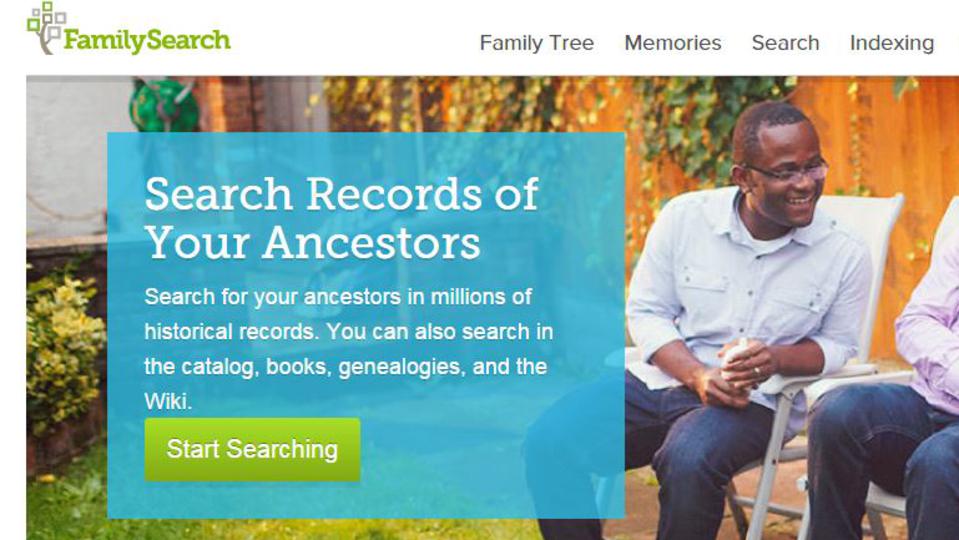
In the landscape of digital history and big data, few platforms command as much respect and technical intrigue as FamilySearch. Often referred to colloquially as the “free Mormon genealogy website,” FamilySearch is operated by The Church of Jesus Christ of Latter-day Saints. However, calling it a simple website is a vast understatement of its technological complexity. It is, in fact, one of the most sophisticated digital archival and data management systems in existence. Providing free access to billions of records, the platform serves as a masterclass in cloud computing, artificial intelligence, and global collaborative software.

The Architecture of Global Data: Inside the Digital Repository
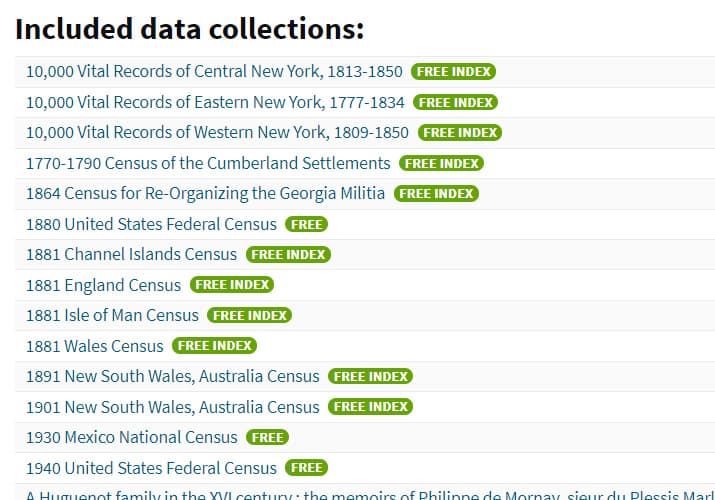
At its core, FamilySearch is a massive exercise in data engineering. The platform manages petabytes of information, ranging from digitized birth certificates and census records to high-resolution scans of centuries-old parish registers. To make this information accessible to millions of concurrent users worldwide, the platform utilizes a robust cloud-based infrastructure.
Cloud Computing and Scalability
Transitioning from localized servers to a distributed cloud architecture was a pivotal moment in the site’s technical evolution. By leveraging global cloud providers, the platform ensures low-latency access regardless of whether a researcher is in Salt Lake City or Seoul. This scalability is essential because genealogical research often involves “bursty” traffic patterns—high usage during holidays or following the release of major data sets, such as the 1950 U.S. Census.
The Graph Database Model
Unlike traditional relational databases that store data in rigid rows and columns, genealogical data thrives on relationships. FamilySearch utilizes sophisticated graph database technologies to manage the “Family Tree.” In this model, individuals are “nodes,” and their relationships (parent, child, spouse) are “edges.” This allows the software to perform complex traversal queries, such as “find the shortest path between User A and a 17th-century blacksmith in Germany,” with incredible speed.
Artificial Intelligence and the Evolution of Automated Indexing
One of the greatest challenges in digital genealogy is the sheer volume of handwritten records. For decades, the process of “indexing”—turning a picture of a document into searchable text—was done entirely by human volunteers. While the human element remains vital, FamilySearch has integrated cutting-edge Artificial Intelligence (AI) to accelerate this process by orders of magnitude.
Computer Vision and Handwriting Recognition
The platform employs advanced Optical Character Recognition (OCR) and Handwriting Recognition (HTR) models. These AI systems are trained on millions of examples of historical handwriting styles, from 19th-century cursive to medieval scripts. By pre-processing these images through machine learning pipelines, the software can suggest transcriptions with a high degree of accuracy. This “Computer-Aided Indexing” allows human reviewers to simply verify the AI’s work rather than typing every name from scratch, increasing the speed of record publication by over 20 times.
Predictive Search and Data Matching
Searching for an ancestor isn’t as simple as a Google search. Names change, spellings vary, and dates are often approximate. The platform’s search engine uses fuzzy logic algorithms and phonetic indexing (such as Soundex and Metaphone) to identify potential matches even when the data is “dirty.” Furthermore, the site’s “Record Hints” feature uses a recommendation engine similar to those found in e-commerce or streaming services. It analyzes the existing data in a user’s tree and proactively crawls the billions of available records to suggest high-probability matches.
Collaborative Software Ecosystems and Open Data Standards
What sets this platform apart from many of its contemporaries is its “One World Tree” philosophy. While other sites allow users to build private, siloed trees, FamilySearch is a collaborative wiki-style environment where every user contributes to a single, unified pedigree of the human race. This presents unique software engineering challenges in terms of version control and conflict resolution.
Versioning and Conflict Resolution
When two users disagree on a birth date or a parentage link, the software must handle the conflict gracefully. The platform employs a sophisticated change-log system, similar to GitHub’s version control. Every change is tracked, attributed, and reversible. This allows the community to self-moderate and refine the data over time, ensuring that the central database becomes more accurate as more users interact with it.
The FamilySearch API and Integration
Recognizing that it is part of a broader tech ecosystem, the platform offers a robust API (Application Programming Interface). This allows third-party developers to build apps and tools that sync with the central database. Whether it’s a mobile app that gamifies family history for teenagers or a professional research tool that performs deep-dive analysis, the API ensures that the “Mormon genealogy website” functions as a foundational platform for the entire genealogy industry. This open-data approach encourages innovation and allows for specialized tools to thrive on top of the core infrastructure.
Data Security and Digital Preservation Strategies
Managing the world’s largest collection of genealogical data requires more than just good code; it requires a world-class strategy for digital preservation and cybersecurity. The records held by FamilySearch are considered irreplaceable, necessitating extreme measures for data redundancy and protection.
The Granite Mountain Record Vault
While the public interacts with the web interface, the “master copies” are often backed up in the Granite Mountain Record Vault—a massive, climate-controlled facility excavated into a mountain near Salt Lake City. This physical backup strategy is mirrored digitally through geographic redundancy. Data is replicated across multiple data centers to ensure that even a catastrophic regional failure would not result in data loss.
Privacy and Digital Ethics
In an era of heightened digital privacy concerns, managing a database of billions of people requires strict adherence to data protection laws like GDPR. The platform uses sophisticated filtering algorithms to ensure that the records of living individuals remain private. Through “Living Person” flags and restricted access protocols, the software automatically hides sensitive data of people born within a certain timeframe unless they are the user who entered the data. This balance of open collaboration and ironclad privacy is a cornerstone of the platform’s technical mandate.
The Future of Genealogical Tech: From Facial Recognition to DNA
As technology continues to advance, the “free Mormon genealogy website” is poised to incorporate even more experimental features. We are already seeing the integration of facial recognition software that can identify common features across historical photographs, potentially identifying “unknown” ancestors in family albums.
Photo Enhancement and Colorization
Using Generative Adversarial Networks (GANs), the platform has introduced tools that allow users to repair damaged digital photos, sharpen blurry images, and even add realistic color to black-and-white snapshots. This branch of AI transforms the user experience from a dry search for dates into a visually engaging narrative, making history more accessible to younger, tech-native generations.
The Convergence of Records and Genomics
While FamilySearch does not currently offer DNA testing directly, its software is increasingly designed to work alongside genetic data. The future of the platform likely involves more seamless integration between traditional “paper-trail” genealogy and the “biological-trail” provided by DNA. This would involve complex algorithms that can triangulate relationships between distant cousins based on shared centimorgans and overlapping trees, further solidifying the platform’s role as the central hub of human connectivity.
Conclusion
The “free Mormon genealogy website” is a misnomer in its simplicity. FamilySearch is a technological titan that sits at the intersection of history and high-tech. Through its innovative use of graph databases, cloud scalability, and AI-driven indexing, it has transformed the way humanity interacts with its past. For tech enthusiasts, the platform serves as a premier example of how big data and machine learning can be harnessed for a purpose that is both deeply personal and globally significant. As the platform continues to evolve, it remains a benchmark for digital preservation and collaborative software in the 21st century.
aViewFromTheCave is a participant in the Amazon Services LLC Associates Program, an affiliate advertising program designed to provide a means for sites to earn advertising fees by advertising and linking to Amazon.com. Amazon, the Amazon logo, AmazonSupply, and the AmazonSupply logo are trademarks of Amazon.com, Inc. or its affiliates. As an Amazon Associate we earn affiliate commissions from qualifying purchases.