
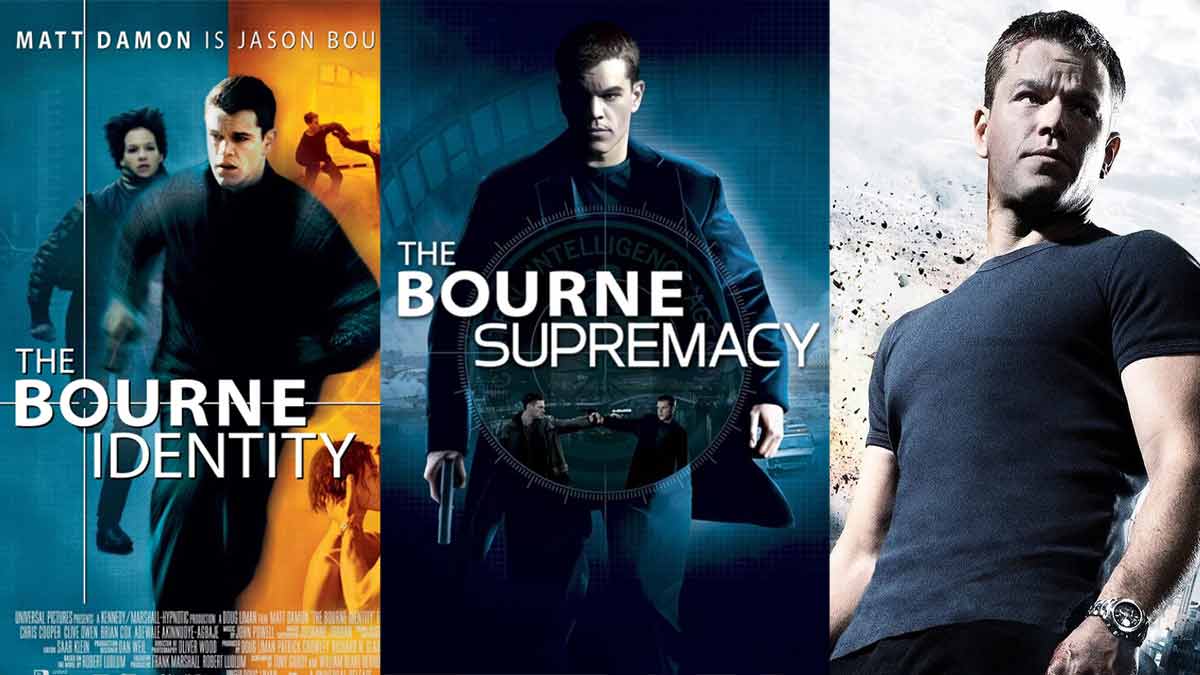
When audiences first sat down to watch The Bourne Identity in 2002, they were introduced to more than just a visceral, amnesiac protagonist; they were introduced to a new era of cinematic technology and digital security concepts. Directed by Doug Liman and based on Robert Ludlum’s novel, the film redefined the “spy gadget” trope. Gone were the invisible cars and laser-shooting watches of the 1990s. In their place was a gritty, realistic portrayal of signal intelligence (SIGINT), biometric identification, and the terrifying efficiency of a centralized surveillance state.

To understand what the first Bourne movie represents, one must look past the martial arts and car chases to the technological infrastructure that drives its plot. It is a film that explores the vulnerability of human identity in a world becoming increasingly digitized.
The Technological Foundation of The Bourne Identity
The core of the film’s tension lies in a single technological artifact: a sub-dermal laser projector. When Jason Bourne is pulled from the Mediterranean Sea with two bullets in his back and no memory, the first clue to his identity is a miniature device embedded in his hip.
The Sub-Dermal Laser and Data Storage
In 2002, the idea of a laser projector embedded under the skin was the height of high-tech speculation. In the film, the device projects a Swiss bank account number onto a wall when activated. This serves as a precursor to modern Near Field Communication (NFC) and Radio Frequency Identification (RFID) chips that are used today for contactless payments and secure access.
The movie highlights a critical shift in how we perceive data storage. It suggests that the human body itself can become a medium for hardware, a concept that has since evolved into the “Biohacking” movement. Today, digital security experts analyze the risks associated with wearable and injectable tech, mirroring the very predicament Bourne faces: a physical body hard-coded with sensitive digital credentials.
Cryptographic Keys and Secure Vaults
Bourne’s journey to the Gemeinschaft Bank in Zurich introduces the audience to the concept of physical-digital hybrid security. The bank vault requires the account number (his “key”) and his physical presence. Within the box, Bourne finds the tools of his trade: multiple passports from various nations, stacks of diverse currencies, and a handgun.
From a modern cybersecurity perspective, this safety deposit box is a metaphor for a multi-factor authentication (MFA) system. To access his “files,” Bourne needs something he has (the sub-dermal chip) and something he is (his biometric signature). The film meticulously documents how these identities are crafted, suggesting that even in 2002, the intelligence community viewed identity as a fluid, programmable software package rather than a static biological fact.
Surveillance Infrastructure and the Panopticon Effect
The primary antagonist of the first Bourne movie isn’t a single person; it is “Operation Treadstone,” a sophisticated surveillance program managed by the CIA. The film provides a masterclass in the portrayal of a “Panopticon”—a system where the subject is always potentially under observation.
The Evolution of Signal Intelligence (SIGINT)
Treadstone operates through a centralized command center where analysts monitor global communication channels. In the early 2000s, this meant intercepting satellite phone calls and monitoring bank transactions in real-time. The film captures the transition from traditional “boots on the ground” espionage to data-driven pursuit.
When Bourne enters the U.S. Consulate in Zurich, the Treadstone team doesn’t just look for him; they monitor every digital ping associated with the location. This illustrates the concept of “Digital Exhaust”—the trail of data we leave behind simply by interacting with modern infrastructure. For tech professionals, the film serves as an early warning of how metadata (time, location, and frequency of contact) can be more revealing than the content of a message itself.
CCTV and Facial Recognition
One of the most enduring tropes established in The Bourne Identity is the “Find him on the cameras” sequence. While the facial recognition software depicted in the film was slightly ahead of its time in terms of speed and accuracy, it accurately predicted the current state of global urban surveillance.
Today, integrated CCTV systems in cities like London or Beijing utilize AI-powered algorithms to identify individuals based on gait, facial features, and even the heat signature of their devices. The first Bourne movie tapped into the nascent fear of a world where one can never truly be “off the grid.” The tech used by Treadstone to track Bourne across Paris demonstrates the early philosophy of Big Data: if you have enough sensors, no one can stay hidden for long.
Digital Security and the Concept of the “Ghost” Identity

Jason Bourne’s survival depends on his ability to manipulate the very systems designed to track him. He operates as a “Ghost,” an entity that exists within the system but cannot be pinned down by it. This mirrors modern techniques used in digital security and privacy protection.
Burner Technology and Communications Security
Throughout the film, Bourne and his pursuers utilize “burner” technology—temporary devices intended to be used once and discarded. This is a foundational principle of operational security (OPSEC). By rotating devices and avoiding persistent digital identities, Bourne creates a moving target for Treadstone’s SIGINT capabilities.
In the contemporary landscape, this concept has migrated into software. We now use disposable email addresses, virtual private networks (VPNs) with rotating IP addresses, and encrypted messaging apps that utilize “disappearing messages.” Bourne’s tactical use of physical hardware in 2002 laid the groundwork for the digital obfuscation tools that are now standard for journalists, activists, and security professionals.
Data Fragmentation and Identity Spoofing
The first Bourne movie spends a significant amount of time on Bourne’s collection of passports. Each passport represents a “fragment” of an identity—John Michael Kane, Jason Bourne, and others. By fragmenting his data across different national databases, he prevents any single entity from gaining a complete picture of his life.
This is a direct parallel to how modern data privacy advocates suggest users should manage their online presence. By using different aliases and “siloing” information between social media, banking, and professional accounts, individuals can protect themselves against total identity theft. If one “fragment” is compromised, the rest of the identity remains secure.
Comparing Cinematic Tech to Real-World Advancements
Looking back at The Bourne Identity more than two decades after its release, it is fascinating to see which technologies have become reality and which remain in the realm of fiction.
From Manual Monitoring to AI-Powered Analytics
In the 2002 film, Treadstone requires rooms full of human analysts to stare at screens and interpret data. This is where the movie differs most from the modern tech landscape. Today, the initial filtering of surveillance data is handled by machine learning algorithms. An AI would detect Bourne’s face in a crowd or flag his passport usage long before a human analyst ever saw the alert.
The move from human-centric to AI-centric surveillance has increased the “velocity” of digital security. In the movie, Bourne has minutes or hours to escape a location before the “Asset” arrives. In 2024, that window has shrunk to seconds, as automated systems can trigger local law enforcement alerts or lock down digital accounts instantly.
The Rise of Biometrics: Beyond the Sub-Dermal Laser
While the sub-dermal laser was a clever plot device, the real-world evolution of biometrics has gone in a different direction. We now rely on passive biometrics—fingerprint sensors on smartphones, face ID for banking, and iris scans at border crossings.
In The Bourne Identity, Bourne’s identity is something he has to discover. In the modern world, your identity is something that is constantly being broadcast by your biology. The “Identity” in the movie’s title has shifted from a personal philosophical question to a technical data point that is verified hundreds of times a day by the gadgets in our pockets.
The Legacy of Tactical Tech in Modern Security
The first Bourne movie remains a touchstone for the tech community because it emphasizes the “how” of security. It isn’t about magical gadgets; it’s about the clever application of existing tools.
Tactical Problem Solving
Bourne’s use of a map to identify blind spots in surveillance or a simple radio to eavesdrop on police frequencies highlights a core tenet of cybersecurity: the most effective tools are often the simplest ones. This “low-fi” approach to bypassing “high-tech” security is a recurring theme in white-hat hacking and penetration testing today.
The Human Element
Ultimately, the movie posits that the most advanced technology in the world—the Treadstone program—is still vulnerable to the human element. Whether it is Bourne’s unexpected amnesia or the hubris of the program’s directors, the tech fails when it cannot account for human unpredictability. This remains the primary challenge in digital security: you can have the most secure encryption in the world, but if a human clicks on a phishing link or forgets their “identity,” the system collapses.
The Bourne Identity did more than start a franchise; it provided a blueprint for the tech-heavy, surveillance-focused thrillers that would dominate the next twenty years. By focusing on the intersection of hardware, data, and human identity, it remains a surprisingly relevant case study in the power and peril of the digital age. For those asking “what is the first Bourne movie,” the answer is a cinematic exploration of the very technologies that now govern our daily lives.
aViewFromTheCave is a participant in the Amazon Services LLC Associates Program, an affiliate advertising program designed to provide a means for sites to earn advertising fees by advertising and linking to Amazon.com. Amazon, the Amazon logo, AmazonSupply, and the AmazonSupply logo are trademarks of Amazon.com, Inc. or its affiliates. As an Amazon Associate we earn affiliate commissions from qualifying purchases.