
In the landscape of household management and the broader gig economy, the terms “nanny” and “babysitter” are often used interchangeably. However, from a financial, legal, and career-strategy perspective, they represent two distinct economic models. Understanding these differences is crucial for families managing a household budget and for individuals looking to maximize their earning potential in the domestic work sector.
The distinction essentially boils down to the difference between a professional career path and a supplemental side hustle. While both roles involve the care of children, the financial obligations, tax implications, and income structures vary significantly. For those navigating personal finance or building a service-based business, identifying which category a role falls into is the first step toward financial compliance and optimized ROI.

Defining the Economic Structure of Childcare Roles
The primary differentiator between a nanny and a babysitter is the nature of the employment relationship and the consistency of the income stream. This distinction dictates everything from hourly rates to the necessity of a formal employment contract.
The Nanny: A Professional Household Employee
A nanny is a professional domestic worker who provides consistent, long-term care for a family. Economically, a nanny is classified as an employee rather than an independent contractor. This role usually involves a set schedule, a guaranteed weekly or monthly salary, and a deep integration into the family’s daily operations.
From a “Money” perspective, hiring a nanny is a significant line item in a family’s annual budget, often comparable to a full-time salary in a corporate setting. For the provider, nannying is a primary source of income. It requires a strategic approach to benefits, such as health insurance stipends, paid time off (PTO), and contributions to retirement accounts. Professional nannies often command higher rates because they bring specialized skills—such as early childhood education degrees or bilingualism—that increase their market value and justify the higher price point.
The Babysitter: The Gig Economy and Supplemental Income
In contrast, a babysitter operates within the “gig” framework. Their work is typically irregular, short-term, and project-based. A babysitter might be hired for a few hours on a weekend or to fill gaps when a primary caregiver is unavailable.
For the provider, babysitting is a classic side hustle. It offers flexibility and low barriers to entry, making it an attractive option for students or individuals looking to supplement their primary income. Because the work is sporadic, the financial relationship is usually transactional, often handled through cash or peer-to-peer payment apps. However, even this “informal” income has tax thresholds that both parties must monitor to remain compliant with local and federal regulations.
The Employer’s Ledger: Costs, Taxes, and Compliance
For a family, choosing between a nanny and a babysitter is not just a lifestyle choice; it is a financial strategy. The total cost of ownership (TCO) for a nanny involves much more than the base hourly rate, whereas a babysitter is generally a straightforward expense.
Understanding the “Nanny Tax”
Once a domestic worker’s earnings exceed a certain threshold (set annually by the IRS), they are officially considered a household employee. This triggers what is commonly known as the “Nanny Tax.” Employers are responsible for withholding and paying Social Security and Medicare taxes, as well as paying federal and state unemployment taxes.
Failing to account for these costs can lead to significant financial penalties. A family budgeting for a nanny must calculate the “grossed-up” cost, which includes employer-side taxes (approximately 7.65% for FICA) plus any state-specific workers’ compensation insurance or disability insurance requirements. This turns a $25/hour salary into a $30/hour total cost, a distinction that is vital for long-term financial planning.
Tax Credits and Deductions for Childcare
While a nanny carries a higher tax burden, there are financial incentives available to families that choose the formal employment route. The Child and Dependent Care Tax Credit allows families to claim a percentage of their childcare expenses on their federal income tax return. Furthermore, many employers offer Dependent Care Flexible Spending Accounts (FSAs), which allow families to pay for childcare with pre-tax dollars, effectively reducing their taxable income.
Babysitting expenses rarely qualify for these benefits because the income often falls below the reporting threshold or the provider is not registered as a formal employee. Therefore, while a babysitter may have a lower “sticker price,” the lack of tax advantages can bridge the price gap between the two roles more than one might expect.
The Provider’s P&L: Maximizing Earnings in Domestic Work
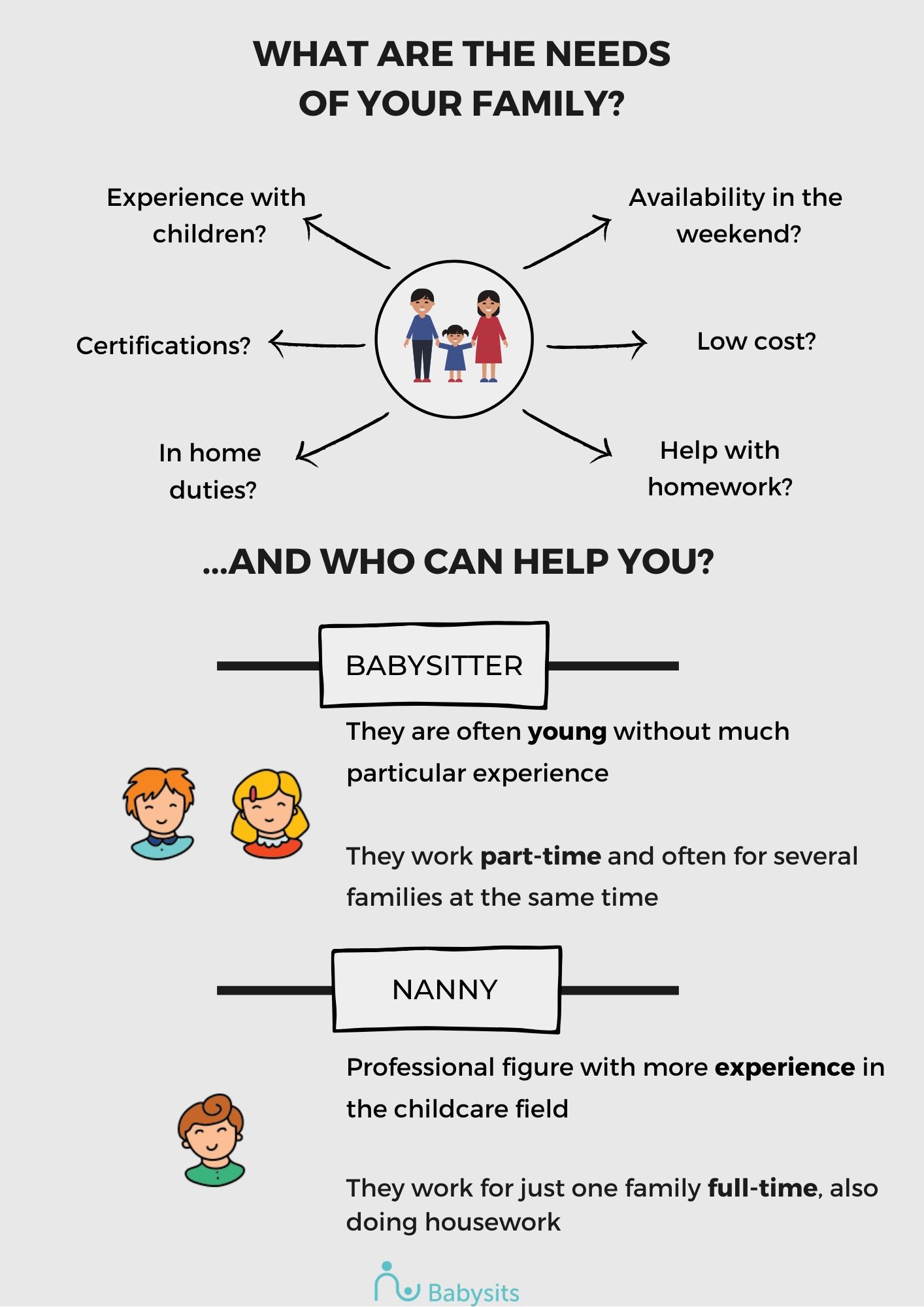
For individuals entering the childcare market, deciding whether to market oneself as a nanny or a babysitter is a branding and financial positioning decision. Each path offers different levels of income stability and growth potential.
Scaling Income as a Professional Nanny
Professional nannies have the opportunity to treat their career like a business. By specializing in “high-end” niches—such as newborn care specialists, travel nannies, or governesses—individuals can command salaries that rival mid-level management positions in corporate sectors.
To maximize the “Profit and Loss” (P&L) of a nannying career, providers should negotiate for a “Total Compensation Package.” This includes:
- Guaranteed Hours: Ensuring a stable floor for monthly income regardless of the family’s schedule.
- Health Insurance Stipends: Often provided tax-free through a QSEHRA (Qualified Small Employer Health Reimbursement Arrangement).
- Education Reimbursement: Investing in certifications that increase marketability and future hourly rates.
The Side Hustle Strategy: Maximizing Babysitting Rates
For those using babysitting as a side hustle, the goal is high margins with low overhead. Since babysitters typically don’t receive benefits, their hourly rate should be high enough to cover their own self-employment taxes and “wear and tear” (such as transportation).
Strategic babysitters often use “surge pricing” models, charging higher rates for holidays, last-minute requests, or multi-child households. By treating babysitting as a mini-business—tracking expenses, managing a client roster, and leveraging referrals—providers can turn an occasional job into a high-yield secondary income stream.
Risk Management and Financial Liability
Every financial venture involves risk, and domestic employment is no different. The distinction between a nanny and a babysitter also changes the liability profile for both parties.
Insurance and Workers’ Compensation
When a nanny is hired, they are often performing physical tasks and operating within a home environment for 40+ hours a week. This increases the statistical likelihood of workplace injury. In many jurisdictions, the “employer” is legally required to carry workers’ compensation insurance. From a financial perspective, this insurance protects the family’s assets from potential lawsuits and ensures the nanny’s medical bills and lost wages are covered.
Babysitters, being temporary and often exempt from mandatory workers’ comp, represent a different kind of risk. Families should verify if their homeowner’s insurance policy covers “occasional domestic help.” For the babysitter, maintaining personal liability insurance or health insurance is essential, as they do not have the safety net of an employer-sponsored plan.
Contractual Protections
A nanny relationship should always be governed by a “Nanny Contract” or “Work Agreement.” This document serves as a financial safeguard, outlining severance pay, notice periods, and confidentiality clauses (NDAs). In the world of high-net-worth personal branding, an NDA is a valuable asset that protects the family’s privacy while professionalizing the nanny’s role.
Babysitters rarely use formal contracts, but clear written communication regarding rates, cancellation fees, and expectations is a best practice for protecting one’s time and income. A “24-hour cancellation fee” is a common financial policy used by professional babysitters to protect their projected earnings from the volatility of a client’s schedule.

Long-term Financial Impact and ROI
Whether you are the one paying for care or the one providing it, the choice between nannying and babysitting has long-term financial consequences.
For the family, a nanny is an investment in stability and human capital. The “return” on this investment is the ability for parents to focus on their own high-earning careers, knowing their household is managed by a professional. The cost of turnover—finding, vetting, and training a new caregiver—is high, making the retention of a good nanny a primary financial goal.
For the caregiver, the nanny path builds a professional resume and contributes to long-term social security and retirement benefits. The babysitter path provides immediate liquidity and the freedom of the gig economy.
In conclusion, the difference between a nanny and a babysitter is the difference between an employee and a contractor, a career and a hustle, and a major budget line item and a discretionary expense. By understanding these financial nuances, both families and caregivers can make informed decisions that support their long-term wealth and stability.
aViewFromTheCave is a participant in the Amazon Services LLC Associates Program, an affiliate advertising program designed to provide a means for sites to earn advertising fees by advertising and linking to Amazon.com. Amazon, the Amazon logo, AmazonSupply, and the AmazonSupply logo are trademarks of Amazon.com, Inc. or its affiliates. As an Amazon Associate we earn affiliate commissions from qualifying purchases.