
The image of the medieval knight, encased in shimmering plate armor and wielding a heavy broadsword, is a staple of historical romanticism. However, if the knights of the Middle Ages were transposed into the 21st century, their “armor” would look nothing like the iron and steel suits housed in museums. In the modern technological landscape, the concept of a “knight” has evolved into the elite operator, the first responder, and the high-stakes security professional. To ask “what would knights wear” today is to explore the cutting edge of material science, wearable technology, and the integration of artificial intelligence into physical defense.
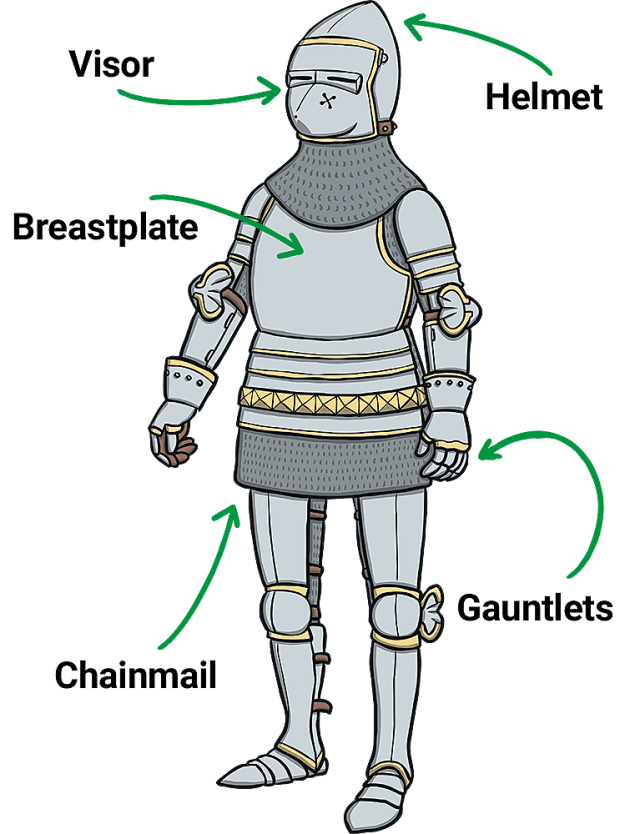
Today’s armor is no longer about the sheer thickness of the material, but rather the intelligence of the fibers and the connectivity of the hardware. We are moving toward a period where protection is active rather than passive, transforming the wearer into a walking hub of data, enhanced strength, and impenetrable digital security.
The New Steel: Advanced Materials and Smart Fabrics
The primary limitation of traditional plate armor was its weight. A full suit of late-medieval plate could weigh between 40 and 60 pounds, significantly taxing the stamina of the wearer. Modern technological knights prioritize “strength-to-weight” ratios, utilizing materials that were once relegated to the realm of science fiction.
Carbon Nanotubes and Graphene
If a modern knight required a suit of mail, it would likely be woven from carbon nanotubes or graphene. Graphene, a single layer of carbon atoms arranged in a hexagonal lattice, is 200 times stronger than steel while remaining incredibly lightweight and flexible. Researchers are currently developing graphene-based “paper” and fabrics that can stop high-velocity projectiles by dispersing energy across the molecular lattice. Unlike steel, which dents or punctures, graphene dissipates the kinetic energy of an impact, making it the ultimate material for high-mobility defense.
Liquid Armor and Non-Newtonian Fluids
Perhaps the most “magical” advancement in modern protective tech is the development of Shear Thickening Fluids (STF), often referred to as “liquid armor.” This technology involves soaking high-strength fabrics like Kevlar in a specialized fluid that remains soft and pliable under normal conditions but turns instantly solid upon impact. When a projectile hits the material, the molecules in the fluid lock together in milliseconds, creating a rigid barrier. This allows a modern knight to maintain full range of motion—climbing, running, and navigating tight spaces—without the clunky restriction of traditional rigid plates.
Powered Exoskeletons: The Mechanical Steed of the Digital Age
A knight was defined not just by his armor, but by his horse—the engine that provided the mobility and power necessary for the battlefield. In the tech-driven future, the “steed” is integrated directly into the suit through powered exoskeletons. These wearable robotic systems represent the pinnacle of human-machine interaction, designed to augment the wearer’s physical capabilities.
Enhancing Strength and Endurance
Modern exoskeletons, such as those being developed by Sarcos Robotics and Lockheed Martin, use a series of sensors, actuators, and hydraulic or electric motors to mimic human movement. For a modern-day knight, this means the ability to carry hundreds of pounds of equipment over rugged terrain without fatigue. These systems use “load-sharing” technology to redirect the weight of the suit and the gear directly into the ground, effectively making the user feel weightless despite being heavily armored.
Integration of AI-Assisted Movement
The intelligence of these suits lies in their control software. High-fidelity sensors detect the electrical signals sent from the human brain to the muscles, allowing the exoskeleton to react in real-time. Artificial intelligence algorithms predict the user’s next move, smoothing out the mechanical assistance so that there is no “lag” between the thought and the action. This AI layer also acts as a safety mechanism, adjusting the suit’s center of gravity to prevent falls or compensating for uneven terrain, ensuring that the modern knight remains upright and mobile in the most chaotic environments.
The Digital Visor: Augmented Reality and Integrated HUDs

The knight’s helmet was historically a double-edged sword; it provided vital protection for the head but severely limited the wearer’s field of vision and situational awareness. Technology has solved this paradox through the development of the “Digital Visor”—a sophisticated array of sensors and displays that provide more information than the naked eye ever could.
Situational Awareness in Hostile Environments
Modern protective headgear is transitioning into a fully integrated Heads-Up Display (HUD). By utilizing Augmented Reality (AR), a modern knight can see through walls using thermal imaging, identify “friend or foe” through IFF (Identification Friend or Foe) digital tags, and receive real-time map overlays. Companies like Microsoft, with their IVAS (Integrated Visual Augmentation System), are already demonstrating how AR can project navigation points and drone feeds directly onto the visor’s glass. This eliminates the “fog of war,” giving the wearer a god-like perspective of their surroundings.
Biometric Monitoring and Health Telemetry
The helmet of the future is also a medical diagnostic tool. Integrated sensors monitor the wearer’s heart rate, hydration levels, core temperature, and even cognitive load. If a modern knight is injured or suffering from heat exhaustion, the suit can automatically transmit this data to a command center or an automated medical drone. This “biometric armor” ensures that the knight is not only protected from external threats but is also monitored for internal physiological failure.
Connectivity as the Ultimate Shield: Cybersecurity in Modern Armor
In the digital age, a knight’s greatest vulnerability is not a physical blade, but a cyberattack. As armor becomes more “smart” and connected, it becomes a node on the Internet of Things (IoT). Therefore, what a knight wears must include a robust layer of digital protection.
Protecting the Internet of Battlefield Things (IoBT)
Every sensor, actuator, and communication device within a modern suit is a potential entry point for a hacker. If an adversary were to gain access to a knight’s exoskeleton, they could theoretically freeze the suit’s joints or manipulate the HUD to show false information. Consequently, modern armor is equipped with hardware-level encryption and decentralized processing. By using edge computing, the suit can process data locally rather than relying on a vulnerable cloud connection, ensuring that the knight remains operational even in a denied or contested electronic environment.
EMP Shielding and Signal Jamming
To counter high-tech threats, modern suits incorporate Faraday cage linings and electromagnetic pulse (EMP) shielding. This ensures that the sensitive electronics within the armor are not fried by directed energy weapons or solar flares. Furthermore, “stealth” fabrics are being developed that can absorb or deflect radar and infrared signals, making the modern knight digitally invisible to automated tracking systems.
The Future Outlook: The Intersection of Biology and Hardware
As we look toward the next decade, the definition of what a knight “wears” may shift from external gear to internal enhancement. We are entering an era of synthetic biology where the armor might be grown rather than manufactured.
Bio-Hybrid Armor and Self-Healing Skins
Researchers are investigating the use of synthetic spider silk—one of the strongest natural fibers on Earth—to create bio-hybrid fabrics that are both bulletproof and capable of self-repair. Imagine a suit that, when torn or punctured, uses integrated chemical compounds to “clot” and seal the breach, much like human skin. This blurring of the line between the wearer and the equipment represents the final evolution of the knightly ensemble.

Neural Links and Direct Interface
The ultimate version of the modern knight’s attire will likely include a direct neural interface, such as those being explored by companies like Neuralink. Instead of using sensors to detect muscle movement, the suit would be controlled directly by the motor cortex of the brain. This would allow for a level of precision and speed that is currently impossible, turning the armor into a true extension of the human body.
In conclusion, what a knight would wear today is a masterclass in technological convergence. The heavy iron plates of the past have been replaced by graphene and non-Newtonian fluids. The horse has been replaced by the powered exoskeleton. The narrow slit of the visor has been replaced by a 360-degree augmented reality HUD. And the physical shield has been bolstered by layers of cybersecurity and EMP protection. The modern knight is no longer a man in a can; he is a hyper-connected, AI-augmented, and digitally-shielded force of nature, equipped with the most advanced tools that human ingenuity can devise.
aViewFromTheCave is a participant in the Amazon Services LLC Associates Program, an affiliate advertising program designed to provide a means for sites to earn advertising fees by advertising and linking to Amazon.com. Amazon, the Amazon logo, AmazonSupply, and the AmazonSupply logo are trademarks of Amazon.com, Inc. or its affiliates. As an Amazon Associate we earn affiliate commissions from qualifying purchases.