
The trajectory of human evolution has shifted. For millions of years, the human form was sculpted by the slow, relentless pressure of Darwinian natural selection. However, as we move deeper into the third millennium, the primary driver of our physical transformation is no longer biology—it is technology. By the year 3000, the concept of a “natural” human body will likely be an archaic one. We are currently standing at the threshold of a transition from Homo sapiens to a technologically augmented successor.
The convergence of biotechnology, artificial intelligence, and nanotechnology suggests that the human appearance in 3000 will be a reflection of our tools rather than our genes. When we ask what people will look like in a thousand years, we are really asking how deeply we will integrate silicon, synthetic polymers, and programmable matter into our carbon-based frames.
The Convergence of Biology and Silicon: The Age of Transhumanism
By the year 3000, the separation between the user and the device will have completely evaporated. We are already seeing the early stages of this with wearable tech and neural interfaces, but the future points toward a total integration where the “hardware” of the human body is upgraded as frequently as we currently update software.
Neural Linkage and the End of External Devices
One of the most profound changes in the human appearance will be the absence of external communication tools. In the 31st century, the human skull will likely house sophisticated neural-linkage arrays that allow for direct brain-to-computer and brain-to-brain communication. This won’t necessarily result in visible “cybernetic” ports. Instead, these interfaces will likely be woven into the nervous system at a cellular level using bio-conductive filaments.
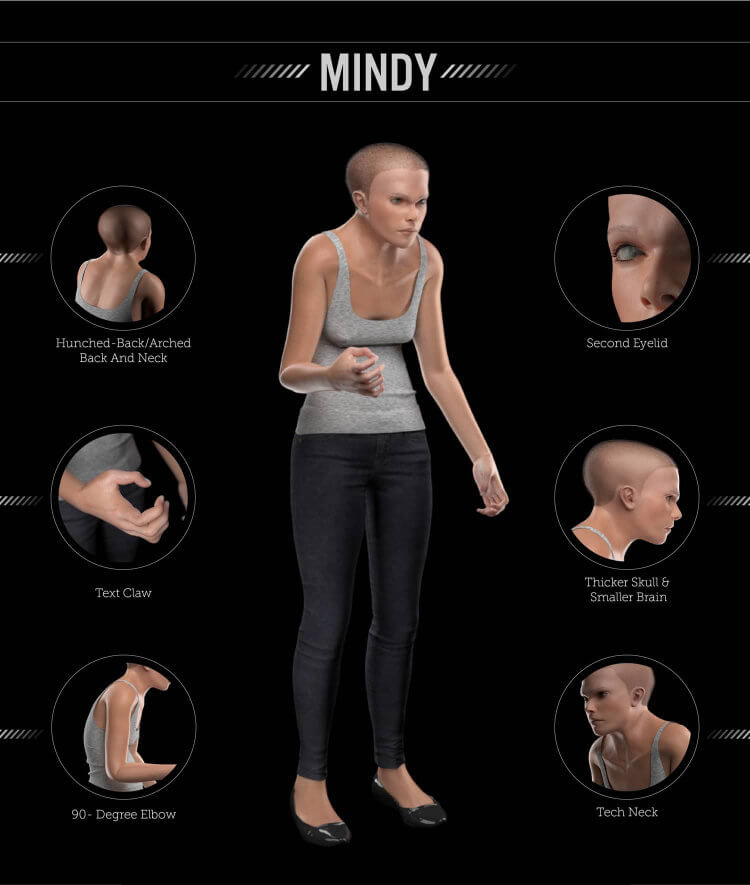
From an external perspective, this means humans might appear more “composed” or even statuesque. Without the need for screens, keyboards, or handheld devices, the physical posture of the 31st-century human will shift away from the “tech neck” slump of the 21st century. Communication will happen internally, leading to a society that may appear quiet and deeply focused to an outside observer, while internally navigating vast digital landscapes.
Cybernetic Enhancements and Physical Performance
Physical limitations such as muscle fatigue or joint degradation will be solved through synthetic musculoskeletal upgrades. We can expect the human of 3000 to possess limbs that are a hybrid of biological tissue and carbon-fiber actuators. These enhancements may not look like the clunky robotics of science fiction; rather, they will likely be “soft” robotics—synthetic muscles that mimic biological ones but provide ten times the strength and endurance.
This level of augmentation will allow for radical changes in human proportions. Depending on the technological trends of the era, humans might opt for elongated limbs for better movement in low-gravity environments or reinforced skeletal structures that can withstand high-pressure atmospheres. The human silhouette will become a matter of functional choice.
Genetic Engineering and the Designer Genome
While cybernetics will modify us from the outside in, genetic engineering—specifically advanced iterations of CRISPR and synthetic genomics—will modify us from the inside out. By 3000, we will have had centuries to perfect the “design” of the human embryo, leading to a population that is physically optimized for health, longevity, and aesthetic preference.
CRISPR-Cas9 and Beyond: Eradicating Biological Limitations
In the 31st century, “natural” aging may be considered a preventable disease. Through constant genetic “patching,” cells will be programmed to regenerate indefinitely, effectively halting the visible signs of aging. The average person in 3000 might look like a 25-year-old in peak physical condition, regardless of whether they are 50 or 500 years old.
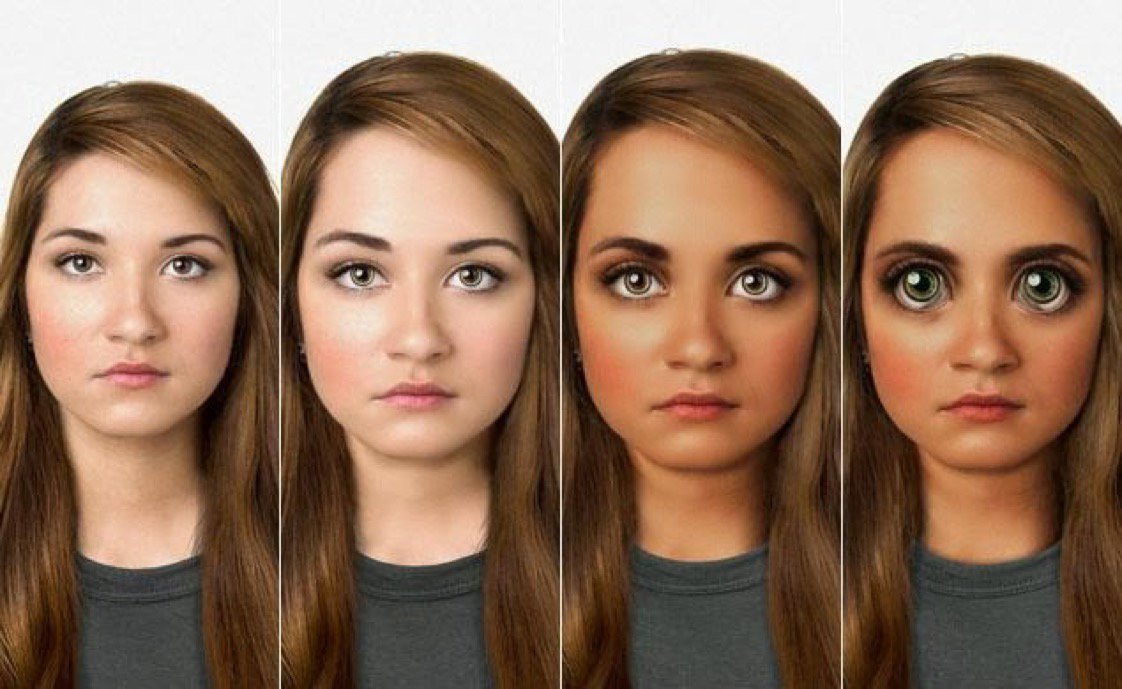
This genetic mastery will also allow for the elimination of hereditary illnesses and physical deformities. The result will be a population with a high degree of physical symmetry—a trait biologically associated with health—but perhaps a lower degree of natural diversity. If everyone can choose their height, eye color, and facial structure, human appearance may fluctuate based on global aesthetic trends rather than geographic ancestry.
Synthetic Biology and New Sensory Organs
Why stop at five senses? Technological evolution in 3000 may introduce entirely new organs into the human body. We may see humans with skin that can change color or texture through bioluminescence, much like a cephalopod, used for both communication and camouflage.
Furthermore, synthetic eyes might expand the visible spectrum, allowing people to see in infrared or ultraviolet. These eyes might look different from our own—perhaps with larger pupils or metallic irises—functioning as sophisticated optical sensors that feed data directly into the visual cortex. The “human look” will expand to include features that are currently considered alien or artificial.
Environmental Adaptation Through Nanotechnology
A significant factor in how humans will look in 3000 is where they will be living. As we expand into the solar system and beyond, our bodies will need to adapt to environments that are hostile to the current human frame. Technology will provide the bridge for these adaptations.

Internal Health Monitors and Automated Repairs
The internal environment of the human body in 3000 will be managed by a “digital immune system” composed of trillions of nanobots. These microscopic machines will circulate through the bloodstream, repairing cellular damage, destroying pathogens, and even clearing arterial plaque.
Because these nanobots can manipulate matter at the molecular level, they could potentially change a person’s physical appearance in real-time. Want to change your hair color or skin tone? A simple software command to your internal nanotech cloud could redistribute pigments within hours. The human body will become a programmable canvas, making “appearance” a fluid concept rather than a fixed identity.
Surviving Extraterrestrial Environments
Humans living on Mars, the Moon, or in rotating space habitats will face challenges like reduced gravity and increased radiation. To counter this, technological interventions might include denser bone matrices reinforced with ceramic composites or skin infused with melanin-mimicking nanomaterials to block cosmic rays.
For those living in zero-gravity environments for generations, we might see a significant lengthening of the digits and limbs, as the need for heavy, load-bearing muscles diminishes. These “Space-faring” humans would look noticeably different from their Earth-bound counterparts, marking the first time in history that human appearance is dictated by planetary residence.
The Digital Consciousness: Moving Beyond the Carbon Frame
Perhaps the most radical possibility for 3000 is that humans may no longer look like “people” in the traditional sense at all. As AI and brain-computer interfaces advance, we may reach a point of “substrate independence”—the ability to upload human consciousness into non-biological forms.
Mind Uploading and Substrate Independence
If the mind can be mapped and transferred to a silicon or quantum processor, the physical body becomes an optional accessory. In this scenario, a person’s “look” could be entirely virtual, existing within a persistent simulation. When they do choose to interact with the physical world, they might do so via a variety of interchangeable shells.
These shells could range from hyper-realistic biological clones to purely functional robotic forms. In a world of substrate independence, the human form in 3000 could be anything from a shimmering holographic projection to a swarm of nanobots capable of taking any shape. The definition of “human” would shift from a physical description to a cognitive one.
Holographic and Robotic Avatars
For those who retain a physical presence, the “body” may be a sleek, highly efficient piece of hardware. These avatars would likely prioritize durability and connectivity. We might see a trend toward “minimalist” bodies—humanoid shapes with smooth, featureless surfaces, designed to be lightweight and energy-efficient. Physical features like mouths or digestive systems might become obsolete if the body is powered by high-capacity solid-state batteries or wireless energy transmission.
Ethical and Security Implications of the 31st Century Body
The technological evolution of the human form brings with it a host of challenges. If our bodies are run by software and enhanced by hardware, they become susceptible to the same risks as any other piece of technology.
The Digital Divide: Biological vs. Enhanced
One of the most pressing concerns for the year 3000 is the potential for a “speciation” event driven by wealth and access to technology. If the costs of genetic engineering and cybernetic enhancement remain high, society could split into two distinct physical classes: the “enhanced” and the “naturals.”
The enhanced would be faster, smarter, and essentially immortal, while the naturals would remain tethered to the limitations of 21st-century biology. This could lead to a radical divergence in appearance, where one group looks like a perfected, futuristic ideal and the other remains within the current biological norm. The “look” of a person in 3000 may be the ultimate indicator of their socioeconomic status.
Cybersecurity for the Physical Self
In a world where the body is integrated with the global network, “bodily autonomy” takes on a new meaning. The human form in 3000 will require sophisticated encryption and firewalls. A person’s appearance could, in theory, be “hacked” or altered without their consent if their internal nanotech or neural links are compromised.
As a result, the humans of 3000 might display “security markers”—biometric signatures or encrypted light patterns on the skin—that verify their identity and the integrity of their physical form. The body will not just be a biological vessel; it will be a secured node in a vast, interplanetary network.
The human of the year 3000 will be a masterpiece of engineering. Whether through the precision of the gene editor, the strength of the cybernetic limb, or the fluidity of the nanotech cloud, our appearance will be a testament to our mastery over the physical world. We will move from being the products of our environment to being the architects of ourselves.
aViewFromTheCave is a participant in the Amazon Services LLC Associates Program, an affiliate advertising program designed to provide a means for sites to earn advertising fees by advertising and linking to Amazon.com. Amazon, the Amazon logo, AmazonSupply, and the AmazonSupply logo are trademarks of Amazon.com, Inc. or its affiliates. As an Amazon Associate we earn affiliate commissions from qualifying purchases.