
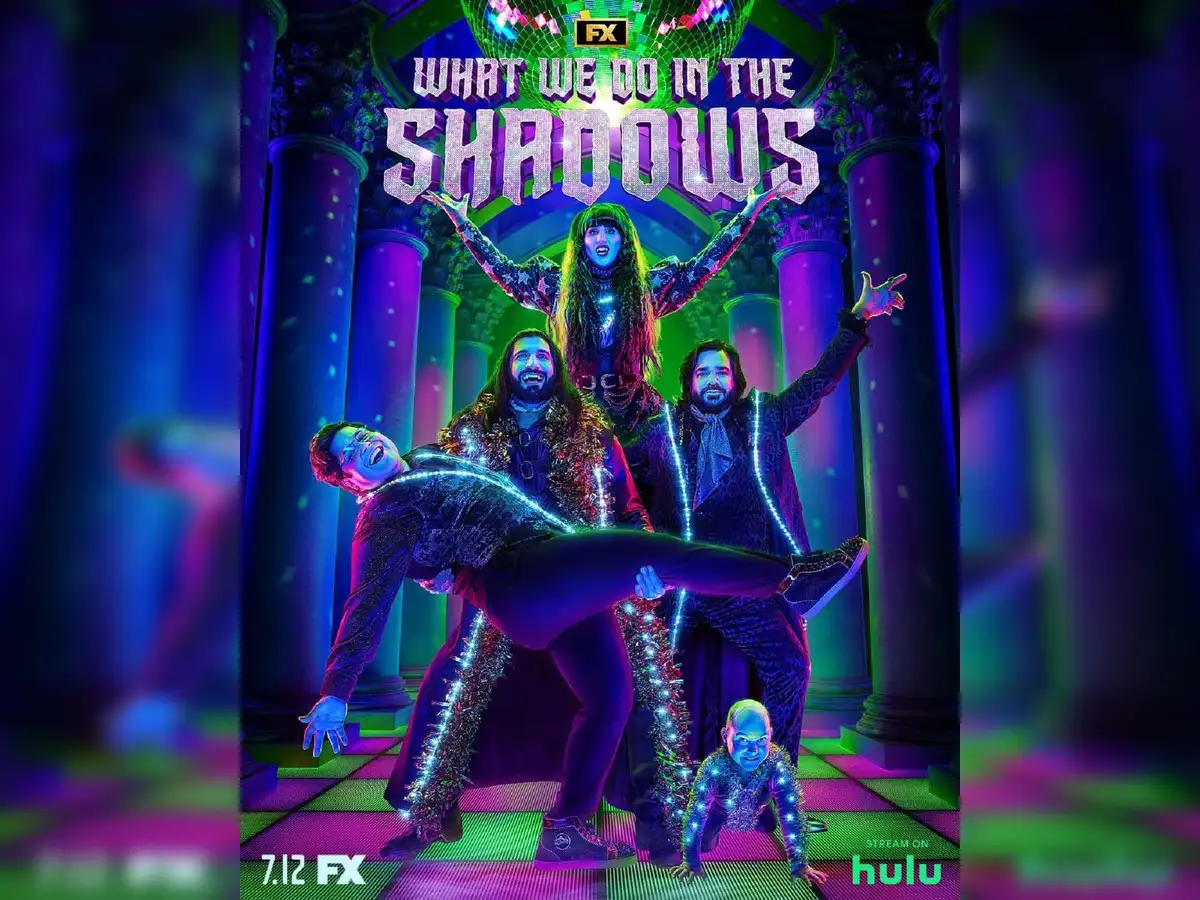
The return of the mockumentary series What We Do in the Shadows for its sixth and final season represents more than just a cultural milestone for television fans; it serves as a case study in the rapid evolution of digital content delivery systems. As viewers prepare to stream the misadventures of Nandor, Laszlo, Nadja, and Colin Robinson, the underlying technology—from high-efficiency video coding to sophisticated content delivery networks (CDNs)—is what truly enables a seamless viewing experience. Understanding the technical landscape of streaming in the current era involves looking at the interplay between software optimization, hardware capabilities, and digital security protocols.

Decoding the Stream: Codecs, Bitrates, and Visual Fidelity
When streaming Season 6 of What We Do in the Shadows, the quality of the image on the screen is a result of complex compression algorithms known as codecs. Because the show features a distinct visual style—heavy on shadows, dark interior shots, and subtle textures—the technical demands on video compression are significant.
High Efficiency Video Coding (HEVC) and AV1
Most modern streaming platforms hosting high-demand content utilize High Efficiency Video Coding (HEVC), also known as H.265. This codec is designed to provide high-quality video at substantially lower bitrates than its predecessor, H.264. For a show like What We Do in the Shadows, where dark scenes can easily suffer from “macroblocking” (the appearance of pixelated squares in shadows), HEVC is essential for maintaining deep blacks and smooth gradients.
Furthermore, the industry is increasingly leaning toward AV1, an open-source, royalty-free video coding format. AV1 offers even better compression efficiency, allowing for 4K resolution streaming without the massive bandwidth overhead traditionally required. This ensures that users on slower internet connections can still experience the show in high definition without constant buffering.
Adaptive Bitrate Streaming (ABR)
Adaptive Bitrate Streaming is the software logic that prevents the spinning “loading” icon. It works by detecting the user’s bandwidth and CPU capacity in real-time and adjusting the quality of the video stream accordingly. The video file for a single episode of Season 6 is stored on the server in several different quality levels (from 480p to 4K). As your network fluctuates, the streaming app switches between these segments seamlessly. This process is governed by protocols like DASH (Dynamic Adaptive Streaming over HTTP) or HLS (HTTP Live Streaming), which break the video into small chunks, ensuring that the playback buffer is always occupied.
The Software Stack: Navigating Streaming Ecosystems and Interface Efficiency
The application through which you stream What We Do in the Shadows Season 6 is a sophisticated piece of software engineering. Whether you are using Hulu, Disney+, or another regional provider, the User Interface (UI) and User Experience (UX) are built on robust frameworks designed for cross-platform compatibility.
Cross-Device Synchronization and Cloud Storage
Modern streaming apps rely on cloud-based backends to synchronize user data. The “resume play” feature, which allows you to start an episode on a smartphone and finish it on a Smart TV, is powered by real-time database updates. Every time a viewer pauses a show, a timestamp is sent to the cloud (often hosted on AWS or Google Cloud), ensuring that the metadata follows the user across all logged-in devices. This requires low-latency API calls to ensure that the transition between devices feels instantaneous.
Recommendation Engines and AI Integration
Behind the scenes, the platforms streaming Season 6 utilize machine learning algorithms to curate content. These AI tools analyze viewing patterns, search history, and even the time of day to suggest what to watch next. For fans of What We Do in the Shadows, the algorithm identifies specific metadata tags—such as “supernatural comedy,” “mockumentary,” or “vampire fiction”—and cross-references them with global viewing trends to refine the user’s personal feed. This data-driven approach to content discovery is a hallmark of modern app development.
Digital Security and Global Access: Bypassing Geographical Restrictions

While What We Do in the Shadows has a global following, licensing agreements often create artificial barriers known as geo-blocking. For tech-savvy viewers, navigating these digital borders requires an understanding of networking security and data encryption.
The Role of Virtual Private Networks (VPNs)
A VPN is the primary tool used by enthusiasts to access streaming content that may not be available in their specific region. Technically, a VPN creates an encrypted “tunnel” between the user’s device and a remote server. By routing traffic through a server in a different country (e.g., the United States or the UK), the user’s IP address is masked, making it appear as though they are browsing from that location.
For streaming Season 6, the quality of the VPN matters. High-end providers use protocols like WireGuard or Lightway, which are optimized for speed and low latency. Unlike older protocols like OpenVPN, which can be computationally heavy, WireGuard uses modern cryptography to ensure that the encryption process does not throttle the streaming speed, allowing for 4K playback without interruption.
DNS Leak Protection and Obfuscated Servers
Streaming services have become increasingly adept at identifying and blocking VPN traffic. To counter this, advanced digital security tools employ “obfuscated servers,” which disguise VPN traffic as regular HTTPS traffic. Additionally, DNS leak protection ensures that requests for website addresses do not bypass the VPN tunnel, preventing the streaming service from seeing the user’s actual location. This cat-and-mouse game between streaming platforms and security software is a defining feature of the current digital media landscape.
Hardware Optimization: Choosing the Right Gear for a Dark Aesthetic
Streaming Season 6 of What We Do in the Shadows effectively requires hardware that can handle the specific technical demands of the show’s cinematography. Because the series is set largely at night and in dimly lit environments, the display technology used is paramount.
OLED vs. LED: The Battle for Black Levels
For a show centered on vampires, the ability of a screen to produce “true black” is critical. OLED (Organic Light Emitting Diode) displays are the gold standard for this. Unlike traditional LED-LCD screens that use a backlight, each pixel in an OLED panel is self-emissive and can be turned off completely. This prevents “blooming”—where light from a bright object spills into the surrounding dark areas—which is essential for maintaining the atmospheric tension of the show.
Spatial Audio and Dolby Atmos
Sound design is an often-overlooked aspect of the streaming tech stack. Season 6 is likely to utilize Dolby Atmos, an object-based audio format that goes beyond traditional surround sound. Instead of just sending audio to a left or right speaker, Atmos treats sounds as “objects” that can be placed in a 3D space. To experience this, viewers need hardware that supports the metadata—either a compatible soundbar or an AV receiver with height channels. The software on the streaming device must also be capable of decoding these Atmos streams and passing them via HDMI eARC (Enhanced Audio Return Channel) to the output device.
The Future of Content Delivery: Edge Computing and Beyond
As we move into the final season of What We Do in the Shadows, the technology behind streaming continues to push toward the “edge.” Edge computing involves moving the processing and storage of data closer to the end-user, rather than relying on a centralized data center thousands of miles away.
Reducing Latency with Edge CDNs
Content Delivery Networks (CDNs) like Akamai, Cloudflare, and Fastly are the backbone of the streaming industry. By caching segments of Season 6 on “edge servers” located in local ISPs or major metropolitan hubs, streaming services can deliver the video data with minimal latency. This reduces the number of “hops” the data must take across the internet, significantly lowering the risk of packet loss and jitter.
AI-Driven Upscaling and Local Processing
The next frontier for streaming technology is AI-driven upscaling on the client side. Devices like the NVIDIA Shield or the latest generation of Smart TVs use neural networks to analyze low-resolution frames and reconstruct them into higher resolutions in real-time. This means that even if a viewer’s bandwidth drops and the stream downgrades to 720p, the hardware can use AI to sharpen edges and reduce noise, maintaining a high-quality visual experience.
In conclusion, streaming What We Do in the Shadows Season 6 is a high-tech endeavor that leverages the pinnacle of modern software engineering and hardware innovation. From the codecs that compress the vampires’ nocturnal escapades to the VPNs that ensure global access, and the OLED panels that render every shadow in perfect detail, the intersection of entertainment and technology has never been more sophisticated. As viewers log in to witness the final chapter of this series, they are participating in a digital ecosystem that represents the cutting edge of the information age.
aViewFromTheCave is a participant in the Amazon Services LLC Associates Program, an affiliate advertising program designed to provide a means for sites to earn advertising fees by advertising and linking to Amazon.com. Amazon, the Amazon logo, AmazonSupply, and the AmazonSupply logo are trademarks of Amazon.com, Inc. or its affiliates. As an Amazon Associate we earn affiliate commissions from qualifying purchases.