
As the summer months approach and temperatures begin to climb, the reliance on climate control technology becomes a central focus for homeowners and office managers alike. While air conditioning systems often take center stage in the discussion of thermal management, the humble ceiling fan remains one of the most effective and energy-efficient tools in our cooling arsenal. However, the efficacy of this device is not merely a matter of turning it on; it is a matter of directional physics. To achieve maximum cooling, a fan must spin in a counter-clockwise direction during the summer.
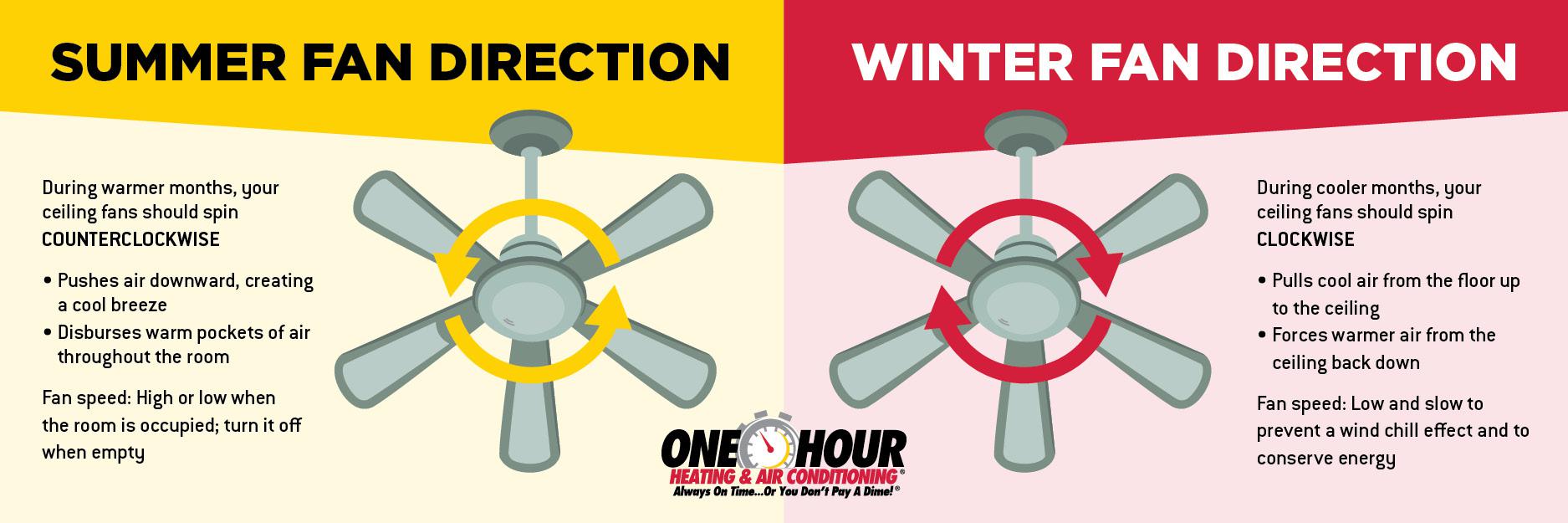
This specific orientation is not an arbitrary design choice but a fundamental application of aerodynamic engineering. In the world of household technology, understanding the “why” behind the direction of rotation allows users to optimize their environments, reduce energy consumption, and extend the lifespan of their appliances. By diving into the mechanics of blade pitch, motor technology, and smart home integration, we can see how a simple directional shift transforms a fan from a mere air mover into a sophisticated piece of climate-control hardware.
The Physics of the Downdraft: Why Counter-Clockwise Wins
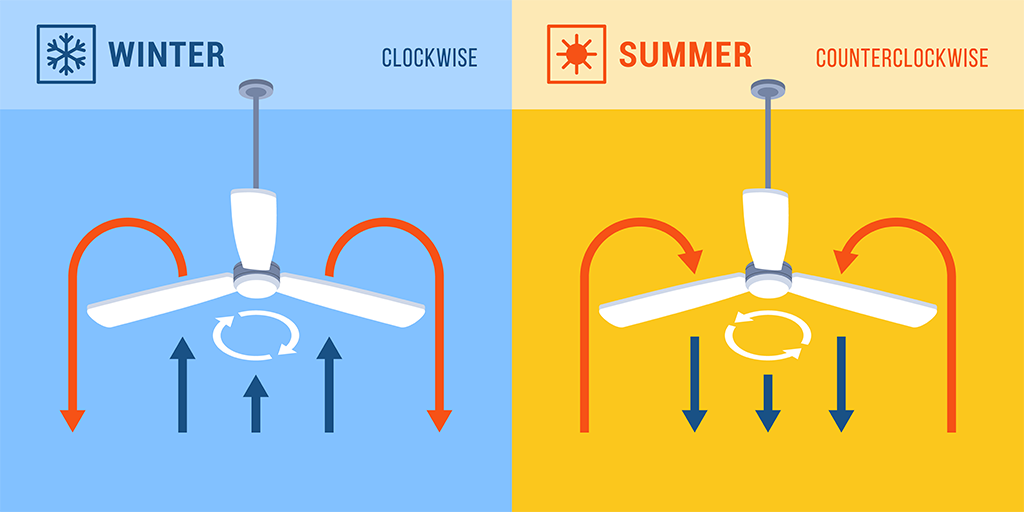
The primary reason a ceiling fan must spin counter-clockwise in the summer is to create what is known in fluid dynamics as a “downdraft.” Most modern ceiling fans are designed with blades set at a specific angle, or pitch. When the motor rotates the assembly in a counter-clockwise direction (when looking up at the fan), the angled blades slice through the air and push a concentrated column of air directly downward.
This downward column of air is the key to the “wind chill effect.” It is a common misconception that fans lower the temperature of a room. In reality, fans cool people, not spaces. As the downdraft passes over human skin, it accelerates the evaporation of moisture (sweat). Since evaporation is an endothermic process—meaning it absorbs heat—the result is a significant cooling sensation on the body. From a technological standpoint, this allows a person to feel up to six to eight degrees cooler than the actual ambient temperature of the room.
The Role of Blade Pitch and Aerodynamics
The effectiveness of the summer setting is heavily dependent on the blade pitch, which is the angle of the blades relative to the fan’s base. Tech-forward manufacturers typically design blades with a pitch between 12 and 15 degrees. If the pitch is too shallow, the fan won’t move enough air regardless of the speed. If it is too steep, the motor may experience excessive drag, leading to inefficiency and potential hardware failure. In the summer setting, the counter-clockwise rotation works in harmony with this pitch to maximize CFM (Cubic Feet per Minute) airflow, a standard metric used to evaluate fan performance.
Visual Verification and Tech Calibration
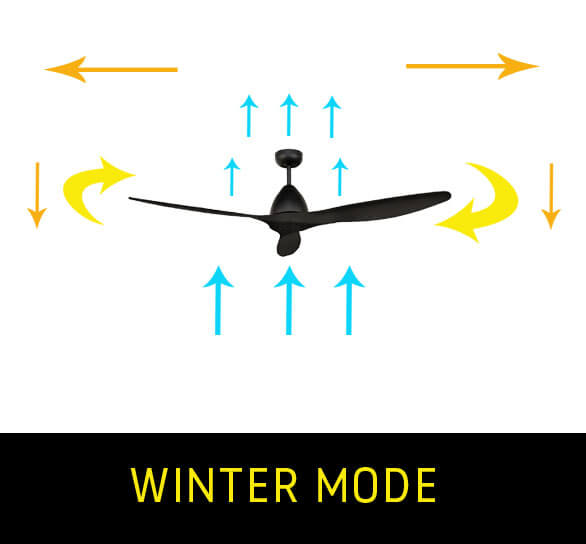
For users unsure of their fan’s current setting, a quick visual calibration is possible. By standing directly under the fan and turning it on at a low speed, one should watch the blades move. If they move from the top right to the bottom left, the fan is rotating counter-clockwise. Furthermore, the user should immediately feel a breeze. If the air feels like it is being pulled upward or if the breeze is only felt near the walls of the room, the fan is likely in its winter (clockwise) setting and needs to be toggled.
Motor Technology: The Evolution from AC to DC Power
While the direction of the spin is crucial, the technology driving that rotation has seen significant advancements in recent years. Traditionally, ceiling fans utilized AC (Alternating Current) motors. While reliable, these motors often lacked precision in speed control and were less efficient in terms of energy consumption. The shift toward DC (Direct Current) motors in high-end ceiling fans has revolutionized how we manage airflow in the summer.
The Benefits of DC Motor Integration
DC motors are significantly more compact and efficient than their AC counterparts. In a summer context, where a fan might run 24/7, a DC motor can use up to 70% less energy than a standard AC motor. More importantly for the user, DC motors offer more speed options—often up to six or even ten distinct levels—allowing for granular control over the downdraft intensity.
Technically speaking, DC motors utilize internal permanent magnets to create torque, which eliminates the need for the heavy copper windings found in AC motors. This leads to a cooler-running motor, which is an overlooked benefit during a heatwave. An AC motor can generate its own heat, which can slightly offset the cooling effect of the fan. A DC motor remains cool to the touch, ensuring that the hardware itself isn’t contributing to the room’s thermal load.
Electronic Commutation and Reversibility
One of the most convenient tech features of modern DC fans is the ease of reversing direction. On older AC models, reversing the spin usually required a manual slide switch located on the motor housing, often requiring a ladder to reach. DC motors utilize electronic commutation, meaning the direction can be reversed via a remote control or a smartphone app. This digital control over the motor’s polarity makes transitioning between summer and winter modes a seamless experience, further encouraging users to actually use the feature to save on energy costs.
Smart Home Integration and Automated Climate Tech
In the current era of the “Internet of Things” (IoT), the question of which way a fan should spin in the summer is increasingly being answered by algorithms rather than manual switches. Smart ceiling fans are now a staple of the modern automated home, integrating with ecosystems like Amazon Alexa, Google Home, and Apple HomeKit.
Thermostatic Synchronization
The most advanced smart fans are equipped with built-in temperature sensors or can sync with smart thermostats like Nest or Ecobee. When the indoor temperature hits a specific threshold, the fan can automatically trigger its summer setting. This creates a layered cooling strategy. For instance, a smart home setup can be programmed so that when the temperature reaches 75°F, the ceiling fan activates in its counter-clockwise summer mode. If the temperature continues to rise to 78°F, the air conditioning system kicks in. This “fan-first” approach significantly reduces the workload on the AC compressor, leading to lower utility bills and a reduced carbon footprint.
Occupancy Sensing and Geofencing
Beyond simple temperature triggers, smart fans use occupancy sensors to detect if a room is in use. Since fans cool people rather than rooms, leaving a fan on in an empty room is a waste of energy. Smart tech ensures that the counter-clockwise downdraft is only active when someone is present to benefit from it. Geofencing takes this a step further, allowing the fan to deactivate when the user’s smartphone leaves the house and reactivate just before they return, ensuring a cool environment without the wasted kilowatt-hours.
Environmental Impact and Energy Efficiency Standards
From a tech-review perspective, the “summer spin” is one of the most effective ways to meet modern energy efficiency standards, such as those set by Energy Star. The Department of Energy has noted that using a ceiling fan in conjunction with air conditioning can allow users to raise the thermostat setting by about 4 degrees Fahrenheit without any loss in comfort.
Reducing the Load on HVAC Hardware
Air conditioning units are the most energy-intensive appliances in most homes. By ensuring a fan is spinning counter-clockwise, the resulting downdraft allows the AC to cycle less frequently. This is a critical technological advantage; reducing the “on-off” cycling of an HVAC system extends the life of the capacitor, the motor, and the refrigerant levels. In essence, the simple mechanical act of a fan spinning the right way acts as a protective measure for more expensive hardware.
Materials and Aerodynamic Innovation
Modern fan manufacturers are also experimenting with materials to enhance the summer cooling effect. We are seeing a move away from heavy wood or pressed-board blades toward lightweight composites and even carbon fiber. These materials allow for more complex “airfoil” shapes—similar to airplane wings—that move air more efficiently with less noise. When combined with the correct counter-clockwise rotation, these high-tech blades minimize turbulence, providing a smooth, “silent” breeze that is far superior to the buffeting air produced by older blade designs.
Maintenance and Optimization for Peak Performance
To ensure that the counter-clockwise summer setting is operating at peak efficiency, certain hardware maintenance protocols should be followed. Over time, even the most advanced fans can suffer from “wobble” or dust accumulation, both of which degrade the quality of the airflow.
Technical Calibration: The Balance Kit
If a fan wobbles while spinning at high summer speeds, it is likely due to an imbalance in the weight of the blades. Most tech-savvy users keep a balancing kit—consisting of small adhesive weights—on hand. By using these weights to calibrate the blades, the fan can spin at higher RPMs without vibrating, which ensures the downdraft remains consistent and the motor bearings are not prematurely worn down.
Firmware Updates and Connectivity
For smart fans, optimization often comes in the form of software. Manufacturers frequently release firmware updates to improve motor efficiency, fix connectivity bugs with smart home hubs, or refine the “Natural Breeze” modes that vary the motor speed to simulate outdoor air movement. Keeping the fan’s software up to date is as important as keeping the blades clean.
In conclusion, the direction a fan spins in the summer is a small but vital component of home climate technology. By utilizing a counter-clockwise rotation, we harness the physics of the downdraft to create a more comfortable environment. When this mechanical principle is paired with modern DC motors, smart home automation, and aerodynamic design, the ceiling fan evolves from a basic household fixture into a high-performance tool for sustainable, efficient living. Ensuring your fan is spinning the right way is the first step in mastering the tech of summer comfort.
aViewFromTheCave is a participant in the Amazon Services LLC Associates Program, an affiliate advertising program designed to provide a means for sites to earn advertising fees by advertising and linking to Amazon.com. Amazon, the Amazon logo, AmazonSupply, and the AmazonSupply logo are trademarks of Amazon.com, Inc. or its affiliates. As an Amazon Associate we earn affiliate commissions from qualifying purchases.