
The flute is traditionally classified as a woodwind instrument, a definition that has persisted for centuries despite the instrument’s transition from wood to precious metals. However, in the contemporary landscape of music technology, the definition of “what type of instrument” the flute is has expanded significantly. Today, the flute exists at the intersection of classical acoustics and cutting-edge digital engineering. It is no longer just a silver tube used in orchestras; it is a sophisticated controller for MIDI data, a source for complex digital signal processing (DSP), and a centerpiece for virtual instrument modeling.

To understand the flute in a modern context, we must examine its mechanical foundations, its evolution into the digital realm through Electronic Wind Instruments (EWIs), and how software synthesis is redefining the very physics of its sound.
The Mechanical Foundation: The Flute as an Analog Hardware System
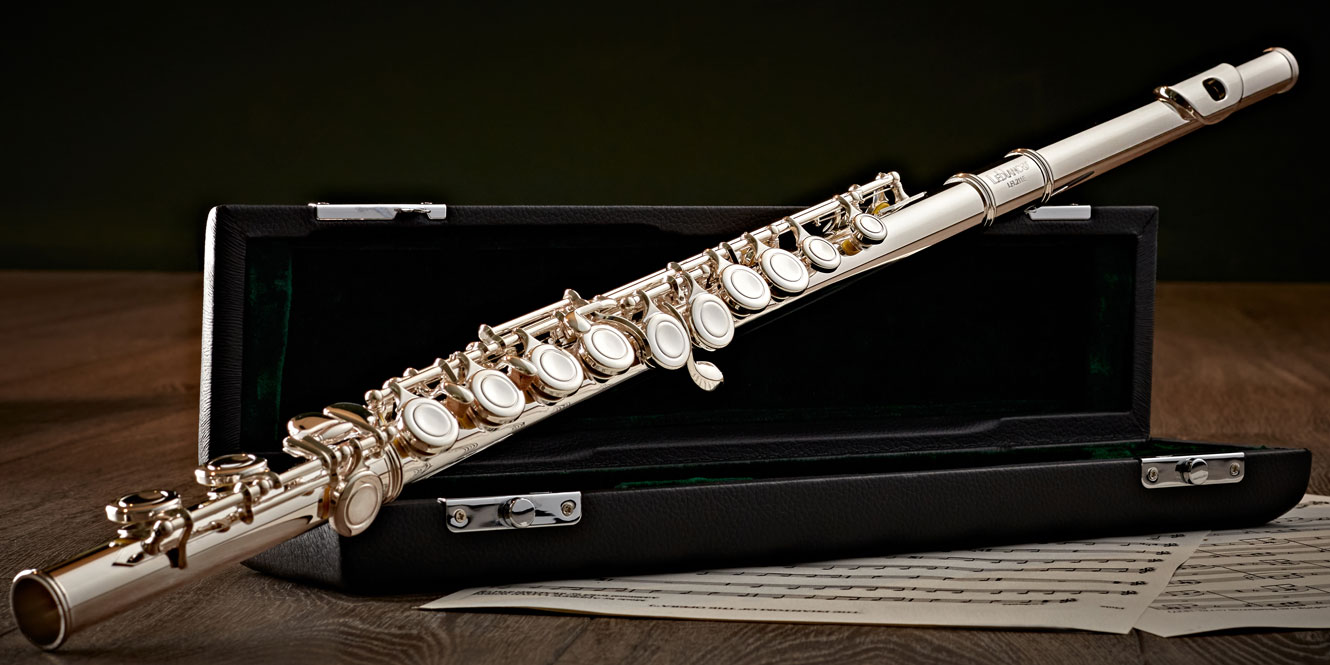
At its core, the traditional flute is an aerophone, an instrument that produces sound by vibrating a column of air. Unlike other woodwinds like the clarinet or oboe, the flute is an “edge-blown” instrument. The player directs a stream of air across the embouchure hole, creating an oscillation known as a Helmholtz resonance. From a technical perspective, the acoustic flute can be viewed as a highly refined piece of analog hardware.
The Physics of Bore Design and Material Science
The transition from the “traverso” (wooden flute) to the modern Boehm-system flute represents one of the earliest major “tech upgrades” in musical history. Theodold Boehm, a jeweler and goldsmith, applied engineering principles to the flute in the mid-19th century, standardizing the cylindrical bore and the complex system of keys and pads.
In modern manufacturing, material science plays a critical role. While professional flutes are often made of silver, gold, or platinum, the choice of material affects the “impedance” of the air column. High-tech manufacturing processes now allow for “heavy-wall” designs and specialized headjoint geometries that optimize airflow. This mechanical precision is the precursor to the digital accuracy we see in modern virtual versions of the instrument.
The Keywork as a Binary Interface
Even in its purely acoustic form, the flute’s key system functions as a rudimentary binary interface. A key is either open or closed, modifying the effective length of the tube and thus the frequency of the sound. This logic—mapping physical finger movements to specific output frequencies—provided the architectural blueprint for the first digital wind controllers developed in the late 20th century.
The Digital Transformation: Electronic Wind Instruments and MIDI Controllers
As music production shifted toward the Digital Audio Workstation (DAW), the flute underwent a radical transformation. No longer confined to the physical properties of air and metal, the “digital flute” emerged as a powerful tool for controlling synthesizers and software.
The Rise of the EWI and Breath-Control Sensors
Electronic Wind Instruments (EWIs) and Electronic Woodwind Instruments are the high-tech descendants of the traditional flute. Devices produced by companies like Akai, Roland, and Berglund take the fingerings of a standard flute and map them to digital sensors.
The most significant technological breakthrough in this space is the high-resolution breath sensor. Unlike a keyboard, which uses “velocity” (how hard a key is hit) to determine volume, a digital flute uses continuous pressure sensing. These sensors convert the player’s air pressure into MIDI CC (Continuous Controller) data, allowing for a level of expressive dynamics that standard MIDI keyboards cannot replicate. This makes the modern flute-type instrument a premier choice for controlling complex, evolving digital textures.
Wireless Connectivity and Low-Latency Performance
Modern digital flutes have integrated Bluetooth MIDI and 2.4GHz wireless protocols to eliminate the tether to the computer. In a professional live-tech environment, latency is the primary enemy. Modern digital wind instruments have reduced “trigger latency” to under 5 milliseconds, making them indistinguishable from acoustic instruments in terms of response time. This shift has turned the flute into a versatile “input device” capable of triggering everything from orchestral samples to massive wavetable synthesis patches.
Virtual Orchestration: Modeling the Flute in Software
When we ask what type of instrument the flute is today, we must also look at the “Virtual Instrument” (VST) category. The flute has been a primary subject of study for software engineers trying to replicate human expression through code.
Sampling vs. Physical Modeling
For years, the digital flute was represented by “sampling”—thousands of individual recordings of a flutist played back via a sampler. While high in fidelity, sampling is often “static.”
The cutting edge of music tech has moved toward “Physical Modeling Synthesis.” Instead of playing back a recording, software like the SWAM engine (Synchronous Waves Acoustic Modeling) uses mathematical equations to simulate the physical properties of the flute. It calculates the friction of the air, the resonance of the tube, and the turbulence of the embouchure in real-time. In this context, the flute becomes a sophisticated algorithm, allowing a producer to change the “material” of the virtual flute from wood to silver with a single click.
AI and the Simulation of Articulation
Artificial Intelligence is now being integrated into flute VSTs to handle “articulation switching.” Real flute playing involves complex transitions between notes, such as portamento, staccato, and various types of vibrato. AI models are trained on thousands of hours of elite flute performances to predict how a transition should sound based on the player’s input. This turns the digital flute from a simple sound generator into an intelligent system that understands musical context.
The Flute in the Modern Production Ecosystem
Beyond the instrument itself, the flute has become a staple in modern digital production, particularly in genres like Lo-Fi, Cinematic Soundscapes, and Experimental Electronic music. This has led to the development of specific “Tech-Flute” workflows.
Digital Signal Processing (DSP) and Augmentation
Many modern flutists are “augmented” performers. By using a pickup microphone (like the Piezo-style triggers) or a high-quality condenser mic routed through a pedalboard or Ableton Live, the flute becomes a source for granular synthesis and spectral processing.
In this setup, the flute is a “carrier signal.” Techniques like “live looping” and “harmonization” allow a single flutist to create massive, polyphonic textures. The use of pitch-to-MIDI converters allows an acoustic flute to trigger a Moog synthesizer simultaneously, blending the organic breath of the player with the raw power of analog-modeled oscillators.
Spatial Audio and Immersive Mixing
With the rise of Dolby Atmos and spatial audio, the flute’s role in the “sonic field” has changed. Because the flute occupies a high-frequency range with significant directional clarity, it is an ideal candidate for 360-degree object-based mixing. Producers use specialized plugins to move flute melodies through a three-dimensional space, utilizing HRTF (Head-Related Transfer Function) technology to create an immersive experience for listeners.
The Future of the Flute: Smart Instruments and Bio-Feedback
Looking forward, the definition of the flute will likely expand into the realm of “Smart Instruments.” We are already seeing the integration of IoT (Internet of Things) sensors into high-end instruments.
Sensor-Embedded Acoustic Flutes
The next frontier is the integration of sensors directly into the acoustic flute without affecting its sound. These sensors could track a student’s finger position, breath pressure, and even heart rate, sending the data to an app for real-time analysis. This turns the instrument into a biometric feedback device, blending music education with data science.
The Role of VR and AR in Flute Performance
Augmented Reality (AR) is beginning to play a role in how the flute is perceived as a “visual” instrument. Through motion-tracking tech, flutists can control visual projections or VR environments with the movement of their instrument. The flute, in this case, becomes a baton for a multi-sensory digital experience, proving that it is far more than just a classical woodwind.

Conclusion: A Multi-Dimensional Definition
So, what type of instrument is the flute? While it remains a woodwind in the traditional sense, a modern technological analysis reveals it to be a sophisticated, multi-dimensional tool. It is an analog masterpiece of mechanical engineering, a high-fidelity MIDI controller, a complex mathematical model in software, and a source for advanced digital signal processing.
As technology continues to evolve, the flute will continue to break out of its classical shell. Whether it is being played in a concert hall, triggered via a USB-C cable in a home studio, or modeled by an AI algorithm, the flute stands as a testament to how traditional design can be seamlessly integrated into the digital age. It is an instrument that is as much about the future of tech as it is about the history of music.
aViewFromTheCave is a participant in the Amazon Services LLC Associates Program, an affiliate advertising program designed to provide a means for sites to earn advertising fees by advertising and linking to Amazon.com. Amazon, the Amazon logo, AmazonSupply, and the AmazonSupply logo are trademarks of Amazon.com, Inc. or its affiliates. As an Amazon Associate we earn affiliate commissions from qualifying purchases.