
In the contemporary financial landscape, where “hustle culture” often clashes with the desire for passive income, many individuals find themselves searching for a stable foundation for their professional and economic lives. Interestingly, some of the most enduring and effective strategies for wealth creation and career advancement are found in ancient biblical texts. Far from being a series of abstract moralisms, the Bible offers a robust framework for labor, productivity, and financial stewardship. Understanding what the Bible says about working hard provides a competitive edge in modern business, emphasizing that diligent effort is not merely a necessity for survival but a strategic path toward long-term prosperity and influence.

The Theology of Diligence: Why Hard Work is a Financial Asset
At the core of biblical teaching is the idea that work is inherently valuable. Unlike some ancient philosophies that viewed manual labor as a curse for the lower classes, the biblical perspective elevates work to a dignified calling. In the context of personal finance and career growth, this translates to the concept of diligence. Diligence is more than just staying busy; it is the focused, consistent application of effort toward a specific goal.
Stewardship over Slothfulness
The Book of Proverbs is particularly vocal about the economic consequences of one’s work ethic. It repeatedly contrasts the “sluggard” with the “diligent.” Proverbs 10:4 states, “Lazy hands make for poverty, but diligent hands bring wealth.” From a modern financial perspective, this is a lesson in human capital. Your ability to work is your primary wealth-generating engine.
Slothfulness, in a financial sense, often manifests as missed opportunities, procrastination in market research, or the failure to develop high-value skills. When the Bible warns against laziness, it is highlighting the opportunity cost of wasted time. In a competitive economy, those who are disciplined in their work habits are essentially investing in themselves, creating a reliable stream of income that forms the basis for all further investing and wealth building.
The Compound Effect of Consistent Effort
The Bible often uses agricultural metaphors to describe work, such as sowing and reaping. These metaphors perfectly illustrate the concept of compounding—not just in interest rates, but in professional reputation and skill acquisition. Proverbs 12:24 notes, “Diligent hands will rule, but laziness ends in forced labor.”
In the corporate world or the entrepreneurial space, “ruling” refers to reaching a position of leadership, authority, and high earning potential. This status is rarely achieved overnight. It is the result of years of “sowing” through hard work, late nights, and continuous learning. By consistently applying effort, an individual builds a “portfolio” of competence that eventually yields a massive harvest of financial rewards and professional opportunities.
Biblical Wisdom on Side Hustles and Multiple Income Streams
One of the most modern-sounding pieces of advice in the Bible concerns the diversification of income. In an era where a single job may not provide total financial security, the “side hustle” has become a staple of personal finance. The Bible anticipated this need for multiple streams of revenue thousands of years ago.
Diversification and the Parable of the Talents
The Parable of the Talents (Matthew 25:14-30) is perhaps the most famous biblical teaching on investment and productivity. In the story, a master entrusts his servants with different amounts of “talents” (a unit of currency). The servants who worked hard to trade and invest their talents were rewarded when they doubled their master’s money. The servant who did nothing out of fear was rebuked.
The financial takeaway is clear: we are expected to be active managers of our resources. “Working hard” in this context means taking calculated risks and seeking a return on investment (ROI). Whether you are managing a 401(k), starting an e-commerce store on the side, or investing in real estate, the biblical mandate is to put your resources to work rather than letting them sit idle. Stagnation is viewed as a failure of stewardship.
Scaling Small Beginnings into Sustainable Wealth
Ecclesiastes 11:6 offers a direct blueprint for the modern entrepreneur: “Sow your seed in the morning, and at evening let your hands not be idle, for you do not know which will succeed, whether this or that, or whether both will do equally well.” This is a classic diversification strategy.
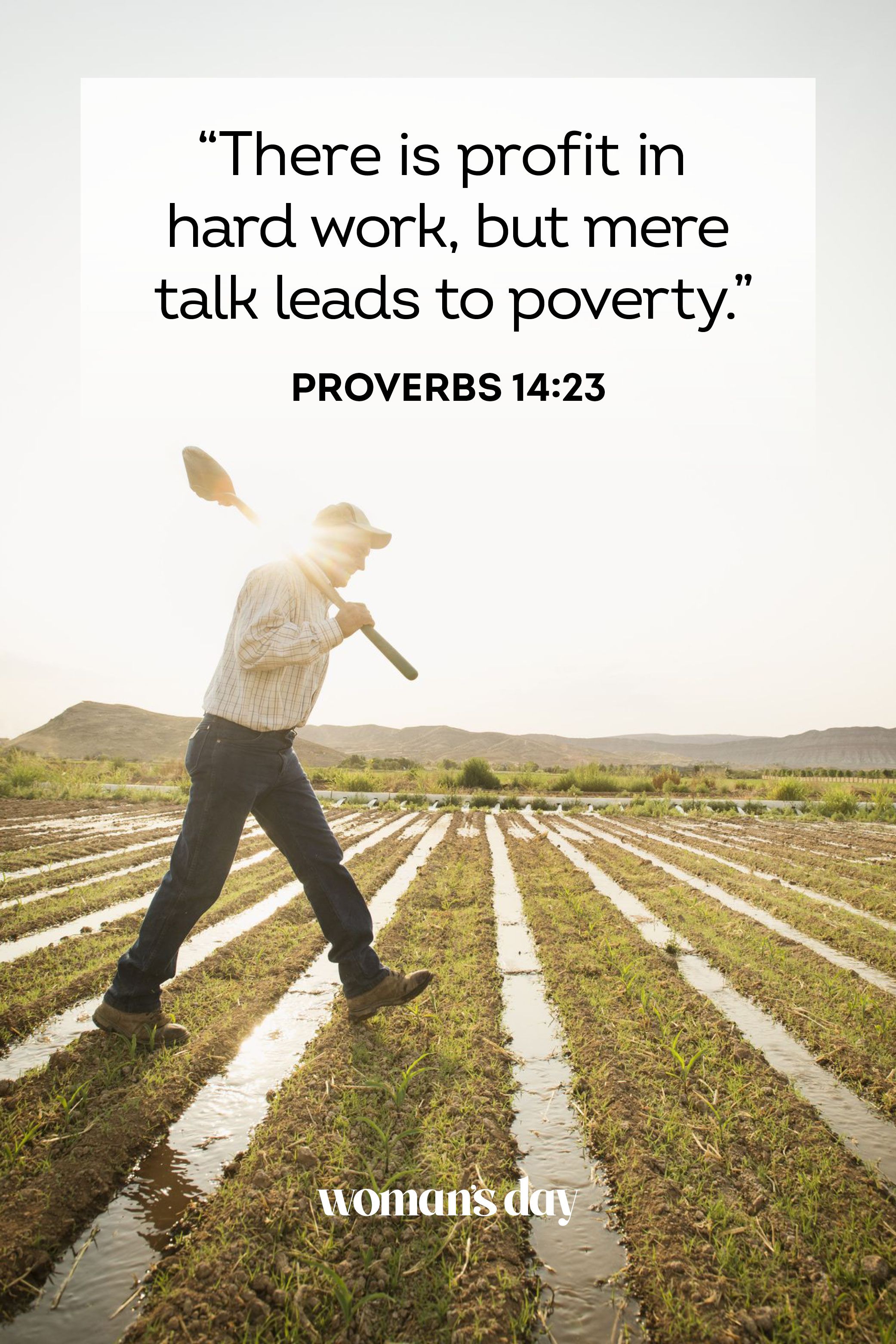
By working hard on multiple fronts—perhaps a primary career in the morning and a side venture in the evening—you mitigate the risk of financial failure. If one “crop” fails due to market shifts or economic downturns, the other may thrive. This biblical principle encourages a proactive approach to income generation, suggesting that the most resilient financial plans are built on a foundation of multifaceted hard work.
Ethical Productivity: Building a Brand of Integrity for Long-Term Profit
In the world of business finance and personal branding, your reputation is your most valuable currency. The Bible emphasizes that hard work must be paired with integrity to produce lasting wealth. Shortcuts and “get-rich-quick” schemes are frequently condemned because they lack the foundation of honest labor.
The Cost of Shortcuts and Dishonest Gain
Proverbs 13:11 provides a sobering financial warning: “Dishonest money dwindles away, but whoever gathers money little by little makes it grow.” This verse highlights the difference between “fast money” and “sustainable wealth.” Many modern financial disasters—from Ponzi schemes to corporate fraud—stem from a desire to bypass the hard work of building a real business.
Working hard with integrity means delivering genuine value to your clients or employer. When you focus on quality and honesty, you build “brand equity.” Customers return to businesses they trust, and employers promote workers they can rely on. In the long run, the “little by little” approach of honest, hard work results in a much larger and more stable net worth than the volatile gains of ethical compromise.
Generosity as a Financial Strategy
The Bible often links hard work with the ability to be generous. Ephesians 4:28 says, “Anyone who has been stealing must steal no longer, but must work, doing something useful with their own hands, that they may have something to share with those in need.”
This introduces a different motivation for working hard: capital accumulation for the purpose of philanthropy. In modern business, this is often seen in the form of Corporate Social Responsibility (CSR) or “B-Corps.” From a personal finance perspective, being a “high-earning giver” provides a sense of purpose that prevents burnout and connects your hard work to a larger mission. Furthermore, the networking and community goodwill generated by generosity often lead to new business opportunities and partnerships, creating a virtuous cycle of financial growth.
Balancing Ambition with Rest: The Biblical Approach to Avoiding Burnout
While the Bible promotes intense diligence, it is equally adamant about the necessity of rest. In a digital economy that never sleeps, the “always-on” mentality often leads to diminishing returns, poor decision-making, and health crises. The biblical concept of the Sabbath is a sophisticated productivity tool that ensures long-term financial sustainability.
The Sabbath Principle in a 24/7 Economy
The Sabbath was not just a religious ritual; it was a mandatory break from the “hard work” of the week. By stepping away from labor one day out of seven, individuals are forced to trust that their six days of diligent work are sufficient. From a modern psychological and economic standpoint, this prevents burnout and allows for “deep work.”
High-level financial decision-making requires clarity and perspective. Constant grinding without rest leads to “decision fatigue,” where the quality of your work suffers and your ROI drops. By incorporating a biblical rhythm of rest, you preserve your most important financial asset: your mind. Taking time to recharge ensures that when you do work, you are operating at peak efficiency, making your “hard work” more effective and more profitable.
Contentment vs. Compulsion
Finally, the Bible warns against the type of hard work that is driven by an unhealthy obsession with wealth. 1 Timothy 6:10 famously notes that the “love of money” is a root of all kinds of evil. Working hard out of a sense of purpose and stewardship is healthy; working hard out of a desperate, compulsive need for more is a recipe for misery.
The biblical approach to money encourages contentment. Hebrews 13:5 advises, “Keep your lives free from the love of money and be content with what you have.” This doesn’t mean you shouldn’t strive for financial success; rather, it means your identity shouldn’t be tied to your bank balance. When you work hard from a place of contentment, you make better financial decisions. You aren’t driven by fear or greed, which are the two emotions that most frequently lead to market bubbles and individual financial ruin.
In conclusion, what the Bible says about working hard is remarkably relevant to today’s financial and business environments. It champions a model of “Diligence Plus”—hard work combined with integrity, diversification, and strategic rest. By viewing your labor through the lens of stewardship and your income as a tool for both security and generosity, you align yourself with timeless principles that have guided the successful management of wealth for millennia. Whether you are building a startup, climbing the corporate ladder, or managing a household budget, these biblical insights offer a blueprint for a prosperous and meaningful financial life.
aViewFromTheCave is a participant in the Amazon Services LLC Associates Program, an affiliate advertising program designed to provide a means for sites to earn advertising fees by advertising and linking to Amazon.com. Amazon, the Amazon logo, AmazonSupply, and the AmazonSupply logo are trademarks of Amazon.com, Inc. or its affiliates. As an Amazon Associate we earn affiliate commissions from qualifying purchases.