
In the modern digital landscape, the abstract concepts of high school mathematics often feel distant from the practical realities of a career. However, for those operating within the technology sector, trigonometry is far from a relic of the classroom. It is a foundational tool that powers the software, hardware, and algorithms we interact with daily. From the rendering of three-dimensional environments in high-end gaming to the complex signal processing that enables 5G connectivity, trigonometry provides the geometric framework necessary to translate physical reality into digital data.
Understanding which professions use trigonometry requires a look beyond the drawing board and into the codebases of the world’s most influential tech companies. In these environments, sine, cosine, and tangent are not just functions on a calculator; they are the logic gates for spatial awareness, movement, and data compression.

Software Engineering and Game Development: Crafting Virtual Realities
The gaming industry is perhaps the most visible consumer of trigonometric principles. Modern video games rely on sophisticated engines like Unreal Engine or Unity to simulate lifelike environments. For a software engineer or a graphics programmer, trigonometry is the primary language used to manage objects within a three-dimensional coordinate system.
Vector Mathematics and Character Movement
When a player moves a character across a screen, the software must calculate the new position based on the angle of movement and the velocity. This is achieved through vector decomposition. By using sine and cosine functions, developers can determine the x and y coordinates of a character’s movement relative to their current orientation. Without these calculations, smooth diagonal movement or the realistic rotation of a camera would be impossible to implement.
Furthermore, collision detection—the process that prevents a digital character from walking through a wall—relies heavily on the calculation of distances and angles between polygons. Tech professionals in this niche use trigonometric identities to resolve these spatial conflicts in real-time, ensuring that the physics of the game feel consistent and immersive.
Rendering and Ray Tracing
One of the most significant technological leaps in recent years is the widespread adoption of ray tracing. This technology simulates the way light behaves in the real world to create stunningly realistic shadows, reflections, and refractions. Graphics engineers use trigonometry to calculate the “angle of incidence” and the “angle of reflection” as virtual light hits different surfaces. By tracing these paths through complex geometric calculations, hardware-accelerated GPUs can render cinematic visuals that were once thought to be computationally impossible.
Data Science and Artificial Intelligence: Decoding Complex Signals
While trigonometry is often associated with physical shapes, it is equally vital in the realm of abstract data. Data scientists and AI researchers utilize trigonometric functions to analyze patterns, compress information, and train sophisticated machine learning models.
Signal Processing and the Fourier Transform
In the world of audio engineering, speech recognition, and image processing, the Fourier Transform is a cornerstone technology. This mathematical process decomposes a complex signal into a sum of simpler sine and cosine waves. This is how your smartphone is able to recognize your voice amidst background noise or how a music streaming service compresses a high-fidelity file into a smaller format without losing significant quality.
Tech professionals specializing in digital signal processing (DSP) use these periodic functions to filter out interference in telecommunications and to enhance medical imaging technologies like MRIs. In these fields, trigonometry is the key to separating meaningful information from “noise.”
Positional Encoding in Transformer Models
The current revolution in Generative AI and Large Language Models (LLMs) also has a surprising link to trigonometry. Architecture like the “Transformer”—which powers tools like ChatGPT—uses a technique called positional encoding. Since these models process words in parallel rather than one by one, they need a way to understand the order of words in a sentence. Researchers use sine and cosine functions of different frequencies to assign a unique “positional signal” to each word. This allows the AI to maintain the context and structure of human language, proving that even the most advanced AI tools are built upon classical mathematical foundations.
Civil and Aerospace Engineering: Building the Modern Infrastructure
The tech industry isn’t just limited to screens; it encompasses the sophisticated hardware and infrastructure that support our physical world. Engineers in the civil and aerospace sectors use high-tech software integrated with trigonometric logic to design and monitor complex systems.
Computer-Aided Design (CAD) and BIM
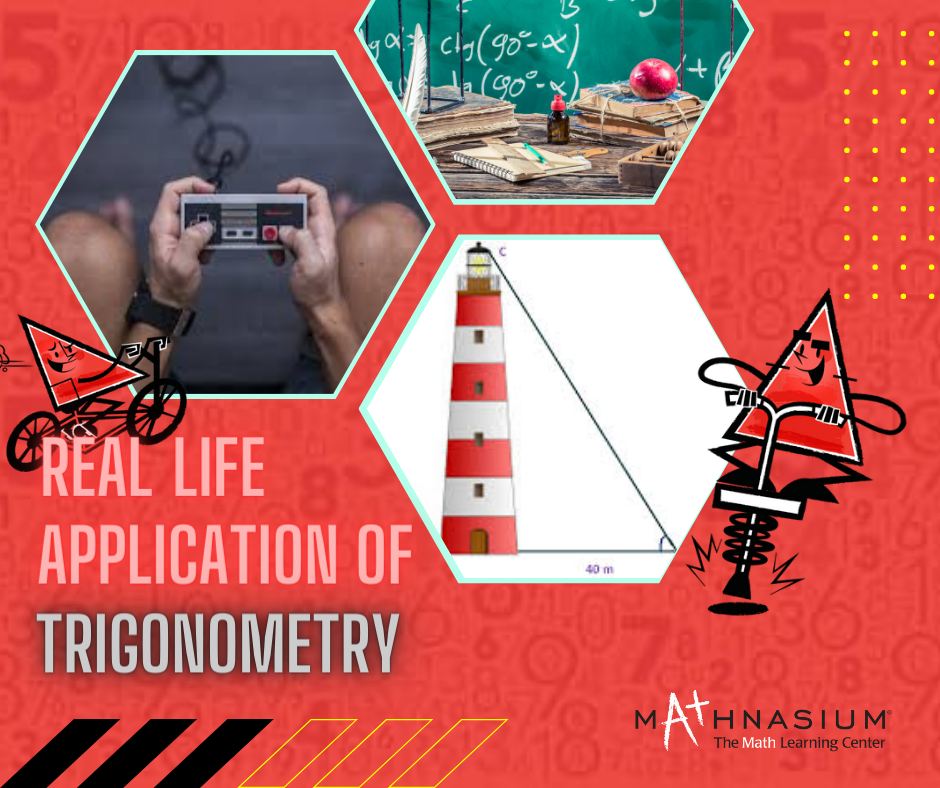
Modern architects and structural engineers no longer rely on manual drafting. Instead, they use Computer-Aided Design (CAD) and Building Information Modeling (BIM) software. These platforms are essentially giant trigonometric calculators. Whether determining the tension in a bridge cable or the optimal angle for a roof to maximize solar panel efficiency, the software utilizes trig functions to ensure structural integrity. Tech professionals in this field must understand the underlying math to verify that the software’s outputs are physically viable and safe for public use.
Orbital Mechanics and Satellite Communication
The aerospace industry represents the pinnacle of applied trigonometry. Navigating a spacecraft or maintaining a satellite’s orbit requires precise calculations of spherical trigonometry. Unlike the “flat” geometry used on a piece of paper, spherical trigonometry accounts for the curvature of the Earth and the vast distances of space.
Engineers at companies like SpaceX or NASA use these calculations to determine launch trajectories and to ensure that satellites remain synchronized with ground stations. When your GPS provides your location with meter-level accuracy, it is doing so through trilateration—a process that uses the distances and angles from multiple satellites to pinpoint a specific coordinate on the Earth’s surface.
Cybersecurity and Digital Signal Transmission
In an era defined by connectivity, the security and efficiency of our data transmissions are paramount. Trigonometry plays a silent but essential role in how we send and protect information across the web.
Encryption Algorithms and Periodic Functions
While many encryption methods rely on prime number factorization, certain advanced cryptographic techniques, such as Elliptic Curve Cryptography (ECC), utilize geometric curves and their properties. Furthermore, in the field of quantum-resistant cryptography, researchers are exploring mathematical structures that involve complex periodic functions. Security professionals who develop these protocols must have a deep understanding of how waves and cycles can be used to obfuscate data, making it unreadable to unauthorized parties.
Telecommunications and Waveform Analysis
The transition from 4G to 5G and the development of Wi-Fi 6 represent massive technological hurdles in how we manipulate electromagnetic waves. Radiofrequency (RF) engineers use trigonometry to manage “phase shifts” and “amplitude modulation.” By manipulating the sine waves of a radio frequency, tech professionals can pack more data into a single signal, leading to the high-speed internet we take for granted today. Trigonometry allows these engineers to calculate how signals bounce off buildings (multipath propagation) and how to align antennas for the strongest possible connection.
Robotics and Automation: The Mechanics of Motion
As automation becomes a standard in manufacturing and logistics, the role of the robotics engineer has grown in importance. Robotics is the ultimate synthesis of software engineering and mechanical hardware, and trigonometry is the bridge between the two.
Inverse Kinematics and Joint Precision
A robotic arm in a warehouse or an automated surgical tool in a hospital must move with extreme precision. To achieve this, engineers use a process called Inverse Kinematics (IK). When an engineer tells a robot to pick up an object at a specific coordinate, the IK algorithm calculates the necessary angles for every joint in the robot’s arm to reach that point.
These calculations involve complex trigonometric identities that translate the desired 3D position into a series of rotations and extensions. Tech professionals in robotics use these functions to ensure that movements are not only accurate but also fluid and energy-efficient.
Sensors and Autonomous Navigation
Self-driving cars and drones utilize LiDAR and ultrasonic sensors to “see” their surroundings. These sensors emit pulses and measure the time it takes for them to bounce back. To turn these time measurements into a 3D map of the environment, the onboard computer uses trigonometry to calculate the distance and angle of every obstacle. This allows the vehicle to make split-second decisions, such as braking for a pedestrian or navigating a narrow corridor, demonstrating how real-time trigonometric processing is vital for the safety of autonomous technology.

Conclusion
The question of “what professions use trigonometry” reveals a fundamental truth about the technology sector: mathematics is the invisible engine of innovation. Whether it is a game developer creating a virtual world, a data scientist training a neural network, or an aerospace engineer launching a satellite, trigonometry provides the essential framework for solving spatial, structural, and data-driven problems. For any professional looking to excel in the tech industry, a mastery of these geometric principles is not just an academic requirement—it is a vital skill set for building the future.
aViewFromTheCave is a participant in the Amazon Services LLC Associates Program, an affiliate advertising program designed to provide a means for sites to earn advertising fees by advertising and linking to Amazon.com. Amazon, the Amazon logo, AmazonSupply, and the AmazonSupply logo are trademarks of Amazon.com, Inc. or its affiliates. As an Amazon Associate we earn affiliate commissions from qualifying purchases.