
The history of the modern digital landscape cannot be written without a central chapter on the emergence of Microsoft. When asking the question, “When was Microsoft founded?” the short answer is April 4, 1975. However, the technical significance of that date extends far beyond a simple chronological marker. It represents the birth of the independent software industry and the beginning of a technological trajectory that would eventually place a computer on every desk and in every home.
In an era where hardware was the primary focus of the nascent computing world, two childhood friends—Bill Gates and Paul Allen—envisioned a future where software was the driving force of innovation. Their vision transformed the way humans interact with machines, transitioning from punch cards and obscure machine code to the sophisticated, AI-driven ecosystems we use today.
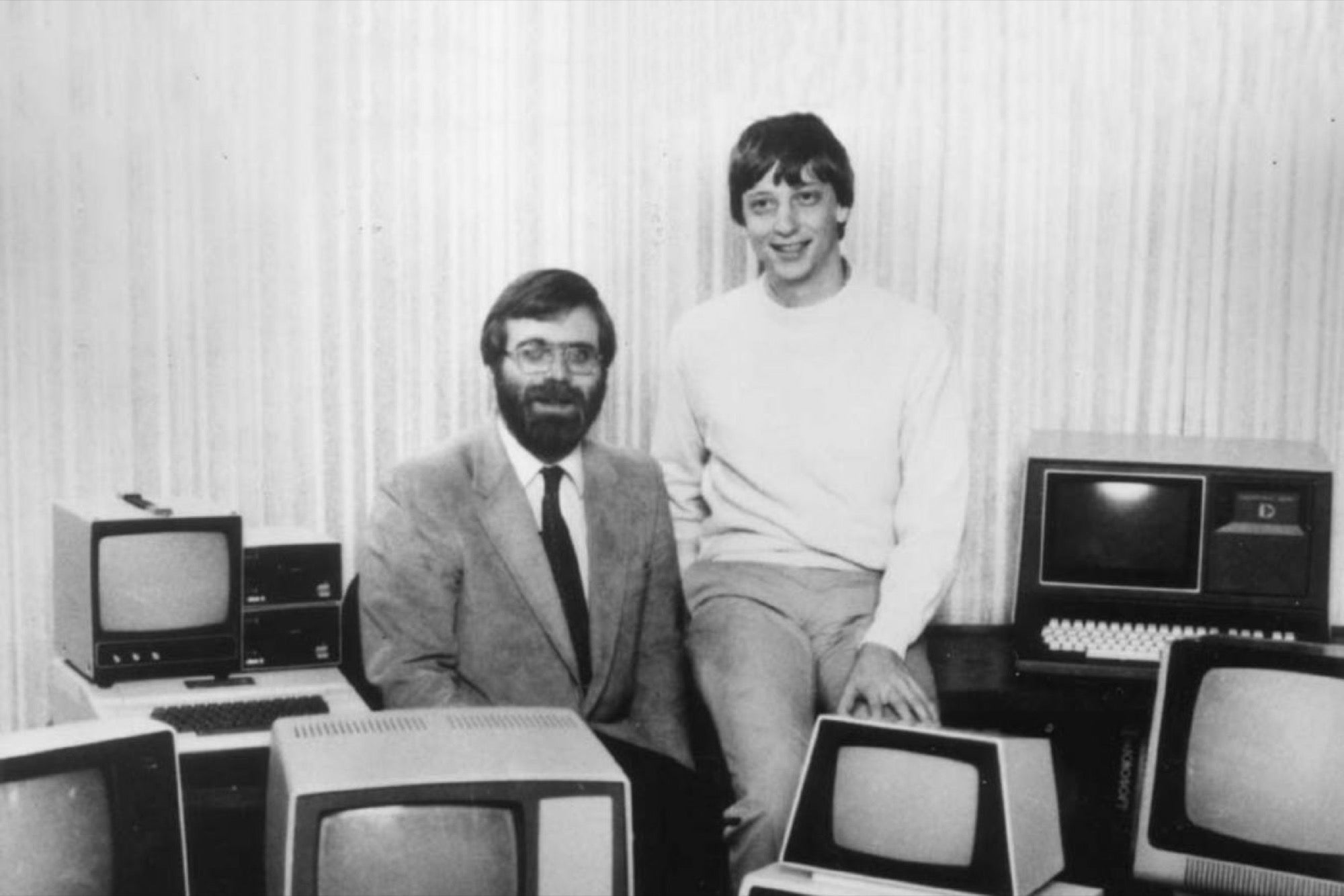
April 4, 1975: The Genesis of the Software Industry
To understand the founding of Microsoft, one must look at the technological climate of the mid-1970s. This was the era of the “hobbyist” computer. Before the founding of Microsoft, computing was largely the domain of massive mainframes housed in universities and government research facilities. The idea of a “personal” computer was a radical, almost fringe concept.
The Altair 8800 and the Birth of Micro-Soft
The catalyst for Microsoft’s formation was the January 1975 issue of Popular Electronics, which featured the MITS Altair 8800. This machine is widely considered the first successful microcomputer. However, the Altair had a significant limitation: it lacked an easy way for users to program it. Bill Gates and Paul Allen saw a massive opportunity to bridge the gap between hardware and user utility.
They contacted MITS and claimed to have developed a BASIC (Beginners’ All-purpose Symbolic Instruction Code) interpreter for the Altair. In reality, they hadn’t written a single line of code for it yet. After a frantic eight-week coding session, they successfully demonstrated their software, leading to a contract with MITS. On April 4, 1975, in Albuquerque, New Mexico, the partnership “Micro-Soft” (a portmanteau of microcomputer and software) was officially established.
From BASIC to MS-DOS: The Foundation of Personal Computing
While Microsoft began with BASIC, its first major technological leap occurred in the early 1980s. When IBM decided to enter the personal computer market, they needed an operating system. Microsoft, having pivotally transitioned from a language-focused company to a platform-focused one, licensed QDOS (Quick and Dirty Operating System) from Seattle Computer Products, refined it, and rebranded it as MS-DOS.
This was a watershed moment in software history. By maintaining the rights to license MS-DOS to other hardware manufacturers, Microsoft ensured that their software would become the universal standard. This decoupling of software from specific hardware architecture changed the tech industry forever, allowing for a software-first economy where interoperability became the primary goal for developers.
From Command Lines to Graphical Interfaces: The Windows Legacy
As the 1980s progressed, the limitations of text-based command-line interfaces (CLIs) became apparent. For technology to become truly ubiquitous, it needed to be accessible to non-engineers. This realization led Microsoft to begin development on what would become the most dominant operating system in history: Windows.
The Evolution of the Windows Ecosystem
Microsoft Windows 1.0, released in 1985, was not an independent operating system but rather a graphical shell that ran on top of MS-DOS. It introduced the concept of “windows,” scroll bars, and mouse-driven navigation to the PC world. While early versions faced stiff competition, the release of Windows 3.0 and eventually Windows 95 solidified Microsoft’s technological dominance.
Windows 95 was a paradigm shift. It introduced the “Start” menu and the taskbar, UI elements that remain central to the desktop experience today. Technically, it moved the consumer market toward a 32-bit architecture and introduced “Plug and Play,” a software protocol that automated the installation of hardware drivers. This period marked the transition of the computer from a specialized tool to a general-purpose appliance.
Scaling Productivity through Microsoft Office
Parallel to the development of the operating system, Microsoft revolutionized software for the workplace. Before the late 80s, productivity software was fragmented. Word processors, spreadsheets, and presentation tools were sold as separate, often incompatible entities.

Microsoft Office, first released for Windows in 1990, bundled Word, Excel, and PowerPoint into a cohesive “suite.” The technical achievement here was the integration—allowing data to flow seamlessly between applications via OLE (Object Linking and Embedding). This set the standard for modern productivity software, creating a software ecosystem that millions of businesses still rely on for their daily operations.
The Cloud Infrastructure Pivot: Azure and the Modern Data Center
As the world moved into the 21st century, the tech industry shifted from local computing to distributed networks. Microsoft, under new leadership and a changing technological landscape, underwent one of the most successful pivots in software history: the transition to the “Cloud.”
Shifting from On-Premise to the Cloud
For decades, Microsoft’s business model was based on selling perpetual licenses for software installed on local machines. However, the rise of high-speed internet enabled a new model: Software as a Service (SaaS). This shift required a massive technological overhaul of their core products.
In 2010, Microsoft launched Windows Azure (later renamed Microsoft Azure). This was no longer just about operating systems for PCs; it was about building a global network of data centers. Azure provided the infrastructure for businesses to host applications, manage data, and utilize massive computing power without owning the physical servers. Today, Azure is the backbone of the enterprise tech world, supporting everything from small app startups to global financial institutions.
The Impact of SaaS on Modern Business
The transition to Microsoft 365 (formerly Office 365) represented the final move toward a cloud-native software model. By moving productivity tools to the cloud, Microsoft enabled real-time collaboration, automatic updates, and cross-platform accessibility.
Technologically, this required a complete rewrite of how software handles state and synchronization. Using sophisticated APIs and cloud-based storage (OneDrive), Microsoft ensured that a document edited on a smartphone in London would be instantly updated for a collaborator on a laptop in New York. This era defined the current state of digital security and software delivery, where “the cloud” is the default environment for all tech development.
The AI Frontier: Redefining Software through Generative Intelligence
Today, nearly five decades after its founding, Microsoft is at the forefront of the most significant technological shift since the invention of the internet: Artificial Intelligence. By integrating generative AI into its existing software stack, Microsoft is fundamentally changing how humans interact with technology.
Integrating Generative AI into the Tech Stack
Microsoft’s massive investment in OpenAI and the subsequent development of “Microsoft Copilot” represents the next evolution of the software interface. We are moving from a world of “point and click” to a world of “natural language intent.”
Technically, this involves embedding Large Language Models (LLMs) directly into the kernel of the operating system and the fabric of productivity apps. In Excel, AI can now perform complex data analysis via simple text prompts. In Outlook, it can draft emails based on context from previous meetings. This is not just an “add-on” feature; it is a fundamental reimagining of software architecture where the computer understands the user’s goal rather than just following a set of binary instructions.

The Ethical and Security Implications of Modern AI Software
As Microsoft pushes the boundaries of AI, it is also leading the conversation on digital security and ethical software development. The “Secure Future Initiative” is a technical framework designed to ensure that AI-driven tools are built with “Security by Design.”
Modern software must now account for prompt injection attacks, data privacy in LLMs, and the ethical use of synthetic media. Microsoft’s role has shifted from a company that simply provides tools to a company that must manage the complex interplay between massive computational power and human safety. Their founding mission—”a computer on every desk”—has evolved into “an AI assistant for every person,” marking the next great chapter in the history of technology.
In conclusion, when we look back at April 4, 1975, we aren’t just looking at the birth of a company. We are looking at the foundation of the modern software industry. From the first BASIC interpreter for the Altair to the global-scale AI of Copilot, Microsoft has consistently defined the trends, tools, and tutorials that shape our digital lives. As we move further into the age of AI and cloud computing, the legacy of that small Albuquerque startup continues to drive the pulse of global technology.
aViewFromTheCave is a participant in the Amazon Services LLC Associates Program, an affiliate advertising program designed to provide a means for sites to earn advertising fees by advertising and linking to Amazon.com. Amazon, the Amazon logo, AmazonSupply, and the AmazonSupply logo are trademarks of Amazon.com, Inc. or its affiliates. As an Amazon Associate we earn affiliate commissions from qualifying purchases.