
In the realm of human cognition, answering the question “what month was two months ago” is a trivial task. We mentally scroll back through a linear calendar, accounting for the current date, and arrive at an answer in milliseconds. However, in the architecture of modern technology, software engineering, and artificial intelligence, this seemingly simple query represents a foundational challenge in temporal logic and data processing.
Calculating relative dates is a cornerstone of digital ecosystems. From financial apps calculating quarterly shifts to project management tools setting automated deadlines, the ability to accurately look back—and forward—requires sophisticated algorithms that account for the irregularities of the Gregorian calendar. When a user asks a digital assistant or a line of code to identify a period two months in the past, they are engaging with a complex web of time zones, leap years, and modulo arithmetic.
The Logic of Relative Date Calculation in Modern Software
Software developers rarely hard-code dates. Instead, they rely on dynamic calculations that use the current system time as a “Unix epoch” or a “now” object. To determine what month was two months ago, a program must perform subtraction while simultaneously managing the transition between calendar years.
Temporal Logic and Edge Cases
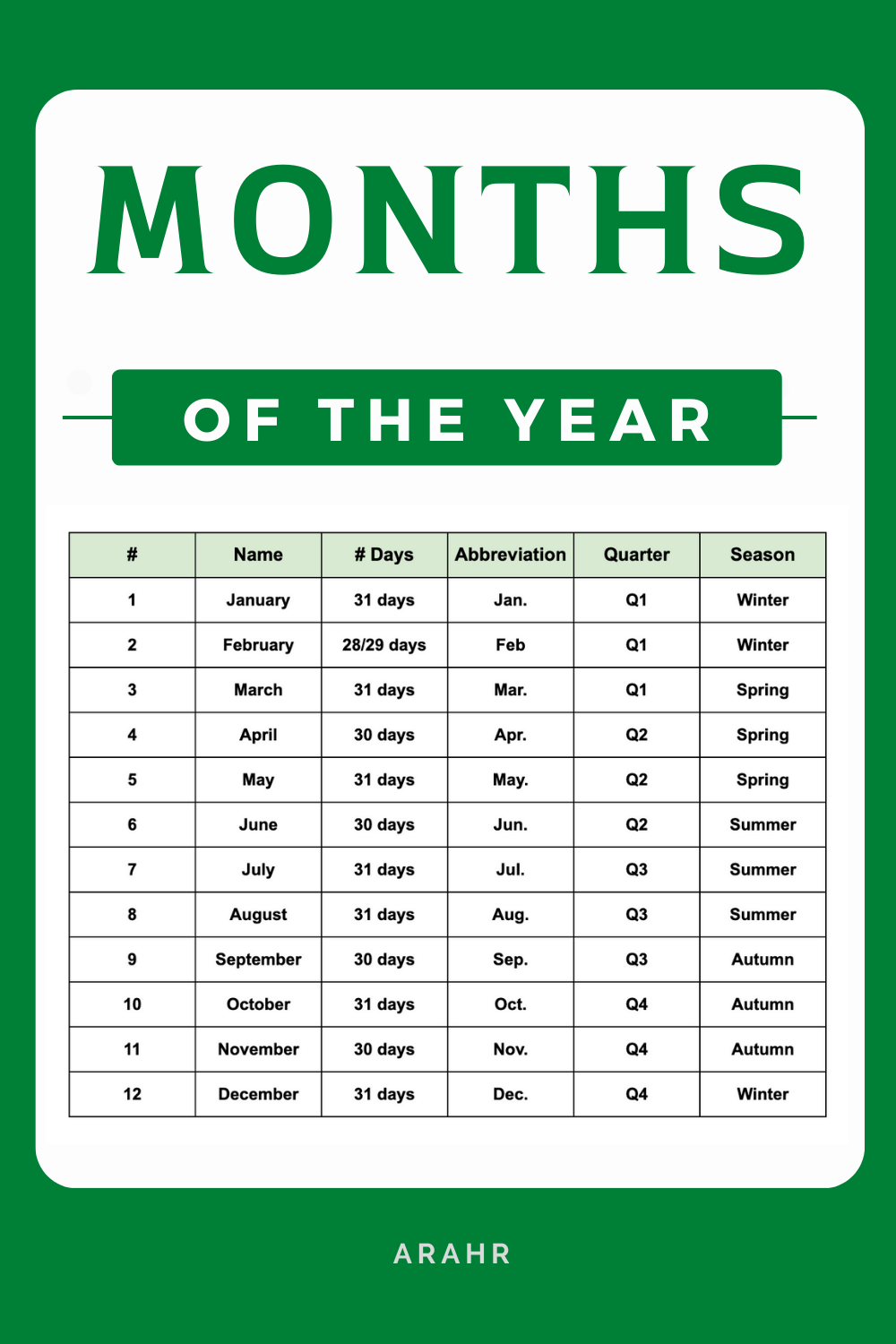
The primary challenge in temporal logic is that months are not uniform units of measurement. Unlike a “second” or a “day,” which have fixed or nearly fixed durations, a “month” can last 28, 29, 30, or 31 days. If today is March 31st, a naive calculation of “two months ago” might land on January 31st. However, if today is August 30th, two months ago would be June 30th.
The complexity heightens when the calculation crosses the New Year threshold. If the current month is January (represented as 1 in most systems), subtracting two months requires the algorithm to realize it must loop back to November (11) of the previous year. This is typically handled through modulo 12 arithmetic, ensuring that the system moves from 1 back to 12 and then to 11, rather than returning a null or negative value.
How Programming Languages Handle Date Subtraction
Most modern programming languages provide built-in libraries to handle these headaches. In JavaScript, the Date object allows developers to set the month by subtracting an integer. For instance, date.setMonth(date.getMonth() - 2). The engine automatically handles the year rollover.
In Python, the datetime module is the gold standard. However, the standard timedelta object strangely lacks a “months” parameter because of the variable length of months. Developers instead turn to the dateutil library and its relativedelta function. This tool is designed to mimic human calendar logic, correctly identifying that two months before March 15th is January 15th, regardless of whether it is a leap year.
Automating Time-Based Queries with AI and Natural Language Processing (NLP)
As we transition from manual coding to conversational AI, the way we interact with time is changing. Natural Language Processing (NLP) allows users to ask “What month was two months ago?” without needing to know a single line of syntax.
The Role of Large Language Models in Deciphering “When”
Large Language Models (LLMs) do not “calculate” time in the traditional sense; they interpret the context of the user’s query against a reference point. When a user interacts with an AI tool, the system is usually provided with a “system prompt” that includes the current date and time.
When the LLM receives the prompt “what month was two months ago,” it identifies the “now” parameter (e.g., May 2024), parses the intent (retrospective temporal shift), and performs a semantic calculation to arrive at “March.” This capability is vital for AI agents tasked with summarizing emails from “the last two months” or analyzing market trends since the previous quarter.
Real-Time Data and Context Awareness
Modern AI tools are increasingly context-aware. If a user is working on a fiscal year that starts in July, “two months ago” in a professional context might mean something different than the literal calendar month. Advanced AI assistants can now integrate with enterprise APIs to understand specific corporate calendars, ensuring that “two months ago” aligns with the specific reporting cycles used by the organization. This fusion of linguistic understanding and hard data allows for a more intuitive user experience.
Essential Date/Time Libraries for Developers
For tech professionals building the next generation of apps, choosing the right library to handle date math is critical. A failure to accurately calculate “two months ago” can lead to significant bugs, such as missed subscription renewals, incorrect data visualization, or security certificate expirations.
Moment.js and Day.js in the JavaScript Ecosystem
For years, Moment.js was the industry standard for date manipulation in web development. It simplified the process of finding relative dates with human-readable outputs. However, due to its large bundle size and mutable design, the community has largely shifted toward Day.js.
Day.js provides a similar API but is significantly more lightweight. A command like dayjs().subtract(2, 'month') is all that is required to fetch the desired date object. This shift reflects a broader trend in tech: moving toward “immutable” date objects that prevent accidental bugs when the same date variable is used in multiple parts of an application.
Python’s Datetime and Arrow
Python remains the backbone of data science and backend automation. While the standard datetime library is robust, many developers prefer Arrow. Arrow is a Python library that offers a more sensible and “human” approach to dates. It provides a .shift() method that makes looking back two months as simple as arrow.now().shift(months=-2). This readability is essential in complex data pipelines where temporal accuracy is non-negotiable.
Cybersecurity and Log Analysis: The Importance of Accurate Retrospective Dating
In the field of digital security, “two months ago” is often a critical window for incident response and threat hunting. Statistics show that the average “dwell time”—the time a hacker remains undetected in a network—can often exceed 60 to 90 days.
Reconstructing Incident Timelines
When a security analyst discovers a breach, the first step is to look back. If the breach was detected today, they must examine logs from two months ago to see if that was the point of initial entry. Accurate time-stamping and relative date calculation are vital here. If the SIEM (Security Information and Event Management) tool fails to correctly calculate the temporal offset during a leap year or across a time zone shift, the analyst might miss the critical logs that reveal the attacker’s “patient zero” machine.
Database Management and Timestamping Conventions
To avoid the pitfalls of relative dates, the tech industry has standardized on UTC (Coordinated Universal Time). By storing all data in UTC and only converting to local time at the “presentation layer” (the UI the user sees), systems remain consistent. When a database query asks for records from “two months ago,” it calculates the range based on UTC timestamps to ensure that no data is lost during Daylight Saving Time transitions or when servers move between physical regions.
Future-Proofing Time Manipulation in Emerging Tech
As we look toward the future of technology, our relationship with time and calendar logic continues to evolve, particularly with the rise of decentralized systems and hyper-automation.
Decentralized Time and Blockchain Timestamps
In blockchain technology, time is often measured in “block height” rather than traditional months or days. However, for decentralized finance (DeFi) apps to interact with the real world, they must use “Oracles” to bring in calendar data. Determining “two months ago” on a smart contract requires verifiable time sources to ensure that interest rates, vesting periods, and insurance claims are processed fairly. This represents a new frontier where calendar logic meets cryptographic security.
Integrating Temporal Intelligence into SaaS Ecosystems
The next phase of Software as a Service (SaaS) involves “Temporal Intelligence.” This is the ability of software to not only react to the present but to anticipate needs based on historical cycles. If a SaaS tool recognizes that a user’s workload spikes every two months, it can begin to pre-allocate cloud resources or suggest automated workflows in advance.
Understanding “what month was two months ago” is no longer just about answering a question; it is about pattern recognition. By mastering the technical nuances of date calculation, tech companies are building smarter, more resilient systems that align perfectly with the human experience of time. Whether through a simple Python script or a complex neural network, the ability to look back with precision is what allows us to move forward with confidence.
aViewFromTheCave is a participant in the Amazon Services LLC Associates Program, an affiliate advertising program designed to provide a means for sites to earn advertising fees by advertising and linking to Amazon.com. Amazon, the Amazon logo, AmazonSupply, and the AmazonSupply logo are trademarks of Amazon.com, Inc. or its affiliates. As an Amazon Associate we earn affiliate commissions from qualifying purchases.