
For anyone planning a digital nomad stint in Split, a corporate expansion into Zagreb, or a deep dive into the burgeoning tech scene of the Adriatic, the question “what language do people speak in Croatia?” is often the first point of inquiry. While the literal answer is Croatian—a South Slavic language with a rich, complex history—the modern answer is deeply intertwined with the evolution of technology. In an era of global connectivity, the language spoken in Croatia is increasingly being decoded, translated, and taught through the lens of high-end software, neural networks, and sophisticated mobile applications.

To understand the linguistic landscape of Croatia today, one must look beyond the alphabet and the grammar. One must look at how Natural Language Processing (NLP) handles morphologically rich languages and how the latest advancements in Artificial Intelligence (AI) are making the Croatian language more accessible to the global community than ever before.
Understanding the Croatian Language: A Challenge for Modern NLP
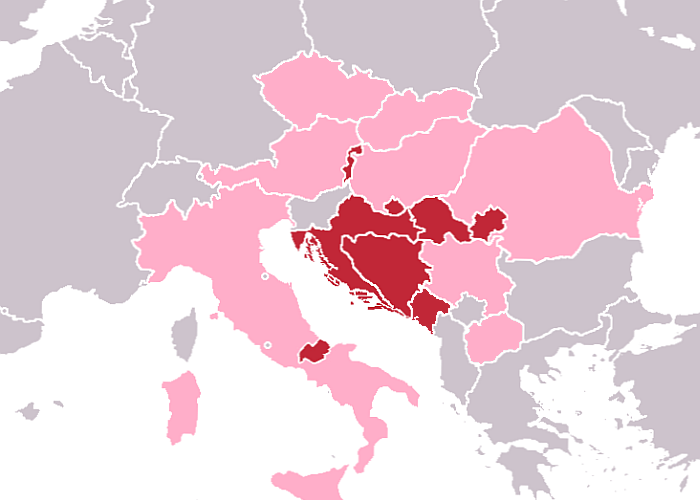
Croatian is a South Slavic language that uses the Latin alphabet, supplemented by five special characters: č, ć, dž, đ, š, and ž. While it shares structural similarities with Serbian, Bosnian, and Montenegrin, it possesses a distinct vocabulary and phonetic nuances that are critical for both human speakers and machine learning models to grasp.
The Complexity of Slavic Morphology
From a technological standpoint, Croatian is significantly more complex than English. While English relies heavily on word order to convey meaning, Croatian is a highly inflected language. This means that nouns, pronouns, and adjectives change their endings based on seven grammatical cases (nominative, genitive, dative, accusative, vocative, locative, and instrumental).
For developers of translation software, this presents a “sparsity” problem. In English, the word “house” remains “house” regardless of whether it is the subject or the object. In Croatian, the word kuća transforms depending on its role in the sentence. For an AI to accurately translate into Croatian, it must understand the syntactic relationship between every word in a sentence, necessitating a much higher level of computational logic than simpler languages require.
Regional Dialects and the Digital Data Gap
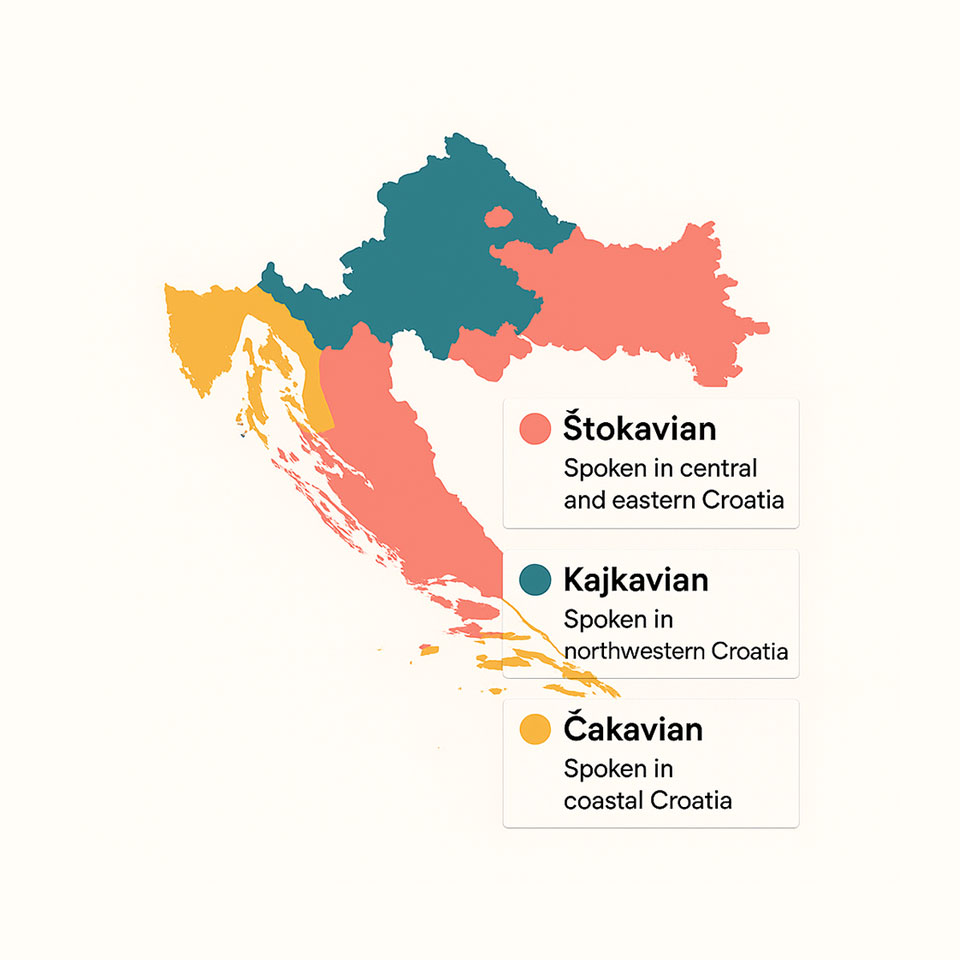
Furthermore, Croatia is characterized by three major dialects: Štokavian (the basis for the standard language), Kajkavian (spoken in the north), and Čakavian (spoken on the coast and islands). While formal communication and tech interfaces use Standard Croatian, the colloquial language found in social media data and voice-to-text inputs often varies wildly.
In the world of Big Data, Croatian is often categorized as a “low-resource language.” This doesn’t mean the language lacks speakers, but rather that there is a smaller volume of high-quality, digitized text available for training Large Language Models (LLMs) compared to languages like Spanish or Mandarin. Tech firms are currently bridging this gap by using data scraping and “back-translation” techniques to build more robust datasets for the Croatian linguistic market.
The Evolution of Translation Tools: From Manual Dictionaries to Real-Time AI
As Croatia continues to grow as a premier destination for tech-focused travelers and international business, the demand for real-time translation has skyrocketed. We have moved far beyond the era of carrying physical phrasebooks. Today, the language of Croatia is filtered through sophisticated software stacks.
The Transition to Neural Machine Translation (NMT)
The biggest leap in understanding what language people speak in Croatia came with the shift from Statistical Machine Translation (SMT) to Neural Machine Translation (NMT). Early versions of Google Translate often struggled with Croatian grammar, frequently producing “word salad” because they translated segments in isolation.
Modern NMT systems, such as those utilized by DeepL and updated versions of Google Translate, use deep learning to predict the likelihood of a sequence of words. This allows the software to account for the entire context of a sentence before producing a translation. For a business traveler in Croatia, this means that an email translated from English to Croatian is now professional and grammatically coherent, a feat that was nearly impossible for AI just a decade ago.
The Role of Context in Digital Translation
Contextual awareness is the “holy grail” of translation tech in Croatia. Because many Croatian words have multiple meanings depending on the context—especially when dealing with the nuances of the maritime or tourism industries—tech providers are now implementing “attention mechanisms” within their neural networks. These mechanisms allow the AI to “focus” on specific parts of the input sentence (like a verb or a gendered noun) to ensure the output remains accurate across long-form documents.
Tech Solutions for Travelers and Expats in Croatia
When you land at Franjo Tuđman Airport in Zagreb, the language you encounter is immediate. However, for the non-speaker, technology acts as a real-time interpreter. The integration of hardware and software has revolutionized how people interact with the Croatian language on the ground.
Voice-to-Voice Translation and Wearables
One of the most significant breakthroughs for visitors to Croatia is the rise of low-latency voice translation. Apps like iTranslate and the built-in features of the latest smartphones allow for near-instantaneous conversation. By using specialized speech-to-text (STT) algorithms optimized for the specific phonemes of the Slavic language family, these tools can capture the nuances of Croatian speech and output synthesized English in seconds.
We are also seeing the emergence of “hearables”—smart earbuds that offer real-time translation during face-to-face interactions. While still in their infancy for less common languages, the rapid improvement in Croatian STT data means that a tourist in a Hvar market can soon have a fluid conversation with a vendor, with the technology bridging the gap in real-time.
Optical Character Recognition (OCR) for Local Navigation
Navigation in Croatia often requires reading menus, street signs, and historical markers. OCR technology has turned the smartphone camera into a powerful translation lens. By leveraging computer vision, apps can now overlay translated text directly onto the image of a Croatian sign. This technology relies on sophisticated edge computing, allowing the processing to happen on the device without needing a constant high-speed internet connection—essential for those exploring the remote islands of the Kornati archipelago.
Language Learning Ecosystems: AI Tutors and Gamification
For those who want to go beyond translation and actually speak the language of Croatia, the tech landscape offers an array of sophisticated learning platforms. The “language” people speak in Croatia is no longer just taught in classrooms; it is taught via algorithms.
Spaced Repetition Systems (SRS)
Modern language apps like Duolingo, Memrise, and specialized Croatian platforms utilize Spaced Repetition Systems. These are algorithms designed to present information to the learner at the exact moment they are about to forget it. For a language as grammatically dense as Croatian, SRS is invaluable for memorizing the various case endings and irregular verbs. By tracking a user’s performance, the software creates a personalized learning curve that is far more efficient than traditional rote memorization.
Using LLMs as Personalized Language Coaches
The most recent trend in language acquisition is the use of Large Language Models (like ChatGPT or Claude) as conversation partners. Because these models have been trained on vast amounts of Croatian text, they can simulate real-world conversations.
A learner can ask an AI to “act as a waiter in a restaurant in Dubrovnik” and practice ordering food in Croatian. The AI can then provide instant feedback on grammar, suggest more natural phrasing, and explain the cultural context behind certain words. This type of interactive, tech-driven immersion is democratizing the ability to learn Croatian, making it accessible to anyone with an internet connection.
The Future of Cross-Linguistic Communication in the Adriatic
As we look toward the future, the question of “what language do people speak in Croatia?” will increasingly involve a digital component. We are entering an era of “ambient translation,” where technology fades into the background, and communication becomes seamless.
Localization and the Digital Economy
For the tech industry within Croatia, localization is a major focus. Croatian startups are developing software that isn’t just “translated” into English, but “localized” for global markets, while simultaneously ensuring that international tech products are properly adapted for the Croatian market. This involves more than just text; it involves adapting UI/UX design to accommodate the longer word lengths of Croatian text and ensuring that voice interfaces recognize regional accents.
The Convergence of Tech and Culture
The Croatian language is a symbol of national identity, and technology is proving to be a guardian of this heritage. Digitization projects are preserving ancient Glagolitic scripts and local dialects, ensuring that as the world becomes more tech-centric, the unique linguistic flavor of Croatia is not lost in translation.
In conclusion, while the people of Croatia speak a language rooted in centuries of Slavic tradition, the way that language is experienced by the rest of the world is being fundamentally reshaped by technology. From NMT and OCR to AI-driven learning platforms, the linguistic barriers of the past are dissolving. Whether you are using a smartphone to navigate a menu in Zadar or using an AI tutor to master the seven cases, the language of Croatia is more accessible, vibrant, and tech-integrated than ever before.
aViewFromTheCave is a participant in the Amazon Services LLC Associates Program, an affiliate advertising program designed to provide a means for sites to earn advertising fees by advertising and linking to Amazon.com. Amazon, the Amazon logo, AmazonSupply, and the AmazonSupply logo are trademarks of Amazon.com, Inc. or its affiliates. As an Amazon Associate we earn affiliate commissions from qualifying purchases.