
In the world of real estate investment and personal finance, your home is often your largest asset. Within that asset, few components carry as much weight in a professional appraisal as the flooring. Understanding exactly what material is underfoot is not merely a matter of interior design; it is a critical step in asset management. Whether you are preparing a property for the rental market, calculating your home’s equity, or planning a high-ROI renovation, the answer to “what kind of flooring do I have” dictates your maintenance budget, your tax depreciation schedule, and your ultimate exit strategy.
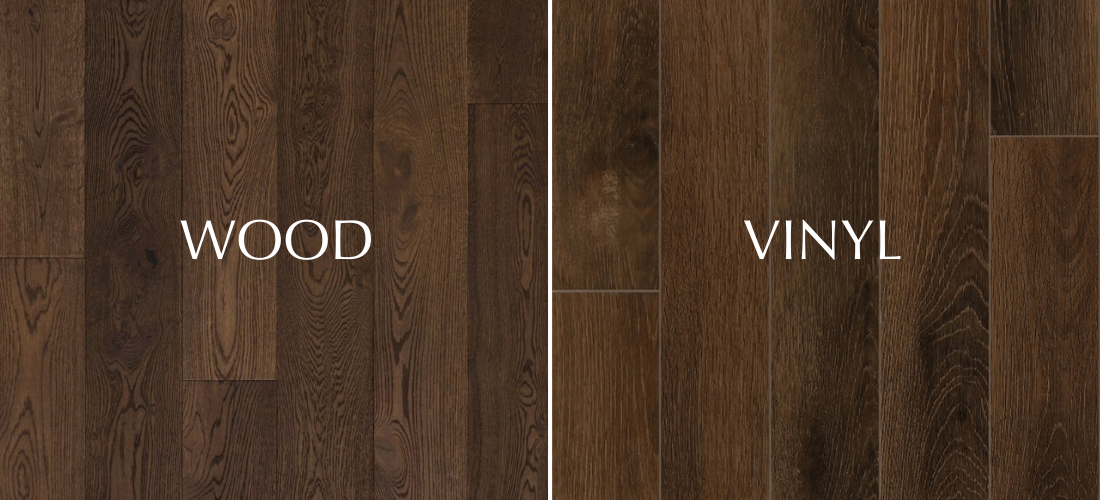
For a homeowner or a real estate investor, the difference between solid hardwood and a high-quality laminate can represent thousands of dollars in property valuation. Identifying these materials accurately allows you to protect your investment and make data-driven decisions about upgrades.
The Financial Impact of Flooring on Real Estate Valuation
Before diving into the physical identification of materials, it is essential to understand the “why” from a financial perspective. In the current real estate market, flooring is one of the primary “eye-candy” features that influence a buyer’s emotional response and, subsequently, their offer price.
Appraisal and Equity
Appraisers categorize flooring based on its permanence and quality. Permanent fixtures like solid hardwood or natural stone are viewed as capital improvements that increase the base value of a property. In contrast, “floating” floors or older wall-to-wall carpeting may be viewed as items with a shorter lifecycle, potentially requiring a “credit” or reduction in valuation if they show signs of wear. Knowing your flooring type allows you to argue for a higher valuation during a refinance or sale by providing documented proof of high-value materials.
The ROI of Different Materials
Not all floors are created equal when it comes to Return on Investment (ROI). While solid hardwood is the “gold standard” for resale value—often recouping 70% to 100% of its cost at the time of sale—modern Luxury Vinyl Plank (LVP) has become the darling of the rental market due to its durability and lower entry price point. If you are an investor, identifying your current flooring helps you determine if the existing material is a liability (e.g., high-maintenance carpet in a pet-friendly rental) or an asset (e.g., original parquet that can be refinished for a premium).
Identifying High-Value Natural Materials
Natural materials are generally the most valuable. They are also the most frequently misrepresented in real estate listings. To truly understand your property’s worth, you must distinguish between authentic natural products and their high-tech mimics.
Solid Hardwood: The Gold Standard
Solid hardwood is characterized by being a single piece of wood from top to bottom. From a financial standpoint, this is an “intergenerational” asset.
- How to Identify: Look at the expansion gaps near baseboards or remove a floor vent to see a cross-section. If the material is a solid, uniform piece of wood, it is solid hardwood.
- Value Indicators: Look for consistent grain patterns and the presence of “nails” or staples if it’s an older installation. Solid hardwood can be sanded and refinished multiple times, meaning its “useful life” in a financial model is 50 to 100 years.
- The “Money” Perspective: If you have solid hardwood, your maintenance strategy should focus on preservation. Refinishing costs significantly less than replacement and yields a much higher ROI.
Natural Stone and Ceramic Tile
Natural stone (marble, slate, travertine) and ceramic/porcelain tile are durable assets typically found in high-traffic areas or wet zones.
- How to Identify: Natural stone will have unique veining in every single tile; no two pieces will ever be identical. It is also cold to the touch and heavy. Ceramic and porcelain tiles often have a “printed” pattern. If you see the exact same swirl or “fleck” on two different tiles, it is likely a manufactured product.
- The “Money” Perspective: Natural stone adds a “luxury” tier to your property valuation. However, it requires periodic sealing. Failing to identify stone and treating it like ceramic can lead to staining, which devalues the asset.
Distinguishing Between Synthetic Alternatives and Their Impact on Resale
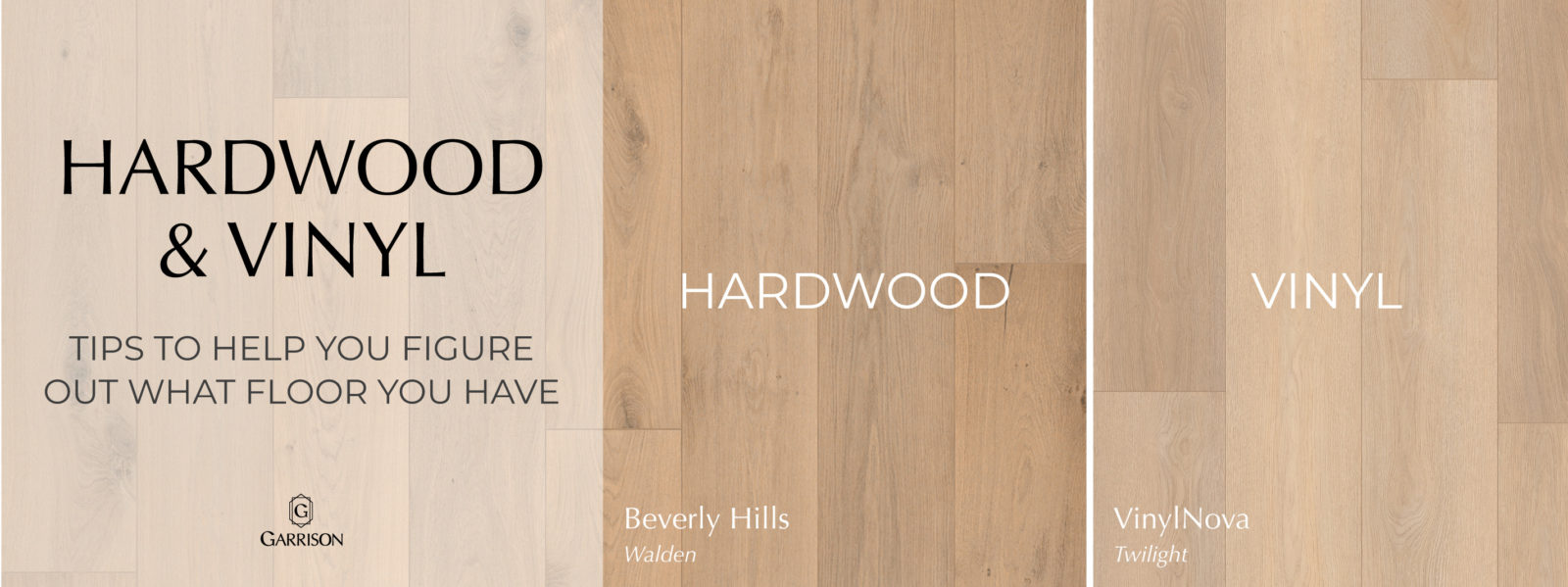
In the last decade, synthetic and composite flooring have dominated the market. While they may look like wood or stone, their impact on your balance sheet is vastly different.
Engineered Wood vs. Laminate
Engineered wood is often confused with laminate, but they sit in different classes of the “Money” hierarchy.
- Engineered Wood: This consists of a thin veneer of real wood bonded to a plywood or high-density fiberboard (HDF) core. It is real wood on top, which allows it to be marketed as “hardwood” in real estate listings, though it typically has a shorter lifespan than solid wood.
- Laminate: This is essentially a photograph of wood protected by a clear “wear layer” over a wood-chip base. It sounds “hollow” or “clicky” when walked on with hard shoes.
- Financial Distinction: Engineered wood holds value much better than laminate. In many high-end markets, laminate is seen as a “placeholder” floor that a buyer will expect to replace, whereas engineered wood is accepted as a premium finish.
Luxury Vinyl Plank (LVP) and Tile (LVT)
LVP has revolutionized the “Online Income” and “Side Hustle” world for DIY landlords. It is waterproof, durable, and relatively inexpensive.
- How to Identify: LVP feels slightly softer and warmer underfoot than laminate. If you can find a spare plank, LVP is flexible and made of a rubbery PVC material, whereas laminate is rigid and wood-based.
- The “Money” Perspective: For a rental property, LVP is the ultimate financial tool. It reduces the “Capital Expenditure” (CapEx) budget because it rarely needs replacement between tenants. However, for a luxury home sale, LVP may be viewed as a “budget” choice compared to real stone or wood.
Life-Cycle Costs and Tax Implications
As a property owner, identifying your flooring is the first step in calculating the Total Cost of Ownership (TCO). This is a standard business finance metric applied to physical assets.
Depreciation and IRS Classifications
In the United States, the IRS allows for the depreciation of residential rental property over 27.5 years. However, certain types of flooring—specifically carpeting and some floating floors—can sometimes be depreciated over a much shorter 5-year schedule if they are not considered “permanent” improvements to the structure.
- Strategic Action: If you identify your floor as “removable” (like carpet or certain click-lock laminates), consult with a tax professional. You may be able to accelerate depreciation, increasing your cash flow in the early years of an investment.
Maintenance vs. Replacement
- Hardwood: Annual cleaning and a “screen and coat” every 5–7 years. High upfront cost, low lifecycle cost.
- Carpet: Professional cleaning every 12 months. Lifecycle is usually only 5–10 years. From a personal finance standpoint, carpet is often a “liability” because it requires frequent replacement and can harbor allergens that decrease a home’s marketability.
- Vinyl/Tile: Low maintenance, high durability. Ideal for maximizing “Net Operating Income” (NOI) in commercial or residential rentals.
Maximizing ROI: How Flooring Choice Influences Property Liquidity
Finally, the type of flooring you have directly impacts your property’s “liquidity”—how fast you can turn the asset into cash.
Market Trends and Consumer Behavior
Current data in the real estate market shows a massive shift away from wall-to-wall carpeting in common areas. Properties with hard surfaces (wood, LVP, tile) sell faster and often attract multiple offers. If you identify that your home has “hidden” hardwoods under old carpet—a common find in homes built between 1920 and 1970—you are sitting on a “value-add” opportunity. Pulling up that carpet and refinishing the wood is one of the highest ROI activities a homeowner can perform.

Cost-Benefit Analysis of Upgrading
If you identify your flooring as a low-value material (like dated linoleum or worn-out laminate), you must perform a cost-benefit analysis before replacing it.
- Calculate the “Flip” Value: Will spending $5,000 on new LVP increase your home’s sale price by $10,000? In most mid-market neighborhoods, the answer is yes.
- Analyze the Competition: Look at “Comps” (comparable sales) in your area. If every house selling for your target price has hardwood and yours has laminate, your flooring is a “liquidity drag.”
By accurately identifying “what kind of flooring do I have,” you move from being a passive resident to an active asset manager. Whether you are looking for tax advantages, preparing for a sale, or simply trying to budget for future repairs, the material under your feet is a fundamental component of your financial portfolio. Treat it with the same scrutiny you would apply to a stock or a bond, and your property’s value will reflect that diligence.
aViewFromTheCave is a participant in the Amazon Services LLC Associates Program, an affiliate advertising program designed to provide a means for sites to earn advertising fees by advertising and linking to Amazon.com. Amazon, the Amazon logo, AmazonSupply, and the AmazonSupply logo are trademarks of Amazon.com, Inc. or its affiliates. As an Amazon Associate we earn affiliate commissions from qualifying purchases.